The Spectator

Call Barnier’s bluff

From our UK edition

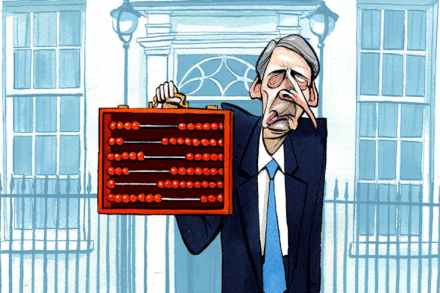
There is a growing perception that Britain is floundering in its EU negotiations, with a professional team from Brussels running rings around our bumbling amateurs. It is an idea that is being put about by the EU’s chief negotiator, Michel Barnier, who this week appealed for Britain to begin ‘negotiating seriously’. As he has found out, the strange dynamic of British public debate at present means that EU spin is repeated uncritically by those hostile to Brexit. It can seem, at times, as if we are in the grip of hysteria normally seen during the final days of an election campaign. This is not to say that the British side has been faultless. The government has struggled to articulate the clear case for Brexit that we heard during the Leave campaign.

Portrait of the week | 31 August 2017

From our UK edition

Home Sir Keir Starmer, the shadow Brexit secretary, announced a change in Labour’s policy by saying that he wanted Britain to stay in the single market and customs union during a transition period after Brexit, which could be ‘as short as possible but as long as necessary’. The French government denied that senior French diplomats had said they wanted to see Brexit talks make progress by proceeding to questions of trade. ‘We need you to take positions on all separation issues,’ said Michel Barnier, the European Union’s chief negotiator. British sources denounced M. Barnier’s ‘inconsistent, ill- judged and ill-considered comments’.

to 2322: In memoriam

From our UK edition

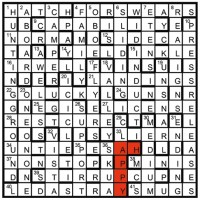
The event was THE GLORIOUS TWELFTH (1D/29) (12 August, opening day of the grouse-shooting season). Remaining unclued lights bring to mind ‘grouse’: LAGOPUS LAGOPUS SCOTICUS (43/19: scientific name); RUGOSE and ROGUES (11 and 3: anagrams); GRIPE and BLEAT (39 and 25: synonyms).

Hard lessons

From our UK edition

George Tomlinson, the post-war education secretary, declared that politicians should leave exams to the teachers because ‘the minister knows nowt about curriculum’. Today, however, the curriculum seems to be in a state of permanent revolution. The new GCSEs, for example, are marked on a nine-point scale: a grade of 7 or above indicates what used to be an ‘A’. For every five students who hit the 7 threshold, only one will get 9, the top mark. How employers are meant to understand this is another question. The GCSE overhaul is the latest of a series of reforms, started by Michael Gove seven years ago, which are intended to ‘restore confidence’ after years of grade inflation. During the Labour years, ministers denied that exams were getting easier.

Portrait of the week | 24 August 2017

From our UK edition

Home Big Ben ceased sounding for a planned period of four years, thanks to a decision by the Speaker and two Commons committees. The silence was attributed to the need to protect the hearing of workmen restoring the Elizabeth Tower, though experts on the bell and on previous restorations saw no reason for it. A game of hunt-the-issue was begun when Sarah Champion, the Labour MP for Rotherham, was obliged to resign as shadow minister for women and equalities after writing a piece for the Sun that began: ‘Britain has a problem with British Pakistani men raping and exploiting white girls.

to 2321: Cleaner

From our UK edition

The key word is DENTIFRICE (38), which can be divided into DENT defining 11, 21, 33; IF 13, 20, 27; and RICE 4A, 12, 18.   First prize Trevor Speak, Dursley, Glos Runners-up Victoria Estcourt, King’s Somborne, Hants; J.S.

Donald Trump and America’s identity crisis

From our UK edition

Long before student activists started talking about pulling down statues of Cecil Rhodes, a cultural war was being waged in America over monuments honouring General Robert E. Lee and other leaders of the Confederacy. In 2001 there was a petition to remove some of these statues from the University of Texas on the grounds that their presence might ‘lead people to believe that the university is tolerant of the Confederate ideology regarding slavery’. The arguments that started on campus then branched out beyond it. To some, the statues were a symbol of Southern heritage and pride. To others, they were a monument to racism. In recent years this argument has intensified, gathering a momentum that few of America’s political leaders fully understood.

Letters | 17 August 2017

From our UK edition

The education gap Sir: It is disappointing that Toby Young (‘Parents, not schools, are key to the knowledge gap’, 5 August) conforms to the ‘Close the gap’ mentality that obsesses Ofsted and leftish thinking in state schools. Young deplores ‘the attainment gap between disadvantaged and non-disadvantaged 16-year-olds in England’. I prefer to get away from the tendentious terms ‘disadvantaged’ and ‘non-disadvantaged’ pupils and stick to the idea of high- and low-attaining pupils. Left-inclined schools have various ways of closing this gap in attainment. One is to impose limits on how abler pupils can be challenged.

America’s identity crisis

From our UK edition

Long before student activists started talking about pulling down statues of Cecil Rhodes, a cultural war was being waged in America over monuments honouring General Robert E. Lee and other leaders of the Confederacy. In 2001 there was a petition to remove some of these statues from the University of Texas on the grounds that their presence might ‘lead people to believe that the university is tolerant of the Confederate ideology regarding slavery’. The arguments that started on campus then branched out beyond it. To some, the statues were a symbol of Southern heritage and pride. To others, they were a monument to racism. In recent years this argument has intensified, gathering a momentum that few of America’s political leaders fully understood.

Portrait of the week | 17 August 2017

From our UK edition

Home Regulated rail fares will rise by 3.6 per cent in January, bringing the price of annual tickets from Oxford, Colchester or Hastings to more than £5,000. The rise depended on the annual rate of inflation in July as measured by the Retail Prices Index, which had risen to 3.6 per cent; as measured by the Consumer Prices Index it remained unchanged at 2.6 per cent. A passenger train was derailed near Waterloo station but none of the 23 on board was injured. A train from Royston hit the buffers at King’s Cross. Richard Gordon, the author of Doctor in the House, died aged 95. The landlord of the Mallard in Scunthorpe became the third person at the pub to win £1 million in the National Lottery.

to 2320: Crossings Out

From our UK edition

When BRIDGE is added to the unclued Across lights and FORD to the unclued Down lights (including each of the three components in 1 Down), they all become names of British towns.

Jeremy Corbyn still cannot bear to condemn his fallen idols in Venezuela

From our UK edition

Jeremy Corbyn finally broke his silence on Venezuela this week, but in the manner of a man who has his head buried in a very large bucket of sand. He condemned violence ‘on both sides’, painting the country’s problems as a battle between factions rather than a case of a repressive government snuffing out popular protests. No one would know from the Labour leader’s words that President Maduro’s regime is engaged in what the UN Human Rights Office described this week as a ‘widespread and systematic use of excessive force’. More revealing still was Corbyn’s reply when prodded on the economic and social conditions which led to the protests.

Letters | 10 August 2017

From our UK edition

Unbearable wait Sir: Like Jenny McCartney, I too am fed up with flying (‘Civilised air travel? Pigs might fly’, 5 August). However, it’s not for any rudeness on the part of the staff, which I have as yet not encountered. Nor is it the lack of meals. Who needs them? No, it’s the agony of endless queues at the airport, the misery of taking off shoes and putting them back on, with no chairs supplied, and the confiscation of small items overlooked in packing. This is no fault of the air companies, but the rise in terror attacks has made such scrutiny necessary. I have ceased to travel long journeys by plane and try to manage with rail.

Barometer | 10 August 2017

From our UK edition

Out with a whimper Usain Bolt managed only a bronze in his last appearance in the 100 metres at the World Athletics Championships in London. Final appearances often don’t go to plan: — Don Bradman was bowled for a second-ball duck by Eric Hollies in his last Test at the Oval in 1948. Four runs would have given him a career average of 100. — Stanley Matthews bowed out in 1965 in a testimonial between his personal XI and an international XI, which won 6-4. — Pelé appeared for the last time in a Brazil-Yugoslavia friendly on 18 July 1971. The match ended 2-2, with neither of Brazil’s goals scored by Pelé. — However, Martina Navratilova did win her last match — the final of the mixed doubles at the US Open in 2006.

Portrait of the week | 10 August 2017

From our UK edition

Home British negotiators are prepared to pay up to £36 billion to the EU to settle the so-called divorce bill for Brexit, according to the Sunday Telegraph. By voting for Brexit, ‘the old have comprehensively shafted the young’, the leader of the Liberal Democrats, Sir Vince Cable, aged 74, wrote in the Mail on Sunday, ‘imposing a world view coloured by nostalgia for an imperial past on a younger generation much more comfortable with modern Europe.’ Lord Neuberger, who will retire as president of the Supreme Court next month, said that the government should ‘express clearly what the judges should do about decisions of the European Court of Justice after Brexit.

Corbyn’s fallen idols

From our UK edition

Jeremy Corbyn finally broke his silence on Venezuela this week, but in the manner of a man who has his head buried in a very large bucket of sand. He condemned violence ‘on both sides’, painting the country’s problems as a battle between factions rather than a case of a repressive government snuffing out popular protests. No one would know from the Labour leader’s words that President Maduro’s regime is engaged in what the UN Human Rights Office described this week as a ‘widespread and systematic use of excessive force’. More revealing still was Corbyn’s reply when prodded on the economic and social conditions which led to the protests.