The Spectator

Donald Trump and America’s identity crisis

From our UK edition

Long before student activists started talking about pulling down statues of Cecil Rhodes, a cultural war was being waged in America over monuments honouring General Robert E. Lee and other leaders of the Confederacy. In 2001 there was a petition to remove some of these statues from the University of Texas on the grounds that their presence might ‘lead people to believe that the university is tolerant of the Confederate ideology regarding slavery’. The arguments that started on campus then branched out beyond it. To some, the statues were a symbol of Southern heritage and pride. To others, they were a monument to racism. In recent years this argument has intensified, gathering a momentum that few of America’s political leaders fully understood.

Letters | 17 August 2017

From our UK edition

The education gap Sir: It is disappointing that Toby Young (‘Parents, not schools, are key to the knowledge gap’, 5 August) conforms to the ‘Close the gap’ mentality that obsesses Ofsted and leftish thinking in state schools. Young deplores ‘the attainment gap between disadvantaged and non-disadvantaged 16-year-olds in England’. I prefer to get away from the tendentious terms ‘disadvantaged’ and ‘non-disadvantaged’ pupils and stick to the idea of high- and low-attaining pupils. Left-inclined schools have various ways of closing this gap in attainment. One is to impose limits on how abler pupils can be challenged.

America’s identity crisis

From our UK edition

Long before student activists started talking about pulling down statues of Cecil Rhodes, a cultural war was being waged in America over monuments honouring General Robert E. Lee and other leaders of the Confederacy. In 2001 there was a petition to remove some of these statues from the University of Texas on the grounds that their presence might ‘lead people to believe that the university is tolerant of the Confederate ideology regarding slavery’. The arguments that started on campus then branched out beyond it. To some, the statues were a symbol of Southern heritage and pride. To others, they were a monument to racism. In recent years this argument has intensified, gathering a momentum that few of America’s political leaders fully understood.

Portrait of the week | 17 August 2017

From our UK edition

Home Regulated rail fares will rise by 3.6 per cent in January, bringing the price of annual tickets from Oxford, Colchester or Hastings to more than £5,000. The rise depended on the annual rate of inflation in July as measured by the Retail Prices Index, which had risen to 3.6 per cent; as measured by the Consumer Prices Index it remained unchanged at 2.6 per cent. A passenger train was derailed near Waterloo station but none of the 23 on board was injured. A train from Royston hit the buffers at King’s Cross. Richard Gordon, the author of Doctor in the House, died aged 95. The landlord of the Mallard in Scunthorpe became the third person at the pub to win £1 million in the National Lottery.

to 2320: Crossings Out

From our UK edition

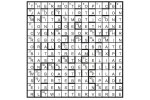
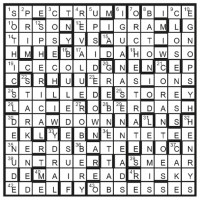
When BRIDGE is added to the unclued Across lights and FORD to the unclued Down lights (including each of the three components in 1 Down), they all become names of British towns.

Jeremy Corbyn still cannot bear to condemn his fallen idols in Venezuela

From our UK edition

Jeremy Corbyn finally broke his silence on Venezuela this week, but in the manner of a man who has his head buried in a very large bucket of sand. He condemned violence ‘on both sides’, painting the country’s problems as a battle between factions rather than a case of a repressive government snuffing out popular protests. No one would know from the Labour leader’s words that President Maduro’s regime is engaged in what the UN Human Rights Office described this week as a ‘widespread and systematic use of excessive force’. More revealing still was Corbyn’s reply when prodded on the economic and social conditions which led to the protests.

Letters | 10 August 2017

From our UK edition

Unbearable wait Sir: Like Jenny McCartney, I too am fed up with flying (‘Civilised air travel? Pigs might fly’, 5 August). However, it’s not for any rudeness on the part of the staff, which I have as yet not encountered. Nor is it the lack of meals. Who needs them? No, it’s the agony of endless queues at the airport, the misery of taking off shoes and putting them back on, with no chairs supplied, and the confiscation of small items overlooked in packing. This is no fault of the air companies, but the rise in terror attacks has made such scrutiny necessary. I have ceased to travel long journeys by plane and try to manage with rail.

Portrait of the week | 10 August 2017

From our UK edition

Home British negotiators are prepared to pay up to £36 billion to the EU to settle the so-called divorce bill for Brexit, according to the Sunday Telegraph. By voting for Brexit, ‘the old have comprehensively shafted the young’, the leader of the Liberal Democrats, Sir Vince Cable, aged 74, wrote in the Mail on Sunday, ‘imposing a world view coloured by nostalgia for an imperial past on a younger generation much more comfortable with modern Europe.’ Lord Neuberger, who will retire as president of the Supreme Court next month, said that the government should ‘express clearly what the judges should do about decisions of the European Court of Justice after Brexit.

Corbyn’s fallen idols

From our UK edition

Jeremy Corbyn finally broke his silence on Venezuela this week, but in the manner of a man who has his head buried in a very large bucket of sand. He condemned violence ‘on both sides’, painting the country’s problems as a battle between factions rather than a case of a repressive government snuffing out popular protests. No one would know from the Labour leader’s words that President Maduro’s regime is engaged in what the UN Human Rights Office described this week as a ‘widespread and systematic use of excessive force’. More revealing still was Corbyn’s reply when prodded on the economic and social conditions which led to the protests.

to 2319: poem III

From our UK edition

The poem was Shelley’s ‘Ozymandias’. The words from the poem are LEGS (16), TWO (17A), SANDS (26), NOTHING (37), KING (42), ANTIQUE (5), LAND (9), TRAVELLER (10), MET (23), DESPAIR (32). OZYMANDIAS (in the twelfth row) was to be shaded.   First prize P.J.W.

Letters | 3 August 2017

From our UK edition

No reason for subsidies Sir: For believers in free enterprise like me, it was hugely disappointing to read that Sir James Dyson, probably its most impressive UK exponent, has become a champion for taxpayer-funded subsidies for the farming industry (‘I like making things’, 29 July). He argues that they are necessary due to the cost of regulations and because other countries have them. In any global market that UK companies operate in, such excuses for subsidies exist. As Dyson has the biggest farm operation in the UK, his leading the call for the continuation of subsidies to match EU levels should probably not be surprising, but it is still not very inspiring. The value of farmland is now two and a half times what it was ten years ago.

Portrait of the week | 3 August 2017

From our UK edition

Home Philip Hammond, the Chancellor of the Exchequer, appeared to wrest control of plans for Brexit from cabinet rivals, while Theresa May, the Prime Minister, was in Italy and Boris Johnson, the Foreign Secretary, was in Australia. Mr Hammond foresaw a ‘transitional deal’ ending by June 2022, when the next general election is due. He said it would be ‘some time before we are able to introduce full migration controls between the UK and the European Union’. Liam Fox, the International Trade Secretary, insisted that the cabinet had not agreed to a three-year transition. Mr Johnson said he was unaware that Amber Rudd, the Home Secretary, had announced a year-long inquiry about the costs and benefits of EU migration.

Crunch time

From our UK edition

For anyone considering a career in economic forecasting, the Bank of England’s inflation report for August 2007 ought to be required reading. A graph illustrating its Monetary Policy Committee’s ‘best collective judgment’ of annual economic growth two years ahead is fixed around a central prediction of 2.5 per cent, with extreme boundaries of 0.8 per cent and 4.2 per cent. But after two years, economic growth was running at –5.6 per cent, and the economy had just completed its fifth consecutive quarter of negative growth. The finest minds of Threadneedle Street could not see two years ahead.

to 2318: Groundwork

From our UK edition

SOIL (9) — cryptically indicated by ISLAND IN THE SUN (1A), the title of a SONG (40) recorded by HARRY BELAFONTE (43) — defines each of the other unclued lights.   First prize Mrs P. Newbury, Linlithgow, West Lothian Runners-up C.

Barometer | 27 July 2017

From our UK edition

But me no butts Boris Johnson, being taught a Maori head-to-head greeting, joked that it might be ‘misinterpreted in a pub in Glasgow’. But did he offend the wrong city? In 2007 the OED appealed for details on the origin of ‘Glasgow kiss’, meaning a headbutt. Then, its earliest known first use was in the Financial Times in 1987, whereas ‘Liverpool kiss’ (meaning the same thing) was traced back to 1944. The appeal pushed back the Glasgow first use, but only by five years to 1982, when the Daily Mirror said: ‘Glasgow has its own way of welcoming people... there is a broken bottle gripped in the first of greeting. Or there’s the Glasgow kiss — a sharp whack on the nose with the forehead.

Letters | 27 July 2017

From our UK edition

Bugs bite back Sir: Matthew Parris is quite right to say that we Leavers would prefer independence in reduced circumstances to affluent federalism (‘Dear Leavebugs, it’s time to admit your mistake’, 22 July). But he is wrong to suggest that our preference is a guilty secret, or that it should be. Many of us despaired at the narrowness of both referendum campaigns, which made no attempt at addressing our ‘spiritual’ concerns about EU membership, or indeed the equally spiritual hopes of the Remainers. Spiritual, moral and cultural questions are at the root of all politics and economics, and any debate which leaves them out is empty.

Portrait of the week | 27 July 2017

From our UK edition

Home Theresa May, the Prime Minister, invited the media to take a photograph of her beginning a holiday with her husband Philip at Lake Garda before pressing on to Switzerland for some walking. David Davis, the Brexit Secretary, resisted demands by Guy Verhofstadt, the European Parliament Brexit negotiator, that the European Court of Justice should retain jurisdiction over EU migrants in Britain. BMW said a fully electric Mini is to be built at Cowley in Oxford, with motors made in Germany and shipped over for assembly. The government announced plans to ban new diesel and petrol cars and vans from 2040. The number of people over 90 with a driving licence reached 100,000.

Playing chicken

From our UK edition

Besides being important in themselves, the trade talks between Britain and the United States which began this week are symbolic of the opportunities that should become available as we leave the European Union. For years we have dealt with the US, our biggest single customer, under burdensome tariffs and other regulation — but we had no choice. The EU handled trade policy and it never succeeded in completing a trade deal with any of its major trade partners. Britain, by contrast, has always been more global than Europe in its outlook. The vote for Brexit was, among other things, a vote to raise our sights to more distant horizons. At the time of the referendum, a bilateral trade deal with the US looked unlikely for political reasons.