The Spectator

Crown and countries

From our UK edition

Next week, 53 world leaders arrive in London for the Commonwealth summit. It is hard to imagine a better network for the globalised age. Leaders of countries with a combined population of more than two billion will come to discuss issues of common interest. There will be a banquet hosted by the Queen — in her role as the Head of the Commonwealth — at Buckingham Palace, and a day-long leaders’ retreat at Windsor Castle. A nod to history, to be sure, but if the Commonwealth was just about nostalgia the summits would have stopped long ago. The G53 will have much to discuss. The Commonwealth has a shared language, overlapping administrative and legal systems (largely based on English common law) and a shared heritage.

Portrait of the week | 12 April 2018

From our UK edition

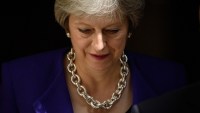
Home Parliament was in recess when Theresa May, the Prime Minister, agreed with America and France that the international community should respond to the chemical attack reported from Syria. It was not certain in any case that Parliament would back direct action by Britain. Yulia Skripal, who with her father Sergei was poisoned in Salisbury on 4 March, was discharged from hospital and taken to a safe place. Richard Osborn-Brooks, 78, who killed a burglar with a screwdriver with which he had been threatened, learnt that he would not be charged. He and his disabled wife had to leave their house for fear of revenge by associates of Henry Vincent, the dead man. People removed from a fence bouquets of flowers commemorating the burglar.

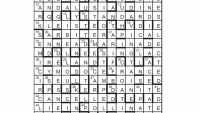
to 2351: Triplets

From our UK edition

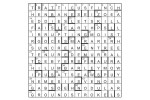
Unclued lights associated with IRIS are: flowers (2, 11, 40), Greek goddesses (10, 16, 30), and parts of the eye (6, 12, 34).   First prize P.

Our future queen

From our UK edition

From The Spectator, 15 April 1943: Princess Elizabeth will be 17 next Wednesday, which means she is ceasing to be a child. Her life has so far, most rightly, been spent in her home rather than in the public eye, and her future subjects know little of her, apart from the admirable broadcast talk she gave three years ago, to the children of the Empire, at home and overseas, when she was only 14. Now that the Princess stands on the threshold of public life, they may feel some natural desire to know something of how she is being prepared for the high office that will one day be hers, and the Queen has shown a gracious readiness to make available such information as is relevant for that purpose.

Where is Artificial Intelligence taking us?

From our UK edition

Recently, The Spectator, in association with NatWest, brought together leading entrepreneurs, MPs and technology writers to discuss where Artificial Intelligence (AI) – or the fourth industrial revolution as it is often termed – is taking us.

Letters | 5 April 2018

From our UK edition

Self-limiting beliefs Sir: As someone who spent much of his working life teaching at Eton and Harrow, it was amusing to learn from Toby Young (31 March) that privately educated pupils achieve better exam results than pupils in other schools because they came into the world equipped with high IQ genes which, together with parental background, guarantee success, with the school adding little. If only we teachers had known! If genes are as important as Toby, Robert Plomin and others insist, it does ask questions of the drive to improve social mobility. If schools are limited in the difference they can make, do we fuss too much about ‘good’ and ‘bad’ schools?

Criminal policies

From our UK edition

Any notion that the surge in killings in London was a problem confined to gang members has been dispelled by the death of 17-year-old Tanesha Melbourne-Blake, who acted as a mentor for troubled children but who died in her mother’s arms after a drive-by shooting. The number of people killed in the capital has now risen to more than 50 this year, with the latest victim an 18-year-old man who was stabbed to death in an east London street on Wednesday night. Violent crime is everyone’s problem, yet until this year it had slipped a long way down the list of pressing political issues. Terrorism continues to take up debate, as do sexual offences, especially allegations involving public figures.

Portrait of the Week – 5 April 2018

From our UK edition

Home Alison Saunders said she would relinquish her position as the Director of Public Prosecutions when her five-year contract ends in October. Cressida Dick, the Commissioner of the Metropolitan Police, told the Times that she was ditching the previously embraced principle of believing all complaints of sexual assault. ‘We should have an open mind when a person walks in,’ she said. In February, 15 people were murdered in London and 14 in New York; in March it was 22 and 21. On 2 April two teenagers were shot in London; one died at the scene and the other the day after. Michael Gove, the Environment Secretary, said that the sale of ivory items of whatever age would be made illegal.

to 2350: Pieces

From our UK edition

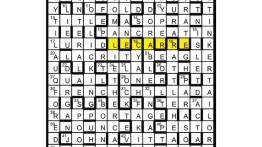
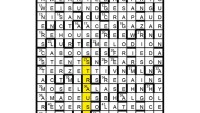
The unclued lights are classical French plays (‘PIÈCES’) by Corneille (9, 18, 21A), Molière (11, 23, and 21D/29) and Racine (1A, 24 and 25). The highlighted letters reveal the three playwrights’ names.

Theresa May has shown Putin that the West can still unite

From our UK edition

After Britain voted to leave the European Union, there was much mistaken talk about how it might also move away from its allies. Boris Titov, one of Putin’s appointees and a half-hearted challenger to him in the presidential election a fortnight ago, claimed that it would break the transatlantic alliance, turning the remainder of the EU into Russophiles, adding: ‘It’s not long until a united Eurasia — about ten years’. That fantasy was destroyed last week when, in an unprecedented show of solidarity, 23 countries announced that between them they are to expel more than 100 Russian diplomats whom they suspect have been working as spies.

Barometer | 28 March 2018

From our UK edition

Not cricket The Australian cricket captain Steve Smith was banned for a match and fined his match fee after a player was caught tampering with the ball by rubbing it with tape in the hope of making it swing more. How do you make a cricket ball swing? — The science was covered in a paper by N.G. Barton in the Proceedings of the Royal Society of London in 1982, which claimed, after wind tunnel tests, that maximum swing can be achieved by keeping one side of the ball shiny and bowling it at 30 metres per second (67.5mph), with the seam at an angle of 20 degrees from the direction of the ball and a backspin of between five and eight revolutions per second. Contrary to the lore of the game, humidity makes no difference, though a bit of sandpaper on the non-shiny side certainly would.

Portrait of the week | 28 March 2018

From our UK edition

Home ‘We recognise that anti-Semitism has occurred in pockets within the Labour Party,’ Jeremy Corbyn, the Labour leader, said. ‘I am sincerely sorry for the pain which has been caused.’ His remarks were released before the publication of an open letter to Labour MPs from the Board of Deputies of British Jews and the Jewish Leadership Council which said Mr Corbyn was incapable of contemplating anti-Semitism seriously ‘because he is so ideologically fixed within a far-left worldview that is instinctively hostile to mainstream Jewish communities’.

War and peace | 28 March 2018

From our UK edition

After Britain voted to leave the European Union, there was much mistaken talk about how it might also move away from its allies. Boris Titov, one of Putin’s appointees and a half-hearted challenger to him in the presidential election a fortnight ago, claimed that it would break the transatlantic alliance, turning the remainder of the EU into Russophiles, adding: ‘It’s not long until a united Eurasia — about ten years’. That fantasy was destroyed last week when, in an unprecedented show of solidarity, 23 countries announced that between them they are to expel more than 100 Russian diplomats whom they suspect have been working as spies.

to 2349: Novel

From our UK edition

The novel was HOWARDS END by E.M. Forster. Round the perimeter run the characters LEONARD BAST, PERCY CAHILL, MARGARET SCHLEGEL and HENRY WILCOX followed by EMF. WADED/SHORN (20/39) and SHOWN/ADDER (11/26) each  combine to form an anagram of HOWARDS END.   First prize Penny Mitchell, Burton-on-Trent, Staffordshire Runners-up R.R.

German manoeuvres

From our UK edition

From ‘The great battle’, 30 March 1918: Since our last issue by far the greatest battle of the war has developed — a battle to which, for significance and size, history affords no parallel. It is being fought with such intensity and with such an exhausting use of men and munitions that we cannot suppose that there will be a prolonged crisis… When the battle is over the military situation will be radically changed… We shall know either that Germany has lost her gambler’s throw and that we can deal with her during the rest of the war with confidence and deliberation, or we shall know that we have got to begin the war, as it were, all over again.

Letters | 22 March 2018

From our UK edition

Reform National Insurance Sir: One objection to an increase in National Insurance contributions to rescue the NHS is that it would once again exempt from contributing those who most heavily use the NHS — the retired — and heap yet more of the burden on the working young who least use it and can least afford it (‘The Tory tax bombshell’, 17 March). As you acknowledge, National Insurance contributions long ago ceased to be purely contributions into a pension and sickness benefit scheme, and became part of general taxation. This means that entirely exempting retirees from contributing when many of them are on incomes larger than the working young is quite impossible to justify.

Barometer | 22 March 2018

From our UK edition

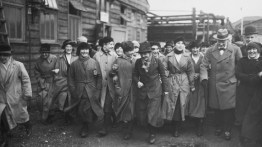
Spin doctors The BBC has denied it photoshopped a Newsnight backdrop to make Jeremy Corbyn’s hat look more Russian. The art of doctoring photos is, appropriately enough, often credited to the Bolsheviks. One photo of Lenin in 1920 had Trotsky and Kamenev edited out after they fell from favour. — Yet manipulating photos for political purposes really began 50 years earlier. One photo, an attempt to flatter Abraham Lincoln, had his head fixed on the body of a more shapely politician, John Colhoun. — A photo of Ulysses S. Grant inspecting his troops on horseback has been exposed as being made of three different images. Course work Graduate salary data for degree courses is to be released. Which places are the best and worst at getting you a job?

Portrait of the week | 22 March 2018

From our UK edition

Home Britain and the European Union agreed on a transitional period after Brexit on 29 March 2019 until the end of 2020 in which Britain can make trade deals and EU citizens will be able to claim UK residency. The Irish border question was unresolved. British fisherfolk were sold down the river, despite an undertaking a week earlier by Michael Gove, the Environment Secretary, and Scottish Conservative leader Ruth Davidson. In a joint statement, the two politicians had promised: ‘Britain will leave the CFP [Common Fisheries Policy] as of March 2019.’ In fact, Britain will merely be ‘consulted’ on fishing quotas during the transitional period.