The Spectator

The staple of our strength

From our UK edition

From ‘News of the week’, 27 April 1918: The Navy has come altogether into its own again. The details of the gloriously daring naval enterprise at Zeebrugge and Ostend have taught the nation to remember that the Navy is not only the staple of our strength, but has a very positive power of aggression even under the conditions of this war. Ultimately our victory will depend upon the exercise of this power… The spirit of the Navy has always been true to the Nelson legend, and it was not the fault of the Fleet that sometimes the opportunities have been withheld from it of acting in accordance with its traditions.

Letters | 19 April 2018

From our UK edition

Sit the snowflakes down Sir: I was surprised to read Theo Hobson’s article about ‘snowflake’ Christians in the C of E (‘Holy snowflakes’, 14 April). What most struck me was the timidity of the clergy, who instead of explaining Christian teaching to their gay and other ‘snowflake’ parishioners, merely kowtowed to them by removing a collage depicting an exorcism. Clergy need to teach those who are easily offended that nowhere in the Christian Gospels — as my many readings tell me — does Jesus condemn gays. (That condemnation belongs to the Old Testament, where God commissioned Abraham and the Patriarchs to breed abundantly and build a nation.

Portrait of the Week – 19 April 2018

From our UK edition

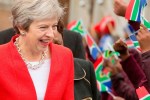
Home Amber Rudd, the Home Secretary, apologised in Parliament for the treatment of immigrants from the Commonwealth from before 1971, known as the ‘Windrush generation’ (after the Empire Windrush, the ship that brought West Indian workers to England in 1948). The 1971 Immigration Act allowed Commonwealth citizens then living in the United Kingdom indefinite leave to remain, but the Home Office kept no records of these. Some had lost their jobs, others had been refused National Health Service treatment, and others threatened with deportation. Theresa May, the Prime Minister, apologised to Caribbean heads of government who were in London for the Commonwealth Heads of Government Meeting.

to 2352: Upright Characters

From our UK edition

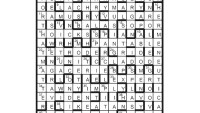
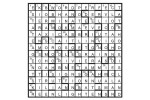
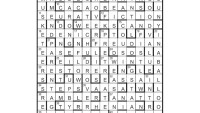
‘THE WRITING ON THE WALL’ (Daniel 5.5) at 12/22/41 was ‘MENE MENE TEKEL UPHARSIN’ at 23/16/26, according to Brewer, which also gives ‘IF YOU HATE GRAFFITI, SIGN A PARTITION’, at 19/1D/7, as an example of GRAFFITI. First prize C.V. Clark, London WC1 Runners-up Francesca Charlton, Sleaford, Lincs; A.R.

Theresa May’s Syria strikes statement, full text

From our UK edition

Last night British, French and American armed forces conducted co-ordinated and targeted strikes to degrade the Syrian Regime’s chemical weapons capability and deter their use. For the UK’s part four RAF Tornado GR 4’s launched storm shadow missiles at a military facility some 15 miles west of Homs, where the regime is assessed to keep chemical weapons in breach of Syria’s obligations under the Chemical Weapons Convention. While the full assessment of the strike is ongoing, we are confident of its success. Let me set out why we have taken this action. Last Saturday up to 75 people, including young children, were killed in a despicable and barbaric attack in Douma, with as many as 500 further casualties. We have worked with our allies to establish what happened.

Viktor Orban and Hungary’s muzzled media

From our UK edition

There are several ingredients for a successful democracy: the rule of law, opposition parties working without harassment, and a free press able to discuss every issue from every angle. Viktor Orban won a landslide victory in Hungary’s elections last weekend, reflecting public support that is far wider than his critics allow. But was it the result of a free and fair debate? This week, the last serious independent Hungarian daily newspaper closed. Magyar Nemet — and its sister radio station Lanchid Radio — have been unable to recover from financial problems which have been exacerbated by government advertising being withdrawn from troublesome newspapers and ploughed into friendly ones.

Letters | 12 April 2018

From our UK edition

For the many not the few Sir: As is clear from the last paragraph of your leading article (7 April), the ability of Tony Blair to rewrite history (or persuade others to do so) obviously remains undiminished, although it is surprising to find that your own publication succumbs so easily to his ‘charms’. How many more times does the canard that he and the Labour party pioneered the use of the phrase ‘for the many not the few’ have to be refuted? In fact, it was one of your own former editors, the late and very sadly lamented Iain Macleod, who first used that phrase (and, of course, in a different context) at the Tory party conference on 9 October 1969.

Crown and countries

From our UK edition

Next week, 53 world leaders arrive in London for the Commonwealth summit. It is hard to imagine a better network for the globalised age. Leaders of countries with a combined population of more than two billion will come to discuss issues of common interest. There will be a banquet hosted by the Queen — in her role as the Head of the Commonwealth — at Buckingham Palace, and a day-long leaders’ retreat at Windsor Castle. A nod to history, to be sure, but if the Commonwealth was just about nostalgia the summits would have stopped long ago. The G53 will have much to discuss. The Commonwealth has a shared language, overlapping administrative and legal systems (largely based on English common law) and a shared heritage.

Portrait of the week | 12 April 2018

From our UK edition

Home Parliament was in recess when Theresa May, the Prime Minister, agreed with America and France that the international community should respond to the chemical attack reported from Syria. It was not certain in any case that Parliament would back direct action by Britain. Yulia Skripal, who with her father Sergei was poisoned in Salisbury on 4 March, was discharged from hospital and taken to a safe place. Richard Osborn-Brooks, 78, who killed a burglar with a screwdriver with which he had been threatened, learnt that he would not be charged. He and his disabled wife had to leave their house for fear of revenge by associates of Henry Vincent, the dead man. People removed from a fence bouquets of flowers commemorating the burglar.

to 2351: Triplets

From our UK edition

Unclued lights associated with IRIS are: flowers (2, 11, 40), Greek goddesses (10, 16, 30), and parts of the eye (6, 12, 34).   First prize P.

Our future queen

From our UK edition

From The Spectator, 15 April 1943: Princess Elizabeth will be 17 next Wednesday, which means she is ceasing to be a child. Her life has so far, most rightly, been spent in her home rather than in the public eye, and her future subjects know little of her, apart from the admirable broadcast talk she gave three years ago, to the children of the Empire, at home and overseas, when she was only 14. Now that the Princess stands on the threshold of public life, they may feel some natural desire to know something of how she is being prepared for the high office that will one day be hers, and the Queen has shown a gracious readiness to make available such information as is relevant for that purpose.

Where is Artificial Intelligence taking us?

From our UK edition

Recently, The Spectator, in association with NatWest, brought together leading entrepreneurs, MPs and technology writers to discuss where Artificial Intelligence (AI) – or the fourth industrial revolution as it is often termed – is taking us.

Letters | 5 April 2018

From our UK edition

Self-limiting beliefs Sir: As someone who spent much of his working life teaching at Eton and Harrow, it was amusing to learn from Toby Young (31 March) that privately educated pupils achieve better exam results than pupils in other schools because they came into the world equipped with high IQ genes which, together with parental background, guarantee success, with the school adding little. If only we teachers had known! If genes are as important as Toby, Robert Plomin and others insist, it does ask questions of the drive to improve social mobility. If schools are limited in the difference they can make, do we fuss too much about ‘good’ and ‘bad’ schools?

Criminal policies

From our UK edition

Any notion that the surge in killings in London was a problem confined to gang members has been dispelled by the death of 17-year-old Tanesha Melbourne-Blake, who acted as a mentor for troubled children but who died in her mother’s arms after a drive-by shooting. The number of people killed in the capital has now risen to more than 50 this year, with the latest victim an 18-year-old man who was stabbed to death in an east London street on Wednesday night. Violent crime is everyone’s problem, yet until this year it had slipped a long way down the list of pressing political issues. Terrorism continues to take up debate, as do sexual offences, especially allegations involving public figures.

Portrait of the Week – 5 April 2018

From our UK edition

Home Alison Saunders said she would relinquish her position as the Director of Public Prosecutions when her five-year contract ends in October. Cressida Dick, the Commissioner of the Metropolitan Police, told the Times that she was ditching the previously embraced principle of believing all complaints of sexual assault. ‘We should have an open mind when a person walks in,’ she said. In February, 15 people were murdered in London and 14 in New York; in March it was 22 and 21. On 2 April two teenagers were shot in London; one died at the scene and the other the day after. Michael Gove, the Environment Secretary, said that the sale of ivory items of whatever age would be made illegal.

to 2350: Pieces

From our UK edition

The unclued lights are classical French plays (‘PIÈCES’) by Corneille (9, 18, 21A), Molière (11, 23, and 21D/29) and Racine (1A, 24 and 25). The highlighted letters reveal the three playwrights’ names.

Theresa May has shown Putin that the West can still unite

From our UK edition

After Britain voted to leave the European Union, there was much mistaken talk about how it might also move away from its allies. Boris Titov, one of Putin’s appointees and a half-hearted challenger to him in the presidential election a fortnight ago, claimed that it would break the transatlantic alliance, turning the remainder of the EU into Russophiles, adding: ‘It’s not long until a united Eurasia — about ten years’. That fantasy was destroyed last week when, in an unprecedented show of solidarity, 23 countries announced that between them they are to expel more than 100 Russian diplomats whom they suspect have been working as spies.