The Spectator

Allenby’s triumph

From our UK edition

From ‘The Eastern successes’, 28 September 1918: The glorious news from Palestine and Macedonia has exceeded all expectations. The annihilating victory of Sir Edmund Allenby in Palestine, and the rapid advance of the Allies against the apparently demoralised Bulgarian Army, will help very powerfully towards weakening the unity and breaking the heart of our enemies. Though it would be impossible to praise too highly these splendid achievements, it is necessary to judge them in their proper relation to the strategy of the whole war...

Full text: Jeremy Corbyn’s Labour conference speech

From our UK edition

Thank you for that welcome. I want to start by thanking the workers, the fantastic staff at the Conference Centre and hotels, the Labour Party staff who make this possible, and the people of Liverpool who have made us feel so welcome this week. And I want to thank my family, but in particular my wife Laura. Tu eres mi fuerza y mi apoyo. Gracias Laurita. And congratulations conference, to all of you on what’s been a great conference. A conference of a Labour Party that’s ready to take charge and start the work of rebuilding our divided country. This year we mark the centenary of the Representation of the People Act, which saw eight million women getting the vote for the first time, along with five and a half million working class men.

Full text: Emily Thornberry’s Labour conference speech

From our UK edition

Conference, as we all know, this is a year of important anniversaries in the history of the socialist movement - a movement always based on the unstoppable momentum of the masses, the incredible inspiration of courageous individuals and a core belief that injustice done to any of us is injustice done to all of us wherever we are in the world. And in this year of anniversaries, we start by celebrating 150 years of the TUC: 150 years spent fighting for workers, not just in Britain but all across the globe, and stronger than ever today thanks to the leadership of Frances O’Grady, and thanks to a Labour leadership which now respects the representatives of our workers, rather than treating them with deliberate contempt.

Full text: Keir Starmer’s Labour conference speech on Brexit

From our UK edition

Conference, the last two years have not been easy. Like many of you, I was devastated by the referendum result. Like many of you, I’d campaigned passionately to stay in the EU. Not for the technical benefits – important though they are. But because I’m an internationalist. Because I believe that nations achieve more together than they do alone. I believe that the greatest challenges facing our nation –  armed conflict, terrorism, climate change or  unchecked globalisation – can best be met together with our EU partners. And the greatest opportunities –  medical research, scientific advancement, art and culture – can only be realised together with our EU partners.

Labour’s conference, day three: The Spectator guide

From our UK edition

It's Brexit day at Labour conference: Keir Starmer will be on his feet in the conference hall this morning, detailing the party's plan for leaving the EU. Diane Abbott and Emily Thornberry will also be speaking. And there's plenty of action on the fringes, including Tom Watson – who was sidelined from the main stage – popping up: Labour conference: 9:30: Morning Plenary Session: NEC and CLP Constitutional Amendments 10:10: Brexit and the economy Brexit secretary Keir Starmer 12.30: Rebecca Long-Bailey 12:40: Votes 1415: Afternoon Plenary Session: 14:45: Emily Thornberry 14:30: Security at home and abroad 17.10: Diane Abbott 17:30: Votes   Fringe events: 10:00: If Not Leave, What?

Full text: John McDonnell’s Labour conference speech

From our UK edition

I want to start by thanking the Treasury Team: Peter Dowd, Shadow Chief Secretary, Jonathan Reynolds, Annaliese Dodds, Clive Lewis, Lynne Brown, Lord Dennis Tunnicliffe, Lord Bryan Davies and PPS Thelma Walker who won back Colne Valley from the Tories last year. This month is the 10th anniversary of the financial crash. J.K.Galbraith in his book on the 1929 crash said sure you can try to create institutions to avoid crashes in the future but the best protection is memory. So it’s worth remembering. The causes of the crash were: Yes, greed; yes, the deregulation that turned the City into a multibillion pound casino, but more importantly it was caused by the power of a small, financial elite who exercised too much power over our political system.

Labour’s conference, day two: The Spectator guide

From our UK edition

John McDonnell takes centre stage on day two of Labour's conference. The shadow chancellor has recently dismissed reports of a coup against Jeremy Corbyn as 'laughable'. But could his speech today be an audition for the top job when the Labour leader does depart?

The method behind Donald Trump’s madness

From our UK edition

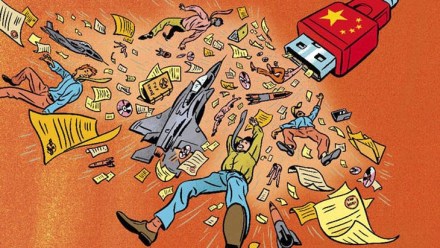
Donald Trump campaigned as an unrepentant protectionist and, on the face of it, he has lived up to his word. He has torn up the US-Pacific free- trade partnership, threatened the European Union with trade wars and imposed tariffs on billions of dollars’ worth of imports from China. As you might expect, Beijing’s retaliation has been immediate — as has the damage. American cherry growers, for example, estimate that they have lost about $85 million after suffering retaliatory surcharges. Farmers are now having to be bailed out by the US government. Yet this week Trump has doubled down, introducing tariffs on another 6,000 Chinese imports. When China responds in kind, he says, America will move on to phase three.

The Irish border was always going to be a sticking point in Brexit talks

From our UK edition

I’m afraid Brexit has always been about Ireland. Perhaps Salzburg will finally, brutally, illustrate that point. The Spectator declared its support for Leave in the final week of the 2016 referendum campaign. The editorial arguing in favour of a leave vote hinged not on free trade, but sovereignty: which is a different way of saying control. It did not mention Ireland at all – but very few did. It was of marginal interest. I read that leader in Downing Street, where I then worked. I did not then, and do not now, agree with the sovereignty argument – but I can respect it. Since EU membership necessarily involves compromising on pure national sovereignty, it follows that a vote to leave offers the opportunity to reclaim some sovereignty.

Full text: Theresa May’s Downing Street statement on Brexit

From our UK edition

Yesterday, I was in Salzburg for talks with European leaders. I have always said that these negotiations would be tough - and they were always bound to be toughest in the final straight. While both sides want a deal, we have to face up to the fact that - despite the progress we have made - there are two big issues where we remain a long way apart. The first is our economic relationship after we have left. Here, the EU is still only offering us two options. The first option would involve the UK staying in the European Economic Area and a customs union with the EU. In plain English, this would mean we’d still have to abide by all the EU rules, uncontrolled immigration from the EU would continue and we couldn’t do the trade deals we want with other countries.

Letters | 20 September 2018

From our UK edition

Stand by your plan Sir: Matthew Parris (‘Must the will of the people always be respected?’, 15 September) asks when it is permissible to seek to overturn a referendum result. He missed a crucial point, which is that the answer depends on the locus of the individual considering the question. To my mind an ordinary citizen is always free to campaign to overturn the result. An MP, possibly, but not when elected on a manifesto to implement said result or who when campaigning in the referendum said they would abide by the result. Any member of a government who has promised to implement the result must clearly do just that.

Portrait of the Week – 20 September 2018

From our UK edition

Home Britain was overwhelmed by Brexitry. Before flying off to an EU summit in Salzburg, Theresa May, the Prime Minister, interviewed on Panorama, said that if Parliament did not ratify the Chequers plan, ‘I think that the alternative to that will be having no deal.’ The International Monetary Fund warned against ‘a no-deal Brexit on WTO terms that would entail substantial costs for the UK economy’. Philip Hammond, the Chancellor of the Exchequer, said: ‘We must heed the clear warnings of the IMF.’ Mr Hammond was said to have suggested in cabinet that Britain might have to remain a member of the EU beyond 29 March next year, but he was ‘slapped down’ by Mrs May.

Trading blows

From our UK edition

Donald Trump campaigned as an unrepentant protectionist and, on the face of it, he has lived up to his word. He has torn up the US-Pacific free- trade partnership, threatened the European Union with trade wars and imposed tariffs on billions of dollars’ worth of imports from China. As you might expect, Beijing’s retaliation has been immediate — as has the damage. American cherry growers, for example, estimate that they have lost about $85 million after suffering retaliatory surcharges. Farmers are now having to be bailed out by the US government. Yet this week Trump has doubled down, introducing tariffs on another 6,000 Chinese imports. When China responds in kind, he says, America will move on to phase three.

The Spectator writers’ party, in pictures

From our UK edition

It's the Spectator's 190th birthday this year and we celebrated with an end-of-summer drinks party in the garden for the writers and cartoonists who make the magazine what it is. In keeping with Fleet Street tradition, there was no food and plenty of booze – and everyone was kept entertained by great music from Charlie Wolfin and his jazz trio.