The Spectator

Barometer | 7 March 2019

From our UK edition

Trolley dollies Virgin Atlantic dropped its requirement for air hostesses to wear make-up at work. What was required of the first air hostesses? — United Airlines introduced hostesses in 1930 on its multi-leg flights from California to Wyoming. They had to be registered nurses, aged 25 or under, weigh no more than 8st 2lb and be no taller than 5ft 4in. — The first UK airline to introduce hostesses was Air Despatch in 1936. They were expected not only to be able to cook and mix cocktails but also to be able to type letters for businessmen on the flight. On a knife edge Is knife crime rising everywhere?
Close the deal

From our UK edition

It is becoming painfully clear that on Tuesday the House of Commons will be asked to vote on an EU withdrawal bill that is almost entirely the same as the one defeated by 230 votes in January. Geoffrey Cox, the Attorney General, is seeking to guarantee that Britain will never be trapped in the backstop. If he succeeds, Brexiteers, whatever their wider misgivings, should hold their noses and vote for Theresa May’s deal. It will be tempting for MPs who are seeking a proper break with the EU to repeat their rebellion. May’s deal means Britain will, for two years, be an EU member in all but name: paying all of the money and obeying the directives while undergoing (at least) two more years of Brexit talks.

Portrait of the Week – 7 March 2019

From our UK edition

Home Two 17-year-olds were stabbed to death in London and Manchester, bringing the number of teenagers killed in knife crime this year to ten. Theresa May, the Prime Minister, said that there was ‘no direct correlation between certain crimes and police numbers’. Next day, Cressida Dick, the Metropolitan Police Commissioner, said: ‘There is some link between violent crime on the streets obviously and police numbers, of course there is.’ The owners of Giraffe and Ed’s Easy Diner are to close 27 of their 87 restaurants. The family that has owned the British sports-car maker Morgan for 110 years is selling it to an Italian venture capitalist firm, Investindustrial. The philosopher A.C.

2395: Concise Crossword

From our UK edition

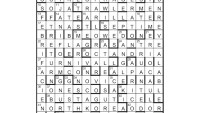
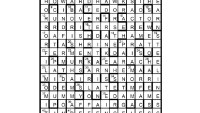
The seven concise clues lead to: heALth centre (3,31), HEARTbreak (9), midrIFf (26), last of alL (40), out of afRIca (14/2), wild WEST (21) and false DAWN (7,24).   First prize Margaret Lusk, Fulwood, Preston, Lancs Runners-up G.H. Willett, London SW19; E.C. Wightman, Menston, W.

Dangerous liaison

From our UK edition

From ‘She was a child and I was a child’ by Kingsley Amis, 6 November 1959: The only success of the book is the portrait of Lolita herself. I have rarely seen the external ambience of a character so marvellously realised, and yet there is seldom more than necessary for the undertone of sensuality… She is a ‘portrait’… devotedly watched and listened to but never conversed with, the object of desire but never of curiosity. What else did she do in Humbert’s presence but play tennis and eat sundaes and go to bed with him? What did they talk about? What did they actually get up to? Apart from a few sentences of elegant hot-book euphemism, we are not even told that.

We need local news if democracy is to thrive

From our UK edition

The announcement this week that Capital, Heart and Smooth radio are cutting back their local news shows might not in itself seem important — they have loyal audiences keen to know what’s happening outside London — but it’s part of a worrying trend. Over the past two decades, important powers have been devolved to regions and local areas, a process that began with Tony Blair’s regional assemblies and picked up with David Cameron’s ‘localism’ agenda. We now have several elected mayors, while local authorities have more responsibility over the NHS. The decisions that affect our lives are more likely to be taken locally than nationally. And yet at the same time the local media that once held local government to account has atrophied.

Letters | 28 February 2019

From our UK edition

It’s now or never Sir: I read with great interest Paul Collier’s suggestion (‘Take back control’, 23 February) that Britain should withdraw Article 50 and remain in the EU as a means of obtaining a better exit at some point in the future. This would be a UK humiliated by the inability of parliament to carry out the clear direction of the voters after nearly three years. A UK so abjectly defeated it would hardly be in any position to build alliances. What EU country would want to endanger its reputation by supporting the country which has been taught such a salutary lesson by the European Commission?

Read all about it | 28 February 2019

From our UK edition

The announcement this week that Capital, Heart and Smooth radio are cutting back their local news shows might not in itself seem important — they have loyal audiences keen to know what’s happening outside London — but it’s part of a worrying trend. Over the past two decades, important powers have been devolved to regions and local areas, a process that began with Tony Blair’s regional assemblies and picked up with David Cameron’s ‘localism’ agenda. We now have several elected mayors, while local authorities have more responsibility over the NHS. The decisions that affect our lives are more likely to be taken locally than nationally. And yet at the same time the local media that once held local government to account has atrophied.

Portrait of the week | 28 February 2019

From our UK edition

Home Theresa May said in the Commons that if MPs voted on 12 March against her draft withdrawal agreement with the EU, they would be able to vote on 13 March on whether to leave the EU on 29 March without a deal and, if that was not supported, could then vote on whether to ask the EU to agree to an extension of negotiations under Article 50. Three cabinet ministers, Greg Clark, Amber Rudd and David Gauke, had earlier said they would defy government policy in order to vote for a delay; they were called ‘kamikaze cabinet ministers’ during a heated cabinet meeting. Mrs May had returned from an EU-Arab League summit at Sharm el-Sheikh, Egypt, where Donald Tusk, the President of the European Council, had said that ‘an extension would be a rational solution’.

to 2394: Opening time

From our UK edition

‘Never eat an oyster unless there’s an R in the month’ (Brewer). Eight unclued lights (in appropriate order) start with abbreviations of the months said to be safe for OSTREOPHAGES (1): SEPTIME (18), OCTANDRIA (26), NOVICE (34), DECELERATING (43), JANIFORM (11), FEBRIFACIENT (13), MARION (19D) and APRICOT (28).

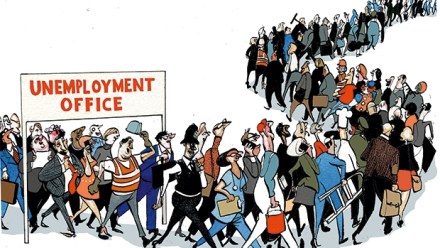
In normal times, the government would be boasting of falling unemployment

From our UK edition

At any other time, news that Honda intends to close its Swindon plant in two years’ time with the loss of 3,500 jobs would have been seen for what it is: a tragedy for those affected, their families and businesses it supports. But the story was used by both sides in the Brexit wars to prove their point. Certain Remainers saw it as proof of what leaving the EU will bring, while some Leavers were almost callous in the way they shrugged off the closure. When news like this is being exaggerated for effect, it’s hard to form a clear view of what’s going on. But through the fog, a pattern is discernible. The car-making industry is in great difficulties worldwide, as Ross Clark argued in our cover piece a fortnight ago.

Letters | 21 February 2019

From our UK edition

The breakaway seven Sir: ‘In both parties there are fools at one end and crackpots at the other, but the great body in the middle is sound and wise.’ One of the magnificent seven speaking this week? Well, the sentiment is surely present day, but rather they are the words of Churchill in 1913 trying to engineer a centrist national movement from ‘a fusion of the two parties’. In those days, it was the Conservative and the Liberal parties, but the history of the middle ground since then augurs poorly not just for the breakaway seven, but for those of us who feel disenfranchised by politics. We can argue who currently represents the devil and who the deep blue sea, but right now neither seems an attractive or palatable home.

Portrait of the week | 21 February 2019

From our UK edition

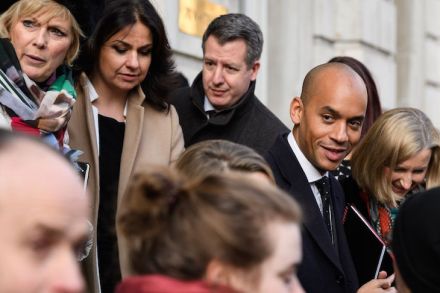
Home Seven MPs resigned from the Labour party and sat in the Commons (next to the DUP) as the Independent Group, or Tig. They were Luciana Berger, Ann Coffey, Mike Gapes, Chris Leslie, Gavin Shuker, Angela Smith and Chuka Umunna. The next day they were joined by Joan Ryan and the following one by three Tories, Anna Soubry, Sarah Wollaston and Heidi Allen. The Labour eight said they objected to anti-Semitism in the party, the security risk should Jeremy Corbyn become prime minister and Labour’s lukewarm attitude to a second referendum. Derek Hatton, who had been the deputy leader of the Militant-controlled council which set an illegal budget in Liverpool, was readmitted to the Labour party after 34 years.

to 2393: Monster Mash-up

From our UK edition

HORROR FILM (1D) ACTOR (15) BORIS (10) KARLOFF (26), né PRATT (21A) died on 2 February 1969. Most famous for THE (7A) MUMMY (37), he was also in HOWARD HAWKS (1A)’s SCARFACE (24).   First prize M.J.

Full text: Heidi Allen, Anna Soubry and Sarah Wollaston’s Tory resignation letter

From our UK edition

Dear Prime Minister. It is with regret that we are writing to resign the Conservative whip and our membership of the Party. We voted for you as Leader and Prime Minister because we believed you were committed to a moderate, open-hearted Conservative Party in the One Nation tradition. A party of economic competence representing the best of British business, delivering good jobs, opportunity and prosperity for all, funding world class public services and tackling inequalities. We had hoped you would also continue to modernise our party so that it could reach out and broaden its appeal to younger voters and to embrace and reflect the diversity of the communities we seek to represent.