The Spectator

Letters | 22 November 2018

From our UK edition

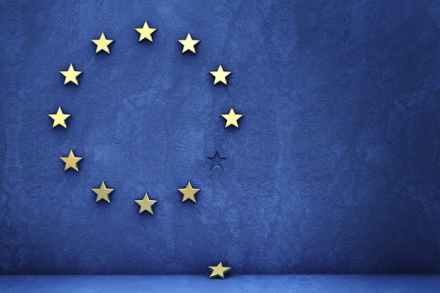
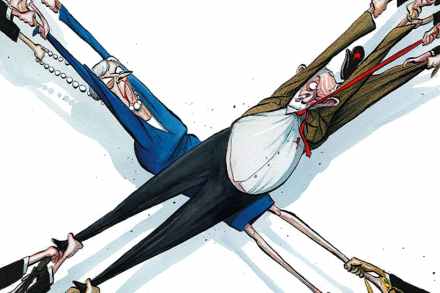
There is no ‘good’ Brexit Sir: David Harper claims to know ‘what the population of the UK voted for’ in the EU referendum (Letters, 17 November), yet no definitive Brexit plan was ever offered by the Leavers. That is one reason why the government, having prematurely triggered Article 50 and recklessly established its ‘red lines’, has been floundering in an attempt at damage limitation. Harper’s disparagement of the single market ignores the fact that any gains from new trade agreements with non-EU countries would be greatly outweighed by the costs of leaving it and would require exports to these countries to grow at a rate that is unfeasible.

Portrait of the Week – 22 November 2018

From our UK edition

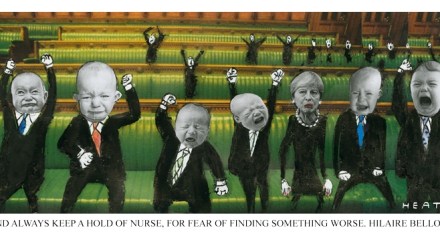
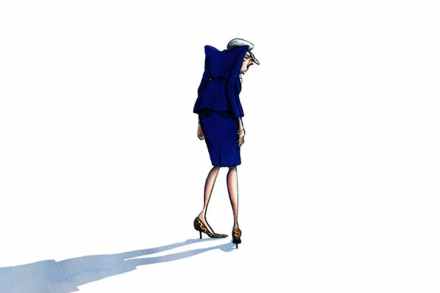
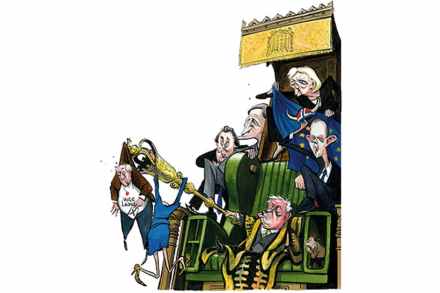
Home Five pizza-eating cabinet ministers — Andrea Leadsom, Penny Mordaunt, Liam Fox, Michael Gove and Chris Grayling — put it about that Theresa May, the Prime Minister, could be persuaded to amend the draft withdrawal agreement with the EU before she signs it at a summit this Sunday. But Mrs May said that she had a deal and was determined to ‘deliver’ it. Having warned that if her Brexit withdrawal agreement was rejected Britain could end up either with no deal or no Brexit, Mrs May went off to Brussels, leaving the new Brexit Secretary, Stephen Barclay, behind.

In place of strife

From our UK edition

France has been in a state of organised uprising this week, with 300,000 motorists taking to the streets and autoroutes to protest against rising fuel taxes. One protester has died, more than 400 have been injured and even more disruption is on the way. Watching Emmanuel Macron, you wouldn’t know it. He travelled to Berlin to commemorate Germany’s war dead, launching for the second time in a fortnight into his proposal for a single European army, and saying it was Europe’s duty to prevent the world ‘slipping into global chaos’ — apparently unable to recognise the chaotic scenes he had left behind.

to 2383: Flagged

From our UK edition

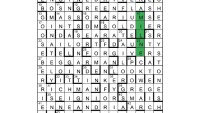
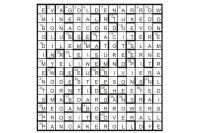
The unclued lights are presenters of BLUE PETER: individually at 39; pairs are 3/2, 7/22, 15A/15D, 15A/17, 25/14, and 32/31, with PETER at 15A doing double duty.   First prize C.E.

Barometer | 15 November 2018

From our UK edition

Hard bitten A British tourist died after contracting rabies from a cat bite in Morocco. Whatever happened to the prominent anti-rabies posters at British ports? — The last case of rabies contracted in the UK was in 1922 but rising cross-Channel traffic led to a fear that infected animals could unwittingly be brought in. — A 1974 regulation introduced long spells of quarantine and those once-familiar posters, then restrictions were eased in the 1990s thanks to pet passports. — The last case of human infection in France was in 1923, but the country was not declared rabies-free until 2001 – a status it lost for two years from 2008. — Worldwide, rabies kills 59,000 people a year, 95 per cent in Africa or Asia and 99 per cent with infections from dogs.

Letters | 15 November 2018

From our UK edition

Hearts as well as heads Sir: Simon Jenkins suggests we should stop remembering and start forgetting about the first world war (‘Don’t mention the war’, 10 November). His beef is with artists in particular, claiming that art ‘drenches history in emotion’. He prefers to read history books. No one would argue against history books, but surely it is not a question of either/or. Artists tell a story in a different way from historians, often to a different audience. They can move people to want to find out more: to look in the box of letters in the attic, to find out about their family connection to the war, to think again about the past and how it impacts on our present. Good history books open our minds to new ideas and perspectives.

Portrait of the Week – 15 November 2018

From our UK edition

Home Theresa May, the Prime Minister, defended a 500-page technical draft of the agreement on withdrawal from the European Union. She met immediate opposition from the Democratic Unionists, from Jacob Rees-Mogg and from Boris Johnson. Mr Johnson’s brother Jo (a Remainer) had earlier resigned as a minister, calling Mrs May’s handling of Brexit a ‘failure of British statecraft on a scale unseen since the Suez crisis’. The BBC reported that several cabinet ministers had expressed doubts about her Chequers plan back in July. Jeremy Corbyn, the Labour leader, insisted that Brexit could not be stopped, but Keir Starmer, Labour’s shadow Brexit secretary, said the option of a new referendum was still ‘on the table’.

A bad deal

From our UK edition

During last year’s general election campaign, Theresa May declared that ‘You can only deliver Brexit if you believe in Brexit’. Unfortunately, her deal proves this point. It was negotiated by a team of people who imagined their job to be a damage-limitation exercise. They did not see Brexit as an opportunity and this is reflected in the terms put before the cabinet. The deal falls far short of what was promised in May’s Lancaster House speech. She said she’d bring back a clean Brexit, taking Britain out of the Single Market, the Customs Union and the jurisdiction of the European Court of Justice. The deal she ended up presenting to her cabinet will, in several important regards, fail all of these tests. But May has conveniently forgotten her tests.

Trial and punishment

From our UK edition

From ‘The Kaiser’, 16 November 1918: What is to be done with the Kaiser? For the question must certainly be answered. If we may venture to judge the feelings of our countrymen, we should say that, though there is no trace of a vindictive hostility towards any of the Germans who may seriously be trying to enter upon a better way of life, there is a very strong feeling that the Kaiser must be brought to trial. This is a perfectly logical conclusion. The British government have announced that all persons proved guilty of offences against the laws of humanity during the war shall be duly punished. It is unthinkable, therefore, that the Kaiser himself should be exempt.

Books of the year – part two

From our UK edition

Daniel Swift I feel as though I came late to the Sarah Moss party. Nobody told me she was this divided country’s most urgent novelist. Her themes: the cycles of history, male absurdity, the forms female subversion may take, in irony, sickness and sacrifice. It helps that she’s absurdly topical, and that she’s funny. Her new book, Ghost Wall (Granta, £12.99), is the shorter, spikier companion piece to her previous novel, The Tidal Zone. It is about ancient Britain and its re-enactment in the present day, and like all the novels I’ve loved best this year, it’s also a parable. Other parables: I was hugely moved by Jesse Ball’s allegorical Census (Granta, £14.

Barometer | 8 November 2018

From our UK edition

It is cricket The use of a baseball expression, backstop, for possible arrangements over the Irish border could upset some Brexiteers. Yet the concept of a ‘backstop’ can be traced to a much more British game, cricket. The use of ‘backstop’ for what we would now call a wicket keeper was first recorded in the Oxford Dictionary in 1819. Seventy years later it cropped up in baseball, as a name for a fence rather than a person. When, in 1890, baseball players started calling the catcher a backstop too, the fence became, in effect, a backstop to the backstop. Big swims Ross Edgley became the first person to swim round the British coast, covering 1,791 miles in four months, starting and finishing in Margate.

Lessons from America

From our UK edition

Donald Trump can, at the very least, claim to have killed off political apathy. Americans this week voted in greater numbers than in any such elections of the past half-century — but it does not follow that this is an encouraging development. The midterm results were a blow for Trump, but not much of a blow. American politics is developing along the lines with which we are familiar: a cultural war, where voters are enthused not so much by what candidates have to say but because of tribal hatred of the opposition. President Trump has proved an even more incendiary figure than candidate Trump: he has not stopped campaigning or using Twitter to set the news agenda. His enemies have not stopped rising to his bait.

Portrait of the week | 8 November 2018

From our UK edition

Home Theresa May, the Prime Minister, set off for St Symphorien Military Cemetery in Mons, from which she was to join President Emmanuel Macron to lay wreaths at Thiepval for the centenary of the Armistice. Jeff Fairburn resigned as chief executive of Persimmon, the housing company, after his £75 million bonus attracted public comment. Marks & Spencer reported falling clothing and food sales. The New Look fashion chain increased the number of shops it planned to close from 60 to 85. British Airways passengers on a flight from Orlando, Florida, scheduled to reach London eight hours later, spent 77 hours on the journey, including an opportunity to sleep on the floor at JFK airport in New York.