Terry Barnes

Terry Barnes is a Melbourne-based contributor for The Spectator and The Spectator Australia.

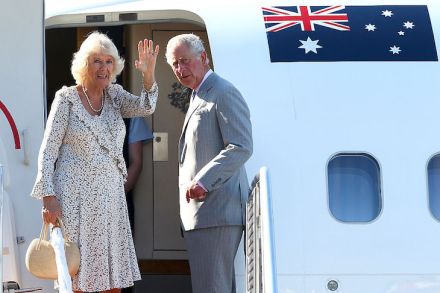
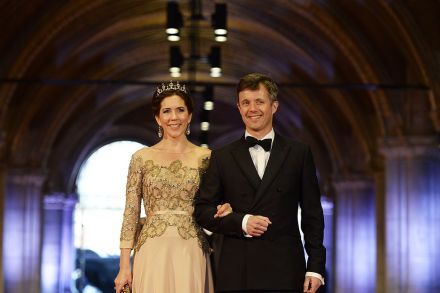
Aussie republicans are fawning over Denmark’s new queen

From our UK edition

According to opinion polls, more Australians want to ditch the country’s ties with the British monarchy than retain it. The Labor government of prime minister Anthony Albanese includes an assistant minister for the republic. King Charles is being dropped from Australian banknotes. Most major Australian media outlets, including News Corp’s flagship newspaper the Australian, and especially the national broadcaster, the Australian Broadcasting Corporation, are no supporters of the King. The ABC last year notoriously used its coronation coverage to debate the future of the monarchy and to assert its direct responsibility for the greatest stain on Australia’s history: the suffering and maltreatment of Aborigines in the colonial period.

Why is Australia turning its back on Israel?

From our UK edition

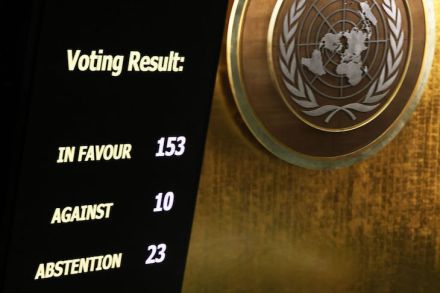
In the days after the 7 October attack on Israel, Australia vowed to stand with Israel. It appears to have forgotten that pledge. When the United Nations General Assembly voted in October in favour of an immediate humanitarian truce in Gaza, Australia abstained because the motion failed to explicitly mention, let alone condemn, Hamas. James Larsen, Australia’s representative to the UN, said he could not support the resolution because its failure to name the 7 October culprits meant it was 'incomplete'. Last night, the UN General Assembly again voted resoundingly in favour of a ceasefire. This time, Australia abandoned its principles, broke with the United States and the United Kingdom, and supported the motion – despite it still failing to condemn Hamas.

The crushing defeat of Australia’s divisive Voice referendum

From our UK edition

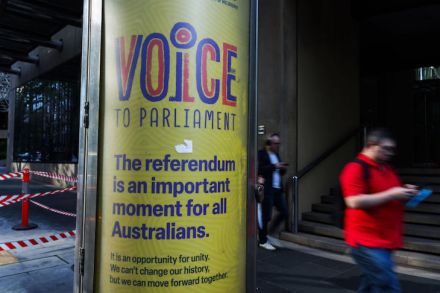
Australia’s Prime Minister, Anthony Albanese, urged his fellow Australians to take ‘the opportunity to make history’ today. And they did, but not in the way that Albanese had so fervently hoped. His government’s referendum, which aimed to change the country’s constitution to entrench an Aboriginal and Torres Strait Islander advisory voice to Australia’s parliament and executive government, was defeated by a majority of voters in all Australian states. The final margin, 59 per cent to 41 per cent between Yes and No, was not just decisive. It was a landslide of resounding proportions, almost a mirror reversal of the polled support for the Voice as recently as April.

Australia’s Voice referendum is tearing the country apart

From our UK edition

Almost 250 years after European settlement, many of Australia’s Aborigines still face appalling socio-economic disadvantages compared to fellow Australians: lower life expectancy and school completion but high welfare dependency and incarceration rates, domestic violence, and endemic unemployment, truancy, alcohol and substance abuse. These are sad realities in such a prosperous nation as Australia. Government statistics show overall per capita spending on an Indigenous person – about three per cent of the total population – is higher that for other Australians, funding health, welfare, education and employment programmes in a national effort known as 'Closing the Gap'. Yet despite the billions spent over decades, that gap remains intractably wide.

Sydney’s cocaine wars are spiralling out of control

From our UK edition

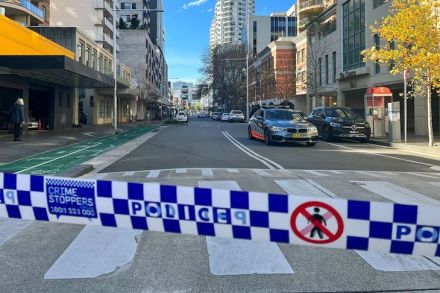
The illicit moment of surreal euphoria from snorting a line of cocaine comes at a heavy price of misery and death for so many others – a dreadful toll that is plain to see on the streets of Sydney. The competition between criminal gangs for the city's drug users has become deadly on a scale not seen in Australia for years. The latest victim, David Stemler, died in a hail of bullets in the early hours of Thursday. Stemler was the 23rd person to lose his life in Sydney's drug wars over the last two years. Just why demand for cocaine has skyrocketed in Australia isn't clear. It's not as if this dangerously addictive recreational drug has just hit our shores.

John Howard is right about British colonialism in Australia

From our UK edition

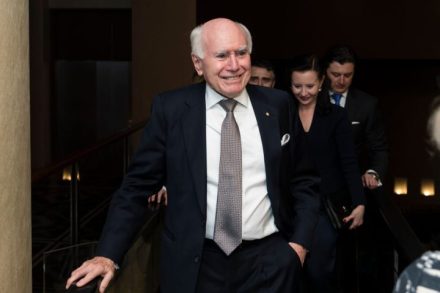
Almost sixteen years after he lost office and his own parliamentary seat, former Australian Liberal prime minister John Howard is still an influential political figure. Idolised by the right and demonised by the left, when Howard speaks, Australians still take notice. When Howard spoke to the Australian newspaper to mark his 84th birthday this week, he told home truths as he sees them, in his trademark plain language style. The focus of Howard's interview was the Australian Labor government's drive to change the nation's constitution to give Aborigines a race-based 'Voice to parliament'.

Australia’s Commonwealth games disgrace

From our UK edition

In world sport, the Commonwealth games are a bit of a sideshow. In swimming and athletics, at least, they are seen as something of a mid-cycle training event for the Olympics. Australians, however, love the Commonwealth games. Not just because they are about friendly sporting rivalries and promote goodwill between the nearly 60 nations of the Commonwealth and Britain's remaining dependencies. Nor because they are one of the few remaining institutions that justify the Commonwealth's active existence.  But because Australia wins big, every time. With only England as a serious rival for intra-Commonwealth supremacy, Australian teams and athletes are guaranteed a shower of gold medals, in a way the Olympics nor any other major sporting event can rival.

Ben Roberts-Smith and the murky debate over accountability in war

From our UK edition

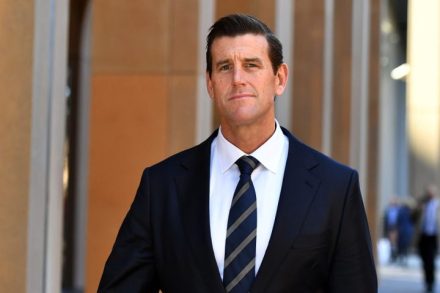
Today in Sydney, Australia's most decorated soldier, former Special Air Services corporal Ben Roberts-Smith VC, was found by a civil court, on a balance of probabilities, to be a likely war criminal, a murderer, a liar and a bully. Roberts-Smith is a huge man, towering over all around him. When he was presented alongside other Victoria Cross winners to the late Queen some years ago, he loomed over her by a good eighteen inches.  Can we ever fully understand what goes on in people's minds in war? His reputation as a battlefield soldier was fearsome. The mere sight of him charging towards the enemy must surely have intimidated the Taliban machine gun position that he single-handedly overran in the action for which he deservedly won his Victoria Cross.

Trudeau’s ‘coronation gift’ is just lip service to the monarchy

From our UK edition

Cynically dressed up as a coronation-related gift to the Canadian nation, just days after the coronation, the country’s leader Justin Trudeau has unveiled a Royal Crown of Canada.   Trudeau is paying lip service to the monarchy Canada shares with Britain and the King's other realms Not a physical gold and jewelled crown, mind you, but a virtual crown, designed to replace St Edward's crown – the very crown placed on the King's head a week ago – on Canada's coat of arms, official documents, and armed forces and Mountie badges and insignia.  This new Canadian crown replaces the crosses and fleur-de-lys of St Edward's Crown with stylised maple leaves. The rim is festooned by blue wavy line intended to symbolise native Canadians' kinship with the sea and sky.

RIP Barry Humphries

From our UK edition

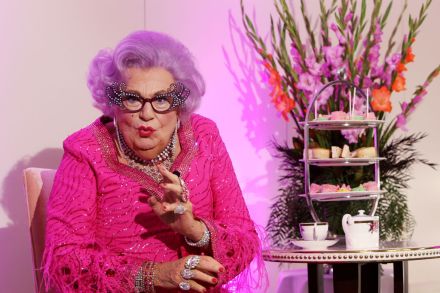
It was not just Barry Humphries who died on Saturday. It was that towering skewerer of pomposity and humbug, and gate-crasher of Royal boxes, Dame Edna Everage. It was Australia's roving cultural attaché and Australian Minister for the Yartz, Sir Les Patterson. It was pathetic Melbourne suburban pensioner, Sandy Stone. It was colonial hellraiser Barry McKenzie. It was a host of other characters, who burst forth from Humphries's determination to be different in a world that worshipped conformity, and his witheringly sharp eye for the absurdities of the human condition.  Like another hugely-talented man of many characters, Peter Sellers, Humphries kept the real him from most of the wider world.

Could Donald Trump tank Aukus?

From our UK edition

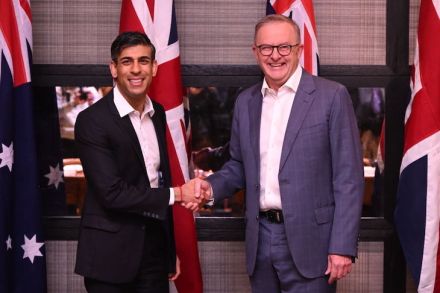
There are few surprises in the Aukus nuclear-powered submarine programmed announced by Rishi Sunak, his Australian counterpart Anthony Albanese, and US president Joe Biden overnight. Australia will get its fleet of nuclear submarines. The United States will supply Virginia-class boats to Australia for the 2030s; US Virginias and Royal Navy Astute-class boats will be stationed in Western Australia later this decade. And the three partners, under British leadership, will develop a new 'Aukus-class' of nuclear submarines for the 2040s and beyond. It's a hugely ambitious programme, and geopolitically astute. A risk-averse Sir Humphrey Appleby might have even called it 'courageous'.

Is Australia up to the Aukus challenge?

From our UK edition

One hundred miles or so south of Sydney, lies tranquil Jervis Bay. On its shores, largely reclaimed by the bush, are the abandoned foundations of a large nuclear power station. When it was built in the late 1960s, it was intended to be the first of a network supplying nuclear-generated electricity to the eastern Australian grid. More than fifty years on, this is all that remains of Australia's only attempt to establish a civil nuclear industry, every attempt since then to revive the possibility stymied by anti-nuclear activists and politicians lacking the courage to challenge them. Those doomed foundations symbolise the challenge to Australia to fulfil its central part of the Aukus alliance between her, the United Kingdom, and the United States.

Do Fifa really want Saudi Arabia to sponsor the women’s world cup?

From our UK edition

In July and August, Australia and New Zealand are hosts of the 2023 Fifa Women’s world cup.   It could not be a better opportunity for the sport. Football in Australia at the professional level lags well behind Australian Rules and rugby league when it comes to profile and broadcast attention. And in New Zealand the round-ball game has a permanently uphill challenge to compete with the unofficial state religion, rugby. The tournament is therefore a huge deal for the two host associations, and the culmination of years of planning and hard work.  But it is still Fifa’s tournament, not Australia and New Zealand's, and Fifa is a law unto itself.

Why is Australia’s bank snubbing King Charles?

From our UK edition

Traditionally, the reigning monarch has appeared on the lowest denomination of Australia’s banknotes. It is a practice that harks back to the pound notes of pre-decimal days. It was even maintained by the Reserve Bank when the one-dollar note was replaced by a gold coin in the 1980s, and the Queen took the colonial philanthropist Caroline Chisholm’s place on the $5 note. This was controversial at the time, but only briefly. Before long, the Queen's place on the $5 note was fully accepted. This remained so until her death in September. Today, however, our central bank showed its tin political ear with its announcement that the image of the late Queen, Elizabeth II, will not be replaced on Australia's $5 note by our new King, Charles III.

Why Australia can’t forgive Novak Djokovic

From our UK edition

So, Novak Djokovic has won the Australian Open tennis tournament – again. Djokovic was never seriously challenged at any stage, beating Stefanos Tsitsipas in straight sets in the final. In winning his 22nd Grand Slam title, drawing level with Spanish maestro Rafael Nadal, Djokovic also had his revenge on Australia – and Australians. Australia is, of course, the country that deported him for being unvaccinated in 2022. As recently as last month, polls indicated that just one in three Australians wanted Djokovic to come back this year. This clearly motivated the Serbian star: he wanted to prove his detractors wrong and, in his eyes, he did.

Who’s killing Australia Day?

From our UK edition

Australia Day was once a big deal Down Under, but in recent years the annual celebration has been somewhat muted. Take the Australian Open, currently running in Melbourne. The organisers have dedicated days throughout the tournament for a range of causes: there has been a Pride day and a day celebrating indigenous art and culture. But although the semi-finals are being played today, on Australia Day itself, there will be no recognition of the country’s national day. ‘We are mindful there are differing views, and at the Australian Open we are inclusive and respectful of all,’ Tennis Australia said in a statement. Tennis fans aren’t the only ones missing out: Victoria’s state government has quietly axed Melbourne’s Australia Day parade.

Has Scott Morrison become Australia’s Richard Nixon?

From our UK edition

In May 1940, Winston Churchill was not only appointed Prime Minister but Minister for Defence. In doing so, Churchill ensured that he, and not the three traditional cabinet secretaries traditionally responsible for the armed services, had ultimate responsibility for Britain’s war effort. This was an open, and very public, move which was welcomed and praised at a time Hitler was on Britain's doorstep. In March 2020, the then Australian prime minister, Scott Morrison, found himself leading his own national battle – this time against the Covid-19 pandemic.

Why did the new Australian PM insult the Queen?

From our UK edition

Timing is everything in politics. This week in Canberra a new junior minister, an obscure Australian Labor Party MP named Matt Thistlethwaite, was sworn in by the Queen’s representative, Governor-General David Hurley. His portfolio: Assistant Minister for the Republic. A minister of the Crown sworn to bring about the demise of the Crown in Australia. When Australia’s new strongly left-wing prime minister and admiring friend of former Labour leader Jeremy Corbyn, Anthony Albanese, announced his government would include a minister dedicated to making Australia a republic, his timing was calculated and deliberate.

How Scott Morrison was defeated in Australia

From our UK edition

‘Scott Morrison is empathetic – without the “em”.’ Those words, spoken on Friday by the Labor party frontbencher Jason Clare, on a national breakfast programme, perfectly encapsulated how Scott Morrison was defeated in the Australian election on Saturday. Morrison wasn’t saved by his economic management (this Friday Australia’s unemployment rate was confirmed as 3.9 per cent, the lowest in 50 years). Nor by the fact that Australia’s post-Covid economic bounce-back was one of the biggest and quickest in the OECD.

Could Australia’s answer to Corbyn become PM?

From our UK edition

While the main electoral attraction of the moment is the French presidential showdown between Emmanuel Macron and Marine Le Pen, it is not the only significant election underway in the western world. On 21 May, Australia goes to the polls. The contest is between the nominally centre-right coalition of the Liberal and National parties led by prime minister Scott Morrison, and the Australian Labor party led by a long-term, socialist left-wing MP, Anthony Albanese. On the face of it, Morrison should be re-elected on his record. In his three-year term, he has seen Australia through natural disasters, including the massive bushfires affecting the south-east of the country in 2019 and early 2020, and just now floods inundating large parts of New South Wales and Queensland.