Terry Barnes

Terry Barnes is a Melbourne-based contributor for The Spectator and The Spectator Australia.

The city finally cracking down on the e-scooter menace

From our UK edition

E-scooters are the bane of modern civilisation. They are the stealth bombers of our pavements. They are a silent danger to those who ride them, and a threat to life and limb for pedestrians and cyclists forced to share paths and roadways with them. They give accident and emergency departments unwanted business, thus imposing a significant social and financial cost on the wider community. There is nothing worse than being out for a walk with your young children in a park or on a shared pathway, only to be nearly mowed down by a speeding e-scooter rider you never heard coming, who sounded no warning, and who obviously doesn’t care about anyone else. Across the West, however, e-scooters are being promoted as a clean, green mode of personal transport.

Does Australia have a crocodile problem?

From our UK edition

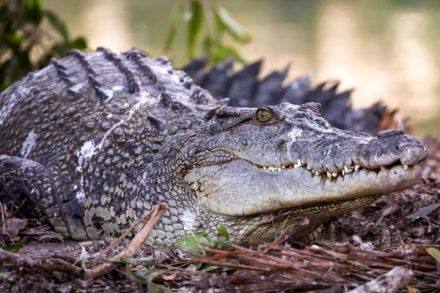
During the cold months of July and August, many southern Australians head north to warmer climes. A favourite destination is north Queensland, with its jungles, rainforests, mangrove swamps and rivers. And saltwater crocodiles. David Hogbin, a 40-year-old father-of-three and GP from New South Wales, was one such sun-seeking tourists. He travelled north with his family on holiday, but will never return home. After falling into a river when a path he was walking on gave way, he was eaten by a crocodile. Crocodile attacks in Australia are big news because they’re so rare Hogbin's death is tragic, not least because he leaves behind a young family, but because this incident last Saturday was a desperate mishap. It is hard to see how he could have avoided his fate.

The everyman immortality of Jack Karlson

From our UK edition

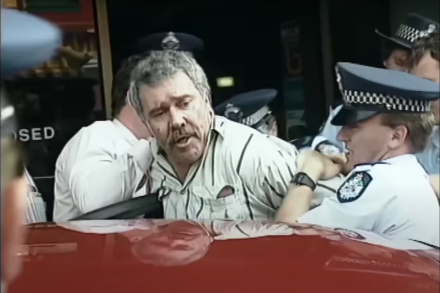
Jack Karlson, whose death this week aged 82 has been reported in Britain and around the world, was an Australian small-time crook, prison escaper and colourful character who had a tough and difficult life. He was also, however, the reluctant star of a 1991 TV news report that later became an internet sensation. Back then, Karlson was having a bite to eat in a local Chinese café in suburban Brisbane, when, like Monty Python’s Spanish inquisition, a posse of Queensland police suddenly and unexpectedly swooped to arrest him. Thanks to a tip-off to a journalist, it was all captured on camera.

Many Australians are revolted by Julian Assange’s return

From our UK edition

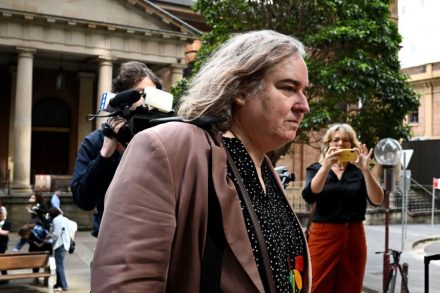
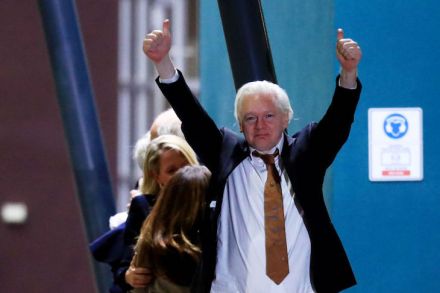
Convicted spy Julian Assange has come home to Australia. Assange’s chartered private jet touched down in Australia’s capital, Canberra, early in the evening local time to a hero’s reception. That the plea-bargaining deal ensuring his freedom was executed in a remote courthouse on the American territorial island of Saipan, in the isolated western Pacific but satisfying American demand that Assange be convicted on American territory, added a bizarre touch of the exotic to the whole tawdry business. It was a rubber stamp stopover en route from London to Canberra. Assange is a figure of whom we are ashamed to call our own It’s appropriate the deed was done on Saipan.

Why is Australia culling wild horses?

From our UK edition

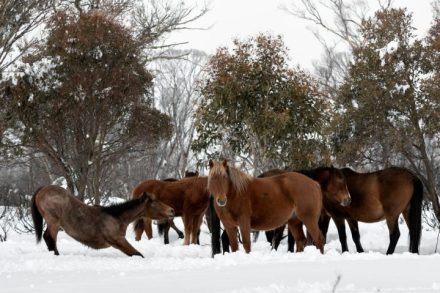
A government-sanctioned programme to cull the brumby mobs of wild horses in Australia’s High Country has become a hot political issue in New South Wales and Victoria, the two states whose border is straddled by the Snowy Mountains. Immortalised in Australian literature through the famous 1890 bush ballad ‘The Man from Snowy River’, by the poet and journalist Andrew ‘Banjo’ Paterson, to many, these wild horses represent a living part of the Australian national legend.  Set in the Snowy Mountains, the poem tells the story of a posse of riders who chase down a mob of wild horses – brumbies – to recapture an escaped racehorse colt who has joined them. It's a story that triggers pride in a great many Australians.

Australia’s Covid honours farce

From our UK edition

Whatever one thinks of all that happened in the Covid years, and how the experience scarified so many and even compelled us to question the solidity of democratic institutions and values throughout the West, most of us simply want to forget. The Covid time is like a relationship gone bad: it’s easier to cope by burying it it and moving on. In Australia this week, however, unpleasant reminders of the dark Covid time resurfaced in an unexpected place: the national King’s Birthday honours list. What a face-slapping insult Andrews’s gong is to Victorians Since dispensing with imperial honours several decades ago, the highest civilian honour here is to be appointed by the King as a Companion of the Order of Australia.

Victoria’s absurd new minister for men’s behaviour

From our UK edition

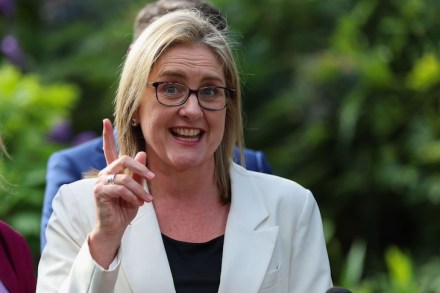
Australian states like to advertise themselves on car number plates with a catchy slogan capturing what they see as their self-image. My home state of Victoria’s slogan is ‘The Place to Be’. When it comes to identity politics and the state government’s obsession with progressive causes – to the point of being extremist – Victoria is very much Australia’s place to be.

Elon Musk has won a victory for free speech in Australia

From our UK edition

In the unedifying clash of heads between billionaire Twitter/X owner, Elon Musk, and Australia’s e-safety commissioner Julie Inman Grant, there could only be one rightful winner. Elon Musk. On Monday, Musk’s X succeeded in having a temporary injunction thrown out by Australia’s Federal Court preventing it and Mark Zuckerberg’s Meta from posting images of last month’s Sydney stabbing. An Armenian Orthodox bishop, Mar Mari Emmanuel, was attacked in his church, allegedly by a religiously radicalised youth, in April. The incident was captured by the church’s own livestream of the event and beamed across the internet: the footage is disturbing but already there for the world to see, if anyone chose to see it.

The truth about Australia’s controversial crocodile cull

From our UK edition

The Northern Territory News, Darwin’s daily paper, is known worldwide for its front pages with headlines so cleverly lurid that they outshine the efforts of the Sun’s Kelvin McKenzie in his editorial heyday. Over the years, the newspaper has run front pages highlighting everything from UFO and mythical beast sightings to the bizarre behaviour of Territorians, who, if you go by the NT News, are no strangers to acting oddly. But there’s one hot topic always guaranteed a NT News front page when it comes up: crocodiles. ‘I love crocodiles and anytime we have a good one we put it on the front page,’ a former NT News editor, Matt Williams, once said. ‘When we get a good crocodile story, we actually sell more papers.

Australia doesn’t need a Ministry of Truth

From our UK edition

Two unrelated acts of stabbing violence, first the random murderous rampage of a knife-wielding man in Sydney’s Bondi Junction, followed by the livestreamed knife attack on an Assyrian Christian bishop in his church, have led to a crackdown on freedom of expression in Australia. Misinformation and disinformation, our politicians have concluded, caused these grim incidents. Unpalatable as they are, online outpourings of bile and deliberate falsehood need to be seen to be disbelieved. Australia’s Liberal party, supposedly representing the country’s centre-right voters, has indicated it will back Australia’s Labor government in imposing a legislated regime to ‘combat’ misinformation and disinformation online.

Australia is in danger of tearing itself apart

From our UK edition

In her new book, Liz Truss says she likes Australia and Australians. The country is, she says, ‘like Britain without the hand-wringing and declinism’. But had Truss cared to scratch beneath the surface on her visits Down Under, she might have realised that Australians today are anything but the laid-back, easygoing, and ‘she’ll be right’ society of our national mythology. Following the Hamas atrocities of 7 October, things have only got worse Far from it. Australians are struggling to keep a lid on social, political, ethnic and religious tensions reflected in their society.

The Sydney church terror attack is a wake-up call for Australians

From our UK edition

Sydney has been rocked by another stabbing rampage – just days after six people were murdered in a knife attack in the city's Bondi Junction. A bishop of the Assyrian Orthodox Church, Mar Mari Emmanuel, was knifed at the altar during the incident yesterday afternoon in the working-class suburb of Wakeley. Several other parishioners were also injured as they sought to disarm the attacker. Police have arrested a teenager and are treating it as a terrorist attack. The horror was broadcast on the livestream of the Assyrian Christ The Good Shepherd Church, meaning that thousands of followers witnessed the attack. News of the stabbings spread fast among the local Assyrian community, and an angry mob descended on the church.

The unimaginable tragedy of the Sydney stabbing attack

From our UK edition

Bondi Junction, in Sydney's affluent eastern suburbs, is well known to many British backpackers and tourists. Close to the city's most famous beaches, it is where locals and visitors go to shop, enjoy the many cafes, or catch the train to town. The sprawling Westfield shopping complex there is a popular place. This Saturday afternoon, a pleasant autumn day, it was filled with shoppers, and people catching up with friends over coffee or just passing the time. None of them would have expected a rampage by a seemingly ordinary man, dressed in an Australian rugby league team jersey and shorts, wielding a knife. 'He looked like a man on a mission', an eyewitness said. What that mission was, no one yet knows.

Australia’s activist governor-general spells trouble for the royals

From our UK edition

While the King and the Princess of Wales both battle cancer, the business of monarchy goes on. In the realms of the Commonwealth that includes ensuring the Crown is represented in each respective constitutional government. In Australia, though, the choice of candidate for governor-general is far from reassuring news for the monarchy. Samantha ‘Sam’ Mostyn, an activist and lawyer, was named by Australian prime minister Anthony Albanese as the country’s 28th governor-general. ‘Ms Mostyn is known for her exceptional service to the Australian community. She is a businesswoman and community leader with a long history in executive and governance roles across diverse sectors’, said Albanese.

The great shame of Australia Day

From our UK edition

Captain James Cook has fallen. Not on the shore of Hawaii’s Kealakekua Bay on Valentine’s Day 1779, but in the Melbourne bohemian bayside suburb of St Kilda. His statue was sawn off at the ankles in the dead of night with an angle grinder; his plinth daubed in a blood-red, anti-colonial slogan. The culprits haven’t been caught yet. Their act of vandalism happened on the eve of Australia Day, celebrated on 26 January as the anniversary of the day in 1788 when a British penal settlement was established by a motley crew of seamen, marines and convicts, which ultimately became the great city of Sydney and the birthplace of modern Australia.

How Australia became obsessed with land acknowledgments

From our UK edition

If you attend almost any public meeting or event in Australia these days, you’ll be greeted – some would say confronted – by a mandatory statement before it starts. Even the nation’s parliament now starts the day with this statement, ahead of the centuries-old ritual of reciting the Lord’s Prayer. Known as the Acknowledgment of Country, it is a now all-pervasive ritual of Australian life. Generally, it uses these words: A whole industry has sprung up around Aborigines being hired by event organisers to stage Welcomes to Country We meet here today on the lands of the traditional owners, the (Aboriginal tribe) people, and acknowledge their elders past and present.

Why is Australia burying helicopters that Ukraine wants?

From our UK edition

What do you do if you have dozens of combat helicopters you don’t want? If you’re the Australian government, you dismantle them and turn them into landfill. That’s the imminent fate of 45 Australian Army and Royal Australian Navy MRH-90 Taipan helicopters, grounded since a crash in Queensland last summer and withdrawn from service. Australia has had something of a troubled history with its European-UK designed MEH-90s, the Taipan being an adaptation of the NH-90 type currently in service with a number of Nato countries. Severe procurement and operating cost blowouts, mechanical failures, high maintenance costs, difficulty in obtaining spare parts, and several whole-fleet groundings have plagued the aircraft.

Australia sees sense on its plan to ditch the monarchy

From our UK edition

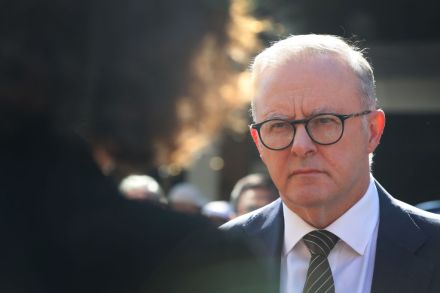
Australia's government has been determined to ‘do a Barbados’ and ditch the British monarchy for an Australian republic with an Australian president. But now, it seems, prime minister Anthony Albanese has lost his nerve. In the week that the first Australian coins of Charles III’s reign entered general circulation, and it was confirmed the King and Queen will visit Australia later this year, Albanese and his government scuttled away from his party’s proclaimed republican intentions with a speed that makes even Rishi Sunak look decisive and in control.

Aussie republicans are fawning over Denmark’s new queen

From our UK edition

According to opinion polls, more Australians want to ditch the country’s ties with the British monarchy than retain it. The Labor government of prime minister Anthony Albanese includes an assistant minister for the republic. King Charles is being dropped from Australian banknotes. Most major Australian media outlets, including News Corp’s flagship newspaper the Australian, and especially the national broadcaster, the Australian Broadcasting Corporation, are no supporters of the King. The ABC last year notoriously used its coronation coverage to debate the future of the monarchy and to assert its direct responsibility for the greatest stain on Australia’s history: the suffering and maltreatment of Aborigines in the colonial period.

Why is Australia turning its back on Israel?

From our UK edition

In the days after the 7 October attack on Israel, Australia vowed to stand with Israel. It appears to have forgotten that pledge. When the United Nations General Assembly voted in October in favour of an immediate humanitarian truce in Gaza, Australia abstained because the motion failed to explicitly mention, let alone condemn, Hamas. James Larsen, Australia’s representative to the UN, said he could not support the resolution because its failure to name the 7 October culprits meant it was 'incomplete'. Last night, the UN General Assembly again voted resoundingly in favour of a ceasefire. This time, Australia abandoned its principles, broke with the United States and the United Kingdom, and supported the motion – despite it still failing to condemn Hamas.