Tanya Gold

Tanya Gold

Tanya Gold is The Spectator's restaurant critic.

The unconscious savagery of the Rolls-Royce Spectre

From our UK edition

Most Rolls-Royce drivers have four cars or more: this is a car for leisure. They drive their Rolls-Royces perhaps 3,000 miles a year: I would never do that. I would treat it like any other car. Lawrence of Arabia had nine armoured Rolls-Royce Silver Ghosts for his campaign in Arabia. I would go to the supermarket in it, muddy the doors, let brambles scratch it. Before I drove Rolls-Royces I didn’t like them because I didn’t like the people who drove them. Now the fact they drive them is the only thing I like about them.

‘Well-priced and skilful’: Masala Zone, reviewed

From our UK edition

There are cursed restaurants and cursed women, and this makes them no less interesting. One is Maxim’s in Paris, which knows it – it gaily sells ties in a charnel house decorated for the Masque of the Red Death – and another is the Criterion at Piccadilly Circus, which doesn’t. One day it might meet its destiny, which is to be an Angus Steakhouse (this might lift the curse, the Angus Steakhouse has its own magic) but it isn’t there yet. Restaurant after restaurant favours hope over experience here: Marco Pierre White (Mark White) passed through, spilling acronyms about. I suppose it serves it right for being in the neo-Byzantine style. Don’t restaurant developers watch horror films?

Fine food in a fine restaurant: Origin City reviewed

From our UK edition

Origin City is a good name for this restaurant, whether it knows it or not. It is at West Smithfield, the only surviving wholesale market in the City of London (I do not count Borough, which is a snack shack impersonating a greengrocers and is only spiritually in the City). Covent Garden sells face cream – Eliza Doolittle didn’t need it – and Billingsgate awoke one morning to find itself on the Isle of Dogs. Somehow the cows hung on in West Smithfield. We owe them a lot but I would say that, I am a restaurant critic. Somehow the cows hung on in West Smithfield. We owe them a lot This is the most interesting part of the City of London: St Bartholomew the Great, of God and Four Weddings and a Funeral – the one where Charles was punched, fairly – and Cloth Fair.

Is Israelophobia the latest form of anti-Semitism?

From our UK edition

Israelophobia addresses an anti-Semitic mutation ‘evolving out of reach’: the demonisation of the Jewish state. Its author, Jake Wallis Simons, is the editor of the Jewish Chronicle. His antennae are primed for anti-Semitism and he finds plenty of it. In France, 60 per cent of religious abuse is directed at Jews and in Germany anti-Semitic incidents have doubled in a decade. In his telling, Israelophobia – Leon Pinsker’s Judeophobia transformed – is the descendant of the deicide myth, the blood libel and the Shoah. Hassan al-Banna, the founder of the Muslim Brotherhood, was a fanatical admirer of Hitler You can hear it in the quality and narrowness of the discourse, he notes. Liberal Zionism is considered no less murderous by anti-Zionists than Greater Israelism.

As gaudy as Versailles: The Duchess of Cornwall in Poundbury reviewed

From our UK edition

Poundbury is the King’s idealised town in Dorchester, built on his land to his specifications: the town that sprung out of his head. (‘My dream,’ says Harry Enfield in The Windsors, ‘was always to build a mixed-used residential suburb on the outskirts of Dorchester.’) It is so fascinating that I dream, briefly, of moving in for the completeness of the vision – who doesn’t want to live inside art? – and the portrait of the British class system in housing. Here it is, at last, laid out like a textbook: journey’s end. We order via app and pay in advance: there is a shortage of what tabloids call flunkeys It is becalmed on a Sunday evening, and sun saturated: there is almost no one about. Perhaps the residents are indoors, enjoying the lushness of their fittings.

Bruton is suddenly the place to be – and I have a theory why: At the Chapel reviewed

From our UK edition

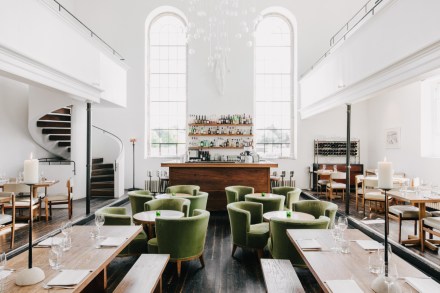
At the Chapel, Bruton, is a restaurant and hotel in a former chapel in Bruton. This was once an ordinary town in Somerset, with a note in the Domesday Book, a ruined priory and a famous dovecote on a hill. Bruton is known for a flood in 1917 – it was the second-largest one-day rainfall measured in the UK – but another calamity was coming. In 2014 the art gallery Hauser & Wirth, with branches in London, Zurich and New York, decided it needed a premises in Bruton, and a restaurant called the Roth Bar and Grill. There is also an Instagram-friendly farmhouse to rent on this site. When I toured it, the price was £666 a night, including the art and, I hope, a food gift basket and, I suspect, an ancient native Briton graveyard.

A Margherita in Tolkien’s Middle-earth: Pizza in the Courtyard at Sarehole Mill reviewed

From our UK edition

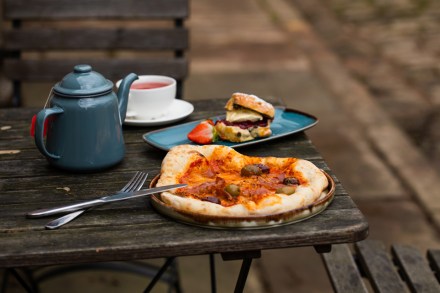
Sarehole Mill is four miles south of the centre of Birmingham. If this were a fairy tale, and it should be, it would follow that Birmingham swallowed Sarehole a century ago, like a dragon and its prey. I like Birmingham: I like its optimism, its violence and its multiplex, which can match any American Midwest mall in competitive dystopia and idiocy. Birmingham has energy, and that swallowed Sarehole, but unfortunately for Birmingham, there was a writer who cared: John Ronald Reuel Tolkien.Sarehole was his childhood palace, and now, more reluctantly I would imagine, his memorial pizzeria.

Spectator Out Loud: Robert Tombs, Jamie Blackett and Tanya Gold

From our UK edition

22 min listen

This episode of Spectator Out Loud features Professor Robert Tombs on Canada's willingness to believe anything bad about its own history (00:55); the farmer Jamie Blackett on the harms of wild camping (12:10); and Tanya Gold on the reopening of Claridge's Restaurant. Presented and produced by Cindy Yu.

‘Thinks of the diner, not the chef’: Claridge’s Restaurant, reviewed

From our UK edition

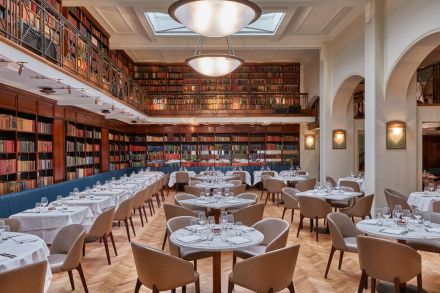
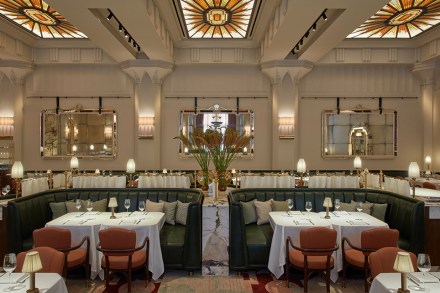
The BBC made a very odd documentary about the renovation of Claridge’s: The Mayfair Hotel Megabuild. They filmed, agog, as the hotel grew eight new storeys – three above, and five below – between 2014 and 2021 while staying open: guests slept and ate, unaware of ‘Narnia doors’ to the building site. (That Narnia is where guests aren’t indicates what Claridge’s employees cannot put into words without spontaneously combusting.) Labourers dug the basement by hand and impersonated the Artful Dodger when management toured. The BBC described the new penthouse at length without mentioning that it is gross, with a grand piano in a glass box on a terrace like a Richard Clayderman-themed nightmare. A roof was assembled off-site and stuck on as for a doll’s house.

Big Little Bavaria on Thames: Bierschenke bierkeller reviewed

From our UK edition

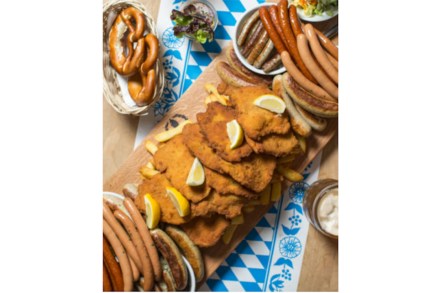
I am not sure the vast Bierschenke bierkeller in Covent Garden is successful, even if it is skilful: I worry it is the wrong place for it. People go to Covent Garden to buy gym clothes, watch musical theatre and pick up men, not to find Wagner and pigs and the drumbeat of the earth: Covent Garden is more Kit Kat Club than Twilight of the Gods with sausage. I am not saying you must be into Götterdämmerung to enjoy this restaurant. It just helps. There is no atmosphere I can find, and I think this is deliberate: a beer hall is an existential void to fill  It used to be in the City of London, and that worked. City men are savages, mining for gold: they would absolutely kill a pig. That is what beer halls are, base: wheat, fat, sweat.

A taste of 1997: Pizza Express reviewed

From our UK edition

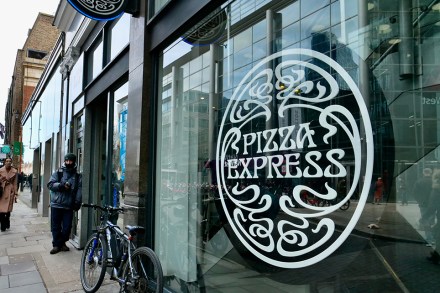
As the government withers this column falls to ennui and visits Pizza Express. As David Cameron, who left the world stage humming, said of Tony Blair: ‘He was the future once.’ So was David Cameron, and so was Pizza Express: I bet they meet often. It was founded in 1965 by Peter Boizot, who shipped a pizza oven from Naples and a chef from Sicily and opened in Wardour Street. That branch closed in 2020. Boizot grew up in Peterborough but lived in continental Europe for a decade, and he learnt three things: an Italian restaurant must be bright; good pizza must be slightly charred (burning food is underrated); children need restaurants too. These changes were sensational, and Pizza Express was launched on the stock exchange in 1993.

As good as pub food gets: The Red Lion, East Chisenbury, reviewed

From our UK edition

The Red Lion, East Chisenbury, is in the Pewsey Vale on the edge of Salisbury Plain. Wiltshire’s strangeness surpasses even Cornwall and its menhirs: it has the greater volume of ghosts. I once spent an eerie day in Imber, the deserted village on the plain – the inhabitants were given 47 days’ notice to leave in November 1943, so American soldiers could shoot up Imber in preparation for invading Normandy. Its church of St Giles, perfectly maintained, is open one day a year in September. Its pub, the Bell Inn, was sold to the Ministry of Defence, and is not a fine restaurant with rooms but a red-brick ruin, with the glass of the windows shot out: Daphne du Maurier’s ideal, the Manderley of pubs.

Could you love an electric campervan?

From our UK edition

The Volkswagen ID Buzz is a pretty car, though so innocent-seeming you would forgive it anything. It succeeds the equally pretty T2 campervan, the Betty Boop of 1950s vehicles. The T2 was so convincing – cars, like everything, vary in charisma – it is one of the most famous vehicles in the world, so much so that I can’t think of one without seeing Don Draper’s face. Iconic is a stupid word, but the T2 was iconic, and in testament you will pay £20,000 for the bones of one, though you shouldn’t. I should have waited for Exeter and topped up at Bristol, as the delivery driver counselled, but I wanted a McDonald’s as much as you can ever want a McDonald’s But life is renewal, and here is the Buzz, which charms me. (I wonder if the name is supposed to invoke insect life.

Home cooking, but idealised: 2 Fore Street reviewed

From our UK edition

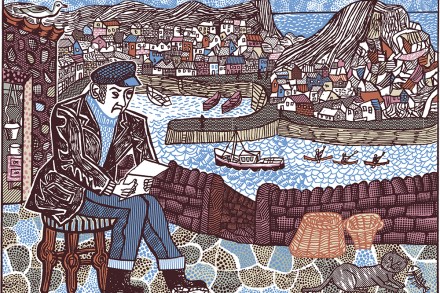
The restaurant 2 Fore Street lives on Mousehole harbour, near gift shops: the post office and general store have closed, leaving a glut of blankets and ice cream, the remnants of Cornish drama. It’s a truism that Mousehole is hollowed out – tourism changes a place, and no one knows that better than Mousehole. Eating at 2 Fore Street gives the visitor the opportunity to examine what they have done with what they call love. There’s a mania for creating 30 perfect soufflés a night thatI cherish  Mousehole is one of those cursed villages that gather in the south-west: haunted in winter and glutted in summer, to paraphrase ‘The Pirates Next Door’.

Wuthering Heights in Devon: the Pilchard Inn, Burgh Island, reviewed

From our UK edition

The Pilchard Inn sits at the entrance to Burgh Island, a minute tidal island off the coast of south Devon. The island is home to the Burgh Island Hotel, an eerie Art Deco masterpiece built by the son of a screw mogul, which dominates the view from Bigbury-on-Sea like Coney Island: it is more apparition than hotel. The hotel is faded, fascinating, plated in Art Deco and decorated with vast screws. I wonder if this is a joke: there is little information about the early years of the house, which vibrates with depravity and things unsaid. To compound the mystery, Agatha Christie wrote here in a shack by the sea, eating cream from a tub as she murdered people in her head, and wrote it down for money. The hotel inspired And Then There Were None and Evil under the Sun.

A themed restaurant done right: The Alice, Oxford, reviewed

From our UK edition

The Alice lives in a ground-floor room of the Randolph Hotel in Oxford, which venerates the fantastical and the savage, as Oxford does. The savage lives in the Randolph’s dedicated crime museum with cocktails: the (Inspector) Morse Bar. The Alice is named for two women: Alice Liddell, the daughter of the ecclesiastical dean of Christchurch College – the grandest and most unfinished Oxford college – who posed for photographs for Lewis Carroll, became Alice of Wonderland and later invented a ladyship (an act as English as anything that ever happened here).

Faultless food with the promise of vengeance: The Trough, reviewed

From our UK edition

Lady Bamford’s Cotswold fairy-land Daylesford Farm has sprouted leaves. It is no longer a farm shop, which should be a humble thing. I went to the Chypraze farm shop at Morvah last month, for instance. The proprietor only had honey, he said, and also pork, because he had just killed a pig. Daylesford is a sort of Las Vegas-themed hotel, invoking something half--imagined from something half-real. Caesar’s Palace; the Paris; the Luxor; the Venetian; Le Petit Trianon; Moreton-in-Marsh! It is not uncharming – many of us have a parallel life in which we live in Lady Bamford’s Cotswold fairy-land, on a pile of Lady Bamford’s dragon gold – but it is a travesty, and it should have a floor show.

The complex genius of Mel Brooks

From our UK edition

Students of Mel Brooks – who has a more important place in American comedy than we, and I suspect even he, have acknowledged – have had thin gruel so far. The emphasis has always rested on Woody Allen, the other New York-born Jewish comic and film-maker who wrote for Sid Caesar – at least since he tried to be Ingmar Bergman. Perhaps that is a joke, or at least a rebuke. American Jewish comedians are so, well, Jewish. It’s pleasing to praise them for their more self-hating work. The Producers is proof of joy – with an overarching, exquisite Jewish joke: Jews fail at failure Now Jeremy Dauber, a professor of Jewish literature and American studies at Columbia University, has written a piece of criticism as elegant and sympathetic as Brooks is vulgar and savage.

Serious about its whimsy: Sessions Arts Club reviewed

From our UK edition

The Sessions Arts Club is a restaurant inside the Old Session House in Clerkenwell, a pale George III building where the criminals of Middlesex were once judged in splendour. It’s common for fine once-public buildings to become private buildings now: the old War Office on Whitehall will be, come summer, Raffles at the OWO. The acronym is not mine – it never is – and I doubt you could run a war from there, though you could try. You could throw a mojito at a laptop. I wonder if there is a connection between the ugliness of the new public buildings and the state of our public discourse: what is there to be proud of but rage?

Nicola Sturgeon and the truth about motorhomes

From our UK edition

Watching the narrative arc of the Sturgeon family campervan – removed from the drive of Nicola Sturgeon’s mother-in-law as part of an SNP fraud probe – is an opportunity to review the campervan. Or motorhome, if you prefer. The Mrs Murrell model is a stylish Niesmann + Bischoff ‘iSmove’, priced at £110,000 or thereabouts (her son, Peter Murrell, it should be said, has been released without charge pending further investigation). There’s an irony in being accused of embezzling money for an independence campaign and then supposedly spending it on driving away. Nationalism is about standing still, but campervans contain people and people contain multitudes.