Tanya Gold

Tanya Gold

Tanya Gold is The Spectator's restaurant critic.

Dean Street Townhouse – at last! Somewhere I’d pay to eat

From our UK edition

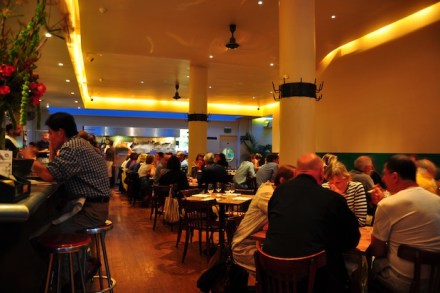
Occasionally a critic must review a restaurant in which they are prepared to spend their own money. So here is the Dean Street Townhouse. It is a terrible name, because all houses in Dean Street, a fusty artery of Soho, are town houses; they are not Wendy houses or country houses or dolls’ houses. But Dean Street House is worse, too close to Soho House, the private club and near neighbour where no one will meet your eye for wondering where the next useful tosser is. ‘Townhouse’ has a kudos, I suppose, these days. It is almost opposite the Groucho Club, which is Noel Edmonds’s Multi--Coloured Swap Shop for media idiots. It shares a corner with Meard Street, in which my friend the artist Sebastian Horsley killed himself with heroin by mistake.

At the Chiltern Firehouse, smugness should be on the menu

From our UK edition

Here then is Gatsby’s house, after an invasion by the Daily Mail. It is called the Chiltern Firehouse. It is a restaurant in a newly opened hotel in a Victorian Gothic former fire station in Marylebone, a proud and grimy district in total denial about its shocking levels of air pollution. The building has a fairytale intensity, with red brick turrets; it is a Roald Dahl prison repointed to its extremities by the man who made the Chateau Marmont in LA. The chef is Nuno Mendes, formerly of Viajante. But what else? Ah — now we are sucked into a wind tunnel of paps and buzz; like so much nonsense, this is media-led, the media having so little to do that they must write about the Chiltern Firehouse. In this, I am complicit.

Something wild – well, wild for Claridge’s – in Gordon Ramsay’s old cave

From our UK edition

Fera is in Gordon Ramsay’s old cave at Claridge’s. His red and yellow room, like a ripped-off arm, has been annihilated; here now is ‘restful’ green, and food by Simon Rogan. His cooking apparently ‘never stands still’. (I am quoting a website.) Fera means ‘wild’. In Latin. I am not sure a restaurant can be wild, but it can be needy. I request a table online. Fera says no. I telephone. Fera says yes. I give my credit card details because love is always conditional. I am then invited to confirm, reconfirm, and re-reconfirm, in the manner of a restaurant impersonating a woman requiring reassurance from a green lover. It is like the Daily Mail’s dolphin that fell in love with its trainer, and committed suicide when rebuffed.

Harry’s Bar, where a slice of cake costs €32 – and is worth it

From our UK edition

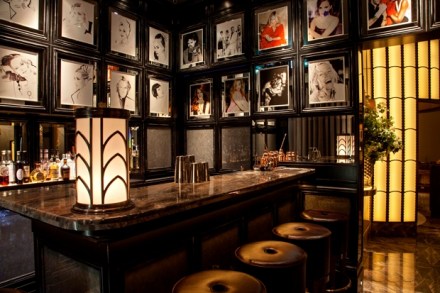
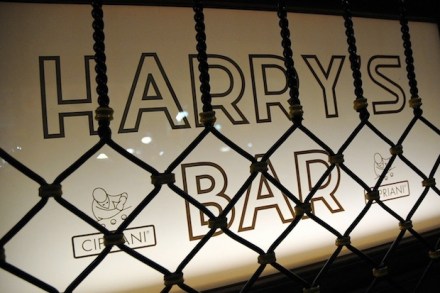
Harry’s Bar is a dull pale box. This is remarkable in Venice, which is a hospice for dying palaces, held up aching over the world’s most charismatic puddle; Harry’s is a transgressive anti-palazzo. It is a world-famous restaurant, the jewel of the Cipriani brand, and it is very conscious of this honour; it sells branded tagliarelli and books about the meals it served 30 years ago to the rich and famous; it is into auto-iconography, like the city it lives in. For this, and so much else, I blame Ernest Hemingway. He ate here after shooting birds in the lagoon and doesn’t the world know it? Some men fought against Hitler. Others ate against him. Outside, people pose for photographs by the signage.

The rudest restaurants in London

From our UK edition

Wong Kei is a mad Chinese restaurant on Wardour Street, Chinatown. Until recently it was considered the rudest restaurant in London and, because human stupidity is without end, it became a tourist attraction in its own right, a destination for masochists too frightened to visit an actual dominatrix who would hit them with a stick. The owner decided this notoriety upset him so he instructed the staff — no more deliberate or casual or accidental rudeness. This was considered so notable that it was reported in national newspapers. I never thought Wong Kei was particularly rude, but then I am Jewish.

After visiting the Cherwell Boathouse, I might spare Oxford from burning

From our UK edition

It is now two decades since I lived in Oxford. I was then a drunk and lonely puddle of a person, with only a gift for screaming; but no matter how low I sank, to paraphrase Alcoholics Anonymous literature, I never sank quite as low as to consider eating at the ’bab van (kebab van) outside Univ (University College) on the High (High Street); I preferred to dine in Hall (a hall). Oxford, you see, has its own native dialect, a sort of pidgin posh best worn with a depressed carnation and a giant inedible chip made of class terror. Perhaps the roots of my eventual redemption were in that tiny grunt of gastronomic self-esteem; who knows? Or was it just another thing I dreamt and actually I ate ’babs constantly? Maybe I really was a ’bab?

Marcus Wareing drops a name

From our UK edition

In the ‘Chefs’ Last Supper’ in the National Portrait Gallery, Marcus Wareing is throwing a brie at Gordon Ramsay, who plays Jesus. They both have restaurants in the celebrity-chef triangle in Knightsbridge near Heston Blumenthal’s Dinner, which led Ramsay to fantasise about chefs’ fisticuffs at 4 a.m. in the street, as he does; but what was Marcus Wareing at the Berkeley, which sounds very like a restaurant with in-built directions for the confused, has been rebranded to be less ‘formal’ and more ‘relaxed’. It is now just ‘Marcus at the Berkeley’. It’s gone the way of gay icons with a solitary name in lights: Judy. Barbra. Liza. Marcus.

Gordon Ramsay joins in the posh invasion of Battersea

From our UK edition

London House is in Battersea, which some people call South Chelsea, but is more East Wandsworth to my mind; or maybe North Clapham, or, even better, West Brixton. This is the self-hatred that the housing bubble has brought to London: we have whole sorrowful postcodes that long to be something else because original posh London, which is SW1 and W1 and SW3, does not really exist any more, or rather it does, but it does not belong to us, so we might as well forget about it. So we have London House. It was obviously a marketing essential to tag this restaurant to London, and also to mention houses, which now are unicorns of brick.

Who dines at Highgrove when Prince Charles doesn’t?

From our UK edition

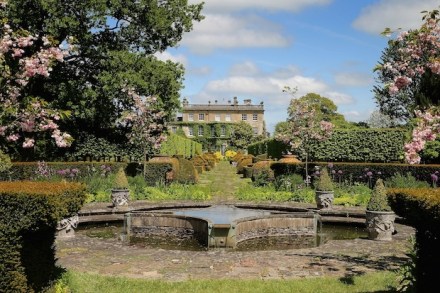
Highgrove is the country house of the Prince of Wales. I write about Highgrove because, although it is not a restaurant, even of the wackiest kind — which can only make me fantasise that Ludwig of Bavaria opened a gay sauna in Neuschwanstein castle — the prince does admit strangers when he is not there and only when he is not there: on Burns Night for instance, or Mothering Sunday, and now, on St David’s Day: a black tie dinner for £95 per face including service. The dinner is in a custom-built barn in the Hobbit style. It is made for his receptions, so I suppose it is less a barn than a giant all-weather gazebo which they call the Orchard Restaurant.

So is Moro a Tory restaurant now?

From our UK edition

Moro (‘moorish’ or ‘sexist’) is a Spanish restaurant on Exmouth Market, near the bones of the old Guardian and Observer building on Farringdon Road. I don’t mind telling Spectator readers (‘you people’) that I once kissed the bricks of this building, quite seriously, like Jews kiss the tarmac at Ben Gurion Airport. (At least that is the story; but I have never seen anyone do it. Kiss some dirty tarmac. What for?) Moro is distinguished as the restaurant in which Guardian journalists first realised Julian Assange is mad. He stood up near an olive and announced he didn’t care if the leaks led informants to be murdered, which is a bad look for a revolutionary, until you really think about it. Then I imagine he ate an olive.

The Fable would do better as an American Psycho theme bar

From our UK edition

The Fable is three floors high and two days old, a monster newly hatched on the Holborn Viaduct; deep below is the valley of the River Fleet, which is genuinely fabulous, but absent from sight. The Fable has the following interesting schtick — fairytales. The question, of course, is whose? Here, cries the PR nonsense, lie the breadstick fairies, who I thought were all dead and lying at the bottom of the Thames, poisoned or just killed by ennui. ‘Inspired by the wit and wisdom of Aesop, the fantasy world of fairytales and our spellbinding adventures around the globe, the Fable is a dynamic all-day bar and restaurant,’ it babbles. Really? Does the City have any dreams left to monetise?

Lanes of London is dining for Martians

From our UK edition

Lanes of London serves street food to people who hate streets; that is, it exists to soothe the still-curious mouths of lazy, wealthy paranoiacs. This is the character of the dishonest age: you can ride in a gondola in Las Vegas, ski down a mountain in Dubai, visit a wizard’s castle in Watford Junction, and enjoy the Notting Hill Carnival in Mayfair while sitting down. (Other options include staying in a five-star faux shanty-town hotel in South Africa, complete with corrugated iron shacks and authentic ‘poor people’s rubbish’).

The 1980s relics of Langan’s Brasserie

From our UK edition

Langan’s Brasserie announces its presence with a long, pink neon line of Langanses, tootling prettily along its façade, which is opposite Marks & Spencer on Green Park. (The apostrophes, by the way, are mine; signage can be illiterate.) So this is a restaurant with Alzheimer’s, a restaurant that has forgotten its own name. Could it be hungover? Langan’s was opened in 1976 by Michael Caine, Richard Shepherd and Peter Langan; two thirds of the triumvirate were newsworthy. Langan was the sort of alcoholic who is mistaken for a raconteur: he told Orson Welles he was fat. (He was fat. Do we care about the feelings of Orson’s fat ghost?) His alcoholism became a destination in its own right, because people are cruel.

Tanya Gold: Child-friendly, sex-free, nut-heavy – just the hotel for my 40th birthday

From our UK edition

Woolley Grange is a child-friendly country house hotel that seems, at first, entirely monstrous — a grey Tudor house in Wiltshire, with gables like teeth and a pond outside, possibly haunted. It is like a smiling wife who bares her fangs and eats the car park and all the Hondas within; a cinematic fiend of a house, in fact, but I am only reading Hilary Mantel these days, and she has the gift of bestowing menace on everything — clingfilm, envelopes, nuts. A country house hotel doesn’t stand a chance. We are here because it is New Year’s Eve. It is my 40th birthday, A has decided that he hates motorways, and Little Baby (LB) is not welcome at ordinary country house hotels, because he is incontinent. (This does not detract from his charm.

Tanya Gold: The sheer horror of Hyde Park’s Winter Wonderland

From our UK edition

Winter Wonderland is a Christmas-themed playground that lands on the sorry part of Hyde Park in November; the part that is munched underfoot, and is sad, and makes money. It sucks up children and spits them out fatter and closer to death, but happy — at least that is what their parents say. The children themselves look drugged, or frightened, because their parents are invariably screaming at them. From the north, Wonderland looks like Coney Island, a cold, bleak fairground from Scooby Doo, with seagulls screaming and circling, far more than is usual for central London. That is when I begin to mistrust Wonderland. We are here for the same thing, these critic gulls and I: the food. There is food in Wonderland; piles of food, most of it fake, or ersatz, or pretend food.

Tanya Gold: Eating in the lobby at Canary Wharf

From our UK edition

One Canada Square was the original glass house in east London’s Gotham City, a thrilling tower with a flashing pyramid on that part of the Thames that looks like a despairing U-bend. The Daily Telegraph used to live here, on floors 11 and 12, when I was a gossip columnist; there was no floor 13, architects being afraid of beauty, and also of witches. I love Canary Wharf, and One Canada Square in particular; I always wonder — will it ever be an ancient building? Or will the flood waters overwhelm it? It is like midtown Manhattan, but less substantial, and twice as lost. It is the second tallest building in Britain, after the stupid Shard, and is, architecturally, an homage to the World Trade Center; that is not an elegy I would wish for.

Boulestin has nothing to do with Marcel Boulestin — but could entice Mary Berry

From our UK edition

Boulestin is a pretty restaurant on St James’s Street, between the posh fag shop (Davidoff) and the old palace, which the Hanoverians thought so ghastly that they moved out to Kensington Gardens, a fresher hell full of squirrels. This is one of the more fascinating West End streets because it is 300 years old and is, as such, the only street in the West End in which the ancient nobility look safe, or even human; you pass tourists, rats and also dukes wafting towards White’s gentlemen’s club, which is duchess-free and where a grown man can be treated like a baby, and not in a perverted way. So Boulestin, named for the famous French chef and photographer Xavier Marcel Boulestin, who looks, from my swift research, like Major Strasser from Casablanca, but fat.

Food: Heston’s brown Dinner, with a side order of irritation

From our UK edition

Dinner by Heston Blumenthal, a brown cavern in the Mandarin Oriental hotel, Knightsbridge, has won a second Michelin star. These stars are food ‘Oscars’ (Hollywood has eaten everything, despite its tendency to despise food) and ensure that wealthy Americans make a detour to dine beneath the stars. This new elevation means that Blumenthal, at least technically, is Britain’s finest cook; the Meryl Streep of dripping and sweat. Blumenthal is a historian chef, a successor to the celebrity chef; he is an intellectual. I say this not because he wears spectacles but because his website has a dictionary definition of dinner — ‘A formal evening meal, typically one in honour of a person or event — from old French Disner’.

Gordon Ramsay’s violently unsexy new restaurant shows he’s near the end

From our UK edition

The Union Street Café is in a dismal, dingy part of London; dismal dingy Southwark. Southwark, in fact, is almost charismatically dingy, a land of despairing streets and brick arches and railway tracks heading suicidally for southern suburbs. Even the churches (small, brown, bricked, almost bricked-up) look apologetic, as if they know they have failed. But it is here, on the junction of Union Street and Great Suffolk Street, that Gordon Ramsay, the second most charismatic of the original celebrity chefs — after Marco Pierre White, now selling stock cubes to old ladies with his swiftly receding sexual charisma — has built his new restaurant. It is his tenth in Britain.

The Wild Rabbit’s food may be organic – but nothing else there is

From our UK edition

The Wild Rabbit is a pub in the Cotswolds, that small corner of Britain full of evil grinning cottages; if the Cotswolds were a small dog it would always be mounting interior decorators and ripping out their throats. It is owned by Carole, Lady Bamford, the wife of the JCB billionaire Sir Anthony ‘Digger’ Bamford, which of course poses the question — does she have a toy one at home? And when she proved she could look after that one she got a real one?