Tanya Gold

Tanya Gold

Tanya Gold is The Spectator's restaurant critic.

With Tanya Gold

From our UK edition

21 min listen

A woman that needs no introduction for regular Spectator readers, Tanya Gold has been the Spectator’s restaurant critic since 2011. On the podcast she tells Lara why – while it might be annoying – fellow critic Jay Rayner is never wrong, why the pandemic was ‘disgustingly great’ for food critics and how she has become ‘enslaved' to her aga. Plus, she discusses her favourite restaurants from Hampstead to Cornwall – though it sounds like she would trade them all in for the mini egg, which she calls 'the highest form of food’. Produced by Patrick Gibbons.

‘The food is not the point here’: Carbone reviewed

From our UK edition

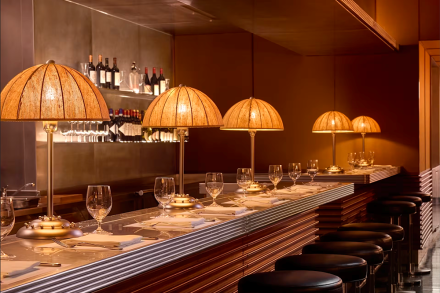
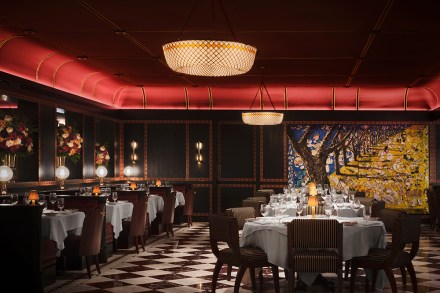
People say that Carbone is Jay Gatsby’s restaurant – Gatsby being the metaphor for moneyed doomed youth – but it is something more awful and, because people are asleep, no London restaurant has been this fashionable since the Chiltern Firehouse a decade ago. It lives in the basement of the former American embassy in Grosvenor Square, which is now the Chancery Rosewood Hotel. I thought this building would smell of fear, of why-can’t-I-have-a-visa-please? The truth is that it does, but that fear is now a commodity: you can be the person saying no-visa-for-you. (‘Uniquely yours,’ says the advertising copy. It means it.

My murderous, malfunctioning Aga

From our UK edition

People always divine themselves through material goods: hence the obsession with the Aga, recently detailed by my friend Rachel Johnson in these pages. Rachel loves her Aga – well, her Agas, she has two – because it needs to be defended from bourgeois socialists who don’t have Agas: they just want them, because self-deception is the defining characteristic of the bourgeois socialist. Me, I hate mine. I used to love her because she made me feel upper middle-class, which I’m not, and now I know I’m not, and I’m glad I’m not, please take her. Of course, Agas are class signifiers. An Aga is like the last vestige of the country estate left after the fire sale. As in: ‘We lost the Titian but kept the Aga’.

Bagels that even New York can’t beat: Panzer’s Delicatessen reviewed

From our UK edition

That Panzer’s Delicatessen in St John’s Wood is called Panzer’s – for the instrument of Blitzkrieg – is mad, until you remember that Jews love to eat near catastrophe, and then it is merely funny. I love Panzer’s so much I am reluctant to share it, but we need all the friends we can get. I keep telling non-Jewish friends: when we burn, you will burn with us. Though I mean it as consolation, they tend to run. St John’s Wood has always existed on the edge of hysteria. Edwardian psychopaths put their mistresses here, and I once went to a children’s birthday party where Peppa Pig couldn’t park, and there was a fight with recriminations. The high street sells corsetry and facial reconstruction.

Almost too interesting for Notting Hill: Speedboat Bar reviewed

From our UK edition

When you are old enough, you can measure your life in restaurants. I remember, for instance, when the Electric Diner on Portobello Road (named for a long ago and far away war) was a place to eat brunch, a meal that shouldn’t exist and doesn’t really, though if it belongs anywhere it belongs here. It was fine but glib – Notting Hill is either a place with no imagination or too much of it, I’m still not sure. How it can tolerate the truth of Grenfell Tower across the way I don’t know either, but I don’t live here. The diner is gone, replaced by a Thai restaurant that is too interesting for Notting Hill The diner is gone, replaced by a Thai restaurant – the Speedboat Bar, twin to a branch in Soho – that is almost too interesting for Notting Hill.

So boring it’s mesmerising: The Place to Eat at John Lewis reviewed

From our UK edition

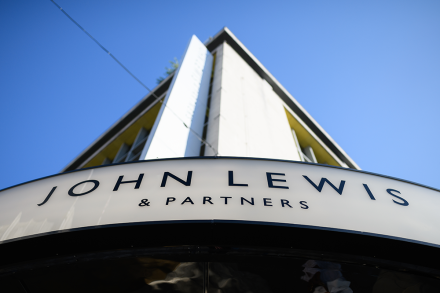
I am, like a strain of Withnail, in the John Lewis café by mistake. I meant to review the new Jamie Oliver café and cooking school on the third floor of John Lewis Oxford Street, but they have run out of food beyond pink cake. We have no choice but to go upwards to the fifth floor and the electricals. I have always felt safe in John Lewis, a despicable thing to think, let alone type, but that is done now. It is called The Place to Eat, which echoes, though unconsciously, Ecclesiastes 3. It is preeningly ugly. I wonder if this is another strain of common British humble-brag, like our teeth, our town centres and our clothes. Because this is ugliness by design: it’s too ugly to be anything else.

Palestinian nationalism has come to Cornwall

From our UK edition

This is West Cornwall, land of fishing, jam first and Trotskyite crafters. There is a sizeable community of nutters yearning for a Cornish intifada: the freedom within, and the freedom without. The old joke is: the duchy is shaped like a Christmas stocking and all the nuts are in the toe. Extinction Rebellion (XR) used to be the big thing down here. My cleaner, a serious deal in XR, screamed at me when my husband put a Tory sign in our garden for the 2019 general election campaign – but fashions change. There are other things to be extinguished now. Since 7 October 2023, the nutters have embraced their own version of Palestinian nationalism and, this being West Cornwall, it is art-themed.

Ferrari and the rise of petrol nationalism

From our UK edition

I used to think I wasn’t attractive enough to drive a Ferrari. I still think that, but you reach an age, like Lester Burnham in American Beauty, when you don’t care any more, and in that despair you can pull off anything. I am now exactly that age: the same age as the man driving the nervous-breakdown orange Lamborghini on the prom in Penzance. When I see him, I have to stop myself screaming the betrayed wife’s words to her adulterous husband in Moonstruck: ‘Cosmo, I just want you to know, no matter what you do, you’re gonna die. Just like everybody else.’ (‘Thank you, Rose.’ ‘You’re welcome.

A Mayfair brasserie for people who work, or at least pretend to: 74 Duke reviewed

From our UK edition

There is an immaculate brasserie called 74 Duke at 74 Duke Street, Mayfair: this is postcode etymology. Duke Street runs from Selfridges to what used to be the American embassy in Grosvenor Square but is now (I assume) a paranoid hotel: the Chancery Rosewood, which has kept the monstrous eagle on the roof. If Duke Street was ever interesting – I like to imagine Mrs Dalloway having a panic attack in the road – it isn’t now. It sells the eternal detritus of the British rich – watches, capes, meat – who I suspect are into crypto these days. It is all a feint anyway: fake London for fake people, and life is at the edges now. A brasserie for the undead, then, and what to say? It’s very nice, but the last restaurant I reviewed near here was Mister Nice, which wasn’t nice at all.

I doubt there’s a better ravioli in London: The Lavery reviewed

From our UK edition

The Lavery in South Kensington is named for Sir John Lavery, official artist of the Great War and designer of the currency of the Irish Free State, who lived here, though he died in Ireland and is buried in Putney. Lavery, of course, would no longer recognise South Kensington as his home, and his white, monumental mid-Victorian house – it’s too cold to be compared to a wedding cake, it’s a power cake – is now a fashionable restaurant and ‘event space’, which I put in quotation marks so you know I didn’t write the words ‘event space’, I just typed them out. In houses like The Lavery, I wonder how tall the Victorians were in their heads.

A fictional Edwardian waif’s hungry fantasy: Fortnum & Mason’s food hall reviewed

From our UK edition

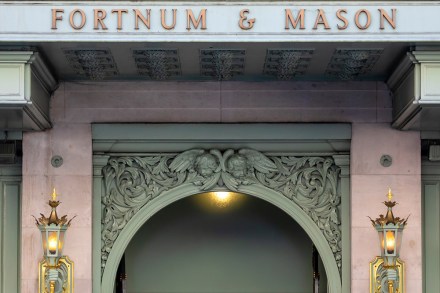
I like a picnic weighted with history and class terror, which means Fortnum & Mason on Piccadilly, which is historical re-enactment with dreaming. I have written about this for years or tried to: food is never just food, only fools say that. You can learn almost everything about people from the food they want. And here is St Narcissus in the form of a department store that works more powerfully as an idea than a mere shop, though it is a very effective shop. Fortnum’s sells a Great Britain that never was, designed for people who no longer exist, if they ever did. It has much to say to Brexiteers and worse, though in biscuit.

‘Italian that just works’: Broadwick Soho reviewed

From our UK edition

This column sometimes shrieks the death of central London, and this is unfair. (I think this because others are now doing it.) It is not the city we mourn but our younger selves. Even so, the current aesthetic in restaurants is awful and needs to be suppressed: beiges and leathers, fish tanks and stupid lighting, all are nauseating. But I hated Dubai. You say Atlantis, The Palm, I say enslaved maid crying for her dreams. But there is refuge, at least from the aesthetic, and it is as ever the child of imagination and nostalgia. Broadwick Soho, the newish hotel in the street where typhus was chased down to a water pump, is a rebuke to desperate minimalism.

The chef does not understand sandwiches: Raffles London at the OWO reviewed

From our UK edition

I am mesmerised by the restaurants of Raffles London at the OWO (Old War Office) because war approaches and the Old War Office is now a stage set for food, floristry and linen. If this is civilisation – it isn’t really, but it thinks it is – who will protect it now? Will we even know if war has started – or care? It was a fine building when I first came – I have reviewed its chilly Mediterranean food, its manic Italian and its tepid French – and it still is. Grand hotels exist to suppress time. It is a preening Edwardian palace with crazed plinths, over-pliant staff and ever sillier restaurants, today’s being the Drawing Room. It looks like how people who are not posh imagine posh country houses to be.

Picture perfect: Locatelli at the National Gallery reviewed

From our UK edition

I feel for Locatelli, the new Italian restaurant inside the National Gallery, whose opening coincides with the 200th anniversary of the gallery and a rehang which I can’t see the point of because I want to watch Van Eyck in the dark. Locatelli must compete with the Caravaggio chicken, which is really called ‘Supper at Emmaus’ if you are an art historian or an adult. In the publicity photographs the chef Giorgio Locatelli is actually standing in front of the Caravaggio chicken. It looks as if Jesus is waving at Giorgio Locatelli but the chicken is unmoved. It stole all the gravitas.

‘This is as good as food gets in London’ – Town, in Drury Lane, reviewed

From our UK edition

Town – well-named, it has vitality – is on the ragged part of Drury Lane WC2 near the Majestic Wine Warehouse and Travelodge. Like musical theatre, whose home this district still is, it is so ebullient and desirous of being loved that it is impossible not to love it back, because it seethes with that rare thing in days of ennui: enthusiasm. It is Judy Garland before the drugs won out and Max Bialystock of The Producers before he lost the pearl in his cravat pin and fell to shagging little old ladies to fund bad plays. It is not exactly the fag end of Covent Garden reborn – we need ragged parishes in over-polished London – but it is more interesting than the awful deadness of the piazza, which is now Westfield-near-Thames.

How to humiliate a Range Rover driver

From our UK edition

Aston Martins are sin, personified: everyone disapproves of them, but everyone wants one. That is why James Bond, a sex-addicted fictional civil servant, is suited to them – at least until he died in No Time to Die (clearly it was). Of course he died. He became emotionally available. If Bond isn’t ripping the knickers off death-stalked maidens, what is the point of him? Why is he feeding a child mango? Next! If you don’t want an Aston Martin, you are either dead like him or – more likely – you have never driven one. Recite the technical specifications by all means and pretend this is why you bought it: numbers. That’s just the denial of the captured. We know why you want the car. For the British, there is no hotter marque – and there never will be.

A man’s restaurant: Victor Garvey at the Midland Grand reviewed

From our UK edition

The Midland Grand Hotel at St Pancras Station is George Gilbert Scott’s masterpiece: his Albert Memorial in Hyde Park (a big dead prince under a big gold cross) has just too much sex to it. Late Victorian architecture seethes with erotica. The facetious will say imperialism was really just penetration, and there’s something in that. It is now the St Pancras Renaissance Hotel, London – oh, the fretted imaginings of marketing departments – and, on a more conscious level, the closest you will get to the great age of rail, though spliced with plastic now. The modern station is ugly and translucent and sells face cream to tourists, and buns. But it hasn’t lost its drama. This is the gateway to Europe and Derby.

Max Jeffery, Tanya Gold, Madeline Grant, Matthew Parris and Calvin Po

From our UK edition

29 min listen

On this week’s Spectator Out Loud: Max Jeffery tracks down the Cambridge bike bandit (1:10); Tanya Gold says that selling bathwater is an easy way to exploit a sad male fetish (5:38); Madeline Grant examines the decline of period dramas (10:16); a visit to Lyon has Matthew Parris pondering what history doesn’t tell us (15:49); and, Calvin Po visits the new V&A East Storehouse (23:08).  Produced and presented by Patrick Gibbons.

Nigel wants YOU, secularism vs spirituality & how novel is experimental fiction?

From our UK edition

52 min listen

How Reform plans to win Just a year ago, Nigel Farage ended his self-imposed exile from politics and returned to lead Reform. Since then, Reform have won more MPs than the Green Party, two new mayoralties, a parliamentary by-election, and numerous councils. Now the party leads in every poll and, as our deputy political editor James Heale reveals in our cover article, is already planning for government. The party’s chair, tech entrepreneur Zia Yusuf, describes the movement as a ‘start-up’; and like a start-up, Reform is scaling up at speed. Among the 676 councillors elected last month, a number are considered more than ready to stand as MPs.

The truth about Sydney Sweeney’s bathwater

From our UK edition

In the 2004 film Mean Girls Ms Norbury (Tina Fey) cries to her High School students: ‘Girls! You’ve got to stop calling each other sluts and whores!’ Do we? I ask because Sydney Sweeney, an American actress, is selling her bathwater to men with unfathomable desires. No woman would buy it. We have an infinite supply. Selling bathwater is hard. It’s the logistics. How do you distribute it? By fishing trawler? By pipe? Sweeney, who has marketing skills – and this is all marketing, she designed a Ford Mustang, which can’t be drunk, last year – has partnered, as they say, with a soap company, which will incorporate drips (dribbles?) of her bathwater into a soap. At least that is what we are told.