Taki

Taki

My Swiss Shangri-La

From our UK edition

Gstaad As everyone knows, snobbery is nothing but bad manners passing itself off as good taste. Past American society dames were terrible snobs, until they met their French and British counterparts, who put them in their place. I’m not going to mention any names because most of them are dead, but looking around me up here in the Alps I’ve seen some new horrors, money snobs who promise to make the older type look like nuns. Mind you, I’m quite snobby myself when it comes to nouveaux riches with bad manners. As Yogi Berra remarked: ‘You can observe a lot just by watching.’ What I see here in Gstaad is a classless society, where the locals are proud to be called peasants while new arrivals feel confused at the lack of an upside-down social structure.

My lunch with Fergie’s body double

From our UK edition

Gstaad There is nothing much I can add to what Daniel Johnson and Charles Moore wrote about the great Paul Johnson, except that I shall miss his annual summer visits to Gstaad, where we walked for hours on mountain trails and I had the opportunity to take in some of his best bon mots. He knew everything and could tell a story like no one else. On the occasions when Lady Carla was with us – she is Italian and never draws a breath – Paul would not slow down for her to catch up but every five minutes or so he’d bellow ‘Is that so?’ and then bash on. My Alexandra particularly liked him and asked me time and again why I didn’t have more friends like Paul. The answer is obvious. There are not many Paul Johnsons around.

My sweet, generous friend Norman Mailer

From our UK edition

Norman Mailer was born on 31 January 1923, and as his 100th birthday approaches there is a major revival of interest among those who can still read. Norman died in 2007, aged 84, and his first-born son Michael, a talented film director who has since become my closest friend, came over to my house in a slightly shocked state. I was his father’s friend and admirer, so we sat down and drank the day and night away. A review of the most recent Mailer biography – a hatchet job by a Brit, Richard Bradford – states that Norman could not walk his dog without getting into a fight. Funny what people not in the know will say or write. I was close to Norman for 30-odd years and never once saw him start something or do anything aggressive.

What Harry could learn from King Constantine of Greece

From our UK edition

Shot in the once upon a time city of dreams, now one of nightmares, the sweeping solipsism expressed made paranoia a kind of totalising faith. Behind the nauseating self-promotion, a so-called prince and his Hollywood diva hogged the headlines. Far, far east lay a dead man, one who had absolutely nothing in common with the self-absorbed, egotistical and narcissistic Englishman. On the contrary, King Constantine II went to meet his maker the same way he had lived his 82 years: uncomplaining, dignified and deserving of much more than he ever received from his people.

The joy of an unplugged life

From our UK edition

Gstaad ‘Living my life in person’ is not a redundancy of expression. What it actually means is living without social media. Why have I chosen the unplugged life? That’s an easy one to answer, but first a little history: I think I was the last one to switch to writing on a word processor when the then back-of-the-book editor Liz issued an ultimatum. (I’ve had seven sainted male editors in 46 years, but only four ladies fixing the column: Jenny, Gina, Liz and Lucy, and never a cross word between any of the aforementioned 11 and poor little me.) Bron Waugh used to send in his copy in long hand, or so I was told, but I typed mine with two fingers until that, too, became ‘unreceivable’. This happened sometime during the 1990s.

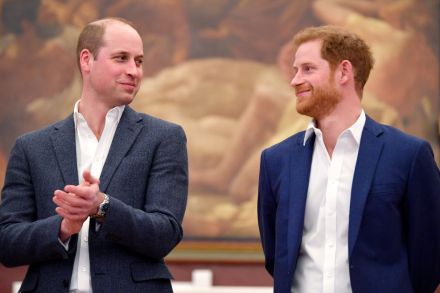
My advice to Harry and William

From our UK edition

Reading about the latest about the pathetic-sounding scuffle between Prince Harry and his older brother, I think I could tell the pair a thing or two about fraternal enmity. My older brother, another Harry, and I have not spoken to each other in more than 30 years. He was taller, blond and looked Germanic. I was shorter, brown-haired and looked Greek. He never made it at school, whereas I collected lots and lots of sporting trophies. My father named him an executive in his shipping companies, I was the odd man out. Harry had the largest house in the Hamptons and the poshest apartment in New York, whereas I sort of lived a gypsy life. Harry was not athletic, I excelled in sports and represented Greece in three of them.

In praise of direct democracy

From our UK edition

Gstaad Talismans from the past are rare but still to be found, especially at the old Posthotel. Faded bleached photographs of horse-drawn sleds on Main Street, long-bearded peasants chopping wood on the Eggli, even skiers walking up mountains in knee-deep snow before ski lifts were invented. Is there anything more precious than old photographs? Killjoy conversation topics such as the size of chalet indoor swimming pools, botulinum toxin fillers, even discussions about gender are now registered on those horrible modern contraptions called smart phones. It is the new reality and there’s nothing one can do about it.

Why going to church beats going to a nightclub

From our UK edition

Gstaad It’s nice to be back in good old Helvetia again, but as the holiest of holy days approaches I cannot help but think of my friend Jeremy Clarke and his struggles. Philosophers, starting with the Greeks, have dealt with life’s problems yet not one of them has been able to pin down Man’s ultimate defeat: death. The one who did manage it was no philosopher. He was a simple carpenter, and his take on death has given more comfort and hope to us mortals than all the eggheads put together. Nowadays we have doubters who see us believers as Dark Ages ignoramuses. You know the kind I’m talking about – smelly, bearded, lefty know-it-alls. But even Charles Darwin believed in God, so who are these modern clowns to doubt Him and His son?

The death of waspish wit

From our UK edition

New York It’s party time in the Bagel, and also the last week I’ll be spending in this unrefined place. The Bagel has lost its je ne sais quoi for me. It is now as subtle as a knocked-out Russian T-72 stuck in the mud. There’s as much wit around here as there used to be virgins in Hollywood, when the great Oscar Levant referred to Elizabeth Taylor’s numerous marriages as ‘Always a bride, never a bridesmaid’. Or, as someone meaner said of another lady actress: ‘She’s the original good time that was had by all.

Why I’m rooting for Elon Musk

From our UK edition

Why bother with something true to life, dignified and classy when you can create something untrue, cheap and vulgar? While surfing through channels looking for a black and white oldie, I came across something that I think is called Rogue Heroes. I’m not sure of the title because the programme annoyed me so much that I turned it off after less than ten minutes. And it took as long as that because the trash was based on a terrific subject: the war in the desert pitting the bold Rommel against timid Monty. What made the few minutes I watched seedy and sordid was the language. I’m no prude and can swear with the best of them, but only in the right environment.

How to run a nightclub

From our UK edition

New York Christmas partying, like Yuletide shopping displays, begins much earlier of late. After the lockdown, however, the urge to party, and party hard, is justified. Like others, I am trying to make up for the missing two years, but the hangover toll is prohibitive. It takes a whole two days to feel normal again, and at this point of my life, days count as much as months used to. Last week I hit a hot new club here on the east side of the Bagel, Casa Cruz, owned by Chilean Juan Santa Cruz, who also happens to be a Speccie reader. Juan was sitting at the table next to mine with some pretty girls and a couple of young men whom I knew when they were still in short pants.

Meet the most influential brain in China

From our UK edition

New York The LNG king Peter Livanos, an old and good friend, has sent me a very informative write-up about China. Peter knows as much as anyone what’s cooking behind what used to be known as the bamboo curtain, and he’s put me right about China when I’ve been wrong about the place in the past. For any of you unfamiliar with shipping terms, LNG stands for liquefied natural gas, something that costs a hell of a lot to carry over water. As a result, the ships that transport LNG cost even more than a hell of a lot to construct. I remember my father talking about building an LNG carrier, a new concept back then, but the cost was prohibitive. Poor Dad died rich soon after, and I only stayed in shipping for another ten years.

The roots of America’s unhappiness

From our UK edition

New York An American columnist whose writing I used to enjoy until his bosses signalled to him that activism is more important than journalism recently reported that Americans are unhappier now than they have ever been. Especially in places that voted for The Donald. Apparently, a pollster found that Trump got the most votes in places where people felt the unhappiest. But that makes sense, doesn’t it? Don’t people vote against the status quo when misery levels are rising? Mind you, it could also be that those who ask the questions have a vested interest in the answers they get. Invent a misery level where voters are for Trump, then pour it on and predict strikes, crime and anti-government demonstrations.

The golden age of motor sport

From our UK edition

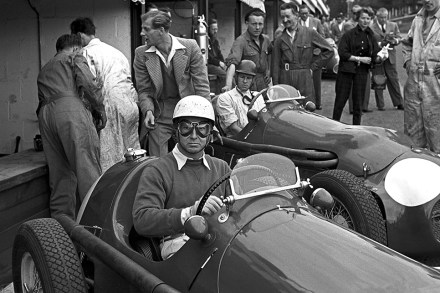
There are heroes and then there are unsung ones, and I basically prefer the latter as I have known a few of them in my lifetime. The funny thing is that I grew up learning only about famous heroes, the Ancient Greek type, starting with the semi-God Achilles. Homer didn’t deal with unsung heroes; everyone was larger than life, and there were only winners and losers. The person I’ll tell you about this week would not have been a Homeric hero, but he certainly was one while participating in the most dangerous game in the world. Lance Macklin was an Old Etonian, a second world war navy vet, and a dashing racing driver at a time when a shunt meant instant immolation and certain death.

New York’s new normal

From our UK edition

New York Ms Geniece Draper is a Noo Yawker who has been in the news lately. She is a 40-year-old with modern Bagelite manners, and by that I mean they are not exactly those of, say, C.Z. Guest or Babe Paley, two ladies who are no longer with us but whose presence in drawing rooms we could rather desperately do with. Ms Draper is angry as hell and has declared she will not take it any more. She was recently charged with grand larceny and petit larceny for snatching a wallet from a Manhattan man. Nothing strange about that: it’s an everyday occurrence in the city that never sleeps. In fact a New York Post columnist wrote on a different matter that no one gets PTSD from ‘getting pickpocketed’. Yes, I agree, but for one small detail.

The death of humour

From our UK edition

New York Rodney Dangerfield was the American Benny Hill: lewd, funny and not exactly politically correct where the weaker sex was concerned. In America today there is no room for Rodney’s or Benny’s shenanigans, and leering at women is now commensurate with having one’s rocket polished in broad daylight, perhaps even more so. I find it amazing to be daily bombarded by the shameless gimmickry, stupidity and smuttiness of television but deprived of talented comedians who tend to get on the wrong side of hatchet-faced feminists. The saccharine cesspool of late-night talk shows, the utter banality of actors and actresses talking about their latest films – this is what our modern culture has become. Never mind.

Remembering Orsini’s

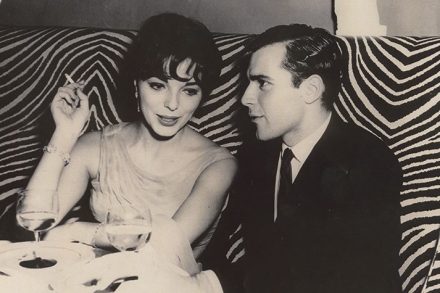
If Paris is cafés and London is pubs, New York is bars. Most of the legendary Big Bagel bars have been Irish: P.J. Clarke’s, still going strong, and the now-shut Elaine’s, where Woody Allen, Jackie Onassis, and Norman Mailer partied and gossiped protected by the formidable Elaine. But for me, although a regular at the above watering holes, there’s one that stands out because it was there where I cut my teeth as a young man about town, where I met Joan Collins, Janet Leigh, and Linda Christian — and debutantes and models galore. That was Orsini’s, at 43 West 56th Street, just off Fifth Avenue.

We’re all victims in the Bagel now – even me

From our UK edition

 New York That Kim Kardashian dame being fined by the Securities and Exchange Commission for a ‘pump and dump’ scheme should help add victimhood to her other assets. Everyone in this country revels in being a victim, or so it seems when watching the news or reading the papers. Here’s our own Jeremy Clarke, as ill as it is possible to be, and what we get is his brave and wonderful column every week, never complaining about how unfair it is, but expressing how lucky he feels to have Catriona taking care of him, and so on. I was telling a friend about this, in a deliberately loud voice, hoping that some wise guy would take exception and confront me, but no such luck.

The lessons of New York’s carnage

From our UK edition

New York I am seriously thinking of visiting a shrink (just kidding) as I now have definite proof that I am crazy. Instead of remaining in England and going to Badminton for the Duke of Beaufort’s 70th birthday bash, and catching a glimpse of the love of my life, Iona McLaren, I find myself in a rotten place where a small headline in the New York Post announces: ‘16 shot during bloody day in NYC.’ All I can say is that the Bagel’s salad days are over. The streets are awash with homeless druggies who are violent and perform their functions right out in the open, even on Park Avenue. Random violence is an everyday happening on the subway, and unhinged whackos shout at women and children when they’re not attacking them.

Rupert Murdoch has nothing to fear from me

From our UK edition

Harvard man Russell Seitz has sent me an extraordinary present as an object lesson in ‘what a magazine should be in case you start another one’. The paper has yellowed and is dog-eared, pages are falling out and the print is faint. But the Transatlantic Review, Vol. 1, No. 1, dated January 1924, is a joy to behold. Mind you, we were already almost 100 years old when Ford Madox Ford first edited TTR in Paris. And that’s what I told my friend Russell. Anyone who writes for or reads The Spectator is not likely to be impressed by other publications, but this does not include a posturing peacock from the BBC who recently spouted gibberish learned at university diversity courses at a Speccie reader.