Svitlana Morenets

Svitlana Morenets

Svitlana Morenets is a Ukrainian journalist and a staff writer at The Spectator. She was named Young Journalist of the Year in the 2024 UK Press Awards. Subscribe to her free weekly email, Ukraine in Focus, here

Is North Korea joining the war in Ukraine?

From our UK edition

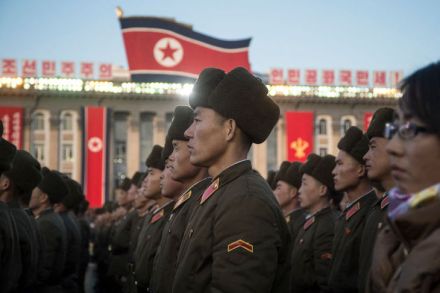
In Russia’s far east, North Korean soldiers are reportedly being trained to fight in the war against Ukraine. Kyrylo Budanov, the head of Ukrainian intelligence, has said that more than 10,000 North Korean troops will not only assist and train Russian forces, but also fight alongside them – starting next month. At least 2,600 of these troops could be deployed in Russia’s Kursk region, to free up Russian soldiers to join Vladimir Putin’s offensive in the Donbas. Zelensky said this means North Korea has ‘effectively joined’ the war South Korea’s spy agency reports that North Korea is sending 12,000 men from four brigades, including elite special forces, to join the war in Ukraine, with deployment already in progress.

Don’t blame Ukraine for not giving up

From our UK edition

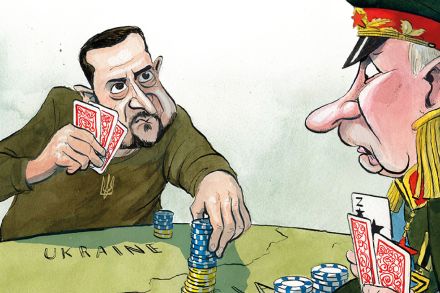
Two years ago, Volodymyr Zelensky was hailed as a hero in America. He was the man who stood up to Putin, who saw off the pillar of Russian tanks advancing on Kyiv – the man who’d fight the revanchist autocracy so the West didn’t have to. How times have changed. To a great many in Washington he is now a liability, a hustler, someone trying to pour American money and his countrymen’s lives into an unwinnable war. An increasing number of Republicans are making him the scapegoat for a war that only the Kremlin can end. The outcome of next month’s US presidential election will be watched more closely in Ukraine than perhaps even in America. Kamala Harris has pledged to do ‘everything’ to help Ukraine win the war.

Inside Zelensky’s not-so-fresh reshuffle

From our UK edition

In Ukraine, there is a joke: never waste time memorising the names of ministers – they’ll be replaced soon enough. Volodymyr Zelensky’s penchant for firing and rehiring every few months has become a signature of his presidency since 2019. This week has not been different, ​​with the largest government shake-up since the full-scale war began. Or, as it turned out, just a reshuffle of the same familiar faces. ‘We need new energy today,’ Zelensky declared, as he instructed the Ukrainian parliament to dismiss and reappoint almost half the cabinet – eight ministers in total. ‘Autumn will be important for Ukraine. Our institutions must be set up so the country achieves all the results it needs.

Zelensky says Kursk offensive is collateral in a victory plan

From our UK edition

At a press conference in Kyiv today, Volodymyr Zelensky spoke about his strategy to end Russia's war. He has a plan which he says he will present next month to Joe Biden and to the two contenders to succeed him: Donald Trump and Kamala Harris. He also confirmed The Spectator’s report that the objective of the Kursk operation is ‘one of the key points’ as collateral in a negotiation which, he says, will ‘force Russia to end the war through diplomacy’. Zelensky’s peace plans have often seemed overly ambitious We’re now in week four of the battle in the Kursk region, with Ukrainian forces taking control of about 100 Russian settlements. The offensive has slowed but presses on. ‘We need to have a strong position at the summit [in November],’ said Zelensky today.

Power play: Zelensky’s plan for his Russian conquests

From our UK edition

40 min listen

This week: Power play. The Spectator’s Svitlana Morenets writes the cover article in this week’s magazine exploring Zelensky’s plan for his Russian conquests. What’s his aim? And how could Putin respond? Svitlana joins the podcast alongside historian and author Mark Galeotti (02:10).Next: Will and Gus discuss their favourite pieces from the magazine, including Richard Madeley’s diary and Lara Prendergast’s argument that bankers are hot again.Then: how concerned should we be about falling fertility rates? In the magazine this week Jesus Fernandez-Villaverde argues that the problem is already far more grave, and far more global, than we realise. Why should we worry about this, and what can be done to stem this?

What’s the real aim of Ukraine’s Russian offensive?

From our UK edition

On Monday morning, Vladimir Putin was briefed about Ukraine’s audacious invasion of Russian territory. With his military chiefs in front of him, he announced that Kyiv had been doing the bidding of its western masters but would succeed only in the ‘annihilation’ of the troops it had sent to Kursk. All this was, as usual, broadcast live by the Kremlin to reassure Russians that the President was in control of the situation – then everything started to go wrong. Alexei Smirnov, the acting governor of the invaded Kursk region, had been expected to give details of the successful evacuation of citizens. Instead, he began to reel off the extent of the defeat. The Ukrainians, he said, had captured territory eight miles deep and 25 miles wide.

Kate Andrews, Adam Frank, David Hempleman-Adams, Svitlana Morenets and Michael Beloff

From our UK edition

40 min listen

On this week’s Spectator Out Loud: Kate Andrews argues vice-presidential nominee J.D. Vance is more MAGA than Trump (1:27); Adam Frank explains how super-earths could help us understand what life might look like on another planet (5:15); David Hempleman-Adams recounts his attempt to cross the Atlantic on a hydrogen ballon (14:31); from Ukraine, Svitlana Morenets reports on the battle to save Kharkiv (20:44); and, Michael Beloff takes us on a history of the Olympics (30:12).  Presented by Patrick Gibbons.

From the front line of the battle to save Kharkiv

From our UK edition

Moonlight shines on the wings of the reconnaissance drone as it glides over the field. Within minutes, the Leleka – Ukrainian for ‘stork’ – crosses the border into Russia’s Belgorod region. The soldiers monitoring it wait in their car, hidden in the undergrowth. Soon the image on their laptop freezes: the Russians are jamming the signal. They manoeuvre the Leleka back and forth, eventually finding a gap in the enemy’s electronic defences. The drone is back in contact, sending footage of Russian roads and towns. The hunt for enemy troops begins. Some 30,000 Russian soldiers are amassed north of Vovchansk, a Ukrainian border town that was attacked two months ago.

James Heale, Svitlana Morenets, Philip Hensher, Francis Beckett and Rupert Christiansen

From our UK edition

38 min listen

On this week’s Spectator Out Loud: James Heale analyses the state of the Conservative leadership race (1:09); Svitlana Morenets reports from the site of the Kyiv children’s hospital bombed this week (5:56); Philip Hensher examines the ‘Cool Queer Life’ of Thom Gunn (12:13); Francis Beckett reviews ‘The Assault on the State’ arguing in favour of bureaucracy (21:20); and, Rupert Christiansen reveals why he has fallen out of love with Wagner (27:05).  Presented by Patrick Gibbons.

What I saw at the Okhmatdyt bomb site

From our UK edition

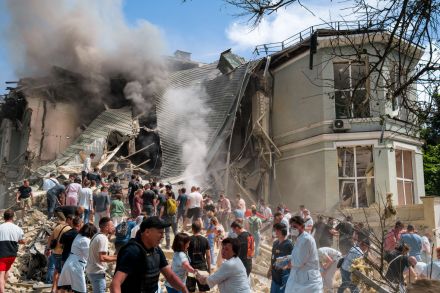
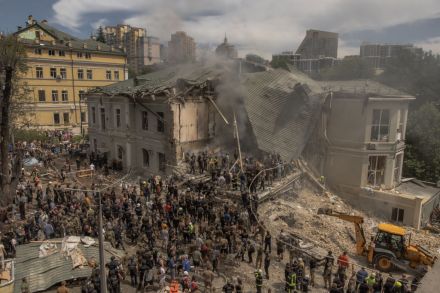
Kyiv For weeks, Kyiv had felt relatively safe compared with just about everywhere else in Ukraine. People had adjusted to wartime life as the city’s air defences managed to intercept most of Russia’s missiles and drones. There had been a sense that things were improving. This was shattered on Monday morning when a missile struck a children’s cancer hospital in the capital. Okhmatdyt is the largest paediatric clinic in Ukraine, the equivalent of London’s Great Ormond Street. Each year, it treats more than 20,000 children with the most serious health conditions. That Russia had targeted it came as a shock but not a surprise: some 1,700 medical facilities in Ukraine have been hit since the start of the full-scale invasion.

Kyiv children’s hospital bombed 

From our UK edition

I have been in Kyiv for a few weeks. The city has felt safe thanks to its improved air defences. But that changed this morning when the capital came under a huge attack. Ukraine’s largest children’s hospital, Okhmatdyt, was hit by Russian missiles. The area is strewn with collapsed concrete and smoke is rising still. Children may remain trapped under the rubble.  People are rushing to help – queuing to deliver water, food and medicine. Some have come to donate blood. Children have been taken out of the hospital on trolleys and are now in the streets, while some continue to receive their cancer treatments via IV drips. Mothers stand with their bed-ridden children outside the collapsed ward that was only recently rebuilt.

Downfall: how Nigel Farage became the left’s greatest weapon

From our UK edition

44 min listen

This week: Downfall. Our cover piece examines Nigel Farage’s role in the UK general election. Spectator editor Fraser Nelson argues that Farage has become the left’s greatest weapon, but why? How has becoming leader of Reform UK impacted the campaign and could this lead to a fundamental realignment of British politics? Fraser joined the podcast to talk through his theory, with former UKIP MEP Patrick O’Flynn (02:10). Next: Spectator writer Svitlana Morenets has returned to Ukraine to report on the war, which is now well into its third year. How are Ukrainians coping and what is daily life like? Svitlana joined the podcast from Kyiv with Ukrainian author Andrey Kurkov (21:53). And finally: has ‘cancel culture’ been cancelled?

My return to Ukraine

From our UK edition

I arrive at Lviv station just before 9 a.m. As the clock strikes, the conductor announces a minute’s silence: a daily commemoration for those who have fallen in the war. But it’s observed only by the railway staff, who stand up to bow their heads. The passengers just carry on. After all, isn’t part of the resistance to carry on life as normal, despite the war? This was the idea at first, but soldiers at the front line have come to resent the chasm between those who are fighting and those who don’t want to have any part in the war. It’s just one of many ways in which, returning to Ukraine, I can see the Russian invasion reshaping my country. Coming home to my village in the west of Ukraine, I see how the war is draining the life out of it.

Biden partially lifts ban on strikes within Russia

From our UK edition

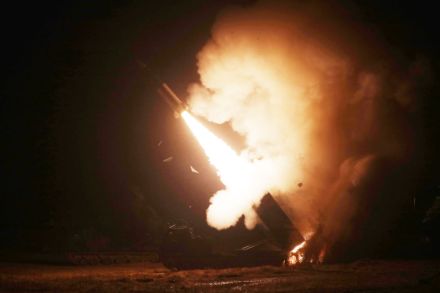
David Cameron publicly said it was up to Ukraine to decide whether to use British weapons to strike targets on Russian territory earlier this month. But nothing has happened since then: no Storm Shadow missiles have flown over the Ukraine-Russia border. Last night, Volodymyr Zelensky explained why: the UK had not given ‘100 per cent permission’ to do so. ‘We raised this issue twice. We did not get confirmation from him [Cameron].’ In reality, Downing Street is waiting on the Americans, he said.The calls for the US and other allies to allow Ukraine to strike Russian territory with western arms have grown louder after Russia launched a second offensive in the Kharkiv region.

Slavoj Zizek, Angus Colwell, Svitlana Morenets, Cindy Yu, and Philip Hensher

From our UK edition

32 min listen

On this week’s Spectator Out Loud: Philosopher Slavoj Zizek takes us through his diary including his Britney Spears Theory of Action (1:08); Angus Colwell reports from the front line of the pro-Palestinian student protests (8:09); Svitlana Morenets provides an update on what’s going on in Georgia, where tensions between pro-EU and pro-Russian factions are heading to a crunch point (13:51); Cindy Yu analyses President Xi’s visit to Europe and asks whether the Chinese leader can keep his few European allies on side (20:52); and, Philip Hensher proposes banning fun runs as a potential vote winner (26:01).  Produced by Patrick Gibbons and Oscar Edmondson.

Georgia is on the brink of revolution

From our UK edition

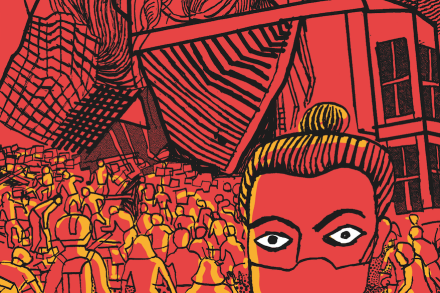
For weeks, the Rustaveli Avenue in Tbilisi has looked like a battlefield. Thousands of protestors, mostly in their twenties, have been met by riot police armed with tear gas, water cannons and rubber bullets. On the face of it, the protest is about a new repressive bill in its final reading in the Georgian parliament. In reality, it’s the struggle between a government that is turning towards Moscow, and a citizenry who by and large believe the future lies with Europe. The crunch point comes next week when the Georgian parliament will vote on a bill which, if passed, would label as a ‘foreign agent’ any political or civil society pressure group that receives more than 20 per cent of its funding from abroad.

Svitlana Morenets, Mary Wakefield, Max Jeffery, Sam Leith and Richard Bratby

From our UK edition

35 min listen

On this week’s Spectator Out Loud: In light of the help Israel received, Svitlana Morenets issues a challenge to the West to help Ukraine (1:15); Mary Wakefield questions the slow response to the Ministry of Defence being daubed in paint (7:33);  Max Jeffery discusses the aims and tactics of the group responsible for the protest, Youth Demand (13:25); Sam Leith reviews Salman Rushdie's new book (18:59); and Richard Bratby pays tribute to Michael Tanner, The Spectator critic who died earlier this month (27:34). Produced and presented by Patrick Gibbons.

Why does the West protect Israel but not Ukraine?

From our UK edition

When Israel and its allies shot down hundreds of Iranian drones and missiles, they demonstrated what an effective air defence looks like. The slow-moving Shahed-136 suicide drones were not hard for the Israeli, Jordanian, British, American and (probably) Saudi air forces to find and eliminate. Even Iran’s cruise missiles were thwarted. It was an overwhelming victory for Israel and a humiliation for Iran. In Ukraine, all this was watched with desperation and even anger. While Israel boasts robust air defence systems and, with its allies, can deploy hundreds of combat aircraft to repel Iran’s attack, Ukraine must ration its defence munitions. Kyiv is forced to choose which cities to protect.

Ukraine’s controversial new conscription law takes effect

From our UK edition

The Ukrainian parliament has finally stopped delaying the inevitable and voted for a new law that tightens mobilisation processes, strengthens penalties for draft dodgers and allows the government to track Ukrainian men of military age who are living abroad, at its second reading yesterday. Once the law is signed by Volodymyr Zelensky, more men aged 25 and over will undergo military training for two to three months, then head to the front line in time for Russia’s summer offensive. But not everything went smoothly. By the request of Oleksandr Syrskyi, the new commander-in-chief of the Ukrainian army, lawmakers have removed provisions on demobilisation and the rotation of military personnel from the bill.

Will Biden support Ukraine’s attacks on Russia?

From our UK edition

46 min listen

This week: will Biden support Ukraine’s attacks on Russia? Owen Matthews writes the cover piece in light of the Zelensky drone offensive. Ukraine’s most successful strategy to date has been its ingenious use of homemade, long-range drones, which it has used to strike military targets as well as oil refineries and petrol storage facilities in Russia. The strikes are working but have alienated the US, who draw a red line when it comes to attacks on Russian soil. Owen joins the podcast alongside Svitlana Morenets, author of The Spectator’s Ukraine in Focus newsletter to debate what comes next.