Susan Hill

Susan Hill

Susan Hill’s latest novel is A Change of Circumstance.

Can I survive six months without my books? 

From our UK edition

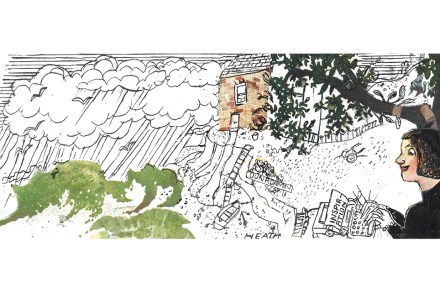
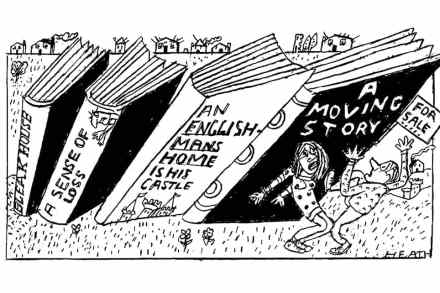
My story begins with a very small puddle on the kitchen floor. As it was nowhere near the sink, I blamed Biggles, the border terrier, but ‘you know my methods, Watson. Apply them’. And having applied them, I saw at once that the small dog could not be to blame, because he is reliably house-trained and had been bumbling about in the garden for the previous half hour, lifting his leg hither and thither. So I mopped it up and forgot about it. Then, that same afternoon, another pool of water appeared, slightly bigger and not on the same spot.  I could put up with the loss of a lot for six months, but not of Biggles Cutting to the chase, we had a leak problem, possibly a major one.


Why I’ve never forgotten Sister Cecilia

From our UK edition

It is never people, always buildings. Faces change, time blurs them, but – unless they undergo a complete makeover – buildings remain pretty much the same, bar a few coats of paint. Along the second-floor corridor lined with arched windows that overlook the street. Buses grind by below. Up the last short steep staircase and along the very top corridor, which is narrower and lined with books. They call it the library and I am often here, tucked into the window seat reading, but otherwise heading for the arched door – everything is arched here – at the far end. It opens on to a low-ceilinged room with roof lights through which the sun seems always to be shining.

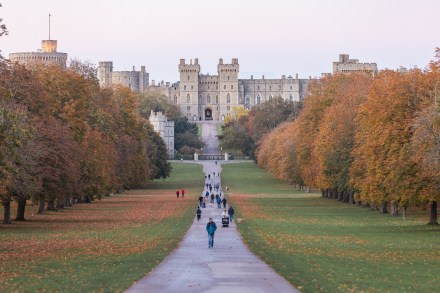
A game of hide-and-seek with the Queen

From our UK edition

One of the best things about growing older is being far less easily embarrassed. You have dealt with so many potentially tricky situations so often that you breeze through, no longer blushing, staring at the floor or looking for the nearest exit. I feel sorry for the young when they make a small faux pas and are convinced that everyone in the room is staring, or worse, laughing at them behind their hands, whereas at my age you know that probably no one has even noticed. If they have, and they do stare, laugh or comment, you can handle that with aplomb, too. The last time someone made a remark in a whisper so loud that I knew they intended me to hear was when I wore Nike trainers at an investiture.

Learning is a lifelong joy

From our UK edition

‘I love learning about things’ (Amelia, aged nine). Not all children do, but many who have not experienced the pleasure of learning early come to see the point of it in later life. Like most writers, I loved books from childhood, and learned favourite pages simply by re-reading. When Thomas Hardy came along for A-level, I was so passionate about his novels that I learned whole pages by heart. But like Amelia, I also loved learning about things – places, cultures, weather, insects, trees, how coal was mined and steel made and glass blown. Ladybird Books were a great source of interest and information, and still are, though when I glanced into The Ladybird Book of the Computer I realised it is now historical and of no practical use.

The strange, beautiful Christmas I spent alone

From our UK edition

My parents gave up on Christmas altogether once I left home for university. They had never been people for celebrations and we were a household like Belfast in the religious sense – my father, the Catholic, went to midnight mass; my mother, Anglican, to the parish church at 8 a.m. I alternated, year by year, for the sake of fairness. It was a strained time. As an adult, living in my own place the moment I could afford rent, I never returned home for Christmas Day, but went to various generous friends – the sort of normal friends who had proper festivities, puddings lit with brandy and paper crowns, the works – and I learned how things ought to be done. Once I was married with children, so they were.

The medicinal powers of a good book

From our UK edition

‘And they lived happily ever after. The end.’ ‘Again.’ My poor father, bidden to read the story of the moment over and over again. Long after I could read perfectly well for myself, at bedtime I needed to hear his quiet monotone that never failed to send me to sleep, just as, though my taste in books was always adventurous, I had a narrow range of preferred stories at night, or if I was unwell. When the shadows thrown by the lamp form themselves into monsters, familiar comforts are required. Alice in Wonderland was read until the words must surely have faded on the page, and if he missed a line I was on to it.

Could prayer cure a sore throat? 

From our UK edition

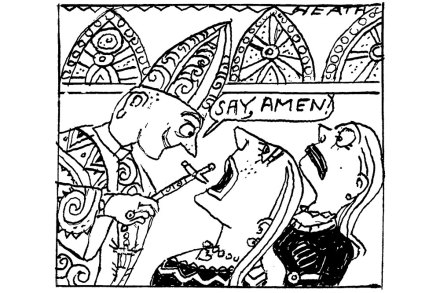
This Saturday, go to London’s oldest Catholic church, St Etheldreda’s in Ely Place, Holborn, and you will find a gathering of singers, along with actors, announcers and other public speakers, who have come to have their throats blessed. Two crossed candles are held up by the priest and either these or a piece of wick soaked in holy oil are touched to each kneeling suppliant, as a special prayer is said. ‘Oh God deliver us, by the intercession of thy holy Bishop and martyr, Blaise, from all evils of soul and body, especially from all ills of the throat.’ As with most saints in the early history of the church, the explanation of how Blaise came to be the patron of throats (and, since saints are generally multi-tasking, of wild animals and wool combers) is the stuff of legend.

The pure joy of grandchildren

From our UK edition

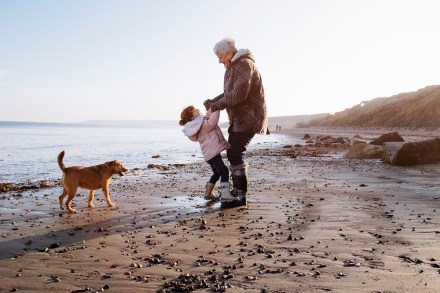
‘My grandchildren are my world,’ writes a woman on social media, summing up a certain type of grandparent. There are, however, two ways of looking at it and I see many whose worlds revolve around their grandchildren because they have no choice. I used to chat with them at the school gate. If their families were not strictly ‘the rural poor’, they were certainly of the group Theresa May described as ‘just about managing’: both parents had to work and grandparents took up the slack, unless they were still of working age, in which case arrangements were more haphazard. I see many whose worlds revolve around their grandchildren because they have no choice Because I had my last child late, I was as old as some school-gate grandmothers who had become parents when very young.

Laughter is the key to surviving Christmas

From our UK edition

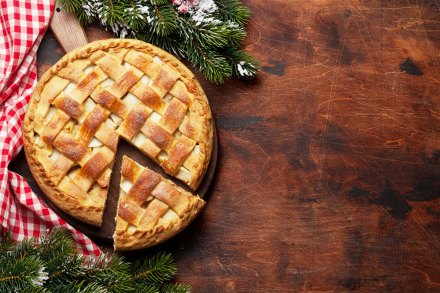
Joy. Family. Love. Lights. Stars. Festivity. And yes, all of those, if you’re lucky, and they are happy words, words that give you that fuzzy glow. Others come fast down the track, of course. War. Disasters. Accidents. Distress. Tears.  I am old now so my most familiar Christmas word is ‘memory’, although I live in the present and ‘fun’ is definitely a Christmas word – but ‘funny’? Yet as I have been sitting by the log fire thinking about Christmases past, funny keeps cropping up.  I said, knife poised, that I hoped it wasn’t the steak pie we were about to eat with our cream or custard One should never laugh at another’s misfortunes, but the first Christmas after the war, I got a third-hand red tricycle, made of what seemed like cast iron.

The joy of a modern house

From our UK edition

We have been in our new home for four months and although getting here was hell, the living is almost heaven. I am rather surprised to be in a modern house after 40 years of living in ones built centuries ago. How would I feel without any nooks and crannies, twisting staircases, elm floors and beams, not to mention the Aga? Well, how do I now feel without the draughts, rattling windows, uneven floorboards and energy bills the size of the national debt that come with every old house, plus the responsibility of too much land? We have only moved five north Norfolk miles but into another world, nearer the marshes, sea and seals, under vast skies in a light-filled house. We left a river valley for 500ft above sea level where it is several degrees colder with noticeably clearer, saltier air.

RIP Fay Weldon, a force of nature

From our UK edition

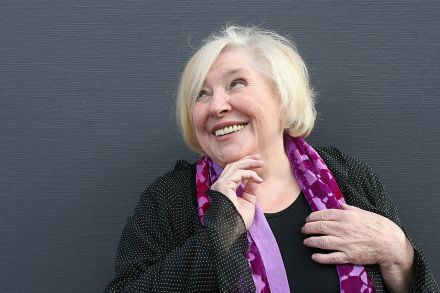
Novelists can often be disappointingly unremarkable as people but occasionally one, like Fay Weldon, is a force of nature. She seemed to pack dozen larger than life women into one, in every sense. She used to say ‘that was after I became a fat girl’, and that she chose to write most about the sort of women whose side she was on – the large and plain ones. In fact, she was on the side of all women, and spoke better in her fiction to her own and my generations than all the militant loud-mouthed feminists. She married three times, enjoyed men and their company and hated men being publicly belittled and emasculated but she simply believed that it was women who needed sticking up and speaking up for and she did it better than most.

Christmas Special

From our UK edition

65 min listen

Welcome to the special Christmas episode of The Edition! Up first: What a year in politics it has been. 2022 has seen five education secretaries, four chancellors, three prime ministers and two monarchs. But there is only one political team that can make sense of it all. The Spectator's editor Fraser Nelson, deputy political editor Katy Balls and assistant editor Isabel Hardman discuss what has surely been one of the most dramatic years in British political history (01:13). Then: Christmas is a time to spare a thought for our neighbours. While in the UK we have our own hardships, families in Ukraine are facing a Christmas under siege.

Why do patients need to know they’re dying? 

From our UK edition

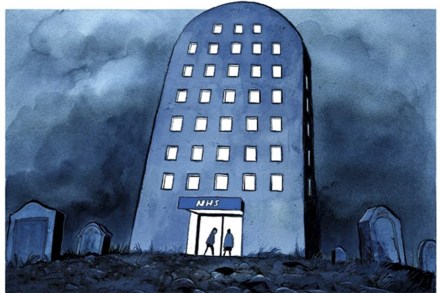
Old people are being stranded in hospital, diagnosed with terrible diseases but unable to recover enough to go home. Dr Adrian Boyle, the new president of the Royal College of Emergency Medicine, has said that NHS hospitals ‘are like lobster traps… easy to get into but hard to get out of’. Might it not be better for some if they’d never gone, or at least never been told exactly what was wrong? In C.P. Snow’s 1951 novel The Masters, the Master of a Cambridge college is ill. People seeing his bedroom light on night and day wonder how long he has left, but the question never occurs to him because he hasn’t been told he has terminal cancer and so believes he is recovering and will soon be back at the helm.

The truth about ‘the most haunted house in England’

From our UK edition

Place and story are little remembered now. The rectory in Essex was severely damaged by fire in 1939. But any old house with an unpleasant atmosphere, especially isolated, damp, dark and unmodernised, was once described as ‘like Borley Rectory’. Judging by this long ‘story of a ghost story’, the place showed its true nature from the beginning. Many of the incumbent rectors, their families, servants and guests heard and felt ghosts, always malevolent. Crockery flew about and hit people; candlesticks tumbled down stairs; there were whisperings, cries, thumps and bumps. The usual. Well, odd things do happen in old houses. I have entered rooms which I was immediately desperate to leave.

Home remedies are good for us – and the NHS

From our UK edition

Today’s medical treatment for major ills is unrecognisable, in sophistication and efficacy, from anything available during the immediate post-war period. We all live longer, pain is far better controlled, and antibiotics save lives – though fewer than they once did because of the cavalier way they have been overused. I did not take any at all until I was 20, and that was penicillin prescribed by a dentist. My children were brought up on it. But I am not sure we are better off for minor conditions. Ambulances are demanded for what only needs a sticking plaster and it is estimated that more than half of those waiting five hours in A&E don’t need to be there at all.

The day I found a postcard from Virginia Woolf

From our UK edition

A dispiriting week. Three months ago, skips arrived, into which were cast the detritus of a decade. Charity shops were donated so much that they began to wave us away. Family welcomed furniture while, oddly, refusing to accept their own toys, clothes and school photographs which had been stored with us ‘temporarily’. Book collections were culled because the new house is much smaller. But hey, we had sold the dearly loved house, whose surrounding garden, meadows, trees, pond and abundant wildlife I will miss so much – and, even better, to enthusiastic, trustworthy buyers whose dream home it was. Apparently. Because on the day before exchange of contracts, they pulled out. Solicitors report that this, and other bad behaviour, is now happening frequently.

My love affair with the Wolseley

From our UK edition

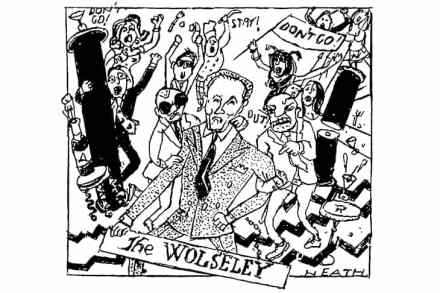
I was sitting alone at a small table in the Wolseley, Piccadilly, waiting for my supper and feeling a sense of absolute contentment. The evening buzz in that theatre-set of a restaurant has always been slightly more subdued than the lunchtime one. The lighting is lower; there are candles, there is calm. On my right, a duke dined with his family; on the left, two celebrated actors next to a young rising star. There were elderly couples from New York who believed in dressing for dinner in glitter and diamonds; there were discreet lovers, old friends. The waiter was perfectly attentive – not too little, nor, importantly, too much. Wolseley waiters do not gush. My smoked salmon arrived, with thin brown bread and butter, half a lemon wrapped in gauze. I sighed.

Can I really be turning 80?

From our UK edition

A princess of Hanover wrote in her diary: ‘My 30th birthday. There must be some mistake.’ Substitute 30th for 80th and you have how I feel this week. But age is all relative, being dependent on your genes, immune system and how it was primed in childhood; on your location, your income and luck. I had long-lived grandparents on both sides; had measles, rubella, mumps, chicken pox, whooping cough and scarlet fever before five; and in spite of semi-permanent tonsillitis was 20 before any antibiotic entered my body. I spent the years until 16 on the north-east coast of Yorkshire, through bitter snowbound winters, my lungs loaded with fresh sea air. Attitude and expectations are important too.

My post-viral battle and what it tells us about long Covid

From our UK edition

One morning in 1966, I woke up seeing double. I splashed cold water over my face and blinked a few times but I still saw double. I had had glandular fever the previous month, for which there was no treatment except rest and paracetamol, and the GP said in time it would cure itself — and though tiredness dragged on I was soon back to normal. But now I began to ache all over again, my temperature was up, glands swollen, and when I lay down I went to sleep for six hours. The GP was confident that, double-vision apart, mononucleosis had returned in a mild form, but asked me if I was experiencing anything unusual. I said my head was full of boiled socks, I could not concentrate or focus, let alone work, and when I tried to read, the letters moved around and jumbled in front of me.

Things go flying

There are fashions in the paranormal as in everything else. Since the famous Enfield hauntings of the late 1970s, poltergeists seem to have gone quiet, or at least unreported; but before then they were everywhere. In 1938, poltergeists kicked off in Thornton Heath, Surrey, and a Jewish Hungarian journalist and psychic investigator, Nandor Fodor, was alerted to strange happenings in the home of a 34-year-old housewife there. The list of happenings is familiar in all poltergeist stories. Furniture moves, light fittings shatter, crockery, money, knick-knacks, even small pictures are thrown through the air, sometimes seemingly aimed directly at individuals.

alma fielding