Susan Hill

Susan Hill

Susan Hill’s latest novel is A Change of Circumstance.

The wonderful ghosts of Christmas past

From our UK edition

The past shifts about like clouds, now dense, now parting for a memory to shine out, perhaps randomly, but bright as the sun. Here is the Sheffield Christmas when I was four and slept in Great-Aunt Florence’s room, on an eiderdown beside her bed, in the terraced house that smelled of coal smoke — the Christmas of worrying about how dirty Santa must get, going up and down the sooty chimneys. Home was Scarborough: the bracing sea air and howling gales where I missed the coal dust smell, though it brought back the cough I had had since nearly dying of whooping cough, aged two — the cough that has never really left me, so that many a Christmas since has smelled of Vicks, camphor, Friars’ Balsam.
East Anglia is the place for birds

From our UK edition

I first visited Orford in 1970, at peak Cold War when this stretch of the East Anglian coast was one of the most dangerous places to be, so that for three months of each winter living in Aldeburgh, I was perfectly positioned for maximum danger between Orford Ness with its secret atomic weapon testing, and Sizewell’s nuclear power station. I was too busy writing books to worry but Orford, bristling with military security and terrifying ‘Keep out’ notices, gave me nightmares. Now it is quiet save for some magnificent gales and rain battering the windows of this house overlooking the water. I am in mid-book as usual, and Orford Ness is an innocent nature reserve, with some access, though one area is still worryingly out of bounds.

We all love a poltergeist story

From our UK edition

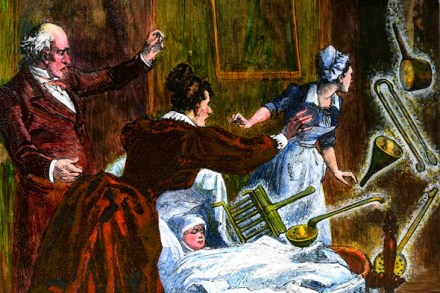
There are fashions in the paranormal as in everything else. Since the famous Enfield hauntings of the late 1970s, poltergeists seem to have gone quiet, or at least unreported; but before then they were everywhere. In 1938, poltergeists kicked off in Thornton Heath, Surrey, and a Jewish-Hungarian journalist and psychic investigator, Nandor Fodor, was alerted to strange happenings in the home of a 34-year-old housewife there. The list of happenings is familiar in all poltergeist stories. Furniture moves, light fittings shatter, crockery, money, knick knacks, even small pictures are thrown through the air, sometimes seemingly aimed directly at individuals.

The dying need real conversation, not false cheeriness

From our UK edition

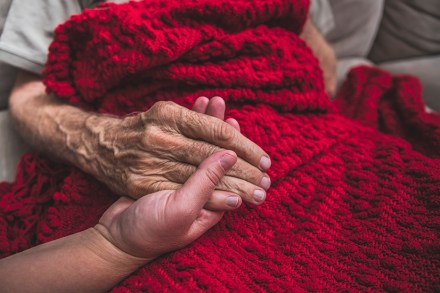
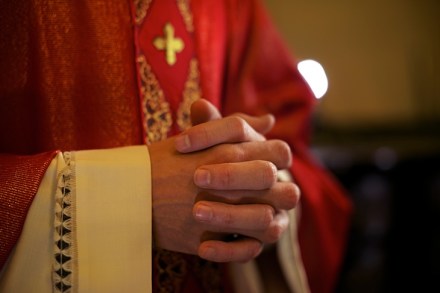
A nurse friend recently finished six weeks in a Covid intensive care unit where she witnessed many deaths and always ensured that nobody died alone. She sat holding a hand, listening, reassuring. Now on leave, she is writing down some of her experiences with the dying. A wise priest I knew said that no matter how strong your faith, your view of what happens at death and ‘the life of the world to come’ should be an agnostic one. But he still recounted some remarkable things he witnessed when sitting with the dying, and my nurse friend described similar experiences.

There’s no point in bishops – Covid has shown us so

From our UK edition

It is a relief to parents that young children are allowed out a bit now as the length of the lockdown has wreaked havoc with tempers. Birthdays have been particularly difficult. Zoom parties, with every guest in their little on-screen box like stamps in an album, are a poor substitute for a roomful of overexcited kids eating jelly. My granddaughter was eight last week and at last could meet her best friend, who lives next door, in the new paddling pool. They have managed uncomplainingly via walkie-talkies through a window so this was a joyful reunion. But what about the other would-be dressed-up party guests, not to mention gift-bearers?

I’m sick of people patronising Captain Sir Tom Moore

From our UK edition

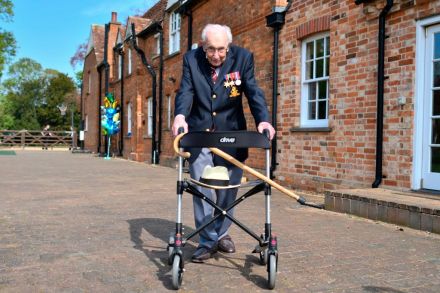
Nobody earns the right to respect just by having lived into old age, whenever that begins — it has happened by chance and by virtue of having dodged a few bullets. But everyone has the right to be treated with good manners and kindness by those with any power over them — even prisoners and toddlers having pyrotechnical tantrums. Mostly, politeness and consideration are forthcoming. It is always a shock if a bank clerk, dentist or traffic cop are brusque, perhaps because it is so rare. Still, I can stand rudeness more easily than I can tolerate being patronised, something older people encounter regularly. When Colonel Sir Tom Moore raised millions for NHS charities, everyone cheered and no one was rude about him, but my goodness was he patronised!

The lost world of lockdown

From our UK edition

It started when, the day after the announcement of some lockdown easing, I drove five miles along the coast road. For seven weeks there had been barely another car, and now it was like a normal pre-pandemic morning. Our little town was no longer deserted, and there were queues for newsagent and bank. Many holiday and second homes are apparently occupied, though no one is actually allowed to be here of course. Nevertheless, agencies are merrily advertising: ‘Come and lock down in beautiful, safe North Norfolk.’ The paths to the beaches are open again, and if the wind had not swung round to blow a vicious north-easterly they would have been crowded.

Who can still make a Sunday joint last a week?

From our UK edition

Sunday lunch was always roast beef and, in the traditional way, the Yorkshire pudding was served first with gravy, supposedly because if you were full of cooked batter you wanted less meat. Monday saw cold meat, jacket potatoes and pickles, while the beef bone went into the pot with lentils, pearl barley, carrots and onions and bubbled on the hob for days, the basis of every dinner until Friday’s fish and Saturday’s sausages and mash, before Sunday came round again. That is what everybody had and, like all housewives, my mother made the most of every morsel. Throughout and after the war, waste was a crime. I hate cooking and am bad at it for all I learned, by watching, about roasting the potatoes in the hot fat round the meat, and I always helped beat the batter.

In the Covid era, age isn’t just a number

From our UK edition

When I told my seven-year-old granddaughter, over Zoom, how much I missed being with her, I added: ‘Maybe it won’t be much longer before I can see you.’ But she said that it would be some time, as ‘the government are going to stop old people seeing anyone because of the virus’. Asked what was meant by ‘old people’, she said: ‘I think anybody more than 54.’ Clearly some misunderstanding. At nearly 25 years beyond 54, I am correctly classed as old; some days I feel it, most days I don’t, but I am well, have most of my marbles and am working hard. Age is just a number. Except that it isn’t.

Do we really want to go back to normal?

From our UK edition

On the day our A-level exams began some wit wrote on the blackboard: ‘I wasted time, and now doth time waste me.’ I thought of that again yesterday when a writer friend emailed: ‘Like you, I thought I would be much more productive but I do find it very hard to focus… and I still haven’t filed those boxes of books in the sitting room.’ The days fly by and the sunshine was a real bonus, for it is pleasant and surely good for the soul to sit in it, reading, dreaming, nodding off, and topping up our Vitamin D levels. I said here at the beginning of lockdown that I would finish the book I had already started, plus some short stories, this weekly column and the occasional book review.

Pity the poor stepmother — the most reviled character in folk literature

From our UK edition

Fairy stories were not originally aimed at children, and we do not know what the first audience responses were; but as humans do not change in certain essentials it seems likely that reactions centuries ago were similar to reactions now — when it is adults who often find many of them gruesome and unsuitable for those of single-figure age. Wicked stepmothers plot torment and murder; small children are banished alone to forests; wolves dress up in grandmotherly bonnets and shawls to deceive — and eventually to kill and eat — rosy-cheeked little girls; beautiful princesses are locked in high towers or tricked into taking poison to fall asleep for 100 years. These tales would not be out of place alongside True Stories of Serial Killers.

Now is the time for comfort reads

From our UK edition

It all started on the day after the Brexit referendum. People who do not get the result they voted for in any election are naturally annoyed, sad, even despairing. If we sincerely believe in one political party and point of view, and lose to the opponents, we feel doomy and gloomy and say so. We used to speak our minds to friends and fellow believers, and that was that. Brexit changed everything. For many who lost, that was not that, and it still isn’t. What started on social media extended to public platforms and personal communication. Disagreement became vicious, language abusive, people tore at one another, claws out, simply for having a different opinion. I lost count of the old friends who dropped and blocked me on discovering I voted Leave and have never picked me up again.

The joy of short stories in these taxing times

From our UK edition

From time to time, usually when things are quiet, the government brings on the dancing girls. David Cameron made Carol Vorderman the celebrity Head of Maths, Prue Leith was wheeled out to revolutionise hospital catering (again), and Mary Portas was to breathe life, excitement and renewed prosperity into our dying high streets. Nothing ever happens, of course, but perhaps Covid-19 does present a real opportunity. In the past 20 years I have watched several small towns change radically. Shops selling things people actually needed — meat, fish, fruit and veg, bread and butter, ironmongery, postal and banking services — have closed.

The online museums you’ll never want to leave

From our UK edition

‘We don’t talk about the war.’ Yet those of my generation and older reference it daily. The coronavirus is an unseen enemy but for every-one not in military service, so were our past enemies — Germany, Italy, Japan, Russia — invisible mainly because the mainland was never physically invaded by any of them, so the only sightings were on the newsreels. All we can see of the virus is that horrible furry ball with round-ended spikes sticking out of it, which is what it looks like under a microscope, but this is still a war, the same as any other. We were not actually quarantined then but travel was both difficult and discouraged, and fierce men on posters asked: ‘Is your journey really necessary?

My isolation reading list

From our UK edition

A psychiatrist once told me that it takes one’s subconscious about three weeks to catch up with a significant life event, and that is certainly holding good now. We have gone through shock and disbelief while simultaneously accepting the situation. Mostly we have also accepted the rules and restrictions, and I wonder if many who flocked to holiday places on the first sunny days of school closures and went dozens abreast in parks and on beaches were not deliberately sticking up two fingers to the virus or the law, but simply in denial. It took more deaths, especially among the young and otherwise fit — plus the Prime Minister’s television address giving not advice but orders — for it to hit home. My own catch-up moment came early one morning.

Shakespeare knew a thing or two about self-isolation

From our UK edition

‘Now I am cabined, cribbed, confined, bound in To saucy doubts and fears.’ Shakespeare got there first, as ever, and he probably knew a thing or two about being in quarantine. The plague lurked darkly, and people were as aware of its dangers as we are of Covid-19. The theatres definitely closed, so it is likely that he wrote while self-isolating. Which is exactly what I am doing, with laptop on the kitchen sofa, tea at my elbow, spring sunshine pouring in. Four long-tailed tits, two robins and a bustle of hedge sparrows are busy shoving one another off the bird table outside. Our resident barn owl skimmed by earlier. Lucky that can I walk in the garden and meadow, or down our quiet lane of an evening, but otherwise, we are strictly quarantined. I am well, but 78.

Susan Hill: The brilliance of the NHS cancer service

From our UK edition

Exactly 50 years ago I drove, for the first visit of many, across country to Aldeburgh in Suffolk, following the Pied Piper, Benjamin Britten. I had been obsessed by his music, and indeed by him, since first hearing the ‘Sea Interludes’ from his opera Peter Grimes in a music appreciation lesson. His sound worlds, his persona, the place he both lived in and recreated in his work, spoke to me in a way nothing else ever has. As I drove in, past the church to see the sea, the Moot Hall, the fishing boats, the shop where he had bought china mugs to string in a line and tap with spoons for the sound of raindrops in Noye’s Fludde, I felt the real, everyday world and his imaginative one interlock. That first visit is etched in my memory.

The boy on the hillside

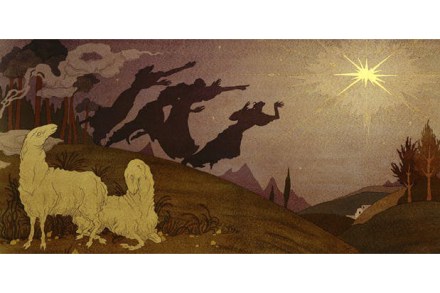
The boy, Seth, stirred in his sleep. ‘Cold…’ He had pushed the blanket off, with his tossing and turning about. ‘Here, here.’ The man seated on the ground nearest to him rearranged Seth’s covering, pulling it up and tucking it under him until he was swaddled like a baby. His head rested on an old fleece. https://audioboom.com/posts/1816403-susan-hill-reads-the-boy-on-the-hillside There were five men and the boy out on this first night of bitter weather. Until now it had been wild winds and huge clouds gray as boulders rolling across the sky and the sheep huddled wherever they could shelter from the gale, but later that day the clouds had shredded into skeins, becoming thinner and paler until they vanished and the sky was quite clear.

star dreamer

A Halloween short story: by The Woman in Black’s Susan Hill

From our UK edition

‘This is a true story…’ Right. Only this time, it really is. There are no wails, whistling winds or taps on window panes, so you may find it a trifle prosaic, but because my tale has none of the traditional accoutrements that may make it all the more chilling. Stay with me. In June this year we had two cars, a Vauxhall Antara and a Volkswagen Tiguan, and it was in the Antara that we set off to the Cotswolds, from where my partner would continue to London for an event requiring evening clothes — which she had left behind in the house. By wondrous chance, we were passing a shopping centre, into which she dashed for a substitute outfit, taking her phone because she was expecting an important call. She returned to the car sans phone.