Stuart Kelly

Get thee to a notary

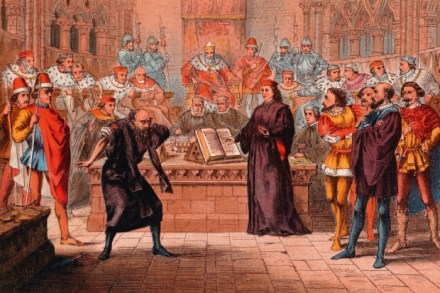
Given this year’s 400th anniversary of Shakespeare’s death, there was always going to be a slew of new publications; few, I suspect, will have as long-lasting an effect as John Kerrigan’s. His field of inquiry is both straightforward and complicated. It is almost retrospectively obvious that Shakespeare’s plays contain a great amount of vows, oaths, swearing both covenantual and vulgar, pledges, promises and imprecations. The same might be said for a great many playwrights’ works; but the depth of subtlety which Kerrigan finds in the handling of these specific rhetorical forms is compelling.

Muses, nurses and punch-bags

The conceit of this book — the author’s third on Robert Lowell — is strong, although its execution is less successful. Lowell made his love life central to his aesthetic project, especially in For Lizzie and Harriet and The Dolphin, and so it makes sense to read his work through his major emotional attachments.

Bard times

It is fair to say that Jeanette Winterson is not Shakespeare, though I cannot imagine why any authors would accept these commissions to retell the plays — Margaret Atwood is lined up for The Tempest, Howard Jacobson for The Merchant of Venice — since the only certainty is that the texts will not be as good as Shakespeare. At least Winterson has chosen one of the more fascinating plays. Collected with the comedies in the First Folio, it is a singularly stark and strange work. Updated to the present day, the jealous King Leontes of Sicily is now Leo, the hedge-fund manager of Sicilia. His wife, MiMi, is a half-French chanteuse, and their mutual friend with whom Leo suspects her of having an affair is Xeno, not Polixenes.

Detroit’s new colonials

In the opening sentence of this subtle and finely poised novel, the narrator, Greg Marnier, known as ‘Marny’, admits that he ‘was never much good at telling stories’. By the end he is accused of having a ‘confessional streak, but no real desire to explain yourself’, while realising that ‘everything people do, everything they say, is just a clumsy form of self-defence’. He is a singularly obtuse and convincing character — a thirtysomething lecturer with no sign of tenure. Then a chance encounter with a rich college friend leads him to re-locate to Detroit.

Sex, violence and lettuces

There is something cruelly beautiful, delightfully frustrating and filthily gorgeous about a Scarlett Thomas novel. Two family trees open and close this book: one shows what the characters think they are and how they are related, the other what they are revealed to be. How the couplings shift is less important than the chains of desire that cannot be mapped or taxonomised. The Gardener family is reeling from and sneakily plotting about the death of great-aunt Oleander, owner of Namaste House, a retreat for whack jobs and slebby failures. But her will leaves them confounded. This family of botanists are each given a seed which might flourish into death or enlightenment. It might explain their genealogy, and the deaths of four of their forebears.

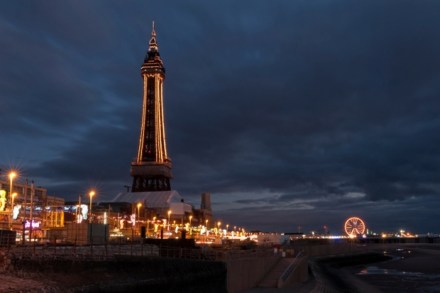
All roads lead to Blackpool in Andrew O’Hagan’s latest novel, The Illuminations

The illuminations of Andrew O’Hagan’s fifth novel are both metaphysical and mundane. In the course of its taut plot, they encompass Blackpool’s elaborate decorations and a moment of understanding between a grandmother and grandson; epiphanies about the nature of masculinity picked out by the tracer fire and explosions in Afghanistan; and a photograph of an everyday sink linked to the aesthetic realisation that ‘colour is light on fire’. O’Hagan has rightly been praised as a prose stylist, and his grasp of cadence and rhythm is every bit as evident here as before; but what is more impressive is O’Hagan as strenuous moralist.