Steven Barrett

Steven Barrett is a barrister.

The EU’s rule of law crisis lets Britain change the Brexit deal

From our UK edition

Following Germany’s example, courts in Poland have rejected the supremacy of EU law. That is the principle that, if you join the EU, you give away part of your sovereignty to it and you have to do what the European Court says. I have written before about the precedent set in Germany. Both states now say that their constitution trumps EU law and the rulings of the EU courts. Legally speaking, this declaration is simply untrue – as should be known to anybody who read and signed the Lisbon Treaty, joining the EU. The United Kingdom always upheld this legal truth. If we wanted our sovereignty back, we had to leave the EU. That was a political choice and isn’t therefore something I write about. It is fair to also highlight that the EU is far from blameless.


Lord Sumption was right to quit the Supreme Court

From our UK edition

There used to be a saying: ‘never discuss religion or politics’. That was just a societal rule, a prudent tip for an enjoyable evening. But that principle is also in our constitution. This is a fact recognised by the Supreme Court — and particularly by Lord Sumption — earlier this year. Sharing your political opinions is, for some people, a breach of constitutional obligations. The UK is odd, some think, in having the constitution that we do. Far younger states with bright and shiny constitutions, written in single documents, seem to look down on our frumpy older version.

The rule of law is breaking down in the EU

From our UK edition

There are 27 member states in the EU. Two have now declared they are not bound by EU law. Based on the law as set out in the treaty each member state signs when it joins the EU, that means both countries are in breach of international law. The first country in breach of international law was Germany. I wrote about this last year. The German court said it wasn’t bound by EU law because the EU had no power to act on the legality of the ECB’s bond-buying programme during the pandemic. The Germans said ‘you can’t answer this question, so we will’. Crucially, the EU disagreed and the European court gave a judgment on the legality of the bonds. At this point the German court overruled the EU.

The new mask regime: a legal guide

From our UK edition

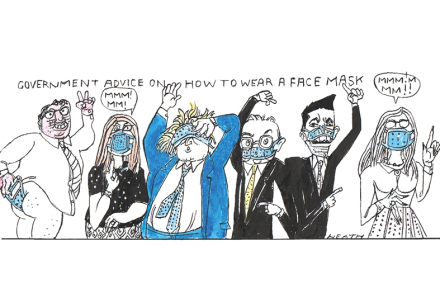
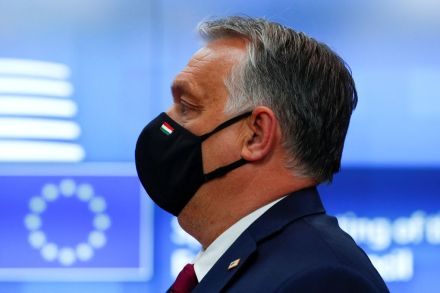
Mask wearing has been compelled by law. Very soon the government has said that compulsion will end (in England at least). There is little in life more terrifying than being British and put in a new social situation without clear rules. So while we contemplate the dread of inevitably offending someone no matter what we do, it might be helpful to clarify what this means from the point of view of the law. The first and most important point is that just because the government stops making mask wearing a legal requirement, that doesn’t mean that mask wearing stops being a legal requirement. Why? Because our legal system gives lots of powers to people other than government. Most of the rules or obligations you follow in any given day won’t flow directly from government.

How Germany’s law-breaking undermined the EU

From our UK edition

Well over a year ago I wrote about how Germany had broken both the EU treaty and so international law, when its constitutional court ruled against the ECB’s bond-buying programme during the pandemic. Germany remains in breach of that law and has not been punished by the EU. The breach is, I think, simple to understand: 27 members sign up to a club and agree to be bound by its rules. If one member says ‘no actually I control the rules’, that’s Germany and it has broken them. The EU tried to paper over the cracks caused by Germany’s EU law breaking, but nothing has yet sealed the hole Germany made. You can think of laws much like walls. We lawyers police these boundaries on how you can or cannot behave.

The EU’s lowering of food safety standards must end talk of alignment

From our UK edition

During the referendum, it was fashionable to pretend that being an EU member did not impact sovereignty. That is wrong as a matter of law. EU member states do surrender, or pool, sovereignty. The political argument is whether or not you think it is worth giving up some sovereignty for EU membership – that is your choice. But these arguments have been dealt a huge blow by the EU. The EU has decided to lower food safety standards and allow farm animals (who normally eat grass) to eat bits of each other. In April the EU decided that once again chickens may be fed pig, pigs may be fed chickens and sheep and cows may be fed to other farm animals. Some MEPs objected, but they have now lost. The EU is going to be rolling back the animal welfare standards put in place to stop BSE.

Is the EU breaching its UK treaty by failing to protect LGBT rights?

From our UK edition

Has the EU Commission lost any sense of moral value? This week, Hungary, an EU member state, voted to impose bigoted and oppressive laws on its LGBT citizens. This amounted to a clear breach of many of our domestic laws – and it is a breach of the shared Human Rights laws. Yet the EU's response has been dismal. Is it time for Britain to show solidarity with LGBT Hungarians – and walk away from its treaty with the EU? The EU Commission said it is aware of what is unfolding in Hungary and that:  'When protecting children from harmful content it is important for member states to find the right balance of relevant fundamental rights, such as the freedom of expression and non-discrimination' But this falls far short of what it needed to say.

What the Covid contract ruling against the government really means

From our UK edition

The High Court's ruling that Boris Johnson's government broke the law by awarding a Covid contract worth £560,000 has been loudly celebrated by campaigners. 'The Government’s handling of pandemic procurement was a kind of institutionalised cronyism,' said Jolyon Maugham, from the 'Good Law Project', which brought the case. But this isn't quite the victory it is being made out to be. It's true that judges did decide that the contract handed to Public First, a communications firm, was unlawful because of a risk of apparent bias. But the Court rejected two of the three things the Project complained about. It also refused to quash, or end, the contract.

The Colin Pitchfork saga exposes the problem with the Parole Board

From our UK edition

Colin Pitchfork, 61, was jailed for life for raping and murdering 15-year-olds Lynda Mann and Dawn Ashworth in Leicestershire in the 1980s. Now the Parole Board has said Pitchfork should be released. The backlash from politicians has been swift. Local MP Alberto Costa said he was 'appalled' by the decision. 'It would be immoral, wrong and frankly dangerous to release this disgraceful murderer of two children,' he added. Justice Secretary Robert Buckland, who is said to be exploring the use of the 'reconsideration mechanism' to reverse the decision, appears to agree with his Tory colleague. But the reality is that Buckland – and Costa – have little power to stop Pitchfork's release.

Burnham’s misjudged attack on the judiciary

From our UK edition

The Mayor of Greater Manchester, Andrew Burnham, has publicly criticised a judge, calling his decision to end a criminal trial on legal grounds a ‘disgrace’. The judge is Mr Justice William Davis, a highly respected ‘red judge’ — that is the top level of judge we have who do trials. They are the best we have. There are 105 in our country. https://twitter.com/AndyBurnhamGM/status/1397494524054810629?ref_src=twsrc%5Etfw This is an attack on the judiciary and the independence of judges. But what you think of people who do such things reveals much about your politics. The charitable argument is that Mr Burnham is confused. That is no insult, the legal system is confusing — I am not an expert on crime, for example.

Barristers should stay out of the Israeli-Palestine conflict

From our UK edition

The world of barristers had something of a minor civil war at the weekend. The cause? The lesser known ‘Bar Human Rights Committee of England & Wales’ (BHRC), decided to weigh in on the Israeli-Palestine conflict. In a letter to the Foreign Secretary, Dominic Raab, the BHRC called on 'the UK Government to urge Israel, its friend and ally, to cease all violations of its obligations and responsibilities as an occupying power immediately, including its assault on Gaza'. It said: 'We urge the Government to issue a statement of unambiguous support for an independent investigation into alleged war crimes in the occupied Palestinian territory by the ICC' Who needs or wants a bunch of wig-wearers popping in?

Glasgow’s immigration raid stand-off is nothing to celebrate

From our UK edition

The rule of law is very simple: it means ‘everyone must obey the law’. Last year, much hay was made by a variety of politicians claiming the government might breach the rule of law over Brexit. It had not. But even the idea that the rule of law might have been broken was given rightful attention. We should take from that a comforting truth that breaches of the rule of law matter to society. This week, a large group of people physically obstructed immigration officers in the proper conduct of their office in Glasgow, preventing them from detaining two men. This was a breach of the rule of law. https://www.youtube.com/watch?

The dividing wall between law and politics is under attack

From our UK edition

All my legal life I have watched with sadness those who are ever groping, Gollum-like, unable to resist the idea that our courts can somehow give them the political victory which the elections deny them. During the fallout from the Brexit vote, I hoped this insanity had reached its peak. I was wrong. We are only four months into the year and already members of the House of Lords have advocated that our courts have a say in determining our foreign policy, while the House of Commons Privileges Committee has suggested our courts should enforce the appearance of witnesses before parliament — and that they should effectively be a court (which they aren’t capable of being).

The EU needs to stop playing politics with law

The Lugano convention – part of a tapestry of complicated international law agreements ensuring the courts of one country recognise the courts of another – has a dull name but it matters a great deal. Since the EU referendum, the convention has played a small role in the great internecine conflict between Britain and Brussels. Much energy has been wasted in this series of pointless bust-ups. And now, the EU is determined to use the Lugano convention – a playing field it claims to control – to ensure Britain pays a price for Brexit, by effectively blocking us from rejoining the convention. Why does this matter? Because without the convention, business suffers.

The EU’s vaccine grab breaches the rule of law

From our UK edition

The EU is discussing confiscating and requisitioning private property. It is surprisingly brazen about this. The bloc is proposing both a ‘bespoke’ vaccine export ban and has identified 29 million doses in Anagni in Italy which it wants. The EU wishes to rectify its own error in vaccine procurement. That is a breach of the rule of law. The rule of law is very simple. It means that no one is above the law and there is one law for all. The EU asserts, regularly, that it has a legal case against AstraZeneca. I, and many other legal commentators, rubbished that assertion in January. But as I stated publicly eight weeks ago, if the EU believes it has a case it must bring one – in the perfectly capable and serviceable court in Belgium.

The truth about statues and the law

From our UK edition

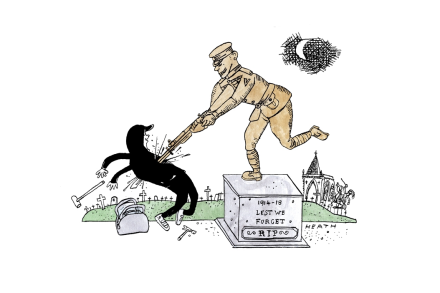
There is a proposal to change how we criminalise people who damage statues. This proposed change is set out in the Police, Crime, Sentencing and Court Bill and has received much criticism — it is the supposed cause of last night’s protests in Bristol, the first place in the UK to see a prominent statue being toppled last summer. But it is not for lawyers to tell the public what they can or should think — the law is the law, but any changes to it are political decisions. Lawyers can elucidate how our regulations currently work but it is for the public and their politicians to decide what those regulations are. So it is worth looking at how the law treats those who deface public monuments and that, perhaps, can inform whether we think the regulations need changing.

The EU’s jab snatching ruse is legally absurd

From our UK edition

For some months now, increasingly disturbing statements on the law or legal threats have emanated from the EU. Some of these focus on AstraZeneca and if you were a drug company who had committed so early on and so successfully to helping develop and distribute a vaccine for the current pandemic (at cost price), you might reasonably feel hard done by. But that is not for me. What is for me is the latest, oddest statement, that the EU may seize AstraZeneca's manufacturing plants and their produce and possibly their intellectual property rights (the recipe). Can they? The EU has form for making statements on the law which are wrong. A summary of the issue is this: the UK and other countries moved very quickly to order batches of vaccines from lots of manufacturers.

Mark Drakeford’s men-only curfew would break international law

From our UK edition

Politicians, including Baroness Jones of the Green Party and Mark Drakeford, who is the Labour leader in Wales, have spoken of the possibility of a 6pm curfew for men. That looks to be a breach of international law and so is something often referred to as illegal. A curfew is a punishment. A curfew directed at any of us on the basis of gender/sex (or any characteristic protected from discrimination) is a collective punishment of those who have that characteristic. Or as Oxford Public International Law terms it: ‘A collective punishment is a form of sanction imposed on persons or a group of persons in response to a crime committed by one of them or a member of the group.’ Collective punishments are therefore a legal wrong.

No, Hancock’s PPE contracts haven’t been ruled ‘unlawful’

From our UK edition

The High Court has said the government acted unlawfully. It is important that is understood, because ‘unlawful’ is a word that can easily mislead. Above all, no one should accidentally think the Court has said that any of the PPE contracts are unlawful. They are not. What the Court has said is that because, on average, the contracts were published on a website after 47 days, the Department of Health and Social Care was unlawful because it promises to publish within 30 days. The government promised 30 days and 47 days is more than 30: that is unlawful. PPE was needed because of the pandemic and, due to the global shortages, the Department of Health and Social Care made contracts to get PPE.

Can the EU win a case against AstraZeneca? I’m not convinced

From our UK edition

The contract between AstraZeneca and the EU has now been published. It confirms my view, expressed on Coffee House, that the EU does not – despite its claims – have any form of ‘strong case’ or way to jump a queue to speed up its vaccine rollout. Both contracts (the one, published previously, which I used as an example in my last post, and today's) are what the EU calls advance purchase agreements, or APAs. The latest contract has slightly different wording in some places. But the differences are not substantial. This, then, appears to be bad news for the EU if it is serious about taking action against AstraZeneca. The words ‘Reasonable best efforts’ remains in the contract and is the cornerstone of the obligation AstraZeneca is under. Clause 5.