Stephen Daisley

Stephen Daisley

Stephen Daisley is a Spectator regular and a columnist for the Scottish Daily Mail

Britain needs to rethink devolution

From our UK edition

Scotland is stuck. This week has only confirmed it. SNP leader Humza Yousaf used his party conference in Aberdeen to announce a council tax freeze. It quickly emerged that he had done so without telling councils and without telling even his own cabinet. As his deputy admitted in an interview, the decision to freeze was agreed between 24 and 48 hours before the speech. Council tax was reportedly chosen because there wasn’t enough time to get expert advice on the impact of freezing other taxes. Councils are furious. Not only weren’t they consulted, but they are already making £300 million in cuts amid a two-year budget shortfall of £1.1 billion.

What Britain should do about Hamas

From our UK edition

London is, at last, beaming Israeli flags onto its most recognisable buildings. This is an improvement on how some of the city’s residents have been marking the mass murder of Jews but beyond that it’s empty symbolism, as these flag projections always are. They’ve become the most visible – and often the most substantive – western response to terrorism in the past decade or so. Perhaps it’s comforting, as you bleed out in a bullet-riddled Paris theatre or under the wheels of a truck in a Berlin Christmas market, to know that your country’s national standard will soon adorn the White House and the Palace of Westminster, but I doubt it.  Rather than a light show, I would prefer a display of gumption.

Israel declares war on Hamas

From our UK edition

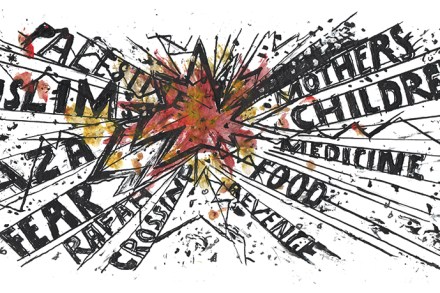
Some 5,000 rockets have rained down on Israeli civilians in an attack co-ordinated from land, sea and air by Gaza-based Hamas and Palestinian Islamic Jihad. Gunmen have stormed the south of Israel, taking control of a number of towns. The attack seems to have taken Israeli intelligence completely by surprise: the death toll - 300 so far - is certain to rise with 900 injured and 100 kidnapped. 'We are at war, not in an operation, not in rounds of fighting. At war,' Benjamin Netanyahu has said. 'I instructed a wide-scale call for reserves to respond militarily at an intensity and scale that the enemy has not known before. The enemy will pay a price they have never paid before.' The Palestinian Health Ministry says 232 Palestinians have been killed so far, with more than 1,700 injured.

What Tories can learn from Alister Jack

From our UK edition

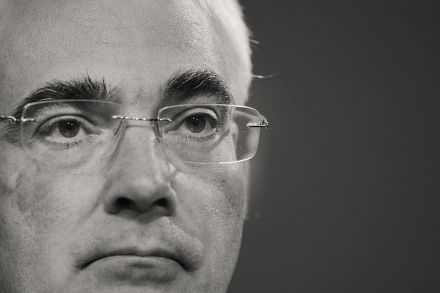
A common complaint from traditional supporters of the Conservatives is that, after 13 years in power, their party has very little to show for it. There has been little roll-back of New Labour era legislation, or the Blair-Brown equalities agenda, or the expansion of the administrative state and taxpayer-funded third-sector organisations committed to progressive policy outcomes. (Not my priorities but what Tories tell me are theirs.) There is a case to be made that the UK is more politically, culturally and fiscally left than it was when David Cameron took over in 2010. Were it not for Brexit and Rishi’s recent rollback on net zero targets, ministers would have had precious little to say to this weekend’s Tory conference that would be welcomed by the average delegate.

We should all care about the dire state of our prisons

From our UK edition

Charlie Taylor is not so much the canary in the coal mine of prison conditions as the British Gas engineer nailing a ‘condemned’ sign to the entrance while ministers skip gaily into the fumes. Taylor, just reappointed to a second three-year term as HM Chief Inspector of Prisons, has been raising the alarm about our crumbling prisons estate since taking up the role in 2020. He also writes on prisons every now and then for The Spectator, so you know he’s a good egg.  The response from ministers has amounted to little more than boilerplate but Taylor’s latest intervention ought to jolt them out of their complacency. He tells the Guardian that one in ten prisons in England and Wales ‘struggle to be fit for purpose’ and ought to be closed down.

Can the SNP hold on to Rutherglen?

From our UK edition

Last night’s televised hustings entrenched the battle lines already drawn in the Rutherglen and Hamilton West by-election. Labour candidate and local teacher Michael Shanks sought to pin unpopular SNP policies, including council tax rises and lengthy NHS waiting times, on the Nationalists’ Katy Loudon, a South Lanarkshire councillor. Loudon retreaded her two-point case for giving the SNP another chance: Westminster Tories had created a cost-of-living crisis and Labour was no different from them. For his part, the Conservatives’ Thomas Kerr tried to paint Loudon as too deferential to the SNP hierarchy while accusing Labour of having 'more flip-flops than Blackpool beach'. The by-election was prompted by a recall petition in which constituents ousted former SNP MP Margaret Ferrier.

Who polices our armed officers?

From our UK edition

When is it acceptable for the police to kill? How do we regulate their use of lethal force? What is the right balance between accountability and legal protection for the police? These questions arise after a weekend in which up to 300 authorised firearms officers (AFOs) handed back their firearms permits to the Met, doing so in response to the prosecution of an officer in connection with the death of Chris Kaba. Many have now returned and contingency measures, including AFO support from other forces and counterterrorism support from HM Armed Forces, have been shelved. However, a sudden stand-down by one-in-ten Met firearms officers is a significant event and likely to have far-reaching consequences.

The Union is in trouble, however this week’s trans ruling goes

From our UK edition

Up before the Court of Session in Edinburgh today is a legal question: was Scottish Secretary Alister Jack’s decision to block the SNP’s gender reforms a lawful exercise of his statutory powers? In January, Jack invoked a relatively obscure power to block the Gender Recognition Reform (GRR) Bill. The GRR Bill – the brainchild of Nicola Sturgeon and her Green coalition partner – would lower the age at which someone can change their legal sex to 16; remove the requirement for medical experts to be involved in the process; and reduce the statutory waiting period from two years to three months, plus a further three-month reflection period.  At the heart of the Bill is a principle that is still fairly new even within gender politics: self-identification.

Prisons aren’t working

From our UK edition

Will we learn the lessons of Daniel Khalife?  It depends what those lessons are. If they revolve solely around prison placement decisions, security protocols, and risk assessments for inmates assigned to work details, then perhaps we will. These sorts of lessons are appealing. They appear to address the immediate causes of the absconsion. They make it look like ministers are doing something tangible. The word ‘crackdown’ can be broken out by Ministry of Justice press officers and newspaper headline writers alike.  But what about the other lessons?

Scotland is right to try drug consumption rooms

From our UK edition

Scotland is the drug deaths capital of Europe. Last year saw 1,051 drug misuse fatalities, a rate 2.7 times higher than that for the UK as a whole. The Lord Advocate, Scotland’s most senior law officer, has already issued guidance allowing police to handle possession of Class A and lower narcotics: with a recorded warning rather than arrest and prosecution. The Scottish government has called for the decriminalisation of all drugs and supports a shift to a health-based approach, a move it has already begun to make within its devolved competencies. The problem has always been the Misuse of Drugs Act, the 1971 legislation which governs the policing and prosecution of possession and supply. That law is reserved to the UK parliament, meaning Holyrood can’t repeal or amend it.

What’s lurking behind Humza Yousaf’s Sturgeon tribute act?

From our UK edition

Humza Yousaf’s programme for government — Holyrood’s duller, drabber answer to the King’s Speech — was mostly a Nicola Sturgeon tribute act. Heavy focus on social and cultural issues. Lots of leftish-sounding buzzwords (‘progressive’, ‘equality’, ‘diversity’) but nothing truly transformative. Still, just because the SNP leader’s speech and the legislative agenda attached were retreads of his predecessor’s era, it doesn’t mean this programme should be overlooked. In fact, there are a number of provisions that are worth keeping an eye on.  First up is one of the most disputed pieces of legislation ever produced by the Scottish parliament, one authored by Yousaf in his former role as Sturgeon’s justice minister: the Hate Crime and Public Order Act 2021.

Bring in the Gen X politicians!

From our UK edition

American politics has become a tug-of-war between two generations. Boomers (and those older) dominate positions of power even as their capacity diminishes. Joe Biden, 80, has repeatedly displayed signs of frailty and confusion but, as far as we know, he’ll be running for re-election in 2024.  Over on Capitol Hill, Senate minority leader Mitch McConnell, 81, continues to freeze during public remarks and Diane Feinstein, 90, faces calls to retire from within her own party. While mental impairment is no impediment to serving in the United States Senate – if anything, it’s probably an advantage – the upper house is older than it has ever been. The average age in the Senate today is 65. There are eight serving senators who were born during Franklin Roosevelt’s administration.

The rise of America’s anti-corporate populists

From our UK edition

They are the Odd Couple of the United States Senate. She is a progressive Democrat and senior senator from true-blue Massachusetts, he a nationalist Republican and junior senator from ever-reddening Ohio. She has a 100 per cent rating from the National Abortion Rights Action League; he is ‘100 per cent pro-life’. She wants a path to citizenship for undocumented aliens; he wants a wall and to double the border patrol. She backs a federal assault weapons ban; his hero is his grandmother, who owned 19 handguns.

GERS Day isn’t great for the Union

From our UK edition

For a decade or so, GERS Day has been something of an annual gloatfest for opponents of Scottish independence. The fiscal data dump would reliably show just how dependent Scotland is on cash transfers from the Treasury to fund the embryonic state created by devolution and its sizeable estate of public service provision. As a result, GERS, which stands for Government Expenditure and Revenue Scotland, has become central to Scottish constitutional politics.  Anti-nationalists say it proves that independence would be financially devastating for Scotland. Nationalists dispute this. Some say independence is a matter of constitutional principle and fiscal considerations shouldn’t come into it.

Oliver Anthony and the snobbery of American conservatives

From our UK edition

If there is a right-wing cultural aesthetic in America, it is low-brow resentment. The old liberal-conservative tradition prized truth, beauty and the ‘the best which has been thought and said’. This has been shunted aside by a hair-trigger populism drawn to any cultural expression that scandalises progressive tastes. If people with graduate degrees hate it, today’s conservatives will love it.  Right-wing populists have a new cultural pin-up in Oliver Anthony, an ex-factory worker and singer-songwriter from Virginia. His track ‘Rich Men North of Richmond’ has garnered 15 million views on YouTube in the space of a week and 1.5 million plays on Spotify in just five days. For each of those five days, it has also held the number one spot on iTunes.  https://www.

Labour is closing in on a vulnerable SNP

From our UK edition

Every few weeks I write a ‘Why isn’t Scottish Labour ahead in the polls yet?’ piece. Here is the latest instalment and the take away is: Labour still hasn’t sealed the deal but it continues to close in on a vulnerable SNP. New polling from Redfield and Wilton shows the SNP retaining its three-point lead over Labour in Westminster voting intentions, with the Nationalists on 37 per cent and Labour on 34 per cent. Plugging these figures into the Electoral Calculus prediction tool gives the SNP 27 seats and Labour 22. If the next election played out this way, the SNP would have failed to win a majority of Scottish seats for the first time since 2015.

Scottish nationalists aren’t alone in seeing independence as an opportunity

From our UK edition

It’s not every day a supporter of Scottish independence is in the running for a peerage, least of all from a Tory government. So no doubt the SNP will be congratulating Mark Littlewood, who could soon be Lord Littlewood thanks to Liz Truss’s resignation honours. The outgoing director of the Institute for Economic Affairs (IEA) has distinguished himself in the world of London think tanks, where most are as uninterested in the fate of the Union as they are uninformed about Scottish politics. Not Littlewood, who is relaxed about the prospect of the Scots breaking away.  During a February 2017 appearance on Question Time, he told the Glasgow audience: ‘I see no reason why Scotland can’t take its place as a proud independent nation.

Locking up shoplifters won’t solve Britain’s crime problem

From our UK edition

The Conservative party has had an idea. It’s not a very good idea, but it’s an idea and those are rare for the Tories. The idea is to start banging up repeat shoplifters and other low-level offenders. Transport minister Richard Holden has complained that ‘the police haven’t concentrated enough on some of these offences’ even though ‘they really do have a huge impact on our high streets and shops right across the country’. Without invoking the term, the minister was calling for an amped up version of broken windows policing, stamping out petty crimes that undermine public confidence and encourage more serious offending. So far, so 1980s right-wing criminology.  No. 10 may like the headlines but No.

Robin Harper is right: the Scottish Greens have ‘lost the plot’

From our UK edition

Robin Harper, the first Green parliamentarian elected in the UK, has resigned from the Scottish Greens, saying his former party has ‘lost the plot’. His resignation letter cites ‘serious concerns’ about the party’s handling of trans issues and hopes ‘the Scottish parliament will return to listening mode’ following the Cass and Sandyford reviews into gender identity services for children.  Robin Harper was and remains a man of the decent, outward-looking left, tolerant of disagreement, more interested in cooperating with his opponents than condemning them. He urges ‘a complete overhaul’ of child and adolescent mental health services.

Why the SNP must cling on in Rutherglen and Hamilton West

From our UK edition

They are the words Humza Yousaf has been dreading: Rutherglen and Hamilton West by-election. South Lanarkshire Council confirmed yesterday afternoon that Margaret Ferrier, the incumbent MP, has been recalled by her constituents via petition. Ferrier was elected as an SNP MP but now sits as an independent after admitting that she travelled between London and Scotland on public transport having tested positive for Covid-19. She is currently serving a Commons suspension for these actions.  The by-election will be a major test for the First Minister and a chance to put his nightmare first four months behind him — or extend the agony, if his party loses the seat. Rutherglen and Hamilton West used to be Lanarkshire Labour heartlands, redder than a pillar box.