Stephen Daisley

Stephen Daisley

Stephen Daisley is a Spectator regular and a columnist for the Scottish Daily Mail

David Cameron? Seriously?

From our UK edition

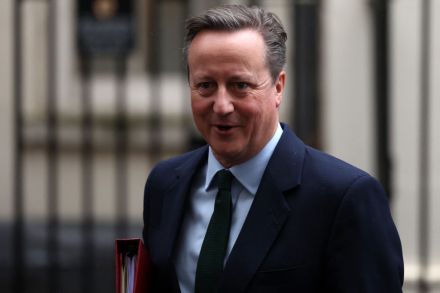
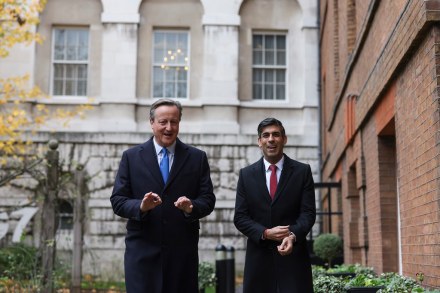
All political careers end in failure but few return to prove it a second time. David Cameron, forced to resign after his defeat in the EU referendum, has been brought back, given a peerage and appointed foreign secretary. His appointment followed the sacking of Suella Braverman as home secretary and James Cleverly’s sidewards move to replace her.  Expect Rishi Sunak’s stenographers in the press to gush over this masterstroke. A heavy-hitter in the cabinet. An experienced pair of hands at the Foreign Office. A return to serious, grown-up politics. Labour will be rattled now! Any such talk will be guff. This is not genius, it’s desperation. The Prime Minister wanted to spend his time in No.

Why is the Welsh parliament condemning Israel?

From our UK edition

This week, the Welsh parliament announced that it ‘condemns the Israeli Government’s indiscriminate attacks on Gaza’ and ‘calls on the international community to...bring pressure to bear on the Israeli Government to end the siege of Gaza which contravenes international law and the basic human rights of Palestinian civilians’. Those were the terms of a motion laid by Plaid Cymru and passed by Members of the Senedd by 24 to 19, with 13 abstentions. The motion was not entirely without merit: it condemned Hamas’s attacks on Israeli civilians and called for the hostages to be released. But this story nonetheless offers a signal from the devolution crisis that no one in Downing Street or Whitehall wants to acknowledge.

Suella Braverman is right for once

From our UK edition

There can be few sins in politics graver than giving Suella Braverman a point. Yet that is exactly what the Home Secretary has in her Times op-ed when she writes: Unfortunately, there is a perception that senior police officers play favourites when it comes to protesters. During Covid, why was it that lockdown objectors were given no quarter by public order police yet Black Lives Matter demonstrators were enabled, allowed to break rules and even greeted with officers taking the knee? She’s not wrong, is she?

TikTok teens have an anti-Semitism blind spot

From our UK edition

How could anyone hate Lily Ebert? The 99-year-old from Golders Green dedicates her life to teaching younger generations about the Shoah. Lily survived Auschwitz, where her mother and two of her siblings were gassed, and she went on to found the Holocaust Survivors' Centre. For her contributions to Holocaust education, she was awarded the British Empire Medal. One of the tools she uses to reach young people is TikTok. Her account, managed by her 19-year-old great-grandson Dov Forman, has 2.1 million followers, drawn to educational videos from a woman who has lived some of the very worst of history. Then, one month ago, when Hamas murdered 1,400 Israelis in one day, things changed.

It’s time to have a think about devolution

From our UK edition

The Scottish government has launched another white paper on independence, this time on the subject of migration. It is the sixth paper in the ‘Building a New Scotland’ series setting out the SNP-Green administration’s vision for a post-UK Scotland. The substance of the document isn’t as important as the fact of its existence. The Supreme Court ruled unanimously that the Scottish parliament cannot legislate for an independence referendum. The UK parliament shows no inclination to permit another referendum. So why is the Scottish government using public resources to promote a prospectus for a constitutional event that is opposed by Westminster and may never happen?

Suella Braverman is all talk

From our UK edition

Three cheers for Suella Braverman, hammer of the left. The Home Secretary has provoked yet more howls of indignation from progressives after describing anti-Israel demonstrations as ‘hate marches’. Speaking after Monday’s Cobra meeting, Braverman said: ‘We’ve seen now tens of thousands of people take to the streets after the massacre of Jewish people, the single largest loss of Jewish life since the Holocaust, chanting for the erasure of Israel from the map. To my mind there is only one way to describe those marches: they are hate marches.’ Suella Braverman’s right-wing philippics are her version of ‘build the wall’ Finally, someone willing to tell it like it is. That is, after all, what Braverman does.

Could Ash Regan’s defection be the beginning of the end for Humza Yousaf?

From our UK edition

Eight months ago, Ash Regan was a contender for the leadership of the SNP, alongside Kate Forbes and eventual winner Humza Yousaf. Today she quit the party, defected to Alex Salmond’s rival Alba, and becomes that outfit’s first ever MSP. In a statement posted on X, formerly Twitter, Regan said it had ‘become increasingly clear that the SNP has lost its focus on independence, the very foundation of its existence’. She added that she ‘could not, in good conscience, continue to be part of a party that has drifted from its path and its commitment to achieving independence as a matter of urgency’.  Regan won Edinburgh East under the SNP banner in 2016 but became increasingly disaffected by the party leadership under Nicola Sturgeon and her successor Yousaf.

How Britain failed Israel

From our UK edition

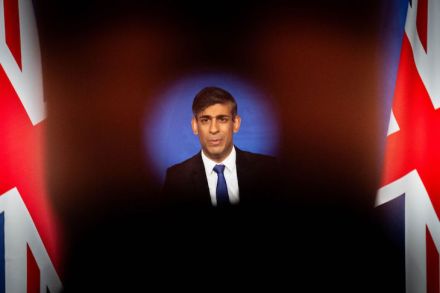
That the United Kingdom’s central institutions are rotten, crumbling, captured and perhaps beyond recovery is not news, but the Gaza intifada has crystallised the scale of institutional debasement. The brutalisation and murder of 1,400 Jews by Palestinian terrorists, and the open celebration of those actions by Jew-haters in this country, ought to have been met swiftly and resolutely. We do not do that sort of thing here. Instead, this demonic behaviour has granted us the most intimate and bracing glimpse at the decay inside the British state since the aftermath of 9/11. At a time when statesmanship is called for, we are forced to choose between Rishi Sunak, a waste of an expensive suit, and Sir Keir Starmer, a waste of a slightly more affordable suit.

Why Israel is set to invade Gaza

From our UK edition

If reports this evening are correct, Israel is stepping up its ground operations in Gaza. The Jerusalem Post quotes IDF spokesman Daniel Hagari saying: ‘In the last few hours, we have severely increased our attacks in Gaza.’ For two weeks, a threatened ground invasion has failed to materialise. The Israeli press attributes the delay to diplomatic efforts with Washington and the need to assess the IDF’s capability for fighting on two fronts should Hezbollah decide to invade or shell from the north. Israelis, particularly though not exclusively on the political right, have been urging Benjamin Netanyahu to get a move on. ‘Tnu tzahal lenatze’ach’ runs the old Second Intifada era slogan. ‘Let the IDF win.’ The delay has been to Israel’s disadvantage diplomatically.

Britain needs to rethink devolution

From our UK edition

Scotland is stuck. This week has only confirmed it. SNP leader Humza Yousaf used his party conference in Aberdeen to announce a council tax freeze. It quickly emerged that he had done so without telling councils and without telling even his own cabinet. As his deputy admitted in an interview, the decision to freeze was agreed between 24 and 48 hours before the speech. Council tax was reportedly chosen because there wasn’t enough time to get expert advice on the impact of freezing other taxes. Councils are furious. Not only weren’t they consulted, but they are already making £300 million in cuts amid a two-year budget shortfall of £1.1 billion.

What Britain should do about Hamas

From our UK edition

London is, at last, beaming Israeli flags onto its most recognisable buildings. This is an improvement on how some of the city’s residents have been marking the mass murder of Jews but beyond that it’s empty symbolism, as these flag projections always are. They’ve become the most visible – and often the most substantive – western response to terrorism in the past decade or so. Perhaps it’s comforting, as you bleed out in a bullet-riddled Paris theatre or under the wheels of a truck in a Berlin Christmas market, to know that your country’s national standard will soon adorn the White House and the Palace of Westminster, but I doubt it.  Rather than a light show, I would prefer a display of gumption.

Israel declares war on Hamas

From our UK edition

Some 5,000 rockets have rained down on Israeli civilians in an attack co-ordinated from land, sea and air by Gaza-based Hamas and Palestinian Islamic Jihad. Gunmen have stormed the south of Israel, taking control of a number of towns. The attack seems to have taken Israeli intelligence completely by surprise: the death toll - 300 so far - is certain to rise with 900 injured and 100 kidnapped. 'We are at war, not in an operation, not in rounds of fighting. At war,' Benjamin Netanyahu has said. 'I instructed a wide-scale call for reserves to respond militarily at an intensity and scale that the enemy has not known before. The enemy will pay a price they have never paid before.' The Palestinian Health Ministry says 232 Palestinians have been killed so far, with more than 1,700 injured.

What Tories can learn from Alister Jack

From our UK edition

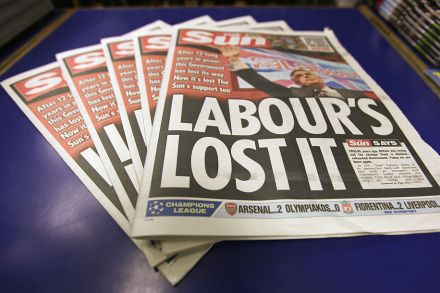
A common complaint from traditional supporters of the Conservatives is that, after 13 years in power, their party has very little to show for it. There has been little roll-back of New Labour era legislation, or the Blair-Brown equalities agenda, or the expansion of the administrative state and taxpayer-funded third-sector organisations committed to progressive policy outcomes. (Not my priorities but what Tories tell me are theirs.) There is a case to be made that the UK is more politically, culturally and fiscally left than it was when David Cameron took over in 2010. Were it not for Brexit and Rishi’s recent rollback on net zero targets, ministers would have had precious little to say to this weekend’s Tory conference that would be welcomed by the average delegate.

We should all care about the dire state of our prisons

From our UK edition

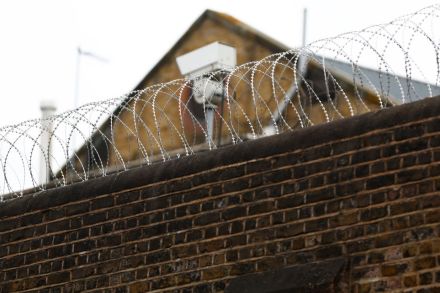
Charlie Taylor is not so much the canary in the coal mine of prison conditions as the British Gas engineer nailing a ‘condemned’ sign to the entrance while ministers skip gaily into the fumes. Taylor, just reappointed to a second three-year term as HM Chief Inspector of Prisons, has been raising the alarm about our crumbling prisons estate since taking up the role in 2020. He also writes on prisons every now and then for The Spectator, so you know he’s a good egg.  The response from ministers has amounted to little more than boilerplate but Taylor’s latest intervention ought to jolt them out of their complacency. He tells the Guardian that one in ten prisons in England and Wales ‘struggle to be fit for purpose’ and ought to be closed down.

Can the SNP hold on to Rutherglen?

From our UK edition

Last night’s televised hustings entrenched the battle lines already drawn in the Rutherglen and Hamilton West by-election. Labour candidate and local teacher Michael Shanks sought to pin unpopular SNP policies, including council tax rises and lengthy NHS waiting times, on the Nationalists’ Katy Loudon, a South Lanarkshire councillor. Loudon retreaded her two-point case for giving the SNP another chance: Westminster Tories had created a cost-of-living crisis and Labour was no different from them. For his part, the Conservatives’ Thomas Kerr tried to paint Loudon as too deferential to the SNP hierarchy while accusing Labour of having 'more flip-flops than Blackpool beach'. The by-election was prompted by a recall petition in which constituents ousted former SNP MP Margaret Ferrier.

Who polices our armed officers?

From our UK edition

When is it acceptable for the police to kill? How do we regulate their use of lethal force? What is the right balance between accountability and legal protection for the police? These questions arise after a weekend in which up to 300 authorised firearms officers (AFOs) handed back their firearms permits to the Met, doing so in response to the prosecution of an officer in connection with the death of Chris Kaba. Many have now returned and contingency measures, including AFO support from other forces and counterterrorism support from HM Armed Forces, have been shelved. However, a sudden stand-down by one-in-ten Met firearms officers is a significant event and likely to have far-reaching consequences.

The Union is in trouble, however this week’s trans ruling goes

From our UK edition

Up before the Court of Session in Edinburgh today is a legal question: was Scottish Secretary Alister Jack’s decision to block the SNP’s gender reforms a lawful exercise of his statutory powers? In January, Jack invoked a relatively obscure power to block the Gender Recognition Reform (GRR) Bill. The GRR Bill – the brainchild of Nicola Sturgeon and her Green coalition partner – would lower the age at which someone can change their legal sex to 16; remove the requirement for medical experts to be involved in the process; and reduce the statutory waiting period from two years to three months, plus a further three-month reflection period.  At the heart of the Bill is a principle that is still fairly new even within gender politics: self-identification.

Prisons aren’t working

From our UK edition

Will we learn the lessons of Daniel Khalife?  It depends what those lessons are. If they revolve solely around prison placement decisions, security protocols, and risk assessments for inmates assigned to work details, then perhaps we will. These sorts of lessons are appealing. They appear to address the immediate causes of the absconsion. They make it look like ministers are doing something tangible. The word ‘crackdown’ can be broken out by Ministry of Justice press officers and newspaper headline writers alike.  But what about the other lessons?

Scotland is right to try drug consumption rooms

From our UK edition

Scotland is the drug deaths capital of Europe. Last year saw 1,051 drug misuse fatalities, a rate 2.7 times higher than that for the UK as a whole. The Lord Advocate, Scotland’s most senior law officer, has already issued guidance allowing police to handle possession of Class A and lower narcotics: with a recorded warning rather than arrest and prosecution. The Scottish government has called for the decriminalisation of all drugs and supports a shift to a health-based approach, a move it has already begun to make within its devolved competencies. The problem has always been the Misuse of Drugs Act, the 1971 legislation which governs the policing and prosecution of possession and supply. That law is reserved to the UK parliament, meaning Holyrood can’t repeal or amend it.

What’s lurking behind Humza Yousaf’s Sturgeon tribute act?

From our UK edition

Humza Yousaf’s programme for government — Holyrood’s duller, drabber answer to the King’s Speech — was mostly a Nicola Sturgeon tribute act. Heavy focus on social and cultural issues. Lots of leftish-sounding buzzwords (‘progressive’, ‘equality’, ‘diversity’) but nothing truly transformative. Still, just because the SNP leader’s speech and the legislative agenda attached were retreads of his predecessor’s era, it doesn’t mean this programme should be overlooked. In fact, there are a number of provisions that are worth keeping an eye on.  First up is one of the most disputed pieces of legislation ever produced by the Scottish parliament, one authored by Yousaf in his former role as Sturgeon’s justice minister: the Hate Crime and Public Order Act 2021.