Spectator Editorial

Trump’s legacy

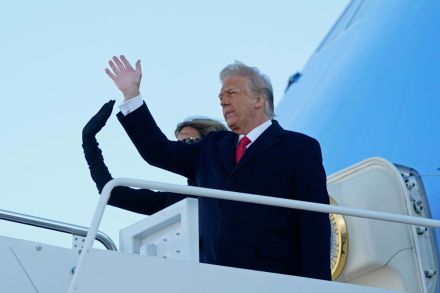
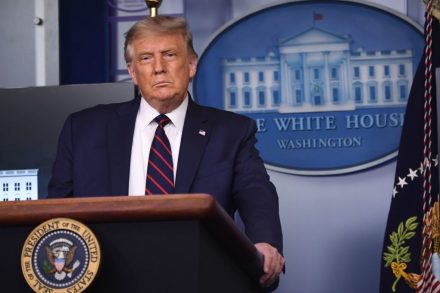
How important is any one human being? In War and Peace, Tolstoy discusses the significance of Napoleon Bonaparte. The Corsican artilleryman-turned-emperor might have brought all of Europe to its knees, but to Tolstoy the great man was a mere cork bobbing on the ocean of history. So it is with Donald Trump as he exits the American political stage, five and a half messy, sordid years after his arrival. The Trump era may be the most memorable period of American history since the 1960s. Certainly, he has inspired more newspaper column inches than any man in living memory. But how important was the man himself? This might at first seem an asinine question. The evidence for this president’s special place in American and even world history seems compelling.

legacy

Buckle up for Biden and the Blob

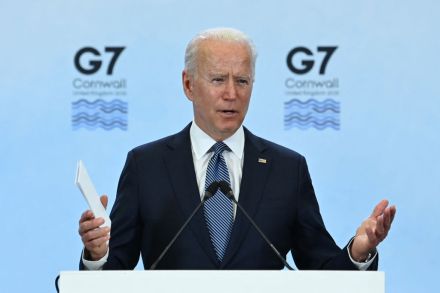
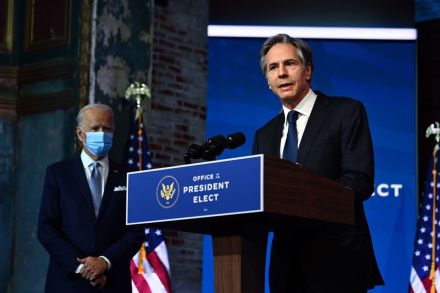
With any change of power in Washington, it is routine to ask which policies will endure and which will change. Yet the incoming Biden administration proposes neither new policies nor the revival of old ones. It promises, rather, an existential transformation following the traumatic ordeal of President Donald Trump. What is being brought back, we are told, is the concept of ‘expertise’ itself. Biden’s return to normalcy will be a re-empowerment of America’s bureaucratic class, so rudely ignored and pushed aside during the four-year time of troubles. Nowhere is this narrative more powerful than in foreign policy.

foreign policy blob

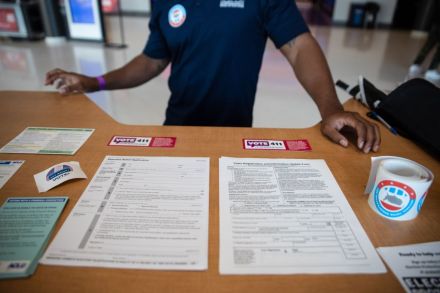
The urgent case for voting reform

By now, The Spectator knows better than to say that Donald Trump has been definitively beaten. The President’s final defeat has been proudly proclaimed and then undermined so many times that the wisest course is to assume he will always rise again. Nevertheless, while Trump has not officially given up, he seems to have failed in his quest to win a second term. But the President did not fail in the hearts of his supporters. Most will agree: they did not lose this race — it was stolen from them. In the late hours of November 3, the President’s lead seemed insurmountable, his victory inevitable. Defying the polls, he romped to easy wins in Florida, Texas, Iowa and Ohio. The New York Times needle showed him on track to win Georgia by four points.

trust
national debt

Forever in our debt

President Donald Trump will enter an election year with the threat of impeachment still hanging over him. Yet in most respects his administration is in a far better position than his critics could have imagined when he took office nearly three years ago. Economic growth, while in retreat in recent months, remains ahead of that of other developed countries. Stock markets, which Nobel Prize-winning economist Paul Krugman said might ‘never recover’ from Trump’s election, are at near-record highs. Where Trump’s opponents feared that his bellicose language would spark a nuclear conflict in North Korea, he defused the situation. His approach to foreign policy may be incoherent, but it hasn’t yet proven to be disastrous.

Onwards and upwards

It would strain credibility to assert that this election campaign has enhanced America’s reputation in the world. The best that might be said is that it has been a slightly less gruesome spectacle than the 2016 affair — and that, perhaps, only because the pandemic has limited public appearances. The great puzzle is how a country of 330 million cannot seem to find two more inspiring candidates. Yet should we take seriously those who are forecasting that the country now descends into civil war or that democracy has died? No, and not just because the latter prediction tends to be conditional on the election’s failing to deliver their favored outcome. American democracy, American power and influence are not dying, and neither are they under threat.

disunited america

The danger this time

Unlike other magazines, The Spectator doesn’t feel compelled to tell people how to vote. We try not to endorse candidates in elections. Our writers adopt different positions and our readers are, on the whole, adults who can think for themselves. But The Spectator would like to make one appeal in this tumultuous year: for America to keep faith in democracy. No matter which candidate emerges triumphant, America looks certain to face a real crisis of democratic legitimacy after November 3. Donald Trump deserves some blame for this turn of events. While Trump has not been one-tenth of the tyrant his enemies accuse him of being, he has toyed with the idea of not accepting the results and even riffed wildly about sabotaging mail-in voting or moving the date of the election.

endorse

The terrifying truth — neither party cares about law and order

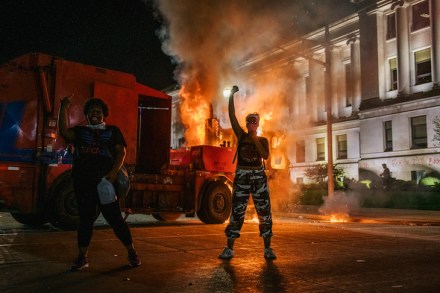
This week CNN’s Don Lemon finally made an observation that should have been obvious three months ago but somehow wasn’t: Democrats might want to stop encouraging rioters and looters in American cities. Not because they were hurting people, or risking wider political violence, or undermining public morale, or making cities uglier, but rather because it turns out nihilistic violence isn’t popular. Lemon’s remarks were quickly seized upon by the right as the gift that they were. It is not often that your political opponent openly admits to cynically evaluating an issue — not based on right or wrong, but on the RealClearPolitics polling average.

law climate

The right stuff

No matter what the pundits say, no matter how the polls look, November’s presidential election is very much up for grabs. In a year as chaotic as 2020, nothing is certain. In another sense, however, the election’s outcome is predetermined: even if he wins another four-year term, Donald Trump’s political moment has all but vanished. For the right, the time has already come to look beyond Trump. The last US issue of The Spectator asked what a Biden presidency might mean. This one asks what might happen to the political right once Trump leaves the White House — be that in 2021 or 2025. Donald Trump may be a real estate tycoon, yet his real skill is in marketing.

donald trump

Biden offers no change and no hope

For too long, Republicans and the media refused to take Joe Biden seriously as a presidential candidate. It’s hard to blame them. The former vice president may poll well, but his previous tilts at the White House had been disastrous. His 2020 campaign has been a string of awkward public gaffes and senior moments — the old boy just isn’t all there. Even his staff seem embarrassed by their candidate. America may be the United States of Amnesia, as Gore Vidal called it, but surely it isn’t about to elect Dementia. Or so we thought. Biden’s clear and present mental degeneration, the elusiveness of his own mind, makes him a strangely effective candidate. It’s hard to oppose, let alone revile, a man who often seems to have no idea what he is saying.

joe biden hope change

No justice, no peace

Who would want to be a policeman in America in 2020? It’s badly paid and dangerous. You might get to be a hero. You are more likely to be despised as a racist. Every day, in crime-ridden urban areas, officers of different ethnicities must make intensely stressful life-and-death decisions as they engage with other people of different ethnicities. That’s the job. It should go without saying that the vast majority of law enforcement officers carry out their duties with admirable professionalism and skill. Watching the news, however, or listening to certain Democratic politicians, we might easily reach a very different conclusion: that cops are vile bigots who target and kill black people for sport.

justice

A new balance

It is already commonplace to say that coronavirus has brought the age of globalization to a shuddering halt. How silly it suddenly seems for production to be held up at a factory in Ohio for want of a 50-cent part normally imported from China. Months after the first COVID-19 deaths in America, we are still waiting for urgently needed Chinese medical supplies. Americans are going without pork or beef, but Chinese-owned US meat processing plants are exporting carcasses to China. Something seems to have gone wrong with almost everything. The global supply chain has us in domestic and strategic knots. As a result, the idea of national self-sufficiency, which had already been growing since the financial crisis of 2008, is suddenly in high fashion.

globalization

After the lockdown, the breakdown

We are told that ‘we’re in this together’ by people who can afford to wait out the epidemic in the way the aristocrats of old retreated to their estates when the plague arrived in the city. It is more accurate to say that we are, as this edition’s cover puts it, ‘together, alone’. The coronavirus has revealed that people today can live in ‘connected solitude’, as Sam Leith describes. It has never been easier to retreat from society if you have the money. But it has never been more vital to sustain real-world connections. We may feel atomized but the truth is we can no more insulate ourselves entirely from other people than we can from the economic effects of an unprecedented shutdown.

breakdown lockdown

The weak response to coronavirus is a symptom of the decay of the liberal state

If COVID-19 spreads in the United States as it has spread elsewhere, then quite soon the virus will be established within the general population. The federal response will have changed from containing isolated ‘hot spots’ to managing a national epidemic. ‘Social distancing’ and self-quarantining will be endemic, hospitals will be overloaded and the economy will have continued to contract. This could test not just the American people — their social bonds, their sense of collective fate — but also America’s government and institutions. That testing will be far more demanding than the ‘stress tests’ faced by the banks after the financial crisis of 2007-08. America’s resolve will be challenged again. This should not be a time for petty politicking.

coronavirus state liberalism

Democracy in danger

The corruption of its democracy is one of America’s oldest yet most surprising habits. Edgar Allan Poe, it is believed, died after the ordeal of ‘cooping’: an informal exercise in getting out the vote, in which an often forcibly inebriated man was marched from booth to booth and made to vote for the same candidate each time. The voters of Massachusetts’s 4th District, compelled by a party machine to endorse Joseph P. Kennedy III, will know the feeling. Indeed, John F. Kennedy’s victory in the 1960 elections is said to have depended on the stuffing of ballots in the Chicago of Mayor Richard J. Daley — and possibly on the intervention in Cook County by the crime boss Sam Giancana. Kennedy went on to win Illinois by 8,000 votes and to take the White House.

democracy

Tyranny of the minority

De mortuis nil nisi bonum, the Romans used to say: ‘Of the dead speak only good.’ We can speak nothing else of the friend and longtime Spectator contributor we lost in January. Sir Roger Scruton was a fearless and humane advocate for art, beauty, faith, peoplehood and tradition; a fierce defender of the right to free and honest speech; and a clear-eyed advocate for the legal inheritances and cultural unity of the English-speaking peoples. He was one of the first people to undergo ordeal by ‘cancel culture’, or persecution by progressives, which is why we dedicate this free-speech issue to him. In the early 1980s, Roger was effectively expelled from the academy for expressing conservative opinions in public.

Who’s right in the 2020s?

A decade is an eternity in politics, but some things don’t change. In 2010, the smart people were either thrilled or alarmed by the prospect of an ‘emerging Democratic majority’, created by high immigration, de-industrialization and college education. Ten years on, influential magazines are still warning Republicans to play nice with a newly diverse electorate or go the way of the Whigs. Meanwhile, the candidates for the Democratic presidential nomination are all promising to ‘revive the Obama coalition’ as if the popular revolt of 2016 never happened. The Obama presidency, with its low-growth recovery and healthcare fiasco, marked the overreach and collapse of big-state liberalism.

right

Mass extinction

That the so-called Extinction Rebellion decided to spray Wall Street’s ‘Charging Bull’ statue with fake blood says it all. The protest group, which originated in Britain but whose protests have spread to New York, Washington and Chicago, is fundamentally an anti-capitalist movement. It is merely the latest incarnation of the antiglobalization and Occupy movements. While those groups gained little traction with the general public, Extinction Rebellion has discovered that by mixing up its demands with concern for the environment, it can win support — or at least a passing kind of support — from a much wider band of the population.

extinction rebellion

Good morning, America

‘The Spectator is the best written paper,’ the American Whig Review said in 1851. ‘It has a place for every thing, and every thing can be found in its place.’ Not much has changed. The Spectator is still the greatest magazine in the English language. We will soon become the first magazine in history to publish a 10,000th edition. As that milestone approaches, we are expanding: this first American issue marks the beginning of an exciting New World chapter. It’s odd, perhaps, that it has taken us 191 years to come to America. The Spectator, rooted in true liberal and radical thinking, has long had an affinity for the Land of the Free. Our history is full of American connections.

magazine leader spectator