Spectator Editorial

Welcome to the new counterculture

The mantle of song of the summer generally belongs to whichever hit Americans heard the most in clubs and bars, at cookouts or on their way to the beach: the earworm that dominated the airwaves and was the soundtrack to their fun in the sun. But as temperatures cool, the most talked-about song of the summer of 2023 wasn’t a mega-hit from a superstar, but a stripped back political ballad by a previously unknown country musician from southern Virginia. Oliver Anthony’s “Rich Men North of Richmond” is an angry song for a restive country — and, astonishingly, given Anthony’s status as a complete outsider, it shot to number one in the charts. His rise is unprecedentedly steep: never before has an artist with no prior chart history debuted in the top spot.

oliver anthony rolling stone counterculture

Stuck watching the Trump show

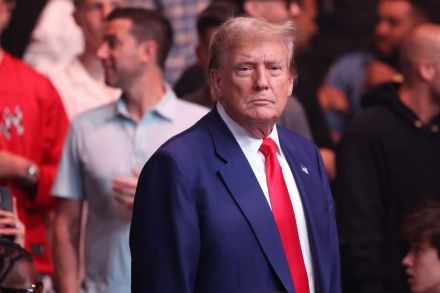
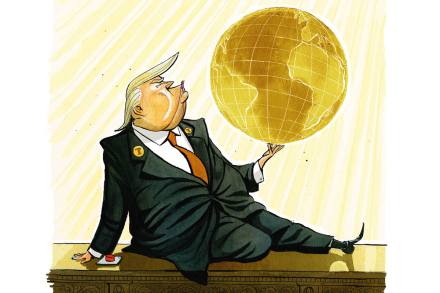
There is one thing about which both Donald Trump and his most vociferous critics are happy: the 2024 election is gearing up to be all about him. The former president is hamming up his victim status on a score-settling vengeance tour that he hopes will propel him back to the White House. His huge poll lead suggests it is a winning strategy — at least in the Republican primary. On the other side of the aisle, Democrats are vain enough to have persuaded themselves that their legal and electoral crusade against the former president amounts to the most important fight in the history of the Republic.

donald trump show

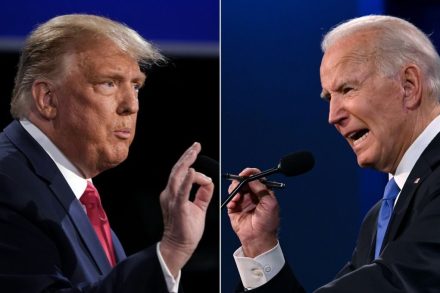
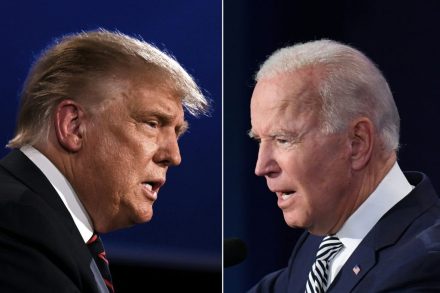
How to make debate great again

By the time you read this, tech billionaires Elon Musk and Mark Zuckerberg may have beaten the living daylights out of each other. Earlier in the summer, Musk tweeted that he was “up for a cage fight” with Zuckerberg. The Meta CEO responded on Instagram Stories, “send me location.” “Vegas octagon,” suggested Musk, referring to the arena where UFC fights are held. Cue an avalanche of hype, some of it serious, much of it tongue-in-cheek, about the possibility of this plutocrat showdown. The Spectator takes no house view on whether the jiu-jitsu-loving Zuckerberg or the barrel-chested Musk should be viewed as the favorite. But we will admit finding this approach to dispute resolution refreshingly old-school — dueling for the new Silicon Valley aristocracy.

debate

How will the decline of cable news affect politics?

The internet has transformed presidential campaigns. Barack Obama micro-targeted his way to victory in 2008. Donald Trump tweeted his way into the conversation in 2016. In 2020, Joe Biden Zoomed his way to the White House. And yet, for all the ways in which communications technology has upended how we do politics, some things haven’t changed all that much. The race for the White House remains a made-for-TV affair: from debates to campaign stops, events are planned with the television viewer in mind. Even in the digital age, the power of television has endured. But as the country gears up for 2024, could that be about to change? News channel ratings have plummeted, households are ditching cable packages and viewers’ trust in the networks is at rock bottom.

news

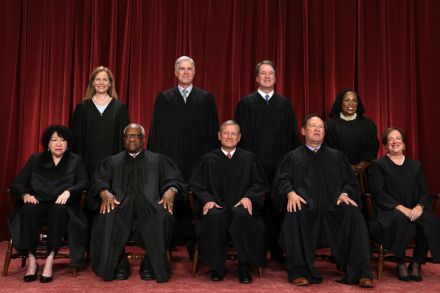
The campaign against the Supreme Court’s legitimacy

Ask anyone about politics these days and you’re likely to hear that our government institutions are in crisis. And not just government institutions, really, but American institutions: the nuclear family isn’t what it used to be; the local community group is drying up; the glazed donut bacon double cheeseburger is harder to find than in our glory days. But in particular it’s our government institutions that are in crisis — which is why the Supreme Court is so important. As Congress buckles under the pressure of endless fundraising and cable news navel-gazing, as the presidency stagnates with its shambling commander in chief and massive bureaucracy, at least the Court still seems to work. In fact, it can seem like an oasis of deliberation in a political scene gone mad.

supreme court

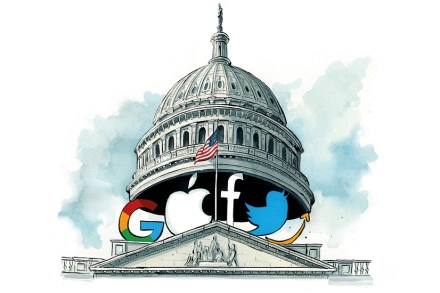
Make tech great again

Mark Zuckerberg has dubbed 2023 Meta’s “year of efficiency.” The slogan is a corporate euphemism for layoffs, of course — and not an especially subtle one. Zuckerberg’s company has parted ways with tens of thousands of employees this year. Other tech firms are following suit. Crunchbase estimates that US tech firms fired more than 118,000 employees in the first quarter of 2023. These are lean times in Silicon Valley — and, as Joel Kotkin explains in this month’s cover story, there is more to this tale than Big Tech belt-tightening after a pandemic-era hiring spree. The Valley, Kotkin explains, is in trouble. A place that America, and the world, once looked to for an ambitious and optimistic vision of the future, has grown sclerotic.

tech

Save America’s cities

Lori Lightfoot became the latest face of municipal failure in America in February when Chicago voters delivered a resounding thumbs down to her record in office. A first-term incumbent, Lightfoot managed to secure just 15 percent of the vote in her reelection bid, finishing a distant third and failing to make the runoff. “I am a black woman in America,” she complained when searching for an explanation the day after her defeat. But her vertiginous fall — she won with three-quarters of the vote in the runoff four years ago — has nothing to do with her race or gender, and everything to do with her record in office. Chicagoans were frustrated with her management for many reasons, but the question of crime dominated the race.

cities

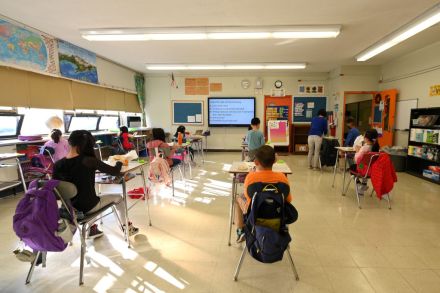
Why aren’t we more focused on cleaning up the pandemic mess?

Unless you work for the White House, where the emergency declaration doesn’t expire until May, the pandemic has long been over. March marks three years since Covid upended Americans’ lives and, for all but a tiny minority, it has ceased being a day-to-day consideration. After long and bruising fights over everything from lockdowns to vaccine mandates, perhaps the only thing Americans can agree on is that the country’s response to the pandemic was a failure. From that starting consensus, arguments about what went wrong soon diverge sharply.

school education american pandemic

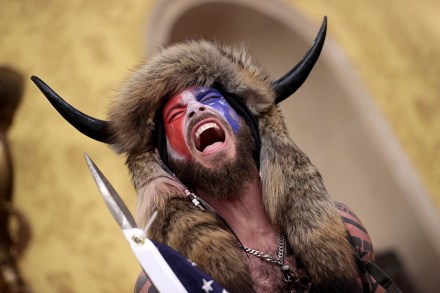
The United States of paranoia

Half a decade ago, with America’s elites trying to make sense of the rise of Donald Trump, an essay from the Sixties made a surprising comeback. Richard Hofstadter’s “The Paranoid Style in American Politics” became part of the conversation over fifty years after it was first published in Harper’s. It was less something concerned citizens actually read, more something they mentioned at dinner parties to sound smart. Writing with Barry Goldwater’s 1964 presidential bid in the background, Hofstadter described in pseudo-psychological terms what he saw as the right’s tendency towards the paranoid style, a phrasing he chose “simply because no other word adequately evokes the sense of heated exaggeration, suspiciousness and conspiratorial fantasy that I have in mind.

cults

After the cryptocrash

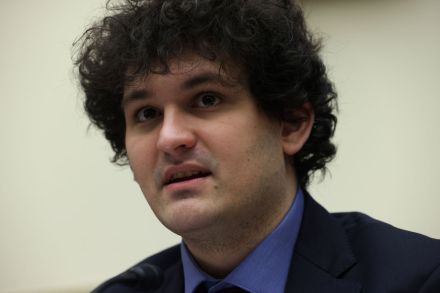
Spare a thought for Miami nightclub owners. In recent years, they rode the cryptocurrency wave, raking it in by catering to the fragile egos of geeky crypto bros eager to flaunt their newfound wealth. Now, in the midst of the cryptocrash, business has slowed dramatically. “Out of the blue, all these kids from crypto started coming down and spending a lot of money — like, an insane amount of money,” one of the city’s nightlife impresarios told the Financial Times recently. Now, he said, they have “completely disappeared.” If empty nightclub tables in South Beach are an amusing but indirect indicator of the crypto slowdown, a more immediate warning sign was the spectacular implosion of FTX, the world’s largest cryptocurrency exchange, late last year.

crypto

How to survive the ‘permacrisis’

Are we in a permanent state of crisis? The Britain-based lexicographers at the Collins Dictionary think so. Last month they chose “permacrisis” as their word of the year. Defining the neologism as “an extended period of instability and insecurity,” Collins explained that their selection “sums up quite succinctly how truly awful 2022 has been for so many people.” It’s easy to see why the word has particular resonance for the Brits, now onto their third prime minister this year. But the sense that we are stuck in an endless cycle of crises is a global one. As 2022 draws to a close, the world faces a daunting set of overlapping disasters.

permacrisis

The lesson of 2022: energy is our lifeblood

This has, so far, been a year of hard lessons. Spiraling inflation has given households an expensive economic refresher course. A land war in Europe has offered an unwelcome reminder of old geopolitical and military truths. But arguably the most important lesson of 2022 concerns the point at which these economic, military and geopolitical considerations converge: energy. On this vital issue, the West has suffered from an epidemic of amnesia in recent years. Too often energy security has either been taken for granted by policymakers and voters, for whom the last energy crisis had become a distant memory, or actively disparaged by an environmental movement whose hardline hostility to fossil fuels has become received wisdom in polite circles.

The Biden ultimatum

Toward the end of the summer, Republicans found themselves with a severe case of pre-midterm jitters. This ailment is prone to flare up every four years, as the opposition party frets over whether it can deliver the incumbent president and his party the clobbering that has come to be expected. A common symptom of this nervousness is for the out-of-power party to wonder if it might fare better with the voters if it set out a substantive policy agenda, rather than simply relying on anger at the other side’s overreach.

biden

Biden’s border blues

When hundreds of thousands of migrants surged to the southern border soon after Joe Biden took office, administration officials urged patience. Donald Trump had “dismantled” the system, homeland security secretary Alejandro Mayorkas insisted when asked about chaotic scenes at the border last March. “It takes time to rebuild it virtually from scratch,” he said. Well, the Biden administration has now had plenty of time — and there is no end to the border crisis in sight. Eighteen months on from Mayorkas’s assurances, the numbers are no less staggering. In June alone, Customs and Border Protection reported more than 200,000 apprehensions. So far this year, law enforcement has encountered more than 1.5 million migrants in attempted border crossings.

border

Why ESG is sinister

In contemporary finance, a bank’s “head of responsible investing” is meant to be an apostle of woke capitalism: a very modern kind of money man who tours the world touting all the good their employer is doing. So you might have expected a speech on climate change and finance by Stuart Kirk, the man with that job title at HSBC Asset Management, to be a bromide-filled snoozefest about the win-win nature of the transition to the green economy. But Mr. Kirk’s address at a recent conference on “Moral Money” was nothing of the sort. Instead, he delivered a broadside against the fashionable idea that climate change is a risk that no financial institution can afford to ignore.

esg

As goes Florida…

Do you remember Rebekah Jones? Don’t worry, we’d forgotten about her too. At the height of the pandemic, she resigned as a low-level functionary in Florida’s public health bureaucracy and accused her state’s governor, Ron DeSantis, of cooking the books on Covid. There was never much evidence to back up Jones’s claims of data manipulation, but that didn’t stop her becoming a pandemic-era media darling. She was given seemingly endless airtime on cable news while newspaper profiles heralded her as a brave whistleblower. Boosted by this favorable coverage, the kooky data scientist even announced a congressional run. But it is now as clear as could be that Jones was wrong.

florida

Embrace the gerontocracy

America is a young nation — and young at heart. Our national ethos is centered on those four words in the Declaration of Independence, “the pursuit of happiness.” In order to pursue anything, you need a certain vigor. America had vigor even before the youth culture of the Sixties revolutionized how we thought about age. That decade ushered in the famous slogan “don’t trust anyone over thirty.” We’re not nearly so politically incorrect now, but the mentality still holds. America is forever prodding and poking its young, waiting for some wellspring of Talmudic wisdom to come gushing forth. What does Gen Z think?! Gen Z would just like to finish high school, thank you very much.

gerontocracy
Democratic gubernatorial candidate Beto O'Rourke interrupts Texas Governor Greg Abbott during a press conference (Getty Images)

Beto’s ‘sick’ school shooting stunt

For the next week, the DC Diary will be written by a rotating cast of Spectator editors. Today’s author is Amber Athey.  Beto’s ‘sick’ school shooting stunt America was rocked Tuesday by news that yet another school had been caught in the crosshairs of a maniac mass shooter. An eighteen-year old Hispanic male in Uvalde, Texas, shot his grandmother before crashing his car into a local elementary school, where he then barricaded himself in a classroom. He executed nineteen children and two adults. Shootings like this are usually followed by cries of “do something!” Those who don’t just “do something!” are accused of not caring about the small bodies lying in the classroom.

Georgia pining

For the next week, the DC Diary will be written by a rotating cast of Spectator editors. Today’s author is Matt McDonald. Georgia pining Another Tuesday, another set of state primaries. This week, the national gaze flicks down to Georgia, where Republican governor Brian Kemp faces a primary challenge from former senator David Perdue. Perdue, the former CEO of Dollar General who lost to Democrat Jon Ossoff in the 2021 Senate runoff, is the chosen candidate of former president Donald Trump. For the reason why, look no further than Perdue’s opening salvo in his debate with Kemp last month: “First off, folks, let me be very clear tonight, the election in 2020 was rigged and stolen.

Who really won in Pennsylvania?

For the next month, the DC Diary will be written by a rotating cast of Spectator editors. Today’s author is Teresa Mull. Uncertainty in the Keystone State The Republican primary race for Pennsylvania’s US Senate seat has been dragging on for months and continues to be drawn-out, as the result of Tuesday’s election are still undecided. “Ultra MAGA” candidate Kathy Barnette made a surprise surge in the final week of the campaign, but it’s looking to have been too little, too late, as Barnette fades behind Dr. Mehmet Oz and Dave McCormick, who have led the field since the beginning. This race has been one of the most closely watched and covered of all, as its outcome will be critical in deciding which party controls the Senate after the November general election.