Sinclair McKay

EastEnders wanted to show Thatcher’s Britain. These days it would make Maggie proud

From our UK edition

Albert Square full of Thatcherites? You ’avin a larf? No, it’s true. EastEnders, conceived 30 years ago partly as a means of enraging the Conservative party, has blossomed into a Tory commercial. Iain Duncan-Smith could watch all the wealth-creating activity in Albert Square with a syrupy smile; George Osborne could visit Phil Mitchell’s garage in a hi-vis jacket and look perfectly at home (Boris Johnson has already had a cameo pint at the Queen Vic). EastEnders portrays small businesses built up through hard work; it implies that turning to the state won’t get you anywhere; they even sent swotty teenager Libby Fox to Oxford. Never mind the affairs and addictions, the murders and rape, Walford is rammed full of aspirational, hard-working families.

Alan Turing’s last victory

From our UK edition

‘So were you levitating with rage by the end?’ I asked her. She — a veteran of Bletchley Park — and I were discussing The Imitation Game, the new film about the mathematician and code--breaker Alan Turing, featuring Benedict Cumberbatch and a host of historical inaccuracies. But she remained sanguine: ‘Not at all, I really enjoyed it a lot. A little dramatic licence here and there, but that’s what you get with films.’ Indeed. Still, the film didn’t take the biggest dramatic liberty of them all, thank goodness — that of suggesting that Bletchley’s triumphs were entirely down to the Americans.

Why Doctor Who is secretly Tony Benn

From our UK edition

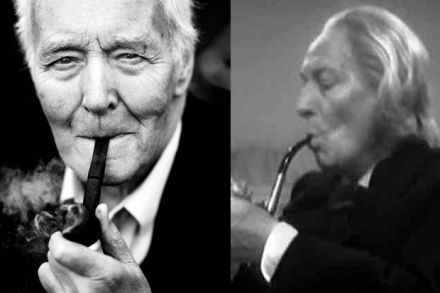
Who inspired Who? Leave aside for one moment the hyperventilating BBC enthronement of Peter Capaldi, though we shall return to him later. I mean way back at the beginning, 50 years ago. The Doctor was invented by a committee of middle-ranking BBC executives — but who was the role-model for this anti-establishment, vaguely dotty but distinguished figure? Come on! With hindsight, the inspiration must surely have been Tony Benn — and I’ll prove it to you. Having inherited the title Viscount Stansgate, Benn used an act of parliament in 1963 to disclaim his place in the House of Lords; in 1963, the Doctor, for his own part, disclaimed his place among the Time Lords.

Trouble ahead

From our UK edition

Must we? All of us? This is the perfect storm, the tempest, the ultimate crisis for non-sport fans. But TV, with all its kaleidoscopic variety, was invented for just such an eventuality, surely? And together with some assistance from our faithful old friends, the tinnies in the fridge, the next few weeks might pass quite pleasantly, no? Fssssst. Sip. Hmmm. See? Happily, in terms of drinking and smoking, Patsy and Edina in Absolutely Fabulous (BBC1, Monday) seemed to be in agreement about what we in the East End refer to as ‘The Limpics’.

The Silver age

From our UK edition

I was ten years old during the Silver Jubilee in 1977. That perfect, daft summer formed and cemented my view of the country I live in, and still makes me feel a wave of unconditional affection every time I think back to it. Social historians seem almost contractually obliged to present England during that time as a tatty, shambolic, declining realm, a dreary windswept concrete shopping precinct where everything was brown and orange. But that is not what we ten-year-olds saw. We saw the vivid bright green of Slime (a fashionable novelty toy then) and the mellow purple of our Chopper bikes and the thrilling scarlet from our LED digital watches. And in the summer of 1977, there was a ubiquity of red, white and blue.

Silent night

From our UK edition

There is one carol that has particular resonance for Londoners: ‘Silent night, holy night’. Just the idea of it can bring on an involuntary shiver of pleasure. In the 36 or so hours between Christmas Day and Boxing Day, after a solid month of the eldritch screeches of office parties and Westfield shopping, we city slickers are suddenly granted something more valuable than gold. The profound quiet — both in the darkness and the daylight — gives us a glimpse of the unsuspected soul of the city. The silence also tells us something about our everyday lives that, even subconsciously, some of us might want to change.

Middleton mania

From our UK edition

Can I be frank? I can’t get enough of the Middletons. I am mad for them. Not just the Duchess of Cambridge, heroically staying awake throughout a cruelly protracted tour of Ottowa (you try it). Not just because of the fact that if you type the words ‘Pippa Middleton’ into Google, it offers you a remarkably narrow range of options from ‘underwear’ to ‘bottom’. Not just because of the Mail Online’s laudable efforts to get Prince Harry and Pippa paired off (before the advent of posh knicker-model ‘Flee’ Brudenell-Bruce). It is because the Middletons represent something we have not seen in proximity to the royal family since — well, perhaps ever.

Junk Bonds

From our UK edition

Writing a James Bond novel? What could possibly be simpler? Surely all one needs is an arch, semi-meaningless title — something like ‘Never Kiss Death Goodbye’ — then a villain with a camply sinister name, a heroine with an even camper double-entendre for a name, a seasoning of sadism and you are away. But it’s not that easy at all. If it is, then why have the writers who picked up Ian Fleming’s mantle got it so wrong? Even the class acts who have come closest to nailing the authentic 007 style — Kingsley Amis, John Pearson and Sebastian Faulks — have missed something small but crucial, as I shall explain. It’s an odd thing, 007’s literary afterlife. No one would dream of taking P.G.

Bring back Father Brown

From our UK edition

G.K. Chesterton’s perspicacious priest is 100 next year. Sinclair McKay says that he is more colourful and insightful than any of today’s TV detectives A chap murdered by an invisible man? A decapitiated Scottish laird with the fillings stolen from his skull? A poet, hypnotised into committing suicide? Who could deal with such curious and baffling crimes? There’s only one possible answer: an amateur sleuth who specialised in the bizarre and diabolical long before Mulder and Scully; a detective long due for a comeback: G.K. Chesterton’s Father Brown.

Happy 30th birthday Viz

From our UK edition

Sinclair McKay celebrates 30 years of Britain’s funniest, sharpest and most irreverent cartoon. David Cameron need look no further for a perfect picture of broken Britain Some night soon on the peaceful back streets of Bloomsbury, you might want to keep an eye out for two young ladies from the north for whom the term ‘muffin top’ might have been invented. They will be extremely drunk, laughing like open drains and displaying unsuitable underwear. They will be looking for romance. They are known widely as the ‘Fat Slags’. Sandra and Tracey are two of the Hogarthian figures that populate the pages of Viz, a distinctly adult comic.

The battle to save Bletchley Park

From our UK edition

Sinclair McKay attends the 70th anniversary reunion of the men and women who broke the Enigma code, and asks why the government won’t fund their museum ‘The turnout is very good,’ says eighty-something Ruth Bourne, glancing around at the tight, slow-moving mass of neat pink woolly cardigans, sensible skirts, pressed grey flannels and sports jackets. ‘More of us,’ she adds, ‘have come out of the woodwork.’ Ruth Bourne helped to shorten the second world war by two years, as did the 80 or so other elderly folk gathered here.

David Cameron can learn from The Avengers

From our UK edition

Sinclair McKay says the Tory leader could do worse than emulate his fellow Old Etonian — the elegant, ruthless, cucumber-cool TV hero John Steed Who is David Cameron’s role model? No one quite knows. Of course Dave would like to be a British Obama, but that’s a little far-fetched (for obvious reasons), so here’s another candidate, just as cool as the President but more up Cameron’s street. Like Cameron he’s an Old Etonian but a social progressive; like Cameron he’s a fashionable man-about-town. Basically, Dave couldn’t have a better hero than John Steed of The Avengers. Steed’s an example of how an unabashed posh chap can win over the entire British nation — plus the US as well.

A quantum of respect for the forgotten master

From our UK edition

Double-dealing female agents. Secret ciphers. Car chases. Now that we have all ingested rather more than a quantum of publicity for Ian Fleming’s gaudy fictions, it might be time for the true inventor of the modern spy novel — and the original purveyor of the above-named elements — to take his bow. The name was Le Queux. William Le Queux. He is almost totally forgotten now. But between the 1890s and the 1920s, he was one of Britain’s most phenomenally popular authors. In the dying days of Victoria’s reign, right up past the first world war, Le Queux turned out countless thrillers that gave us all the familiar leitmotifs of the spy genre.

Hammer’s Dracula is now a beloved British institution

From our UK edition

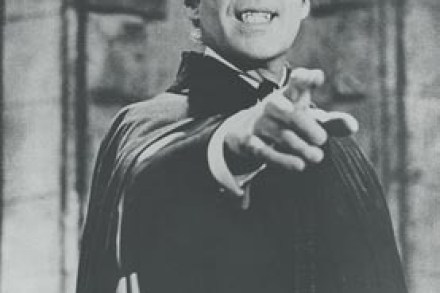
Hammer’s 1958 Dracula is being re-released To some, the spectacle of heaving bosoms, goblets and hideous bloodshot eyes might simply signify an average night out in Boujis. For the rest of us, however, these are the amusingly persistent leitmotifs of Hammer Horror — together with brightly lit Transylvanian inns, horses clattering through Home Counties woodlands, huge fangs and glass paintings of distant castles. Cinema horror these days is largely to do with gruellingly repulsive scenes of realistic torture — from the Hostel films to the Saw series. So how is it that the now-antiquated scare devices of a gimcrack British outfit of the 1950s and 1960s remain so extraordinarily pervasive?

Live and let let

From our UK edition

When you tell people, they recoil as though jabbed with a lavatory brush. ‘You mean you still actually pay rent?’ is, in middle-class terms, a question akin to: ‘You mean you still actually listen to Boney M?’ But with this impending property collapse that we keep on scaring each other with — just the other day, a team of expert economists predicted that prices will fall by more than 6 per cent over the next two years — you might soon be hearing a lot more about people like me. People who rent, that is. I will admit that the image of renting a flat is a bad one.

PROPERTY SPECIAL:Literary London

From our UK edition

Until recently, a lively sub-genre of English literature was that devoted to London's creepier, darker back streets. Peter Ackroyd took us on a grim tour of early 1980s (and early 1700s) Shoreditch and Limehouse in Hawksmoor; Iain Sinclair angrily traversed the weed-sprouting, rubbish-strewn streets of Hackney and Tilbury and what he called the 'sumplands' of Dagenham in Downriver. Angela Carter peeked through the yellowing net curtains of dowdy south London, while Michael Moorcock beckoned us to explore the gentle sadness of peeling suburban avenues. Go further back and you will find Patrick Hamilton's malign vision of Earls Court, Arthur Conan Doyle's all-pervading fogs, Dickens's appalling rookeries.