Simon Ings

How time vanishes: the more we study it, the more protean it seems

From our UK edition

Some books elucidate their subject, mapping and sharpening its boundaries. The Clock Mirage, by the mathematician Joseph Mazur, is not one of them. Mazur is out to muddy time’s waters, dismantling the easy opposition between clock time and mental time, between physics and philosophy, between science and feeling. That split made little sense even in

Taxonomy reaches celebrity heights

From our UK edition

Heteropoda davidbowie is a species of huntsman spider. Though rare, it has been found in parts of Malaysia, Singapore, Indonesia and possibly Thailand. (The uncertainty arises because it’s often mistaken for a similar-looking species, the Heteropoda javana.) In 2008 a German collector sent photos of his unusual looking ‘pet’ to Peter Jäger, an arachnologist at

The trade in cadavers is rife with scandal

From our UK edition

John Troyer, the director of the Centre for Death and Society at the University of Bath, has moves. You can find his interpretative dances punctuating a number of his lectures, which go by such arresting titles as ‘150 Years of the Human Corpse in American History in Under 15 Minutes with Jaunty Background Music’ and

The history, power and beauty of infographics

From our UK edition

William Edward Burghardt Du Bois was born in Massachusetts in 1868, three years after the official end of slavery in the United States. He grew up among a small, tenacious business- and property-owning black middle class who had their own newspapers, their own schools and universities, their own elected officials. After graduating with a PhD

Believing in big data is equivalent to believing in the stars

From our UK edition

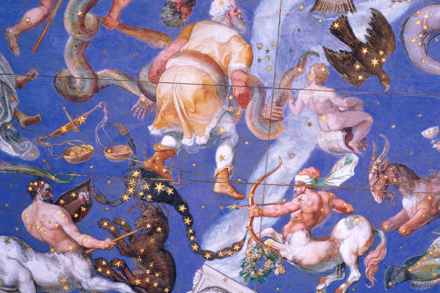
Look up at the sky on a clear night. This is not an astrological game. (Indeed, the experiment’s more impressive if you don’t know one zodiacal pattern from another and rely solely on your wits.) In a matter of seconds you will find patterns among the stars. We can pretty much apprehend up to five

Who knew that chemistry could be so entertaining?

From our UK edition

Here’s how the element antimony got its name. Once upon a time (according to the 17th-century apothecary Pierre Pomet), a German monk (moine in French) noticed its purgative effects in animals. Fancying himself as a physician, he fed it to his own Fraternity… but his Experiment succeeded so ill that every one who took of

Can computers compose?

From our UK edition

In 1871, the polymath and computer pioneer Charles Babbage died at his home in Marylebone. The encyclopaedias have it that a urinary tract infection got him. In truth, his final hours were spent in an agony brought on by the performances of itinerant hurdy-gurdy players parked underneath his window. I know how he felt. My

Hiding in plain sight

From our UK edition

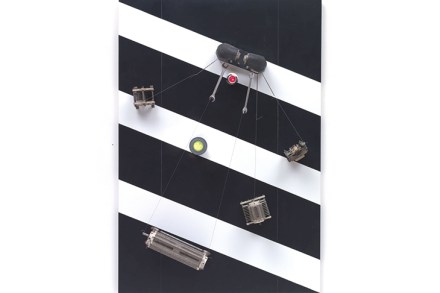
Steel flowers bend in a ‘breeze’ generated by magnetic pendulums. This is the first thing you see as you enter Tate Modern’s survey show. And ‘Magnetic Fields’ (1969) is pretty enough: the work of this self-taught artist, now in his nineties, has rarely been so gentle, or so intuitive. But there’s a problem. ‘I would

Our flexible friend

From our UK edition

Plastics — even venerable, historically eloquent plastics — hardly draw the eye. As this show’s insightful accompanying publication (a snip at £3) would have it, ‘Plastics have no intrinsic form or texture, thus they are not materials that can be true to themselves.’ They exist within inverted commas. They can be shell-like, horn-like, stony, metallic

An admirably elegant theory

From our UK edition

On 6 November 1919, at a joint meeting of the Royal Astronomical Society and the Royal Society, held at London’s Burlington House, the ‘lights went all askew in the heavens’. That, anyway, was the rhetorical flourish with which the New York Times hailed the announcement of the results of a pair of astronomical expeditions conducted

A man of great magnetism

From our UK edition

Chances are, you are reading these words in some room or other. Build a wall down the middle of it, and in the middle of the wall, insert a tiny shutter. Conjure up a tiny critter who can open and shut this little door at will. When a hotter-than-average air molecule careers towards it, the

The Tibetan Passion Book puts the Kama Sutra in the shade

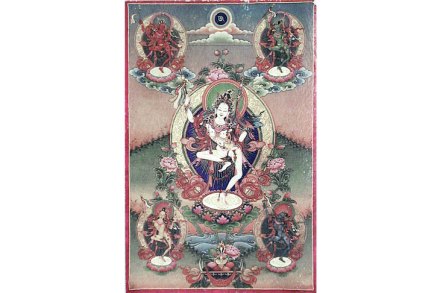
The Tibetan artist and poet Gendun Chopel was born in 1903. He was identified as an incarnate lama, and ordained as a Buddhist monk. In 1934 he renounced his vows, quit Tibet for India, learned Sanskrit and — if his long poem, ususally translated as A Treatise on Passion, is to be taken at face

A robot to love

From our UK edition

‘I gotta be me,’ Sammy Davis Jr. croons as the android Dolores Abernathy (Evan Rachel Wood) steadies her horse, stands up on her stirrups, takes aim with her Winchester, and picks off her human masters one by one. The trailer’s out at last and the futuristic TV series Westworld is set to return in the

Help over the hump

From our UK edition

Losing our way in life’s trackless forest, whither should we turn for solace and advice? Wisdom used to be the special province of our elders, though for no better reason than that old people were less common than they are now. Aristotle had their measure: ‘As they have a lot of experience,’ he wrote, ‘they

The magic of maths

From our UK edition

It’s odd, when you think about it, that mathematics ever got going. We have no innate genius for numbers. Drop five stones on the ground, and most of us will see five stones without counting. Six stones are a challenge. Presented with seven stones, we will have to start grouping, tallying and making patterns. This

Chance would be a fine thing

From our UK edition

If I prang your car, we can swap insurance details. In the past, it would have been necessary for you to kill me. That’s the great thing about money: it makes liabilities payable and blood feud unnecessary. Spare a thought, then, for the economist Robin Hanson, whose idea it was, in the years following the