Sebastian Payne

Revealed: the victims of Osborne’s latest green belt assault

From our UK edition

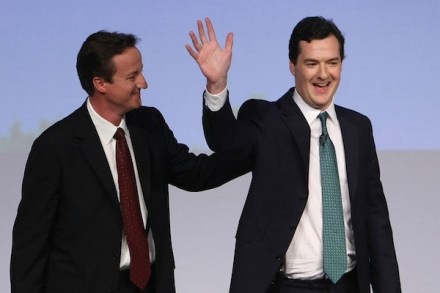
David Cameron's choice of Nick Boles as the new planning minister sends a clear signal that he is serious about planning reform. The founder of Policy Exchange is a close confidante of the Prime Minister and has been trusted with reforms that have been attempted once and damaged Cameron's reputation. If the Chancellor is the winner from relaxed development regulations — which will be a core part of his Economic Development Bill next month — then his party stand to be the losers. The Campaign to Protect Rural England is already gearing up for a second battle: 'If planning restrictions are relaxed, you’re not going to get any increase in the overall number of houses being built.
Will one of David Cameron’s female stars be our next PM?

From our UK edition

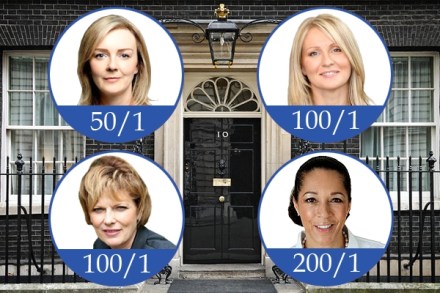
The real winners of the reshuffle have been the 2010 intake of Tory MPs. Several star names — including Nick Boles, Matt Hancock and Sajid Javid — have been moved up to junior ministerial posts today. While David Cameron was criticised for removing several females as Secretaries of State, he has attempted to make up for this by appointing four female hopefuls as under secretaries. All of these recruits are members of 2010 intake and look to be interesting members of the reshuffled government.

George Osborne is staying put but who would the public choose to move on?

From our UK edition

George Osborne has told Andrew Marr this morning that the reshuffle is 'not far away’ and that he is staying put. As we said in this week's magazine leader, reshuffling a Chancellor half way through a parliament would be a major admission of defeat, and for little practical gain. The main issue for the Prime Minister to face now is how the public will react if popular figures are reshuffled. One by one, all of the reshuffle targets have fought their corner through the press. Ken Clarke, Justine Greening, Jeremy Hunt, Baroness Warsi and today Vince Cable have all made made their case publicly to stay where they are. But which ministers do the public want moved on?

Can Alex Salmond regain his lost momentum after Britain’s summer of fun?

From our UK edition

Alex Salmond has gone rather quiet this summer. Before Britain’s season of fun, the SNP leader appeared unstoppable in his quest for Scottish independence, but the Diamond Jubilee and Olympics have halted Salmond’s momentum. The Mayor of London crystallised this feeling yesterday during one of his #askboris sessions on Twitter: ‘The Scots are never going to vote for independence...these games have done for Salmond...

The View from 22 — something fishy, Romney’s Tea Party, tall building syndrome and Clegg’s nonsense theories

From our UK edition

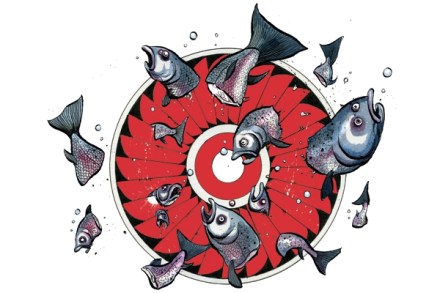
Why does hydroelectric power have such a friendlier image compared to other forms of renewable energy? In this week’s magazine cover, our first ever Matt Ridley Prize winner Pippa Cuckson examines why hydroelectricity is not just bad for the taxpayer, but also bad for the environment. In our View from 22 podcast, Fraser Nelson discusses this hidden scandal: ‘The principle of hydroelectric power, which is great for mountains, does not apply England’s green and pleasant lakes. But that hasn’t stopped the government subsidising this because they love the idea so much…every week three hydro-plants are being authorized which pretty much have the power of a candle.

With friends like the OBR, George Osborne hardly needs enemies

From our UK edition

The Office of Budget Responsibility was created to be George Osborne's friend. The theory was that under the leadership of Sir Alan Budd, the OBR would urge the Chancellor to cut. Budd would be listened to more than Robert Chote, who was then running the IFS. But when Sir Alan quit unexpectedly, Chote took over. Since then, the OBR has become the in-house prophet of doom. It not only points to a growth-free future for Britain, but keeps getting its forecasts wrong. It is proving laughably unreliable as a means for working out the likely effect of UK government policy. In the Telegraph today, Doug McWilliams who wrote the original brief for the OBR, has attacked the current chairman for causing the Chancellor 'no end of trouble' and branded the organisation a 'disaster'.

Of mice and men: the options for airport expansion

From our UK edition

Hugh Robertson was trying to stick up for the Prime Minister this afternoon when he said David Cameron was 'absolutely a man'. He was defending the government's decision to stay right where it is on airport expansion, against Tim Yeo's warning that to stick to manifesto pledges and commitments in the coalition agreement on Heathrow would make Cameron a 'mouse'. So where does this leave the various options to solve our aviation capacity conundrum? Here is a rundown of the various solutions, and who supports them: Heathrow expansion Nine years ago, Labour presented a white paper proposing a third runway at the country’s busiest airport, to be built by 2015-2020. In 2009, the party reconfirmed its support for the runway as well as a sixth terminal.

Never mind about David, we need to talk about George

From our UK edition

It’s a familiar theme: the Tory conference is approaching, David Cameron is in trouble and knives are coming out for him. But how much of the problems are of his own making, and how many have come from the Treasury? Tim Montgomerie focuses today on No.10 (£), saying that Prime Minister must come out fighting for his own survival: 'Gay marriage is only the latest issue that is beginning to create the dangerous impression that Mr Cameron is smaller than the events, factions and tides of public opinion that swirl around his Government. The Prime Minister is no longer seen as his own man. People wonder if he’s in command of his own destiny, let alone the nation’s. He can’t cure our economic ills because everything Britain does is overshadowed by the eurozone.

Farage eyes working class Labour vote

From our UK edition

One of the solutions Tory MPs are mulling over now the boundary reforms are dead in the water is some sort of partnership with UKIP to boost the party's chances in 2015. As many as 60 per cent of Conservative activists are reported to favour such a pact. But David Cameron has yet to show any sign that he's warming towards the party he once described as consisting of ‘loonies, fruitcakes and racists'. If he is not careful, Cameron's hand may be played for him. The Eurozone crisis may finally come to a head, which could lead to a soar in UKIP’s popularity. The Prime Minister might then have to broker a deal to avoid electoral meltdown. If he refuses then, Nigel Jones thinks another Tory leader might be more willing.

What influences GCSE grades?

From our UK edition

For the first time in the history of GCSE exams, this year’s results have seen a decline in grades. Today, the Joint Council for Qualifications, which represents exam boards, announced that the number of papers marked A*-C has dropped from 69.8 per cent last year to 69.4 per cent. A grades have dropped by 0.8 per cent while A* grades are down by 0.5 per cent and C grades also down 0.4 per cent. Since GCSEs were first set in 1986, rising grades each year may have been welcomed by the pupils receiving them, but have led to concerns about grade inflation. To address this, the exams regulator Ofqual has placed extra pressure on examiners as well as curbing the modular aspects of some exams.

The View from 22 – international justice, school sports and unfair GCSE results

From our UK edition

Is there a downside to our glowing era of 'international justice'? In this week's cover feature, Douglas Murray writes that our carefully designed system can trap criminals, giving them no way out and potentially leading to even more horrific acts. In our View from 22 podcast, Douglas expresses some of his issues with how signatories perceive the International Criminal Court: 'It is a replacement for being a serious military power, it's cheaper in the end and gives people this wonderful cloak. Any politician who wraps themselves in the ICC wraps themselves in a wonderful moral aroma that was actually fought for and earned by many hard working people. But it has not been earned by this generation.

Firestarter Francis Maude needs to keep fanning the quango bonfire

From our UK edition

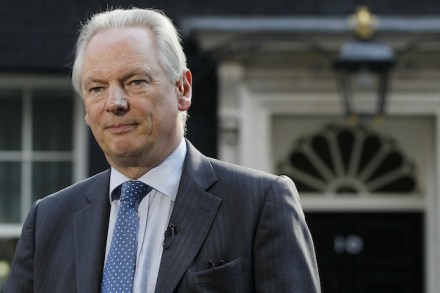
The Prime Minister once promised a 'bonfire of the quangos'. Although his government has sometimes failed to fulfil expectations, his firestarter in the Cabinet Office, Francis Maude, has managed to make a dent in the 1,000+ organisations that flourished under Labour. The latest figures released by the Cabinet Office today claim that £1.4bn has saved through the government's quango reform programme. So far, 106 public bodies have closed, with a further 150 merged down into 70. Among the more quirky ex-quangos  are the Government Hospitality Advisory Committee on the Purchase of Wines, Advisory Committee on National Historic Ships and Advisory Committee on Packaging.

Cameron does not have to worry about the lack of big donations, at least not yet

From our UK edition

Are the big Tory donors running away from David Cameron? The Times reports that many of the major backers have held back on coughing up funds, as a result of their dissatisfaction with Cameron's leadership: ‘Some donors have told The Times that they are pessimistic about the next election. Other donors complain about government disarray, lack of action on the economy, irritation at gay marriage plans and the party’s stance on bonuses and bankers. Boris Johnson is attracting some interest from the donor community, according to two of them.’ So far, the Tories are £1.28 million down on the same period in 2011. But it is the depleted income from Lord Ashcroft, Michael Spencer, Lord Harris and Michael Hintze that is most apparent.

Proalition risks becoming a noalition

From our UK edition

The Conservatives and Liberal Democrats are preparing for their last-ditch attempt to kiss and make up before having to accept their union is over. The coalition partners are heading into the conference season with a positive attitude they hope will carry them through 2015 (and potentially beyond). A new word to describe the second coalition love-in has entered the Westminster lexicon this week — ‘proalition’. Both sides are desperate for proalition to work. Not out of a desire to work together, but out of sheer necessity. If the coalition falls apart in the near future, both parties would face annihilation at the polls.

Conservative Corby slips away

From our UK edition

The first polling on the Corby and East Northamptonshire by-election is out today and not surprisingly, it suggests that Labour will take the seat by a landslide. The poll commissioned by Lord Ashcroft predicts Corby will fall in line with national polling trends — a collapsed Lib Dem vote, reduced Tory presence and a resurgent Labour: If the by-election result follows this pattern, it will represent a 9 per cent swing to Labour since the 2010 general election. If this were replicated at a national level, it would be enough to sweep Ed Miliband back into Downing Street. The poll also gives some reaction to Louise Mensch's resignation.

The View from 22 — Hunger strikes, a psychedelic return and Paul Ryan

From our UK edition

Are we about to see revolutions on the streets thanks to crop prices? John R. Bradley argues in this week’s cover feature that crop price rises this year are going to lead to insurrection across the world. In the latest View from 22 podcast, Clarissa Tan discusses which places the price hikes will affect the most: ‘Places like Egypt that a lot of wheat and grain, including most of the Middle East. I think places where they are a lot of tension; the poorer nations like Yemen come to mind. But we can’t discount countries we might not think are poverty stricken – places like China or Russia, which have agreed not to export any of their grain but keep it its own population.’ Andrew M.

First’s risky win highlights fundamental problems with the rail network

From our UK edition

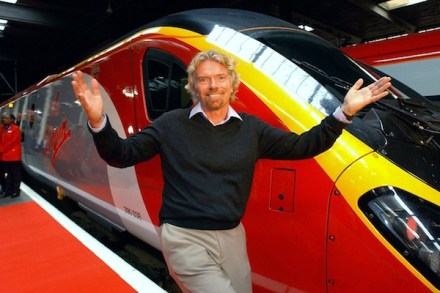
Euston, we have a problem. Richard Branson found out today that Virgin Trains has lost the rail franchise for the West Coast Mainline to First Group. From 9 December, First plans to ‘offer substantial improvements in the quality and frequency of services’ on one of the country’s key arteries. This overhaul will bring in 11 new trains and 12,000 extra train seats by 2016. Branson is sore about his company's loss, and has attacked the government's 'insanity' for handing over the network to First: Under our stewardship, the West Coast Mainline has been transformed from a public liability into a valuable asset for the UK, worth many billions of pounds.  The service is a British success story and one to put up against rail companies around the world.

Pressure on Cameron for reshuffle red meat on Europe minister

From our UK edition

As he relaxes on a Majorcan beach, David Cameron might find his mind wandering to his plans for next month's reshuffle. The latest demand from 'influential figures' is, according to Tim Shipman in the Daily Mail, that he replace Europe Minister David Lidington with a more Eurosceptic minister. Supporting those influential figures from the sidelines is a hefty group of Conservative backbenchers who want to see a bit more welly on the European issue. Some of the names mooted by the Mail - Graham Brady and Mark Francois - would certainly do that but they are no friends of the current leadership. Shipman's story does not say whether Cameron will actually listen to those pushing him, but moving Lidington would be popular.

A deal on party funding could enrage Tory backbenchers all over again

From our UK edition

Are the Tories about to do a deal with the Liberal Democrats over political party funding? Benedict Brogan intriguingly suggests that David Cameron might offer a post-Lords reform olive branch to Nick Clegg — the state funding of political parties. In return, the Lib Dems would have to support a future vote on boundary change: His side won't like it, but it will be presented as Mr Clegg's price for securing a review that gives the Tories more seats. And some Tories, including Mr Cameron, may be secretly delighted to reduce their reliance on donors who are never slow to voice their frustrations when things go wrong. With party memberships plummeting and grassroots cash support drying up, state funding is the gleam in the eye of most politicians.

The runners and riders in the Corby by-election

From our UK edition

Ed Miliband knows that the Corby by-election is going to be a crucial test for his leadership. If he wins, it will be his first constituency gain since he became leader and serve a nicely timed blow to David Cameron’s autumn relaunch. Expectations are high: Bradford West aside, Miliband has managed to increase Labour’s share of the vote in every by-election held in this parliament so far. If he loses, it will be seen as a bitter blow: voters normally punish the party that caused an unnecessary by-election. With a slim majority of 1,895, the Tory candidate faces an uphill battle to hold the seat.