Sean Thomas

Sean Thomas

Sean Thomas is a bestselling author. He tweets from @thomasknox.

How much longer can Boris Johnson keep going?

From our UK edition

41 min listen

In this episode: Is Boris going to limp on? In her cover piece this week, Katy Balls writes that although Boris Johnson believes he can survive the partygate scandal, he has some way to go until he is safe, while in his column, James Forsyth writes about why the Tories have a summer of discontent ahead of them. They both join the podcast to speculate on the Prime Minister’s future. (00:44)Also this week: Why is the Rwandan government taking our asylum seekers?We have heard the arguments behind the Home Office’s plan to send migrants to Rwanda. But why is Rwanda up for this arrangement?

Can you tell which of these artworks was created by a computer?

From our UK edition

Take a look at the four paintings on this page. If you are acquainted with modern art, you will probably assume, at a quick glance, that it shows four works by the Russian artist Wassily Kandinsky (1866-1944). However, whatever your knowledge of modern art, I suggest you look again, because not all of these works are by that great pioneer of abstract painting. More than one of them is an original image created by a computer model, which was asked to do a digital artwork in the style of Kandinsky. Which are the fakes? I’ll give you the answer at the end of the article. Before we get there, you need to know how a computer can make such startlingly echoic images, and what it might mean for art.

Rebuild our cities

From our UK edition

For an ancient city with an illustrious industrial history, Derby doesn’t get much attention. But it does boast at least one famous, possibly apocryphal story, known to scholars of urbanism. Sometime in the 80s or 90s (accounts differ), a party of visiting German VIPs was given a tour of the city’s sights: the humdrum housing schemes; the corners of concrete bleakness; the sad disjointed malls and random multi-storey car parks. Struck near-dumb by the ugliness, the Germans apologised profusely for the damage clearly wrought on poor Derby by the Luftwaffe: wiping away a venerable city centre, leaving behind such tragic hideousness.

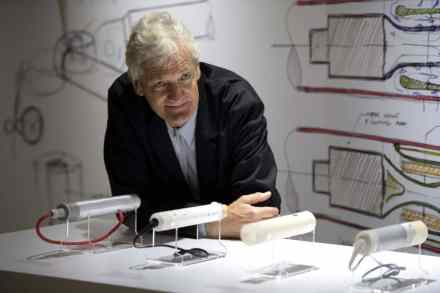
James Dyson is right to urge us back to the office

From our UK edition

I have almost no clue what office life is like. And I really mean ‘almost no clue’. Over several decades of professional work, my entire experience of office life consists of four hours working as a receptionist at a shipbroker’s in the City. I was so bad they sacked me by lunchtime: I didn’t even make it through the first day.  Chastened by this trauma, I thereafter vowed I would never do another hour of paid work in an ‘office’, and I have stuck to my principles. I have never been woken by a horrible alarm at 7am; instead, for all my life, I have heroically kept on sleeping until about 10.30.

John Keiger, Mary Wakefield and Sean Thomas

From our UK edition

21 min listen

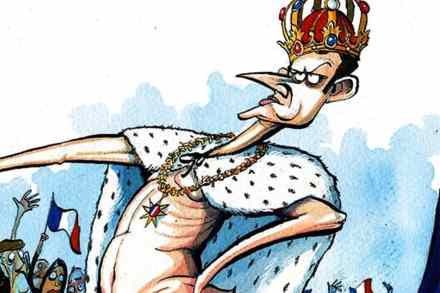
On this week's episode, we’ll hear from John Keiger on Emmanuel Macron’s brand of performative diplomacy. (00:53)Next, Mary Wakefield on the few pros and many cons of the lady carriage. (10:30)And finally, Sean Thomas on how learning to work from home opens the door to working in paradise. (16:17)Produced and presented by Sam HolmesSubscribe to The Spectator today and get a £20 Amazon gift voucher.

Why work from home when you can work from paradise?

From our UK edition

 Colombo If I lift my eyes from my laptop, I can stare across my hotel’s rooftop infinity pool to the soft tropical blues of the Laccadive Sea. In a minute I might order another one of those excellent Sri Lankan crab curries. And another chilled Lion lager. Meanwhile the weather app on my phone tells me that London is shivering in a succession of bitter storms as the government ‘ends all Covid restrictions’, meaning everyone can go back to catching trains in the freezing fog.

What the Capitol riots and the plot to stop Brexit have in common

From our UK edition

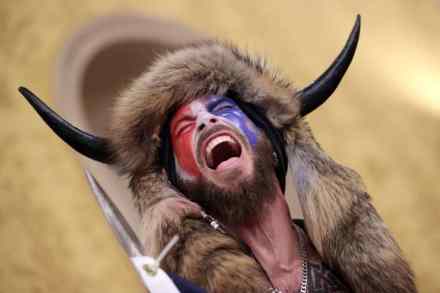
It's not often that browsing the genteel aisles of Waterstones reminds you of madmen storming the Capitol in buffalo-horn helmets, but that's the buzz I got as I briskly scanned the History shelves. I happened on a slender volume called How To Stop Brexit, written by Nick Clegg. I’d never heard of the book (a realisation that probably attaches to quite a lot of books by Lib Dem leaders) so I pulled it out, with curiosity. The text, I thought, must be a new thing, written since we finally Brexited and Clegg joined Facebook. But no: it was published in 2017. It seems I was holding a kind of revolutionary pamphlet, advising Remainers how they might ignore Britain’s largest ever democratic vote, and get it reversed, thus evading the will of the people.

What if wokeness really is the new Christianity?

From our UK edition

Have you had a conversation about The Wokeness recently? If you’re anything like me, you’ll have had a few. And they generally go the same way. First someone leans close, with a kind of guilty expression, then they whisper something outrageously unwoke like “actually, I do believe only women have cervixes”, or “I’m not entirely sure they should have banned The Tiger Who Came To Tea”. ​Sometimes the conversation ends there, with sidelong glances, in case anyone has overheard, and you quickly move on to less contentious topics. Occasionally, however, it goes further, and someone says, with a pleading hint of uptalk in their voice: it’s going to end soon, isn’t it? The madness? Surely it has to end.

We need to find the muscle memory of western greatness

From our UK edition

Like millions around the world, I have spent recent days watching – sometimes forcing myself to watch – these images coming out of Afghanistan, as the nation has fallen to the triumphant warriors of the Taliban with their untamed beards and M4 rifles.  They are the kind of images that come along once in a generation, but remain seared in the collective memory for decades. Many have compared these scenes of American defeat to the famous choppers-on-the-US-Embassy images of Saigon on 30 April 1975. And there are obvious, uncanny echoes.

The cost of net zero

From our UK edition

35 min listen

In this week’s podcast: First up, to deny the man-made climate crisis we now find ourselves in would be an act of wilful delusion. But what is the right way for the UK to try and minimise this looming disaster? In our cover story this week Ross Clark looks at the financial viability of the government’s central proposal: getting to net zero. Lara Prendergast talks to him along with James Kirkup, chair of the Social Market Foundation, who writes in this week’s magazine saying that the cost for net zero is more than worth it. (00:48)‘Ten years ago, electric cars were a work of science fiction, now the best-selling car in the UK in June was the Tesla.

Who’d want to move to America now?

From our UK edition

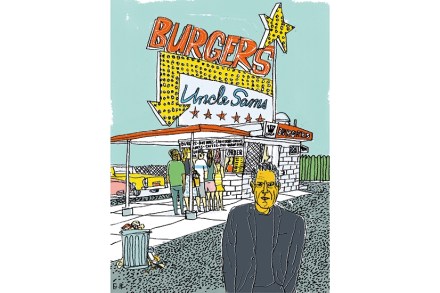
There’s a biopic released this summer, Roadrunner, about the late great chef, writer, bon viveur and TV presenter Anthony Bourdain. It recounts the many invaluable lessons Bourdain taught, such as: never eat the lower colon of a warthog; never order fish in a restaurant on Monday (it will probably be three days old); and, most of all, the American Dream is over. This last fact may seem jarring. Bourdain was a proudly patriotic American. However, I firmly believe he reveals this truth in the 36th episode of his splendid food-and-travel TV show, No Reservations. In this particular episode Bourdain visits Cleveland, Ohio. In his boyish, enthusiastic way, Bourdain tries all manner of nosh.

How I’d write Covid: The Thriller

From our UK edition

Like 98.3 per cent of humanity, I’ve spent the past 12 months reading dubiously precise statistics, staring listlessly into space for hours on end, and, most poignantly, wondering if I am an extra in a movie about a pandemic. This last intuition only worsened when I watched Contagion — the 2011 Kate Winslet/Gwyneth Paltrow pandemic movie — and it felt like I was simply watching the TV news (again), right down to the scenes of giant stadiums ominously filled with empty hospital beds. The sensation that I am living through a real-life thriller is particularly acute for me, because that’s what I do: write thrillers.

Why Brexit is just like having a baby

From our UK edition

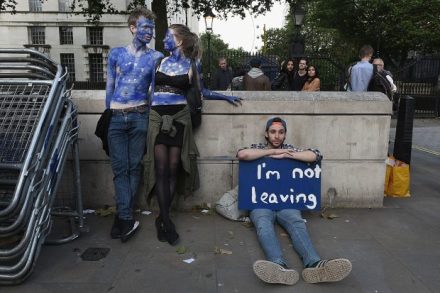
Since that moment in the early hours of June 24 when David Dimbleby said 'The answer is: we’re out', Brexit has been compared to many things. The Reformation. The Corn Laws. Weimar’s collapse into Nazism. Prohibition. The French, Russian and American Revolutions. But I think I’ve got a better comparison: first-time parenting. Scrolling through Twitter, reading about Brexit (as an anxious, just-about-Leave voter), I noticed my moods were rapidly cycling: from glee to gloom, from Bremorse to Brextasy, about every fifteen minutes. Indeed, there’s only been one other time in my life when I’ve been similarly prone to dramatic mood swings, and that’s when I was about to become a father for the first time.

Corbyn the parasite

From our UK edition

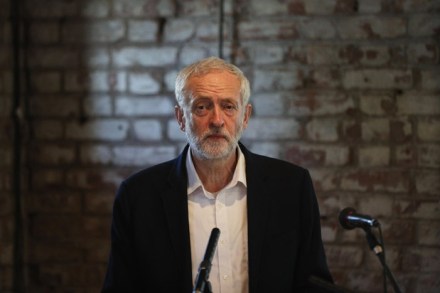
It’s a long way from Westminster to the banks of the Zambesi. But last week, for me, they linked up. I was lolling on my bed in the Sausage Tree Safari Camp, writing up notes for a travel article. Then a single, iridescent, rather delicate green wasp buzzed into my room and settled on my mosquito net. I folded my laptop. Looked at the wasp. And I got a sudden vision of Jeremy Corbyn and the fate of the Labour party. To explain. The reason I was able to identify the wasp so quickly — and assure myself that it was no threat — is because this wasp is one of the 200,000 species of wasp which are parasitic. And I once spent a year researching parasites for a thriller (my conceit was that religion might be a cerebral parasite).

Caught in the tourist trap

From our UK edition

There are few more beautiful places in this world than Bhutan in the eastern Himalayas. I know this because, right now, I am staring down the sub-tropical Punakha valley, gazing at an untouched rural landscape where singing women hoe the sunlit chilli fields. It’s glorious. And gloriously devoid of tourists. Though apparently Prince William and Kate are coming here in the next couple of weeks. I hope they don’t lower the tone. This unusual absence of tourists is down to a government policy.

Countries shape character (so get ready to like Scots less)

From our UK edition

[audioplayer src="http://traffic.libsyn.com/spectator/TheViewFrom22_11_Sept_2014_v4.mp3" title="Fraser Nelson, Tom Holland and Leah McLaren discuss how we can still save the Union" startat=50] Listen [/audioplayer]As I write this, I am sitting outside a weinhaus in Kaub, a half-timbered town on the wooded slopes of the middle Rhine. If you don’t know the place, I recommend a visit: the scenery is lovely, the hiking is fine, and the Riesling is great (they have to handpick the grapes, like peasants in a Brueghel painting, because the river-ine vineyards are too steep for machines). But there is another reason to make the agreeable journey to Kaub: it’s a brilliant place to contemplate the mysteries of nationalism and national character — i.e.

Why Thailand’s elite fell out of love with democracy

From our UK edition

Like any sensible, prosperous Englishman in his middle years, I spend every winter in Thailand. Indeed, I’ve been visiting the country for three decades: I can still remember my first hotel in Bangkok, a beautiful teak-stilted villa down a rat-infested alley which had the singular facility of offering heroin on room service. I went with the intention of staying a week or two. I ended up staying four months: the heroin on room service proved quite distracting. At the end of my stay I got a bill with just three things itemised: Room, Food, Powder. Now I’ve returned from maybe my fortieth visit to Thailand (I stopped doing the drugs years ago; I still enjoy the sun).

Self abuse

From our UK edition

I never used to like pornography – not really. Yes, in my teens in the Seventies I used to have the odd copy of Mayfair under my pillow; yes, as a student in the Eighties I used to filch the occasional Fiesta from my flatmates. But on the whole I didn't really go for jazz mags or blue movies. I found them tedious, repetitive, absurd and very embarrassing to buy. There was also a certain bleakness about the harder, nastier porn videos: all those sad and sorry women; all those contrived and silly poses. And as for the guys with mullets and thick moustaches: ugh! In 2001 I went online. A few months later, sitting idly at my laptop feeling a bit bored of typing my own name into Google, I decided to have a peek at all this porn that was supposed to be saturating the Net.