Sean Thomas

Sean Thomas

Sean Thomas is a bestselling author. He tweets from @thomasknox.

Ozempic has cured my alcoholism

From our UK edition

Remember the lockdowns? I wish I didn’t, but I do. Especially that insanely grim third lockdown, the winter one, which went on and on and on and which bottomed out, for me, as I did my one allotted weekly walk along the Richmond riverside, in freezing horizontal drizzle. I made sure I had a thermos cup of mulled wine in my hand as I debated with my one permitted friend whether we were legally allowed to sit on a bench together. In the end, we decided best not and trudged further into the sleet. They may give you an extra chance of thyroid cancer – or not (though for me the much more proximate likelihood of liver failure makes that fairly irrelevant) I’ve learned many things from lockdowns, one of them is: that I am never locking down again.

Why the dying deserve illegal drugs

From our UK edition

It was about a year ago when my dying father, diagnosed with terminal lung cancer, turned to me and said ‘Sean, can you get me some heroin?’. For a moment – understandably – I wondered if he needed this ultimate painkiller for some fairly ultimate pain, but he didn’t look like he was in agony. And when he followed that up, with a puzzled frown, and the remark: ‘Or maybe some opium, or weed, I’d like to try them,’ I realised that this was nothing to do with analgesics. Dad wanted some psychotropic fun. Dying is not recreation, it’s annihilation.

Why the world loves Margaret Thatcher

From our UK edition

There are many rituals surrounding the placement of a new Japanese Emperor on the Chrysanthemum Throne. Perhaps the most peculiar is the would-be emperor’s encounter with aquasi-sacred, 1300-year-old bronze mirror, the Yata no Kagami. This object, which embodies 'wisdom', is so enigmatic the aspirant emperor isn’t even allowed to see it; instead, functionaries are sent to assure the mirror of the new emperor’s fidelity. Some historians believe the mirror no longer exists, and was lost in a fire in Honshu’s Ise Shrine, 980 years ago. Thus it is with Labour leaders and Margaret Thatcher.

Carbon capture: how China cornered the green market

From our UK edition

30 min listen

On the podcast: In her cover piece for the magazine, The Spectator's assistant editor Cindy Yu – writing ahead of the COP28 summit this weekend – describes how China has cornered the renewables market. She joins the podcast alongside Akshat Rathi, senior climate reporter for Bloomberg and author of Climate Capitalism: Winning the Global Race to Zero Emissions, to investigate China's green agenda. (01:22) Also this week: Margaret Mitchell writes in The Spectator about the uncertainty she is facing around her graduate visa. This is after last week's statistics from the ONS showed that net migration remains unsustainably high, leaving the government under pressure to curb legal migration.

What’s wrong with eating dog? 

From our UK edition

From my desk, as I write this, in a lofty room in a soaring new hotel in Phnom Penh, I can look down at the bustling streets and see the concrete, mosque-meets-spaceship dome of the Cambodian capital’s famous Central Market. Which also happens to be the place where, 20 years ago, I ate the single most disgusting thing in my life. A dried frog. This thing, this whole dried frog, was so repulsive in taste and texture – like eating a tiny, desiccated alien made of poisonously rancid rubber – that I seldom choose to recall it. But today I am forced to, because of the intriguing news from South Korea that the Seoul government is going to ban the eating of dogs.

The Museum of London’s dubious ‘race research’

From our UK edition

I don’t know about you, but I love a bit of topical reading when I go abroad. That’s why, in my last week of travelling between lush, green, untouched Cambodian islands, I’ve been immersed in apposite books like Julia Lovell’s Maoism: a Global History, and Frank Dikotter’s The Cultural Revolution. So far, I’ve been pleased with my choices. First, they are properly appropriate: one of the reasons Cambodia’s islands are so untainted by tourism, or even inhabitants, is because the ultra-Maoist, Chinese-funded Khmer Rouge evacuated all the occupants and forced them into deadly labour on the mainland. Also, the books are truly astonishing, perhaps in a consoling way.

Svitlana Morenets, Sean Thomas and Angus Colwell

From our UK edition

21 min listen

This week, Svitlana Morenets says Ukraine’s counteroffensive is not living up to the hype (00:59), Sean Thomas says he likes travelling to crappy towns (10:27), and Angus Colwell defends London’s rickshaw drivers (17:38).  Presented and produced by Max Jeffery.

Why is Suella Braverman doing so well on social media? 

From our UK edition

As phrases go, 'Twitter analytics' is not the most exciting, especially now we are, apparently, meant to say 'the social medium formerly known as Twitter analytics'. Nonetheless if you dig into Twitter’s user and viewer data, you can unearth some surprising, even mystifying anomalies. In this case, I’m talking about the Twitter account of the recently defenestrated former Home Secretary Suella Braverman. For example, barely 24 hours ago she posted a tweet about the Supreme Court’s judgment on the government’s Rwanda case. The rather dry, technical tweet about necessary new legislation got 2.5 million views.

Why I love terrible towns

From our UK edition

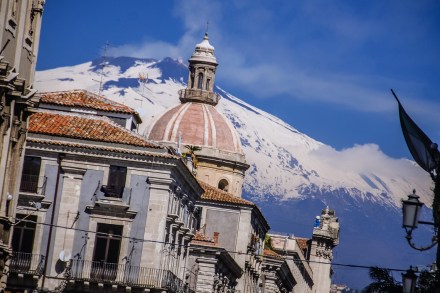
There are plenty of reasons to visit Catania in Sicily, and some of them are positive. The town is impressively ancient – dating back to the 8th century bc. It boasts a handsome, lavishly voluted Baroque core. A few steps from that main piazza you can find the picturesque fish market, the Pescheria, which sequins the black tufa cobbles with silvery fish scales, and has been selling inky squid for centuries. What else? The city has a striking location, with Mount Etna squatting on the horizon, apparently benign, but occasionally sending out chuffs of smoke to remind you of its menace, like a volcanic version of Tony Benn, puffing his pipe at the edge of British politics.

What BLM and the Remembrance Day protests had in common

From our UK edition

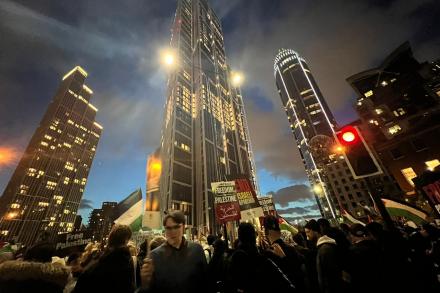
Back in June 2020, I attended a quasi-legal Black Lives Matter protest in London, and a widely reviled counter protest, by hard-right Tommy Robinson-esque ‘football lads’, who were determined to ‘defend’ the Churchill statue and the Cenotaph. As a journalist, I was able to move freely between these two protests: one – the football lads – took place in Parliament Square and lower Whitehall, and the other – BLM – was largely confined to Trafalgar Square and Charing Cross. Mostly, the police managed to keep the warring tribes apart, occasionally the lines broke, and pretty serious violence ensued. I saw this violence from both perspectives.

The Welsh Marches: England’s foodie frontier

From our UK edition

I’m in a car embarking on a road trip through one of the great foodie regions of the world, charged with the onerous task of scoffing and boozing my way through five days of epicurean heaven. But where am I? Trundling along the Rhone valley from Lyon to Provence? Barrelling down the autostrada to Bologna? No, I’m on the A458 just outside Shrewsbury. Because this is a tour of the Welsh Marches, England’s foodie frontier, from Shropshire through Herefordshire to Gloucestershire, where a food and drink revival over the last three decades has turned this lush, fertile, famously green corner of Britain into a gastro-destination as good as any in Europe. My first stop is the Haughmond, a hotel/gastropub with a cute attached bakery, in the village of Upton Magna.

Rishi Sunak is too late – the AI monster is at the door

From our UK edition

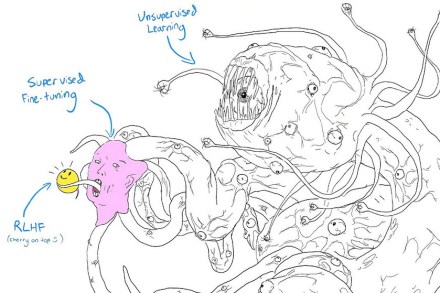
He must be a busy man, Rishi Sunak. When he’s not rescuing the country from inflation, sending the Royal Navy towards troublezones, making long term decisions for a brighter future, herding worried Conservative MPs towards the lemming-edge of the next election, and organising globally important AI summits, I doubt he has much time to read the darker recesses of TwitterX and Reddit where he might have come across a character named ‘Jimmy Apples’. Which is a shame, in terms of that AI conference – being held this week at Bletchley Park, the “home of computing”.

AI will change TV news forever

From our UK edition

As we all know, the last few days have been filled with terrible news out of Israel and Gaza, and this news – on mainstream or social media – has been suffused with appalling pictures of cruelty, carnage and suffering. Like many, I have therefore been doing my utmost to ignore all of this, and bury my head in other tasks, lest I expire out of bleak despair. My personal diversion has been exploring the latest evolutions of AI creativity – drawings, designs, cartoons, paintings. I am trying to discover if AI can be serviceably employed as a graphic designer, or maybe an illustrator.

Beware interesting politicians

From our UK edition

We’ve all been there, haven’t we? One minute you are sitting down, with a cup of tea, ready to listen to Sir Keir Starmer’s latest conference speech, the next you wake up, 17 hours later, the tea spilled across the floor, a line of dried spittle tracked on your chin, because Keir Starmer is so intolerably boring, after a mere three seconds of his stilted and nasal delivery you lapsed into a state of unconsciousness which was sufficiently profound to register on the Glasgow Coma Scale.  This, after all, is a man whose idea of an incredible story is the time he went to a hotel and they gave him the wrong key. Starmer is the epitome of beige lifelessness.

What we lost with the fallen sycamore

From our UK edition

I don’t know about you, but my reaction to learning about the felling of that tree in Northumberland was, well, weird. For a start, unlike many others, I’ve never hugged this lovely tree, never picnicked beneath it, never proposed next to it, never seen it after a long satisfying hike along Hadrian’s Wall, so I do not have much personal connection. In fact, I’ve never even been there. My only knowledge of the sycamore gap sycamore is seeing it in the Hollywood movie, Robin Hood: Prince of Thieves, which in turn – along with some later, pretty images of snowbound hills and auroral lights – slowly induced this extremely vague sense that up there, in far northern England, there was this splendid tree that one day I might visit, maybe, who knows. I mean, it is just a tree.

The night I accidentally saved a baby

From our UK edition

I was writing a thriller in northeast Laos about 15 years ago near a town called Phonsavan, researching a mysterious megalithic site known as the Plain of Jars. When my research was done, I realised I had to devise a route home to the quaint Laotian capital of Vientiane. As I was driving one of only three rentable four-wheel-drives in the country, I decided to make the most of my mobility and take a more exciting route than the singular main road down the middle of the country (whereby I had arrived). I was particularly tantalised by a sentence in the Lonely Planet guide to Laos which claimed ‘there is theoretically an alternative route from Phonsavan back to Vientiane, which is said to be very beautiful, but we haven’t tried it’. I kept thinking: is the baby dying?

The deep absurdity of HS2’s diversity agenda

From our UK edition

When it comes to British railway history, I can say, without exaggeration, that few places are more iconically located than my own home. This is because I live exactly where Camden Town meets Primrose Hill – and where Britain’s first intercity railway tore through inner London (around 1837), surging out of London’s first mainline station: Euston. Indeed, my own house is visible in one of the famous 1838 John Cooke Bourne lithographs of this transport revolution: Building Retaining Wall near Park Street. The prosaic title deliberately spars with the poetic grandeur of Bourne’s cityscape, as the Camden Cutting slices grimly through the housing. Does any of this bizarre, sometimes-well-meaning nonsense really matter?

French food is the worst in the world

From our UK edition

There are certain things that are so shocking they can only be said by close friends. And as the British have been in a close friendship – an entente cordiale – with the French since 1904, I am here to say it to our neighbours across the Channel: I’m sorry, mes amis, but your food is the worst in the world. There are more McDonalds in France, per head, than anywhere in Europe Such a claim needs evidence. So let’s start with that essential emblem of aspirational French cooking: the menu degustation. Over the years, as a travel hack, I have learned to shudder when I see this phrase – ‘tasting menu’ – on le carte of any restaurant, but particularly a striving restaurant in the French regions. Why?

Broken Britain: what went wrong?

From our UK edition

34 min listen

On the podcast:  In her cover piece for the magazine, The Spectator’s economics editor Kate Andrews writes that political short termism has broken Britain. She joins the podcast alongside Giles Wilkes, former number 10 advisor and senior fellow at the Institute for Government, to ask what went wrong? (01:12) Also this week:  In his column Douglas Murray writes about Burning Man, the festival which has left Silicon Valley’s finest stuck in the mud. He is joined by David Willis, who has been covering the festival this year for the BBC, to discuss the schadenfreude of Burning Man.

Is your pet killing the planet?

From our UK edition

As a travel writer, I used to joke about the so-called ‘downsides of the job’. The stupidly complex shower-fixture in the five-star Maldivian Paradise. The unexpected commission to go to Denmark in winter. The vague but real sting of disappointment upon realising that the free hotel pillow-chocolate is actually a mint. But in recent years a genuine and troubling downside has arisen. When I meet someone and tell them what I do, the listener often winces, perhaps with a hint of moral superiority, and says something like: ‘Don’t you feel guilty about your carbon footprint? You’re killing the planet!