Sean Thomas

Sean Thomas

Sean Thomas is a bestselling author. He tweets from @thomasknox.

Are you ready for agentic AI?

It’s an interesting and unusual word, agentic. For a start, some language enthusiasts dislike it as a mulish crossbreed of Latin and Greek. Also, its etymology is obscure. It appears to derive from 20th-century psychology: one of its first usages can be found in a study of the infamous 1960s Milgram experiments at Yale University, when volunteers were persuaded to electrocute, with increasing and horrible severity, innocent ‘learners’ (actually actors). The experiment revealed that most of us would administer a lethal shock of electricity to an innocent human being, if only told to do so by a man in a white coat with a clipboard.

How debauchery turns to tragedy in towns like Vang Vieng

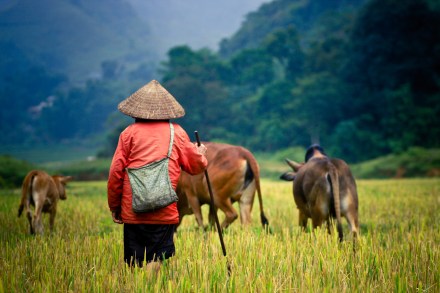
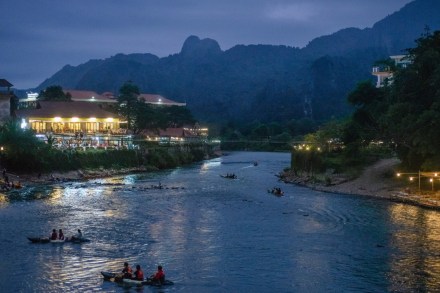
I still remember the first time I saw Vang Vieng, in Laos. It was many years ago, before the Chinese began pouring money in (such is the scale of Chinese investment, Laos now has high-speed rail). I was driving one of the very few rentable 4x4s in the country, picked up in the sleepy capital of Vientiane. I was on the main road connecting south and north Laos. When I say main road, I mean a road that sometimes narrowed to a single track, and that single track was commonly blocked by hens, dogs, playing children, and soldiers sleeping on the roofs of their cars under posters carrying the hammer and sickle (Laos was, and still is, theoretically communist).

Why Britain needs Shinto

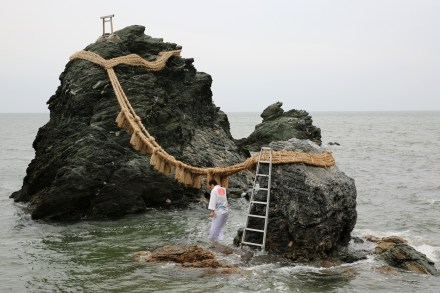
Ise, Japan They say of Japan that if you come here for a week, you want to write a novel about Japan. After a year, maybe a few essays. After a decade, a page. It is one of those countries which seems to get simultaneously more fascinating and opaque. Possessing an ancient monarchy is like having a Gothic cathedral in your back garden So it is for me, on this, my first trip to Japan in 30 years (I lived in Kyoto in the mid-1990s). This time around I have been doing prep by reading the early history of Shinto, the ‘state religion’ of Japan, an animist creed which sees the divine in everything – trees, rocks, lakes, rugby balls (really) – all in the form of kami – which can be spirits of place, mood or idea.

Paul Wood, Sean Thomas, Imogen Yates, Books of the Year II, and Alan Steadman

30 min listen

On this week’s Spectator Out Loud: Paul Wood analyses what a Trump victory could mean for the Middle East (1:16); Sean Thomas gets a glimpse of a childless future while travelling in South Korea (8:39); in search of herself, Imogen Yates takes part in ‘ecstatic dance’ (15:11); a second selection of our books of the year from Peter Parker, Daniel Swift, Andrea Wulf, Claire Lowdon, and Sara Wheeler (20:30); and notes on the speaking clock from the voice himself, Alan Steadman (25:26).  Produced and presented by Patrick Gibbons.

My glimpse into a childless world

If you are looking for a pointer for the future of the world, the free-diving fisherwomen on the matriarchal, shamanistic South Korean island of Jeju are not an obvious example of where we’re heading. Because the haenyeo are famously unique. And famously hardy. But what is happening to them should concern us all. In simple wetsuits they spend hours in the cold, clear waters, seeking out sea slugs, oysters, conches and abalone. They are fiercely independent – they spearheaded resistance to the Japanese in the 1930s and 1940s. But here’s the thing, as Nari (age 70) tells me in the haenyeo’s coastal mud-room: ‘We are probably the last. We have been diving since the men went to war in the 18th century, but maybe no one will do this in 20 years’ time.

Are you ready for the baby wars?

Such an awful lot of stuff is happening right now, even the keenest observer of social trends could be forgiven for missing a statistical milestone passed earlier this month. So here it is: at the beginning of October, it was revealed that, for the first time since the 1970s baby bust, deaths outnumbered births in the UK – meaning, in effect, that all of our population growth (about 680,000 for this year) came from immigration. The reason why is obvious. The boomers – i.e. people born during the great baby boom of 1945-1965 – are dying out, and they are not being properly replaced, thanks to a low total fertility rate (TFR, which equals ‘births per woman’). In England and Wales, TFR fell to just 1.49, far below the accepted replacement rate of 2.1.

The end of the car is now

I love driving. When I say ‘driving’, I obviously don’t mean crawling along the North Circular at 2.7 miles per hour, in a state of zombified inertia, mutinously wondering why Keir Starmer’s voice is so weirdly soul-sapping. And when I say I love driving, I don’t want to claim I’m any kind of petrolhead. I have no idea what a carburettor is, and the same goes for crankshaft, torque, drift, and understeer. In fact, I’m not totally sure what a petrolhead is. I wonder if we are overlooking a much smarter solution, which can be found in Phnom Penh No, when I say I love driving, I mean what I am doing now: speeding across majestic British Columbia in a massive great motor, eating up the North American miles on a proper North American road trip.

What horror does to us

Tonight, the BBC will be broadcasting what is – to my mind – the scariest film ever made. Indeed, I would go further than that, I would say this movie is the scariest human artwork in any form – and that includes novels, plays, stories, the lot. This film beats them all, and by a distance. What is it? Of course, I’m not going to tell you that straight off, that would break all the rules of scary suspense writing. First, I want to examine the underlying questions: why do we like being artificially scared? And what makes a particular ghost story or Dracula remake genuinely frightening? The questions sound simple; they are not.

Has AI just killed the podcast bro?

It’s a well-known psychological phenomenon: that time seems to slow down if you experience lots of new and unusual events. For example, if you are travelling across Asia, a week can seem like a month, and a month like a year, as you encounter so many different landscapes, peoples, climates, languages, cities, and that deep-fried algae you ate in Laos. All the events packed together somehow dilate the sense of time’s passing. The more you think about this technology, the more mind-spinning it becomes The same goes for technology, especially rapidly advancing tech, like AI.

Montenegro’s lost interior

How many Spectator readers are aware that tiny Montenegro, that silver sixpence of south-east Europe, so long lost in the jumbled purse of geopolitics, has some of the deepest canyons in the world? Not many, I’d bet – we know the luscious Montenegrin Mediterranean coast, if we know anything. And I’d wager even fewer know that one such abyss, the Tara River Canyon, is one of the fastest watercourses on the continent. I’d imagine no one at all, including me until five seconds ago, knows that the longest stretch of rapids on this giddying torrent is called Borovi. It’s like Utah hooked up with Iceland, somewhere in Sicily, and brought a friend from Dartmoor I only know this because I’ve just fallen in.

Cambodia’s return to joy

In Cambodia, everybody is looking forward to Bon Om Touk. If your Khmer is a bit rusty, this means the mid-autumn New Moon Water Festival, celebrated in late October. This fervent, noisy, firework-banging festival has multiple, colourful meanings. For a start, it marks the end of the endless summer rain – which turns everyone’s laundry mouldy and gets a tad annoying. It also marks the moment when the fertile Tonle Sap river, which rolls through the sprawling, youthful, trafficky, heat-struck, palm-shaded, jacaranda-adorned, busy-yet-languid, skyscraper-sprouting city, does a handbrake turn.

Keir Starmer and the evil of banality

First, a little story. About three years ago I was given an eccentric but fun assignment between Covid lockdowns – I had to eat my way around the coast of East Anglia. On my gluttonous travels I met an extremely senior retired judge – whose wife now owns a posh boutique hotel in Suffolk. As we ate asparagus and hollandaise in his lovely, sun-dappled garden the amiable ex-beak told me that of all the lawyers who’d ever come before him, Keir Starmer was ‘the cleverest’.

It’s time to get rid of your pet

Around the tolerant British dining table, there are few opinions which will see you shunned, instantly. ‘Bring back the birch’ might be one, unless you’re supping with someone who recently had a bike stolen. ‘Xi Jinping has really good hair’ will certainly silence people. However if you say ‘keeping pets is usually wrong, especially cats and dogs’, I can guarantee universal rejection. Still, the point needs to be repeated – not least because we have new, disturbing evidence of the damage these pets are doing: to the environment. Fluffy may not look like an ecological supervillain, but I am afraid it is the case That evidence comes in the ongoing collapse in British insect life.

Why is Britain so ugly?

Family holidays always carry a risk of dismaying revelations. Suddenly you are thrust together, 24/7, over many days, in a way only matched by Christmas (which is equally perilous). And so it was that, after ten days of driving around Provence and Occitanie, from Arles to the Camargue to the mighty Gorges of the Tarn, my older daughter this week suddenly said: ‘Why is Britain so hideous?’   The outburst was clearly prompted by the comparative beauty of France. My daughter is 18 and her only prior experience of France was grey wintry Paris in a boring school trip, so she was probably expecting more of the same dreariness.

Avant garde is boring

Of all the places to witness the circus parade of modern French history, you can do a lot worse than the tiny town of Espalion, in the beautiful department of L’Aveyron, in the south of France. Because there are few destinations more unchanged than L’Aveyron, and this extremely French place is where I saw the opening of the French Olympic Games, in an al fresco brasserie. And this is where I sensed a weird unease. No one booed, no one catcalled, no one mocked. They sat there, sipping cold bière, and at times they vehemently cheered and laughed. Yet they also appeared a touch confused, and, I suspect, this is because they thought – like the rest of the world – ‘this is quite often a load of bollocks’.

Keep Michelin men out of our hotels!

It’s probably escaped most people’s attention, what with the football, the election, the Ukraine war, the horrors of Gaza, the assassination attempt and the revelation that the most powerful human on the planet has the intellectual sharpness of a daffodil. But in the past few weeks, the world of travel has been roiled by a surprising innovation: Michelin stars for hotels. Though the stars are stylised as ‘keys’. This may not seem like big pommes de terre, but it is quite important. Because, if the concept takes off and hotels start striving for Michelin accolades, then we can expect the best and most ambitious to go the same way as Michelin-mad restaurants. And that will be bad. You could argue it shouldn’t be a problem, as hotels already have star ratings.

My day in Le Pen land

At first glance, for the visitor driving by, Guingamp in northwest Brittany looks idyllic. It is a typically lovely stone-built French small town, it has a sweet river running through the middle, it has pretty ramparts and a ducal chateau and riverbank gardens, with agreeable new fountains in the centre. It even has a decent-sized supermarket open on Sunday. In Guingamp, on a dead Sunday afternoon, I somehow felt more uneasy than I did in war-torn Ukraine At least it did last Sunday, the first French election day, when I paid a visit. The difference for me is that – unlike most trippers – I didn’t breeze on after a peek at the historic watermills. I lingered.

Why the French are so pessimistic

I am sitting in a little bar overlooking the jaunty marina of Trinité-sur-Mer, on the opulent south-east coast of Brittany. My Kir Breton is cold, fizzy, sweet and rubescent. Everyone around me is swigging Sancerre and cidre as the sun slowly nods below the green, southerly Celtic hills. The water glitters, the pretty people parade, the douceur de vivre is palpable. If you look at what has happened to Paris and Marseille, you can see how this can easily go wrong, how France’s good fortune can be squandered I've been here in Brittany five days, having got the ferry over from Portsmouth. And, quite frankly, the difference in life quality has been stark.

Katy Balls, Gavin Mortimer, Sean Thomas, Robert Colvile and Melissa Kite

31 min listen

On this week’s Spectator Out Loud: Katy Balls reflects on the UK general election campaign and wonders how bad things could get for the Tories (1:02); Gavin Mortimer argues that France’s own election is between the ‘somewheres’ and the ‘anywheres’ (7:00); Sean Thomas searches for authentic travel in Colombia (13:16); after reviewing the books Great Britain? by Torsten Bell and Left Behind by Paul Collier, Robert Colvile ponders whether Britain’s problems will ever get solved (20:43); and, Melissa Kite questions if America’s ye olde Ireland really exists (25:44).  Presented by Patrick Gibbons.

The day I met a sun priest

Palomino, Colombia I’m in a truly wonderful place: the Caribbean coast of Colombia. It’s got more bird species than most of Europe, exquisite cotton-top tamarin monkeys that hop through jungles, and one of the world’s highest coastal mountain ranges. There are empty beaches, shimmering lakes, colonial townscapes and a recent folk memory of terrible gangsters. Some male babies are largely kept in caves from birth, in the darkness, until they are nine  It also boasts several indigenous tribes, one of which – the Kogi – I had never heard of until I got here. But the more I read about them from my hammock on the beach, the more I become determined to encounter them – and to talk to one. A Kogi. Why? Because they are so strange.