Sarah Ditum

From bashful teenager to supermodel: Susanna Moore’s fairytale memoir

From our UK edition

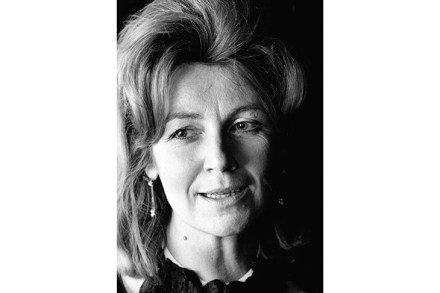
There’s a kind of writing about LA that I am a sucker for. Gossipy, lyrical, with a surface of affectless simplicity but an undertow of melancholy that can be personal (bad love affairs, damaged families) or institutional (the death of old Hollywood, the birth of the new) or, best of all, both entwined. It is reserved in its affiliations, not susceptible to moral fervour, lightly amused by what it observes but not given to wisecracking (it is not Nora Ephron, who I am a sucker for but in a different way). It has the measure of the city’s miraculous lucency and compulsive self-invention. Joan Didion did it; Eve Babitz specialised in it.

The sexism of the conversation about cleaners and Covid

From our UK edition

I don’t have a cleaner. Admittedly, whether I do or not isn’t really relevant to the argument I’m about to make. But quite often when you talk about cleaners, you’ll get a reaction like this: ‘That lazy, dirty Karen, she should clean up after herself instead of farting out columns while someone picks up around her.’ Because people are weird about cleaners. And by weird, I mean very sexist and enormously dishonest. So I don’t have a cleaner. But God, I have never wanted one more than I do during lockdown. I am not a clean person. Maybe a six out of ten on the clean scale, by which I mean I’ve been inside a Lakeland more than once but can still make a bottle of floor soap last several years.

We don’t talk of a ‘working father’ — so why do we still refer to a ‘working mother’?

From our UK edition

The phrase ‘working mother’ ought to be as redundant sounding as ‘working father’ would be if anyone ever said that: in the UK three-quarters of women with dependent children work. Yet the working mother still feels provisional, something that lockdown has made sharply apparent to many women. Will it be Mum or Dad who claims the spare room, while the loser retreats to the kitchen table? Mum or Dad who does the home-schooling? Who will preserve their professional status, and who will slide into the domestic? The answer is that, in most cases, the woman loses, and her male partner quietly gathers the spoils.

Annie Ernaux looks back at her teenage self – and sees a stranger

From our UK edition

How can you recover the teenage girl you were? Not just recall the memories and recount the events — this dress worn at that party, the taste of that alcohol on this boy’s mouth — but restore the world in which these things took place, and the self who acted and was acted upon. Is it possible to be your own Orpheus and yank the Eurydice of your former self from the underworld of forgetting? This is the problem that Annie Ernaux sets herself in this slim, transfixing memoir of young adulthood and first sexual experience. It’s 2014 and Ernaux is looking at a picture. The picture was taken in 1958 and the girl in it is 17. The girl is Ernaux, and also she isn’t.

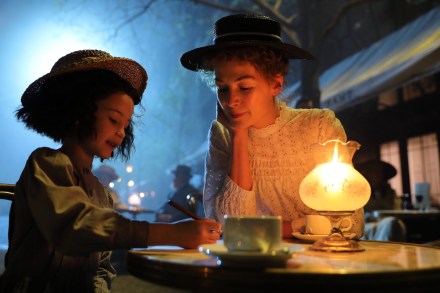
The director of Persepolis talks about her biopic of Marie Curie: Marjane Satrapi interviewed

From our UK edition

The problem with making an accurate film about science is that science is rarely exciting to watch, explains director Marjane Satrapi. Movie convention tends to insist on the climax of the eureka moment and the fiction of the solitary male genius, who doggedly closes in on his discovery in the same way that a detective might doggedly close in on a killer. ‘It doesn’t happen this way,’ says Satrapi. ‘It’s a result of lots and lots of work, which most of the time is repetitive and most of the time you know you don’t know where you’re going, and it’s lots of collaboration.’ Satrapi studied mathematics in her birthplace of Iran, and has a scientist’s intolerance for dramatic licence.

The voices of the victims

From our UK edition

Before she was the subject of true-crime mythologising, Catherine Eddowes made her living from it, selling ballads based on real-life murders to avid Victorian audiences. The historian Hallie Rubenhold suggests that Eddowes may have written them too; unusually for a working-class woman, she was literate. Still, the possible example of her work that Rubenhold reproduces in The Five shows no sign that female authorship led to incipient feminist consciousness. Typically for the 19th century (and still often seen in reporting today), Verses on the Awful Execution of Charles Christopher Robinson, for the Murder of his Sweetheart, Harriet Segar focuses attention on the femicidal man, investing sympathy in him rather than the woman he killed.

Patti Smith had a bad year in 2016

From our UK edition

In the Chinese zodiac, 2016 was the year of the monkey, a trickster year full of the unhappy and the unexpected for Patti Smith. It starts badly at New Year: ‘Some guy with a greasy ponytail leaned over and puked on my boots.’ Then it gets worse, private tragedies and political shocks drawing Smith into a restive, twilight state: ‘The mischievous monkey, toying with the climate, toying with the coming election, toying with the mind, producing sour sleep or nothing at all.’ She tells us how she ‘skated along the fringe of a dream’ in this — well what exactly is it?

The Old Vic’s gender-neutral toilets leave women worse off

From our UK edition

This article appeared briefly on the Stage website before it was unpublished following 'strong responses' online. Here, with Sarah's permission, The Spectator republishes her piece: If you need to confirm that we live in a world built on men’s terms, take a look at the toilets in any public building. The chances are that, while men are freely swanning in and out of their facilities, women are left shuffling uncomfortably in line, waiting for a cubicle. That’s not because women are frivolously lingering in there. While men can unzip and go at the urinal, women have to partially undress and sit down inside a stall, which takes longer – and because of periods, pregnancy and higher incidence of UTIs, women have to use the toilet more often.

A New York state of mind – Doxology reviewed

From our UK edition

Doxology covers five decades and a spacious 400 pages, with all the subplots and digressions you would expect of a baggy monster realist novel. It moves from the subculture of straight edge punk to the backrooms of political powerbroking, and surveys ground from East Harlem to rural Ethiopia. There are at least half a dozen characters who take command of the narration for a substantial chunk of the story, and many more whose consciousnesses we breeze through as cameos. Yet the overall feeling isn’t of plenty, but of precarity. From the opening sentence, it seems that time is always about to run out.

Grit and grace

From our UK edition

The accepted story of mid-20th century culture in Britain belongs to the boys: the British Invasion, Beyond the Fringe and the Angry Young Men, with women relegated to bit parts. Celia Brayfield’s book is a corrective to that. She gathers seven young female writers who made their debuts in the late 1950s and early 1960s, and proposes them as a parallel clique to the Angries. Shelagh Delaney, Edna O’Brien, Lynne Reid Banks, Charlotte Bingham, Nell Dunn, Virginia Ironside and Margaret Forster never thought of themselves as a movement, but they ‘shared an inner place, the territory of girlhood,’ writes Brayfield.

Read Rhys

From our UK edition

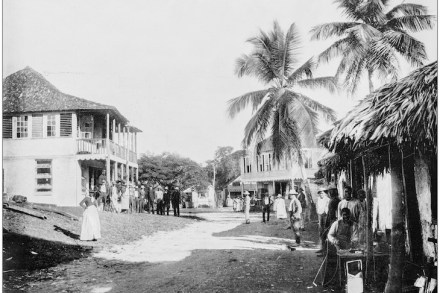
The problem with writing about writers — and a particular blight on the current vogue for autofiction — is that writers do not necessarily live very interesting lives. Wrangling with editors, hatereading your rivals, making coffee and (occasionally) typing are all consuming occupations, but not the stuff of prepossessing narrative. That, at least, wasn’t an issue for Jean Rhys, whose colonial childhood and dissolute adulthood gave her ample material for fiction. But reprocessed by Caryl Phillips as the subject of this new novel, Rhys (or rather Gwendoline, since she has yet to take her pen name in the period Phillips covers) is somehow rendered boring.

Feminist firebrand

From our UK edition

The suffragettes are largely remembered not as firestarters and bombers but as pale martyrs to patriarchy. The hunger artists refusing the rubber tube; Emily Wilding Davison dying under the King’s horse. We forget their destructive acts aimed at men and property; we remember the more sex-appropriate self-destruction. Fern Riddell’s flawed book is intended as a corrective. Its subject, Kitty Marion (born Katherine Marie Schäfer in 1871 in Germany), was one of the suffragettes’ most prolific and dedicated practitioners of political violence: possibly a member of Christabel Pankhurst’s elite terror cell the Young Hot Bloods, undoubtedly an arsonist and a very effective one, the veteran of multiple imprisonments and force-feedings.

Labour’s ‘woman’ problem

From our UK edition

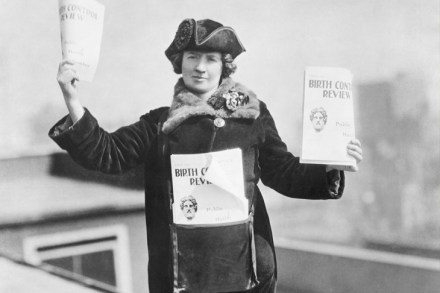
There are plenty of things you could say about Labour’s All-Women Shortlists (AWS). Tony Blair called them 'not ideal at all' in 1995. In 1996, Peter Jepson and Roger Dyas-Elliott – two men who’d been rejected as Labour candidates – called them sex discrimination. An industrial tribunal agreed with them, and Labour was forced to suspend the policy until 2002, when it was able to bring in the Sex Discrimination (Election Candidates) Act, permitting positive discrimination in candidate selection. In 2002, Owen Jones called them 'most successful at expanding the career options of a tiny elite of professional, university-educated women', Blair’s hesitancy forgotten and AWS rewritten as a tool of centrist hegemony.

Who is Sylvia – what is she?

From our UK edition

In May 1956, three months after meeting Ted Hughes, one before they will marry, Sylvia Plath writes to her mother Aurelia about the talented man she has fallen in love with: ‘He will start some portraits of me! A combination of both witch and ghost, perhaps.’ Because of Hughes’s editing and writing of her work, a combination of witch and ghost is precisely how we know her, and he strongly encouraged the idea that the version of Plath he offered was the ‘real one’, a core of personality born in an inevitably fatal struggle narrated through the Ariel poems. Ariel, in his view, was her only true work.

A cursed house

From our UK edition

Beyond the patricide and even the incest, the horror of the Oedipus myth lies in its insistence that our fates are not ours to change. And yet the story itself is far from unalterable, having been handed down in multiple variants — something that Natalie Haynes knows very well as a classics scholar. Now Haynes has written her own version of the tragedy, finding new space in the narrative by looking at it through the eyes of two characters neglected by antiquity: Oedipus’s mother/bride Jocasta and their youngest daughter Ismene. We meet Jocasta as a clever 15-year-old girl married off to old King Laius of Thebes, in what her grasping father declares ‘the best deal of [his] life’.

An untouchable star

From our UK edition

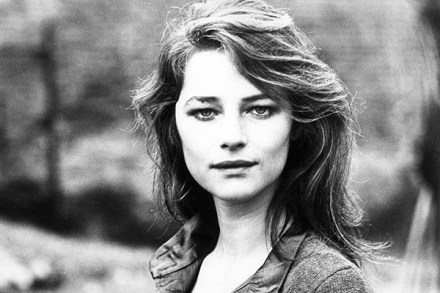
This slight book comes with heavy baggage. In 2009, Rampling handed back a hefty advance for her contribution to a conventional authorised biography, and then used the Human Rights Act to prevent Barbara Victor from publishing anything based on their collaboration, on the grounds that it would violate her right to privacy. The Mail typically demanded to know ‘what can possibly remain untold in her audaciously open life’. What it meant was that, having been so extensively naked on-screen, Rampling had no business pulling down the shutters on her private life. But Rampling’s extraordinary sexiness has always derived from an immaculate meeting of exposure and reserve.

Body language

From our UK edition

Others goes straight to the head. Things start like this: with an article on a website called ‘Women and Film’, by someone called Meadow Mori. Meadow reveals that when she was fresh from her LA high school, she had an affair with a mountain-sized filmmaker, who ‘sounds like the voice of America’, and whose career was marked by genius and frustration. It is, of course, Orson Welles; but there’s more here than scrupulous cinematic referentiality. Is Meadow’s relationship with the F is for Fake filmmaker a truth or an untruth? And if it’s an untruth, does that make it a lie? A lie of invention, a lie about yourself, should not be called a lie, she says in the essay. Perhaps it is a kind of wish-story.

How should gender be defined in Olympic sports?

From our UK edition

There were no women athletes in the first modern Olympic games. The next time around, in the 1900 Paris games, out of 997 athletes there were 22 women, who competed in just five acceptably ladylike sports: tennis, sailing, croquet, equestrianism and golf. Over a century later, the introduction of women’s boxing meant that the 2012 Olympics were the first to feature women competing in all sports. But that moment of parity has been followed almost immediately by a drastic challenge to the very definition of women’s sport, as the International Olympic Committee brought out new rules last November on the inclusion of trans athletes.

Daddy dearest

From our UK edition

In 2004, after a 25-year estrangement, Susan Faludi’s father reappeared in her life via email. ‘I have had enough of impersonating a macho aggressive man I have never been inside,’ it read, and was signed, ‘Love from your parent, Stefánie.’ The 77-year-old had embarked on a new life as a woman, both a dramatic abruption and the continuation of a biography full of reinvention. He was born as a Hungarian Jew called István Friedman, survived the Holocaust thanks to a talent for imitating Nazis, adopted the name Faludi to show he was ‘100 per cent Hungarian’, and later settled in the US, where he became Stephen Faludi, archetypal ‘American Dad’ and, as a photographer, a master manipulator of images.

The making of a legend

From our UK edition

For one week in July 2010, the aspiring spree killer Raoul Moat was the only news. ‘Aspiring’ because he didn’t actually achieve his violent ambitions: by the time he died, he’d only managed to shoot three people (four if you include himself) and murder one (two if you count PC David Rathband, who was blinded by Moat and killed himself four years later). But he made it, in a way. His self-constructed mythology had all the makings of a folk hero —working-class man, wronged by his woman, a grudge against the police — and there was a public ready to embrace him. Floral tributes were left outside his home and at the site of his suicide, and a Facebook page called ‘RIP Raoul Moat You Legend!’ attracted over 35,000 likes before it was removed.