Sam Leith

Sam Leith

Sam Leith is literary editor of The Spectator.

Feral, by Geoge Monbiot – review

From our UK edition

One of the greatest difficulties environmental activists have always had in the war for hearts ’n’ minds is that they so often seem priggish and negative. Everyone knows what they are against (central heating, fun, cod and chips, James Delingpole etc). Fewer people know what they are for. Here, therefore, is George Monbiot’s attempt — shot through — no, positively ravished — with personal feeling — to tell us. He offers, he says, a set of ideas ‘not about abandoning civilisation but about enhancing it [...] to “love not man the less, but Nature more”.

‘Falling Upwards: How We Took to the Air’, by Richard Holmes – review

From our UK edition

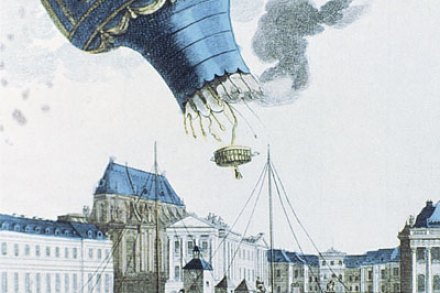
‘Caelum certe patet, ibimus illi’ was the phrase blazoned on the side of the Royal Vauxhall, an 80-foot, red and white candy-striped coal gas balloon launched from Vauxhall Pleasure Gardens in 1836 to fly overnight from London to the continent. The motto is from Ovid: ‘Surely the sky lies open, let us go that way!’ It well captures the exuberantly adventurous temper of the early days of ballooning, that gorgeous dead-end in the history of human aviation. Richard Holmes himself caught the ballooning bug in a Norfolk fairground aged four, he tells us, when his RAF pilot uncle fastened a red party balloon to the top button of his aertex shirt.

‘Levels of Life’, by Julian Barnes – review

From our UK edition

‘You put together two things that have not been put together before and sometimes it works, sometimes it doesn’t.’ In this slim book Julian Barnes puts not two but three things together: nonfiction, fiction and memoir. And sometimes it works, sometimes it doesn’t. The first section is an elegant and breezy account of the early days of ballooning and the development of aerial photography. Here are the adventurer Colonel Frederick Burnaby, the actress Sarah Bernhardt, and the photographer Félix Tournachon (otherwise known as Nadar): ‘The enthusiastic English amateur, the most famous actress of her era, making a celebrity flight, and the professional balloonist’.

Fractured Times: Culture and Society in the 20th Century, by Eric Hobsbawm – review

From our UK edition

Like many posthumous books from distinguished thinkers, this isn’t one. A book, I mean. Not really. The problem is that nobody seems to buy cobbled-together collections of previously published essays, talks and book reviews. The thing to do if you’re a publisher, therefore, is to give it a title that makes it sound like a book, shoehorn the content into vague, grand-sounding sections (‘Part I: The Predicament of “High Culture” Today’; ‘Part II: The Culture of the Bourgeois World’; ‘Part III: Uncertainties, Science, Religion.’; ‘Part IV: From Art to Myth’) and put it between hard covers for 25 quid. That said, the situation’s not quite as bald as all that.

Family differences

From our UK edition

Andrew Solomon’s simple and powerful guiding idea in this book is that there are two sorts of identity that affect your place in the world. Your ‘vertical identity’ is what you share with your parents — and it usually, but not always, includes such things as race, religion, language and social class. Children are born with ‘horizontal identities’ too — which is to say, things that they don’t share with their parents but that they have in common with others elsewhere: being the deaf child of hearing parents, the schizophrenic child of mentally well parents, or the gay child of straight parents. Some of these horizontal identities are things that are, or were, regarded as impairments; some of them are understood as mere difference.

Love among the ruins

From our UK edition

The phrase that gives this book its title is Graham Greene’s: The nightly routine of sirens, barrage, the probing raider, the unmistakable engine (‘Where are you? Where are you? Where are you?’), the bomb-bursts moving nearer and then moving away, hold one like a love-charm. Greene was apparently proud of ‘love-charm’: he used it more than once. It seems to me that the most telling part of the full quotation, though, is that ‘unmistakable engine’. Isn’t Greene’s determination to hear those words in the machine noise a token of the way writers appropriate bare reality? The love-charm is crafted by the one it ensorcels.

Doctor in distress | 12 December 2012

From our UK edition

The passing of Jonathan Miller’s father Emanuel Miller — a very distinguished psychiatrist — was terrible. ‘His last words, as he reared up on his deathbed, were: “I’m a flop! I’m a flop!” ’ One should be cautious about being Freudian here — Emanuel might approve; his son wouldn’t; his son’s biographer might, slightly — but that is a hell of a sentiment to inherit. As theatre and opera director, author of learned papers in medicine and neuropsychology, TV presenter and public intellectual, quotable crosspatch and lightning-rod for English anti-intellectualism, Jonathan Miller looks like someone for whom not being a flop consumes a lot of anxiety. He came out of the traps as not-a-flop with some energy.

Ace of bureaucrats

From our UK edition

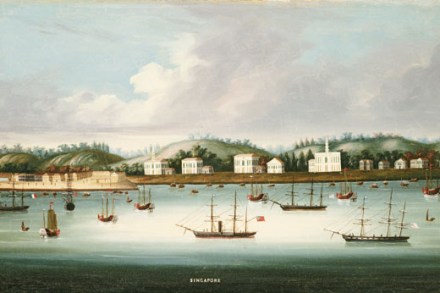
Thomas Stamford Raffles (1781-1826) is a man whose name is now better known than his doings. Its syllables conjure a world-famous hotel, a prep-school, the former business class brand of Singapore airlines, a shonky packet of fags, E. W. Hornung’s Raffles the Gentleman Thief, and Viz comic’s Raffles the Gentleman Thug. He also gave his name to a tropical flower that has the largest bloom on earth, and which gives off ‘precisely the smell of tainted beef’. Most of us will have had the vague sense that he founded modern Singapore (we’re half right about that), and a still vaguer sense that his was a life of glamour, buckle and swash. About that, we are a bit less than half right.

The authorised version

From our UK edition

The first volume of Peter Ackroyd’s six-volume history of England took us from prehistory to the death of Henry VII. Now the great charabanc rattles on. Here is a fat book of old-fashioned, great-man history taking in the second of the Harries twain, Ned the Lad, Mary and Bessie. Things don’t begin well; the speed at which Ackroyd is producing this material is perhaps starting to show. ‘The land was flowing with milk and honey,’ Ackroyd tells us.

Sweet Tooth, by Ian McEwan

From our UK edition

‘I’m trying to help you, Serena. You’re not listening. Let me put it another way. In this work the line between what people imagine and what’s actually the case can get very blurred. In fact that line is a big grey space, big enough to get lost in. You imagine things — and you can make them come true. The ghosts become real. Am I making sense?’ You can’t say the heroine of Ian McEwan’s latest novel wasn’t warned. Serena Frome is a clever, pretty young woman who led a sheltered childhood as the daughter of an Anglican bishop: ‘We grew up inside a walled garden, with all the pleasures and limitations that implies.

Down the mean streets

From our UK edition

One of the fun facts you occasionally hear people brandish about Raymond Chandler is that he was at Dulwich College with  P. G. Wodehouse. It’s a slight fiction —Wodehouse was actually there seven years earlier, so we can’t picture Chandler giving him a bog-wash — but one that sticks because of the contrast: good egg and hard-boiled egg. How could this suburban public school produce, at once, the laureates of Edwardian toffery and LA private-dickery? Reading Tom Williams’s absorbing new biography of Chandler, though, what struck me was not how different but how weirdly similar Wodehouse and Chandler are as writers.

A tough broad

From our UK edition

When the modern reader thinks of Lillian Hellman, if he or she thinks of her at all, the image that presents itself is likely to be of a wizened old doll marooned in a gigantic mink coat, a still bigger hairdo — and wreathed in the smoke emanating not only from a cigarette but from her smouldering pants. Her enemy Mary McCarthy said in a 1979 television interview that ‘every word she writes is a lie, including “and” and “the” ’. That memorable zinger — and the lawsuit that followed, still ongoing at the time of Hellman’s death — all but did for her reputation. Chuck Palahniuk’s novel about the golden age of Hollywood, Tell All, has as a running joke the eye-stretching lies told by Hellman.

Paths of enlightenment

From our UK edition

In which Robert Macfarlane goes for a walk, again. But, as admirers of his previous works will know, Robert Macfarlane never just goes for a walk. This book’s four parts, each divided into three or four sub-sections, tell the stories of 16 expeditions: their declared intention to investigate ‘walking as a reconnoitre inwards’. His theme is the way that walking can be not just the occasion for thought but, in some sense, the method by which it is done; the way in which our experience of ourselves is shaped by moving through a landscape: Landscape is still often understood as a noun connoting fixity, scenery, an immobile painterly decorum.

A moth to the flame

From our UK edition

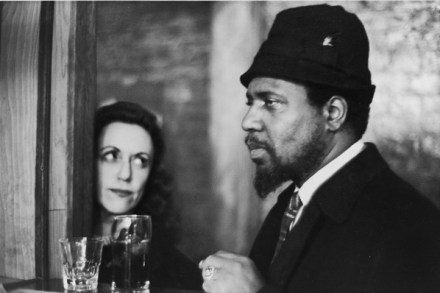
When Hannah Rothschild first met her great-aunt Nica it was 1984. Hannah was 22, and Nica, then 70, had asked her to come sometime after midnight to a basement jazz club in an area of pre-Giuliani downtown Manhattan ‘known for its crack dens and muggings’. She was able to find the venue, as promised, by the pale blue Bentley parked erratically outside and inhabited by a couple of drunks. Inside, her aunt, ‘the Baroness’, was easily identifiable as the only white person: a wizened old doll in a fur coat with a a long black-filter cigarette, drinking whisky out of a teapot.

Hero of his own drama

From our UK edition

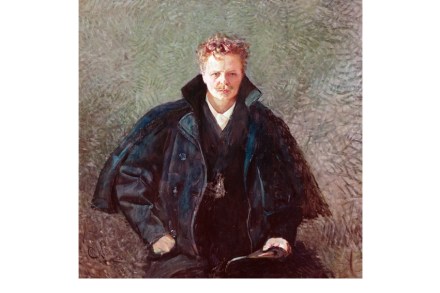
Sam Leith is enthralled by the larger-than-life genius, August Strindberg — playwright, horticulturalist, painter, alchemist and father of modern literature When I’m reading a book for review, it’s my habit to jot an exclamation mark in the margin alongside anything that strikes me as particularly unexpected, funny or alarming. I embarked on Strindberg: A Life with — I’m ashamed to confess — the expectation of a weary plod through 400-odd pages of lowering Scandinavian neurosis, auguring a low exclamation-mark count and a high number of triple zeds. But by the end, there was an exclamation mark beside almost every paragraph.

Private property

From our UK edition

Celebrities have a right to profit from the exploitation of personal information – and so do you Something has been bugging me about the Leveson inquiry, and it’s not a private investigator hired by News International. It’s the pervasive line of defence that you hear when it comes to the invasion of privacy, and with the Sunday Sun rising in the east, it’s worth addressing. There’s no chance the new Sunday red-top will revive the black arts of its predecessor and indulge in what the Met’s Sue Akers has called the Sun’s ‘culture of illegal payments’. But there is every chance that it will carry one basic assumption over intact.

The family plot

From our UK edition

Sam Leith explores the effect that certain writers’ relatives have had on their published works This book’s sort-of preface is a lecture on aunts and absent mothers in Jane Austen — an odd diversion, given that nowhere else in its pages are aunts, or female writers for that matter, given much of an outing. Colm Tóibín sets out his stall early doors: he’s a formalist. Noting the difficulty critics have had getting to grips with Mansfield Park’s great couch-potato Lady Bertram — is she a goodie or a baddie?

Frank exchange of views

From our UK edition

Solomon Kugel is morbidly obsessed with death: his own, and that of those he loves, including his wife Bree and his only son Jonah. He spends his idle hours writing down possible last words in a notebook, and contemplating the undignified and senseless extinctions that await him around every corner. His outlook is not helped by his therapist, Professor Jove, who is convinced that hope is the cause of all human suffering and works hard to extinguish it; nor by his brother-in-law, the unsubtly named evolutionary biologist Pinkus Stephenor — a professional optimist whose latest book is You’ve Got To Admit It’s Getting Better, A Little Better All The Time. (He is a best-seller; Jove can’t get his book published.

Age of ideas

From our UK edition

Sam Leith on Tony Judt’s rigorous, posthumously published examination of the great intellectual debates of the last century When the historian and essayist Tony Judt died in 2010 of motor neurone disease, among the books he had planned was an intellectual history of 20th-century social thought. As the disease robbed him of the ability to write, his friend Timothy Snyder proposed making this book — out of the edited transcripts of a long conversation they would conduct over several weeks in 2009. The book-as-conversation is, as Snyder points out in his foreword, a rather Eastern-European artefact. That’s apt to its content: Snyder is a historian of the region.

Diary – 14 January 2012

From our UK edition

To Moscow! To Moscow! Recently I was in Russia as a guest of the British Council. My friend Damian Barr hosts a regular literary salon in London, and the idea was to put one on here, with the poet and essayist Linor Goralik, the novelist Alexander Ilichevsky, the publisher Dan Franklin and me. Extraliterary considerations: long johns. I asked my Russian friend Natasha, who’s from the Perm region, how cold I could expect Moscow to be in December. She made a hum-haw noise. ‘Actually you can’t know. Sometimes it can be pretty warm. It may even get up to minus five.’ She wasn’t trying to be funny. The great refrain of Chekhov’s Three Sisters has the advantage of not needing a Cyrillic keyboard to reproduce: ‘B Mockby!