Sam Leith

Sam Leith

Sam Leith is literary editor of The Spectator.

An existential hero

From our UK edition

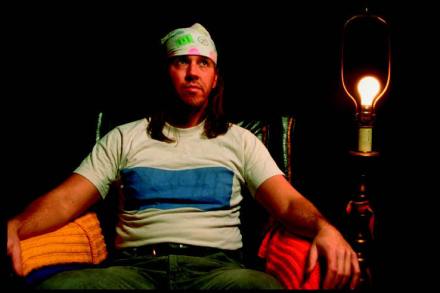
Sam Leith is enthralled by a masterpiece on monotony, but is devastated by its author’s death When David Foster Wallace took his own life two and a half years ago, we lost someone for whom I don’t think the word genius was an empty superlative. He was an overpowering stylist, and a dazzling comedian of ideas. He could be gasp-makingly funny, but had an agonising moral seriousness. There’s more on one page of Wallace than on ten of most of his contemporaries. His mind seemed to have more buzzing in it than the rest of us could imagine being able to cope with, and perhaps than he could. The Pale King, assembled from his notes and papers by his editor Michael Pietsch, is an unfinished novel of more than 500 pages about the American IRS.
The king is crowned

From our UK edition

The moment has arrived. David Foster Wallace’s The Pale King is published today to great fanfare and no small measure of regret that there is no more to follow – rediscovered boyhood poems aside. The lead books article in this week’s Spectator is Sam Leith’s review of Wallace's posthumous unfinished novel. Here it is for readers of this blog: An existential hero When David Foster Wallace took his own life two and a half years ago, we lost someone for whom I don’t think the word genius was an empty superlative. He was an overpowering stylist, and a dazzling comedian of ideas. He could be gasp-makingly funny, but had an agonising moral seriousness. There’s more on one page of Wallace than on ten of most of his contemporaries.

The passionate friend

From our UK edition

Sam Leith explores H. G. Wells’s addiction to free love, as revealed in David Lodge’s latest biographical novel In the history of seduction, there can have been few scenes quite like this one: ‘Am I dreaming?’, she said when she opened her eyes. ‘No,’ he said, and kissed her again. ‘But what about Jane?’ she said. ‘You love Jane.’ ‘Yes, I love Jane, and Jane loves me, but there are many kinds of love, Amber. You’ve read A Modern Utopia, you’ve read In the Days of the Comet, you know my views on free, healthy, life-enhancing sexual relationships. Jane shares them.’ They embraced and lay in eachother’s arms, exploring and gently stroking eachother’s bodies like blind people.

A negative outlook

From our UK edition

Why, the energetic historian Niall Ferguson asks in his new book, did a minority of people stuck out on the extreme western end of the Eurasian landmass come to dominate the world in cultural, political and economic terms for more than half a millennium? This, he says, ‘seems to me the most interesting question a historian of the modern era can ask’. Its supplementary — to which he only tentatively suggests answers — is ‘is it all over?’ Make no mistake [he writes], this is not another self-satisfied version of ‘the triumph of the West’. I want to show that it was not just Western superiority that led to the conquest and colonisation of so much of the rest of the world; it was also the fortuitous weakness of the West’s rivals.

A negative outlook | 24 February 2011

From our UK edition

Here, as promised, is Sam Leith's magazine review of Niall Ferguson's new book Civilisation: the West and the Rest. Why, the energetic historian Niall Ferguson asks in his new book, did a minority of people stuck out on the extreme western end of the Eurasian landmass come to dominate the world in cultural, political and economic terms for more than half a millennium? This, he says, ‘seems to me the most interesting question a historian of the modern era can ask’. Its supplementary — to which he only tentatively suggests answers — is ‘is it all over?’ 'Make no mistake [he writes], this is not another self-satisfied version of ‘the triumph of the West’.

Names to conjure with

From our UK edition

Golly gee. Academic literary critics are going to hate Faulks on Fiction like sin. Here is Sebastian three-for-two Faulks, if you please, clumping onto their turf with a book of reflections on a couple of dozen great novels. And he declares in his introduction, with some pride, that he intends to take ‘an unfashionable approach’ and examine characters in these books ‘as though they were real people’. And he then divides them into four character types — Heroes, Lovers, Snobs and Villains — without so much as footnoting a structuralist ethnographer, instead declaring ex cathedra that these are ‘the four character types that British novelists have returned to most often’. And he blithely describes how ‘we’ react to books.

Theatre of the macabre

From our UK edition

Sam Leith marvels at Victorian Britain’s appetite for crime, where a public hanging was considered a family day out and murder became a lurid industry in itself On my satellite TV box, murder is being committed 24 hours a day, seven days a week. I could probably live out the rest of my life watching the three CSIs, Bones, Criminal Minds and Waking the Dead without ever once breaking for a cup of tea or having to set the video to record. Is this a new thing? Sky Plus may be, but the obsession with murder? Not a bit. It all kicked off with the Victorians, as Judith Flanders’s winningly cheerful new book (aimed squarely at The Suspicions of Mr Whicher market) sets out to demonstrate.

Everything’s about Geoff

From our UK edition

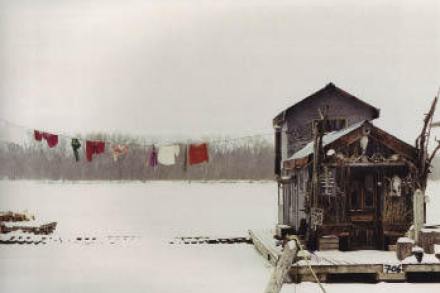
I don’t remember who it was who said ‘memory is genius’, but they were on to something. I’m not sure, either, whether they meant genius in the original sense of ‘animating spirit’ — i.e. memory as constitutive of personality — or in the modern one of ‘brilliance’. But both seem to apply equally well to the peculiar talents of Geoff Dyer. He seems to have a photographic memory; and that’s not a figure of speech. He can remember photographs in an extraordinary way, as witness the opening essays in this collection, in which he spiels on photographers including Alec Soth, Jacob Holdt, Richard Avedon and Martin Parr.

Far from idealism

From our UK edition

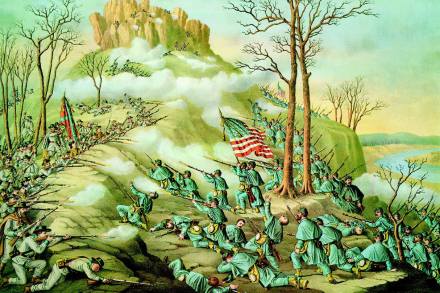
If you think the Special Relationship has been looking strained in recent years, consider its condition during the American Civil War(1861-65). In 1863, an anonymous letter was delivered to Charles Francis Adams at the US legation in London: Dam the Federals. Dam the Confederates.Dam you both. Kill you damned selves for the next 10 years if you like; so much the better for the world and for England. Thus thinks every Englishman with any brains. NB PS We’ll cut your throats fast enough afterwards for you if you ain’t tired of blood, you devils. Brevity, they say, is the first grace of style. The feeling that letter encapsulates ran pretty high in England.

Curiosities of literature

From our UK edition

Lordy. It’s another book by Professor John Sutherland, and a fat one at that. What David Crystal is to linguistics and James Patterson to thrillers, John Sutherland is to literary criticism. I’ve more than once been critical about Sutherland in print, having detected — but who am I to talk? — a certain slapdashery in some of his scholarly productions. On the last occasion, I received a very gracious, if somewhat Eeyorish, email conceding the odd point and explaining his pace of output with a poignant allusion to alimony. So I don’t want the old brute to feel I’ve got it in for him. We all gotta eat.

Beating his demons | 11 September 2010

From our UK edition

Some of us are still startled that Wallace Stevens was 44 when he published Harmonium. So what to make of the fact that Roald Dahl was past the midpoint of his forties when he wrote his first children’s book in 1961, James and the Giant Peach? At the time, he was known as a dark little adult fabulist; macabre like Saki, twisty like O. Henry. A hint as to his view of children’s writing thereto is found in a letter anticipating the birth of his first child: ‘Parenthood is a great strain. I can see it all. Nursery books for Knopf. Once upon a time there was a dear little bunny . . .’ He did indeed end up writing nursery books for Knopf, but dear little bunnies were thin on the ground.

The dying of the light | 7 August 2010

From our UK edition

The phrasing of the subtitle is exact: a memoir in blindness, not of blind- ness. Like a portrait in oils — blindness being not just the subject, but the stuff of which this painfully stumbling, uncertainly reaching book is made. And not of, because it’s not something looked back on, like the memoir of a childhood: the blindness is still there waiting. ‘In’ acknowledges that, the way those even decades in recovery say ‘I am an alcoholic.’ And that, of course, heartbreakingly, is there too. In 2006 the novelist Candia McWilliam started to lose her sight, and to lose it in an unusual and tormenting way. She suffers from something called blepharospasm, a disease where the muscles that hold her eyelids open malfunction.

Learning to live with the bomb

From our UK edition

The call consisted of three short blows of breath. A minute later, the phone rang again. Once more: three short blows of breath. Mr Cowell, under diplomatic cover, was the MI6 handler for Colonel Oleg Penkovsky, the West’s single most important asset in the Kremlin — and the calls he took were the prearranged code that Penkovsky was to use to tell him that a Soviet nuclear attack on the West was imminent. I’d have shat a brick. Wouldn’t you? But Cowell kept his cool. He didn’t call London and get the counterstrike underway. He didn’t put his head between his knees and wait for oblivion. The sky could have been black with Russian nukes, but he didn’t, in fact, do a damn thing.

The inconstant gardener

From our UK edition

In the autumn of 1826, Prince Hermann Ludwig Heinrich von Pückler-Muskau came ashore in London after a long and gruelling voyage from Rotterdam. In the autumn of 1826, Prince Hermann Ludwig Heinrich von Pückler-Muskau came ashore in London after a long and gruelling voyage from Rotterdam. A whiskery Prussian princeling with a heavily indebted estate and a passion for landscape gardening, Pückler had come to England determined to find a wife. This was not a romantic project, however. English women were celebrated on the continent not only for their beauty — the perpetual damp was said to do wonders for their skin — but for their prosperity.

Genetics, God and antlers

From our UK edition

‘Two things fill the mind with ever new and increasing admiration and awe, the oftener and more steadily we reflect on them: the starry heavens above and the moral law within.’ Oren Harman uses this quote from Immanuel Kant to open one of the chapters of The Price of Altruism, and it’s an observation that — after the steady reflection on moral law that Harman’s book invites and encourages — only seems more true by the end. ‘Two things fill the mind with ever new and increasing admiration and awe, the oftener and more steadily we reflect on them: the starry heavens above and the moral law within.

Scourge of the ancien régime

From our UK edition

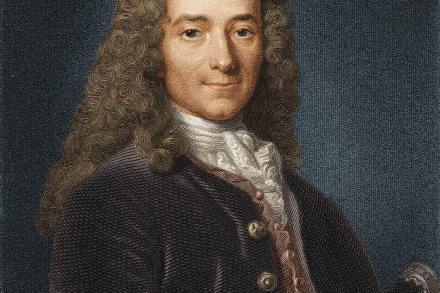
Voltaire’s was a long and amazing life. Voltaire’s was a long and amazing life. He was tragedian, satirist, mathematician, courtier, exile, jailbird, swindler, gardener, plutocrat, watchmaking entrepreneur, penal reform campaigner, celebrity, provocateur, useless loan-shark, serial feuder, coward, astronaut, niece-shagger, spy . . . Except ‘astronaut’, obviously. I made that up to check you were still paying attention. But he did shack up with his niece, the filthy old goat. It seems a shame, then, that for most of us nowadays that long and amazing life is compressed into a couple of quotes from Candide and a few apocryphal stories about his table talk. Ian Davidson’s biography is the corrective: here’s the great man in the round.

A cosmic comedy

From our UK edition

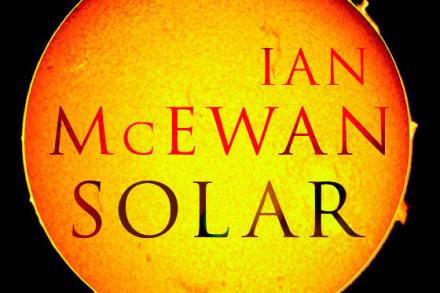
Not long ago I had an email from a friend, wondering if I’d yet read the new Ian McEwan. Not long ago I had an email from a friend, wondering if I’d yet read the new Ian McEwan. ‘Talk about a bolt from the blue,’ she said. ‘McEwan does slapstick. I never saw that coming.’ She added (unfairly, I thought) that you might class On Chesil Beach as slapstick of an unintentional sort, but her point holds. Here, in a book around a scientific theme of considerable seriousness — global warming and renewable energy — McEwan has written the closest thing he’s ever done to a farce. Told in three chunks, spaced at intervals between 2000 and 2009, Solar is the story of a Nobel-prize-winning physicist on a slow slide to disaster.

Not ‘a boy-crazed trollop’

From our UK edition

For someone who barely left the house, Emily Dickinson didn’t half cause a lot of trouble. For someone who barely left the house, Emily Dickinson didn’t half cause a lot of trouble. Lives Like Loaded Guns — which combines biographical material, critical readings, and an assessment of the history of her reputation — tells a completely hair-raising story. The Dickinsons were one of the first families of respectable Amherst. Emily and her sister Lavinia — ‘Vinnie’ — lived in one house, Homestead, right next door to her brother Austin, the head of the family, and his wife Sue. Susan Dickinson was a highly intelligent and sensitive woman, bosom friend to Emily. The poet called her ‘Sister’.

Celebration of old times

From our UK edition

Towards the end of 1979, Antonia Fraser gave an interview to the Washington Post in connection with her book Charles II (renamed ‘Royal Charles’ so as not to confuse a sequel-bombarded American public). She records her final exchange with the interviewer in the tersely effective style of the diaries from which this book is adapted: Man, hopefully, at the end: ‘Just one more question, what is Harold Pinter like about the house, all those pauses and enigmatic statements, I’ve always wondered?’ Me, briskly: ‘Keep wondering.’ ‘Keep wondering.’ Excellent phrase: curt, witty, and just abrupt enough to see off a line of inquiry without giving offence.

Debt and addiction

From our UK edition

I knew that I was onto a good thing with this book before the page numbers were even out of roman numerals. Describing the wealth of new material that has come to light in the three decades or so since the last biography of Thomas De Quincey, Robert Morrison men- tions the areas in which it has enriched our understanding: . . . his enduring sorrow over the loss of his sister Elizabeth, his masochistic desire for humiliation; his association with prostitutes; his pursuit of, and subsequent alienation from, Wordsworth and Coleridge; his struggle with drugs and alcohol . . . his horrendous battles with debt; his imprisonment in Edinburgh gaols . . . This was a lively life, and this is a lively Life.