Sam Leith

Sam Leith

Sam Leith is literary editor of The Spectator.

Private property

Celebrities have a right to profit from the exploitation of personal information – and so do you Something has been bugging me about the Leveson inquiry, and it’s not a private investigator hired by News International. It’s the pervasive line of defence that you hear when it comes to the invasion of privacy, and with the Sunday Sun rising in the east, it’s worth addressing. There’s no chance the new Sunday red-top will revive the black arts of its predecessor and indulge in what the Met’s Sue Akers has called the Sun’s ‘culture of illegal payments’. But there is every chance that it will carry one basic assumption over intact.

The family plot

Sam Leith explores the effect that certain writers’ relatives have had on their published works This book’s sort-of preface is a lecture on aunts and absent mothers in Jane Austen — an odd diversion, given that nowhere else in its pages are aunts, or female writers for that matter, given much of an outing. Colm Tóibín sets out his stall early doors: he’s a formalist. Noting the difficulty critics have had getting to grips with Mansfield Park’s great couch-potato Lady Bertram — is she a goodie or a baddie?

Frank exchange of views

Solomon Kugel is morbidly obsessed with death: his own, and that of those he loves, including his wife Bree and his only son Jonah. He spends his idle hours writing down possible last words in a notebook, and contemplating the undignified and senseless extinctions that await him around every corner. His outlook is not helped by his therapist, Professor Jove, who is convinced that hope is the cause of all human suffering and works hard to extinguish it; nor by his brother-in-law, the unsubtly named evolutionary biologist Pinkus Stephenor — a professional optimist whose latest book is You’ve Got To Admit It’s Getting Better, A Little Better All The Time. (He is a best-seller; Jove can’t get his book published.

Age of ideas

Sam Leith on Tony Judt’s rigorous, posthumously published examination of the great intellectual debates of the last century When the historian and essayist Tony Judt died in 2010 of motor neurone disease, among the books he had planned was an intellectual history of 20th-century social thought. As the disease robbed him of the ability to write, his friend Timothy Snyder proposed making this book — out of the edited transcripts of a long conversation they would conduct over several weeks in 2009. The book-as-conversation is, as Snyder points out in his foreword, a rather Eastern-European artefact. That’s apt to its content: Snyder is a historian of the region.

Diary – 14 January 2012

To Moscow! To Moscow! Recently I was in Russia as a guest of the British Council. My friend Damian Barr hosts a regular literary salon in London, and the idea was to put one on here, with the poet and essayist Linor Goralik, the novelist Alexander Ilichevsky, the publisher Dan Franklin and me. Extraliterary considerations: long johns. I asked my Russian friend Natasha, who’s from the Perm region, how cold I could expect Moscow to be in December. She made a hum-haw noise. ‘Actually you can’t know. Sometimes it can be pretty warm. It may even get up to minus five.’ She wasn’t trying to be funny. The great refrain of Chekhov’s Three Sisters has the advantage of not needing a Cyrillic keyboard to reproduce: ‘B Mockby!

The heart of Hemingway

A new biography of ‘Papa’ has deeply impressed Sam Leith, although its thoroughness — like its subject — ‘teeters on nuts’ Hemingway’s Boat is just what it sounds like. It takes as its conceit — and it’s a good one — that writing about Hemingway’s boat Pilar (now up on blocks in Cuba) is a way of getting at deep things about the man. Pilar was there all the second half of his life and may have been the only friend he never fell out with. Fishing was more than a recreation for Hemingway: it was at the centre, this book plausibly suggests, of his being in the world. Paul Hendrickson duly set about getting to the core of Hemingway’s relationship with Pilar. And how! His research is flat-out phenomenal.

Blast through Boxing Day

Video games are an ideal gift – especially the violent ones Not long ago, Salman Rushdie took to Twitter to say, ‘Passed this billboard: “From the Makers of Doom… Rage!” What does it say about us that these are the names of games?’ The author of Fury had a point. Video games are now bigger business than movies, and the biggest business in video games is war: exploding aliens, terrorists being shot in the spine, guns, guns, guns. To those who don’t know their FPSs from their STDs, it looks like a bewildering miasma of regressive male adolescent nonsense. Which, of course, it is.

Sam Leith’s books of the year


Obviously Alan Hollinghurst’s The Stranger’s Child is a masterpiece. So is Ian Donaldson’s Ben Jonson. But having already said as much in these pages, I mention them only in passing. You’re less likely to have heard about Grant Morrison’s clever, passionate Supergods, but I urge it on you if you have any interest in myth, magic, comic-book culture or the question of why you’d put nipples on a Batsuit. I was grateful to the Man Booker judges, maligned as they have been, for shortlisting Patrick DeWitt’s The Sisters Brothers, which I’d not have read otherwise. It’s wonderfully funny and original. Oh, and there’s The Pale King, too.

Saladin: hero or infidel?

In Baghdad in the 1980s there was a children’s book published called The Hero Saladin. The cover bore an image of Saddam Hussein, identified, in what his biographer drily describes as ‘the second and longer part’ of the book, as ‘Saladin II Saddam Hussein’. Given that Saladin was actually Kurdish — and knowing what we do about Saddam’s respect for that section of his population — the gesture seems even more crass and insolent than it might otherwise. But then, it’s also absolutely standard. Jinnah was Saladin. Assad was Saladin. Saladin is, in modern Arab and Muslim political mythology, more icon than historical figure.

Martin Amis: The Biography by Richard Bradford

Where’s Invasion of the Space Invaders? That’s what I want to know. Only by consulting Richard Bradford’s bibliography would you know that in 1982 Martin Amis published a book — subtitled ‘An Addict’s Guide’ — on how to win at Space Invaders, and that he (presumably) hasn’t let it come back into print. An entire book! That seems to me worthy at least of a paragraph in the body of a 400-odd-page writer’s biography. It tells you something, doesn’t it? I mean, apart from the fact that Martin Amis once liked Space Invaders, which is amusing if not crucial. Anything a writer disowns is of interest: particularly if it’s a frivolous thing and particularly if, like Amis, you take seriousness seriously.

Masques of beauty and blackness

Sam Leith on the paradoxical nature of Britain’s first literary celebrity What a piece of work was Ben Jonson! If you lived in Elizabethan England and had just narrowly escaped the gallows after stabbing a man to death in an illegal duel, wouldn’t you want to keep your head down for a bit? Not Jonson. He converted to Catholicism. A few months after the bishops of Canterbury and London, in 1599, declared the writing of satire illegal, what did Jonson produce? Every Man out of his Humour, a self-declared ‘comical satire’. The writing of history was also proscribed — Tacitean history being a particular sore point. So in 1603 Jonson produced Sejanus, a history play based on Tacitus. Epigrams were banned too. By 1612, Jonson got round to publishing some.

The bigger picture

Many among you, I know, have been fretting that thanks to a combination of political correctness, New Labour educational policy and the European Union’s usurpation of everything the free-born Englishman holds dear, big-picture narrative history is on the point of vanishing from the earth. All that our children’s children will know of British history, you worry, will be a vague sense of how beastly the Nazis were to Mary Seacole. Well, there is good news for you. Here are two new histories (of England, mind — not of Britain) by two of our best writers. Gosh, though. They could scarcely be more different. Peter Ackroyd’s is very long — or promises to be.

Mutiny, mayhem and murder

Nothing more gladdens this reader’s heart than a book that opens up an interesting and underexplored historical byway. Well, perhaps one thing: a book that opens up a historical byway that turns out to be a complete catastrophe. On that count, A Merciless Place more than delivers. Here is one of the great colonial cock-ups. It all started with a question that resonates to this day. When your jails are overcrowded academies of crime, and the respectable public lives in fear of what it imagines to be a violent criminal underclass, what do you do with your surplus convicts? Ken Clarke not yet having been thought of, conventional opinion in the 18th century was: ship them overseas and let them be somebody else’s problem. Yes, it hurt. Yes, it worked.

Golden lads and girls | 2 July 2011

Sam Leith tracks the careers of Alan Hollinghurst’s captivating new characters through youthful exuberance to old age, dust and a literary afterlife It’s quite hard to know where to begin, reviewing The Stranger’s Child. As I finished it, and was heard making bloody-hell-this-is-good noises, two people asked me: ‘What’s it about?’ That, as it turns out, is a very good question. Ostensibly, it’s about a fictional poet called Cecil Valance, a diffusion-line Rupert Brooke described years after his death in the first world war as ‘a first-rate example of the second-rate poet who enters into common consciousness more deeply than many greater masters’.

A nation of meddlers

If you thought that bust of Lenin you had on your desk as a teenager was the ultimate in radical chic, think on. Infatuated with the French Revolution, Lord Stanhope proclaimed his solidarity at a banquet at White’s Club. Announcing that he was thenceforth to be known as Citizen Stanhope, he ordered the coronets to be removed from the iron gates of his estate, Chevening. Despite its title, David Pryce-Jones’s new book isn’t just, or even especially, about traitors. It’s a high-speed survey of prominent British citizens who have taken up foreign causes.

An existential hero

Sam Leith is enthralled by a masterpiece on monotony, but is devastated by its author’s death When David Foster Wallace took his own life two and a half years ago, we lost someone for whom I don’t think the word genius was an empty superlative. He was an overpowering stylist, and a dazzling comedian of ideas. He could be gasp-makingly funny, but had an agonising moral seriousness. There’s more on one page of Wallace than on ten of most of his contemporaries. His mind seemed to have more buzzing in it than the rest of us could imagine being able to cope with, and perhaps than he could. The Pale King, assembled from his notes and papers by his editor Michael Pietsch, is an unfinished novel of more than 500 pages about the American IRS.

The king is crowned

The moment has arrived. David Foster Wallace’s The Pale King is published today to great fanfare and no small measure of regret that there is no more to follow – rediscovered boyhood poems aside. The lead books article in this week’s Spectator is Sam Leith’s review of Wallace's posthumous unfinished novel. Here it is for readers of this blog: An existential hero When David Foster Wallace took his own life two and a half years ago, we lost someone for whom I don’t think the word genius was an empty superlative. He was an overpowering stylist, and a dazzling comedian of ideas. He could be gasp-makingly funny, but had an agonising moral seriousness. There’s more on one page of Wallace than on ten of most of his contemporaries.

The passionate friend

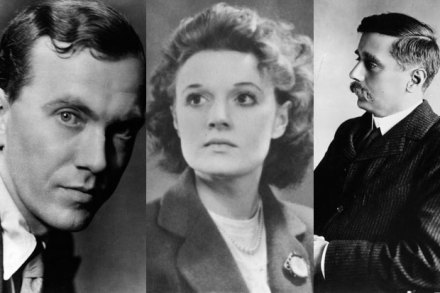
Sam Leith explores H. G. Wells’s addiction to free love, as revealed in David Lodge’s latest biographical novel In the history of seduction, there can have been few scenes quite like this one: ‘Am I dreaming?’, she said when she opened her eyes. ‘No,’ he said, and kissed her again. ‘But what about Jane?’ she said. ‘You love Jane.’ ‘Yes, I love Jane, and Jane loves me, but there are many kinds of love, Amber. You’ve read A Modern Utopia, you’ve read In the Days of the Comet, you know my views on free, healthy, life-enhancing sexual relationships. Jane shares them.’ They embraced and lay in eachother’s arms, exploring and gently stroking eachother’s bodies like blind people.

A negative outlook

Why, the energetic historian Niall Ferguson asks in his new book, did a minority of people stuck out on the extreme western end of the Eurasian landmass come to dominate the world in cultural, political and economic terms for more than half a millennium? This, he says, ‘seems to me the most interesting question a historian of the modern era can ask’. Its supplementary — to which he only tentatively suggests answers — is ‘is it all over?’ Make no mistake [he writes], this is not another self-satisfied version of ‘the triumph of the West’. I want to show that it was not just Western superiority that led to the conquest and colonisation of so much of the rest of the world; it was also the fortuitous weakness of the West’s rivals.

A negative outlook | 24 February 2011

Here, as promised, is Sam Leith's magazine review of Niall Ferguson's new book Civilisation: the West and the Rest. Why, the energetic historian Niall Ferguson asks in his new book, did a minority of people stuck out on the extreme western end of the Eurasian landmass come to dominate the world in cultural, political and economic terms for more than half a millennium? This, he says, ‘seems to me the most interesting question a historian of the modern era can ask’. Its supplementary — to which he only tentatively suggests answers — is ‘is it all over?’ 'Make no mistake [he writes], this is not another self-satisfied version of ‘the triumph of the West’.