Sam Leith

Sam Leith

Sam Leith is literary editor of The Spectator.

Reviewing reviews of reviews — where will it all end? 

From our UK edition

About halfway through reading this collection of essays I had one of those hall-of-mirrors moments. These are mostly book reviews, you see: high-toned, long-form New York Review of Books-type review-essays, given — but book reviews nevertheless. There I was, dutifully noting what David Lodge wrote about what Martin Stannard had to say about Muriel Spark, for instance. At once I found myself entertaining the baseless, pleasing notion that, some years from now a collection of my own book reviews would appear in an edition called something awful like Writing Things Down or Twelve-Point Garamond.

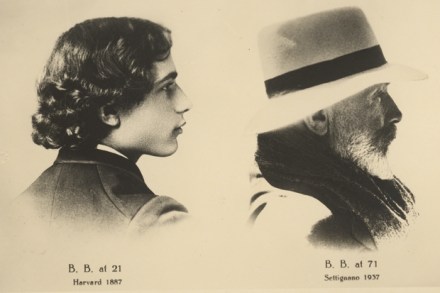
How honest was Bernard Berenson?

From our UK edition

When the great Jewish-American art expert Bernard Berenson died in 1959, he had acquired the status of a sort of sage. He was the relic of a prewar culture that had vanished. He was an embodiment of the idea of connoisseurship that had at once given birth to a great boom in art collecting and yet that was, by the end of his life, being superseded. When Berenson embarked on the career that would see him widely accepted as the world’s foremost authority on Old Masters, the painters of the Italian Renaissance were barely regarded in the US. He died — at 94 — in the age of Andy Warhol. The very span of his life gives his story resonance.

Doctor in distress | 12 December 2012

From our UK edition

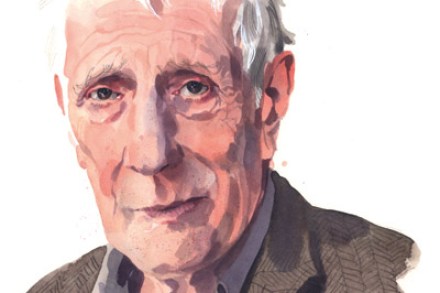
The passing of Jonathan Miller’s father Emanuel Miller — a very distinguished psychiatrist — was terrible. ‘His last words, as he reared up on his deathbed, were: “I’m a flop! I’m a flop!” ’ One should be cautious about being Freudian here — Emanuel might approve; his son wouldn’t; his son’s biographer might, slightly — but that is a hell of a sentiment to inherit. As theatre and opera director, author of learned papers in medicine and neuropsychology, TV presenter and public intellectual, quotable crosspatch and lightning-rod for English anti-intellectualism, Jonathan Miller looks like someone for whom not being a flop consumes a lot of anxiety. He came out of the traps as not-a-flop with some energy.

Look! Shakespeare! Wow! George Eliot! Criminy! Jane Austen!

From our UK edition

Among the precursors to this breezy little book are, in form, the likes of The Story of Art, Our Island Story and A Brief History of Time and, in content, Drabble’s Oxford Companion to English Literature and Johnson’s Lives of the Poets. Other notable precursors are How to Read a Novel by John Sutherland, How to be Well Read by John Sutherland, 50 Literature Ideas You Need To Know by John Sutherland, Lives of the Novelists by John Sutherland and more in that vein. The tireless and compendious Dr Johnson — ‘the first great critic of English literature’ — deserves and receives a chapter to himself here, and it’s no great surprise that the tireless and compendious Professor Sutherland entirely sees the point of him.

England’s 100 best Views, by Simon Jenkins – review

From our UK edition

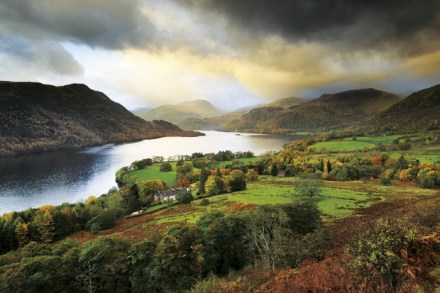
I couldn’t decide on starting England’s 100 Best Views whether it was a batty idea for a book or a perfectly sensible one. Why write about something that begs to be seen? Would this not be better as a collection of photographs, with helpful accompanying maps and perhaps a checklist that, once filled in, entitled you to a badge from Big Chief I-Spy? On the other hand, as Jenkins (he’s Sir Simon, of course, but book reviews know no distinctions of rank) explains in his introduction, a view is more than just a picture: it is something mobile — a collocation of geography and geology, the built environment and the weather, the movements of birds and mammals, and the mood of the person taking it in.

Signifying Rappers, by David Foster Wallace – review

From our UK edition

Since his suicide, David Foster Wallace has made the transition from major writer to major industry. Hence this UK issue of a slender work of music history got up for a small US press in 1990 by a young Wallace and his college friend Mark Costello. The premise: it’s the early days of rap, and two overeducated white kids who like it produce a sampler considering What It’s All About. That it’s dated doesn’t matter much. That it’s juvenilia does. Its cleverness is that of a writer in possession of an immense talent but not yet remotely in control of it: a learner driver doing doughnuts in a powerful car. Almost every sentence is arch or overwrought.

Danubia, by Simon Winder – review

From our UK edition

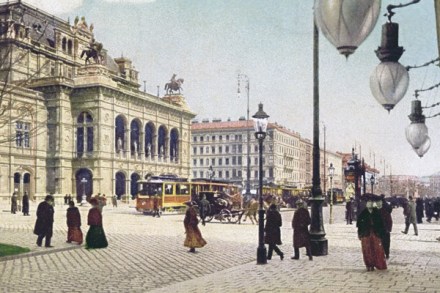
Why do we know so little about the Habsburg empire, given that it is the prime formative influence on modern Europe? Its pomp gave us the art, music, literature and pageantry of our high culture; its relationship with the Ottoman East and burgeoning European protestantism drew our religious and our political maps; its collapse fomented the nationalisms that shaped the 20th century across Europe. A popular abbreviation on the internet is ‘tl; dr’. It stands for ‘too long; didn’t read.’ There’s space for another one that would come in especially helpful for the Habsburg empire: ‘tc; du’ — ‘too complicated; didn’t understand’.

Glorious Misadventures, by Owen Mathews – review

From our UK edition

So: Russia’s imperial possessions on the Pacific North West of America. Remember those? No. Me neither. Something vague about the Russians flogging a bit of Alaska to the United States in the middle of the 19th century perhaps. But until I’d read this book I didn’t know that at one point Continental Russian America, not counting the Aleutian Islands, stretched 1,400 miles from its Eastern Tip (today called Cape Prince of Wales, by little Diomede Island in the Bering Strait) to its southwestern boundary near Sitka. If laid on top of the Continental United States, the territory — which closely corresponds to the modern state of Alaska — would stretch from California to Florida.

Disraeli, by Douglas Hurd; The Great Rivalry, by Dick Leonard – review

From our UK edition

‘Who the hell is Disraeli?’ This, as a gleeful footnote in Douglas Hurd and Edward Young’s new book reminds us, was the response of John Prescott when asked on television what he made of Ed Miliband’s speech last year extolling the virtues of Dizzy’s world-view. Actually — as their book goes on to make clear — Prescott asked the right question. Who the hell was Disraeli? He certainly wasn’t anything close to what posterity — in search of a Tory Great Man — has made of him. Not only, they tell us in this vigorously debunking romp through his political life, did he never use the phrases ‘One Nation’ or ‘Tory Democracy’, he was actively hostile to the concepts that they are now understood to represent.

The birth of modern Britain

From our UK edition

‘Does history repeat itself, the first time as tragedy, the second time as farce?’ asked Julian Barnes in A History of the World in 10½ Chapters. ‘No, that’s too grand, too considered a process. History just burps, and we taste again that raw-onion sandwich it swallowed centuries ago.’ Reading David Kynaston’s densely detailed new book — in a ‘projected sequence of books about Britain between 1945 and 1979’ with the slightly magniloquent general title of Tales of a New Jerusalem — there isn’t half a whiff of onions.

Culture notes: The glory of the Flaming Lips

From our UK edition

Man, I love the Flaming Lips. Psychedelic rock sublimity. They movingly address the deepest human concerns without a whiff of irony, while also seeing the point of confetti cannons, dancing penguins, having the lead singer surf the crowd in a giant plastic bubble, and so on and so forth. This week, mind you, they played the Camden Roundhouse the day after a tornado killed 24 people in their hometown and (in other news) they had to cancel a gig because singer Wayne Coyne had so bad a cough he couldn’t speak. No wonder they weren’t entirely bouncy. The material from their new album The Terror saw their usual ecstatic lift and soaring melancholy give way to a sort of minatory chug — like Led Zep played through an industrial rock-breaker.

Feral, by Geoge Monbiot – review

From our UK edition

One of the greatest difficulties environmental activists have always had in the war for hearts ’n’ minds is that they so often seem priggish and negative. Everyone knows what they are against (central heating, fun, cod and chips, James Delingpole etc). Fewer people know what they are for. Here, therefore, is George Monbiot’s attempt — shot through — no, positively ravished — with personal feeling — to tell us. He offers, he says, a set of ideas ‘not about abandoning civilisation but about enhancing it [...] to “love not man the less, but Nature more”.

‘Falling Upwards: How We Took to the Air’, by Richard Holmes – review

From our UK edition

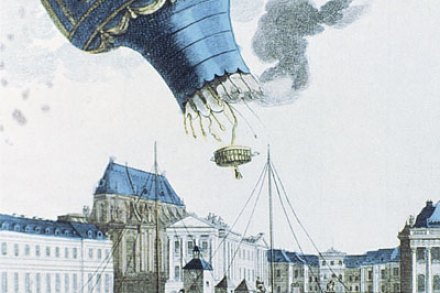
‘Caelum certe patet, ibimus illi’ was the phrase blazoned on the side of the Royal Vauxhall, an 80-foot, red and white candy-striped coal gas balloon launched from Vauxhall Pleasure Gardens in 1836 to fly overnight from London to the continent. The motto is from Ovid: ‘Surely the sky lies open, let us go that way!’ It well captures the exuberantly adventurous temper of the early days of ballooning, that gorgeous dead-end in the history of human aviation. Richard Holmes himself caught the ballooning bug in a Norfolk fairground aged four, he tells us, when his RAF pilot uncle fastened a red party balloon to the top button of his aertex shirt.

‘Levels of Life’, by Julian Barnes – review

From our UK edition

‘You put together two things that have not been put together before and sometimes it works, sometimes it doesn’t.’ In this slim book Julian Barnes puts not two but three things together: nonfiction, fiction and memoir. And sometimes it works, sometimes it doesn’t. The first section is an elegant and breezy account of the early days of ballooning and the development of aerial photography. Here are the adventurer Colonel Frederick Burnaby, the actress Sarah Bernhardt, and the photographer Félix Tournachon (otherwise known as Nadar): ‘The enthusiastic English amateur, the most famous actress of her era, making a celebrity flight, and the professional balloonist’.

Fractured Times: Culture and Society in the 20th Century, by Eric Hobsbawm – review

From our UK edition

Like many posthumous books from distinguished thinkers, this isn’t one. A book, I mean. Not really. The problem is that nobody seems to buy cobbled-together collections of previously published essays, talks and book reviews. The thing to do if you’re a publisher, therefore, is to give it a title that makes it sound like a book, shoehorn the content into vague, grand-sounding sections (‘Part I: The Predicament of “High Culture” Today’; ‘Part II: The Culture of the Bourgeois World’; ‘Part III: Uncertainties, Science, Religion.’; ‘Part IV: From Art to Myth’) and put it between hard covers for 25 quid. That said, the situation’s not quite as bald as all that.

Family differences

From our UK edition

Andrew Solomon’s simple and powerful guiding idea in this book is that there are two sorts of identity that affect your place in the world. Your ‘vertical identity’ is what you share with your parents — and it usually, but not always, includes such things as race, religion, language and social class. Children are born with ‘horizontal identities’ too — which is to say, things that they don’t share with their parents but that they have in common with others elsewhere: being the deaf child of hearing parents, the schizophrenic child of mentally well parents, or the gay child of straight parents. Some of these horizontal identities are things that are, or were, regarded as impairments; some of them are understood as mere difference.

Love among the ruins

From our UK edition

The phrase that gives this book its title is Graham Greene’s: The nightly routine of sirens, barrage, the probing raider, the unmistakable engine (‘Where are you? Where are you? Where are you?’), the bomb-bursts moving nearer and then moving away, hold one like a love-charm. Greene was apparently proud of ‘love-charm’: he used it more than once. It seems to me that the most telling part of the full quotation, though, is that ‘unmistakable engine’. Isn’t Greene’s determination to hear those words in the machine noise a token of the way writers appropriate bare reality? The love-charm is crafted by the one it ensorcels.

Ace of bureaucrats

From our UK edition

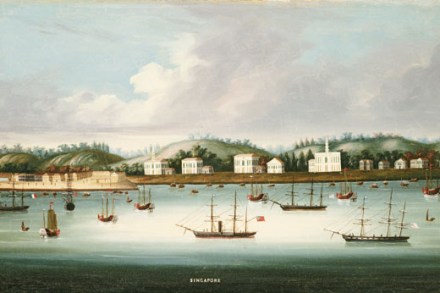
Thomas Stamford Raffles (1781-1826) is a man whose name is now better known than his doings. Its syllables conjure a world-famous hotel, a prep-school, the former business class brand of Singapore airlines, a shonky packet of fags, E. W. Hornung’s Raffles the Gentleman Thief, and Viz comic’s Raffles the Gentleman Thug. He also gave his name to a tropical flower that has the largest bloom on earth, and which gives off ‘precisely the smell of tainted beef’. Most of us will have had the vague sense that he founded modern Singapore (we’re half right about that), and a still vaguer sense that his was a life of glamour, buckle and swash. About that, we are a bit less than half right.

The authorised version

From our UK edition

The first volume of Peter Ackroyd’s six-volume history of England took us from prehistory to the death of Henry VII. Now the great charabanc rattles on. Here is a fat book of old-fashioned, great-man history taking in the second of the Harries twain, Ned the Lad, Mary and Bessie. Things don’t begin well; the speed at which Ackroyd is producing this material is perhaps starting to show. ‘The land was flowing with milk and honey,’ Ackroyd tells us.

Sweet Tooth, by Ian McEwan

From our UK edition

‘I’m trying to help you, Serena. You’re not listening. Let me put it another way. In this work the line between what people imagine and what’s actually the case can get very blurred. In fact that line is a big grey space, big enough to get lost in. You imagine things — and you can make them come true. The ghosts become real. Am I making sense?’ You can’t say the heroine of Ian McEwan’s latest novel wasn’t warned. Serena Frome is a clever, pretty young woman who led a sheltered childhood as the daughter of an Anglican bishop: ‘We grew up inside a walled garden, with all the pleasures and limitations that implies.