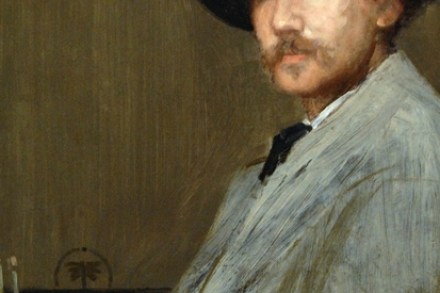
Sam Leith

Sam Leith

Sam Leith is literary editor of The Spectator.

George Weidenfeld, 1919- 2016: the brilliant publisher who fought a duel with a Nazi

From our UK edition

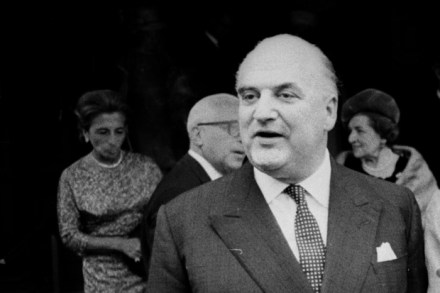
My last contact with George Weidenfeld was when I asked him to review a book for The Spectator: a life of Stefan Zweig, who has been enjoying a bit of a moment lately. George didn’t fancy it, but I received – very courteous and friendly, as his communications always were – a postcard declining. You could see why I asked, though: George was the one of the last people alive who actually lived in Zweig’s world – that cultured and cosmopolitan Mitteleuropean moment at the tail end of the Habsburg Empire, smashed up irrevocably by the Nazis. I first met him a couple of years ago when I was sent to interview him by Tatler. I’ve seldom been so in awe of an interviewee. He arrived in London with a postal order for sixteen shillings and sixpence.

United Arab Emirates: Leaves in the desert

From our UK edition

It’s not so much the volume of deals done in the agents’ enclosure, the number of exhibitors or the size of the conference hall it takes place in. It’s not even — though this can be a key indicator — that the local sex workers take the week off. Nope: you know your book fair is the real thing once the Scientologists come. At the Frankfurt Book Fair their stand is enormous. So wandering round the cavernous halls of the Sharjah International Book Fair, to come upon a display devoted to the works of L. Ron Hubbard was like greeting an old friend. There was no Dianetics, more’s the pity (local religious sensitivities), but here were lurid ziggurats of L.

While ‘Daesh’ prepare to fight, MPs debate how to hurt their feelings

From our UK edition

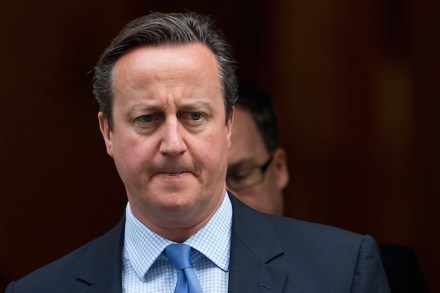
Today in the Commons the Tory backbencher Rehman Chishti asked: “Will the Prime Minister join me in urging the BBC to review their bizarre policy; when they wrote to me to say that they can’t use the word Daesh because it would breach their impartiality rules? We are at war with terrorists, Prime Minister. We have to defeat their ideology, their appeal. We have to be united in that. Will he join me now in urging the BBC to review their bizarre policy?” https://soundcloud.com/spectator1828/cameron-on-what-to-call-isis David Cameron positively purred: “I agree with my honourable friend.

‘They pull a gun, you pull a hashtag’ – the ridiculous debate over what to call Isil

From our UK edition

‘They pull a knife, you pull a gun. He shends one of yoursh to the hospital, you shend one of hish to the morgue.’ Thus Sean Connery in The Untouchables, explaining how you fight a war ‘Chicago-style’. How would you adapt that, do we think, for our collective response to the Paris attacks? ‘They pull a gun, you pull a hashtag. They send 132 of yours to the morgue, you start calling them a slightly rude name.’ As they say on the internet: srsly? Imagine you’re in Raqqa, having at last made hijrah from the family semi in Dudley. You’re chillaxing, maybe having a bit of a kickabout with the head of an apostate, when your friend calls you over to his laptop. ‘Look, brother.

Ted Hughes’s estate squares up to poet’s unauthorised biographer

From our UK edition

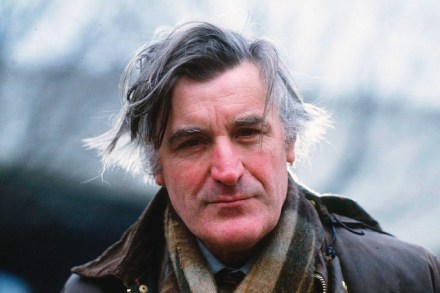
The row over Jonathan Bate’s unauthorised Life of Ted Hughes is hotting up. Professor Bate originally embarked on the book with the blessing of the Hughes estate, but that blessing – along with permission to quote from the poet’s writings – was withdrawn. Now the Hughes estate has issued a press release claiming to have identified a number of errors in the book – 18 in an 16 page sample – and requesting that the book be corrected and an apology made to Carol Hughes. You can read it below. The estate say that they have not yet had a response from Professor Bate or his publishers. I’ve emailed him for comment and will update this post as and when I hear back.

Theatre of politics

From our UK edition

We don’t usually pay all that much attention, as James Shapiro points out, to the Jacobean Shakespeare. We’re in the habit of thinking of him as an Elizabethan playwright: look in most cradle-to-grave biographies for ‘what Shakespeare was doing after James came to the throne in 1603 and there usually aren’t many pages left to read’. That’s to scant his decade-long engagement with the dawning of the Stuart era. Also to ignore that, as Shapiro argues, only three cultural artefacts created during the first decade of King James’s reign still matter 400 years later: the King James Bible, the mythology of the Gunpowder Plot, and Shakespeare’s late plays. Shakespeare, as 1606 began, was 41.

A window on Chaucer’s cramped, scary, smelly world

From our UK edition

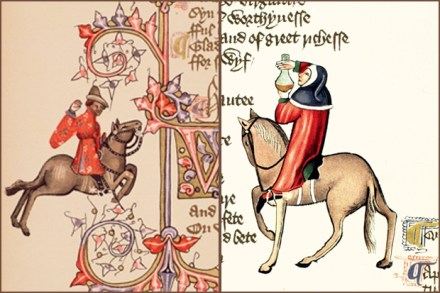
Proust had his cork-lined bedroom; Emily Dickinson her Amherst hidey-hole; Mark Twain a gazebo with magnificent views of New York City. Where, then, did the father of English poetry do his work? From 1374 till 1386, while employed supervising the collection of wool-duties, Chaucer was billeted in a grace-and-favour bachelor pad in the tower directly above Aldgate, the main eastern point of entry to the walled city of London. ‘Grace and favour’ makes it sound grander than it was.

Facebook’s founder asked his 31 million followers to pick up a book. That can only be good news

From our UK edition

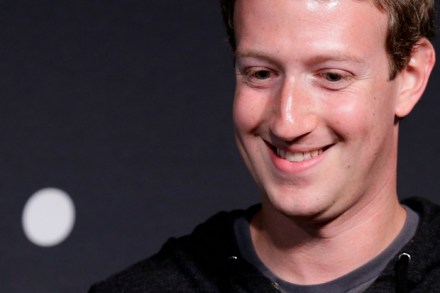
It’s the private messages Mark Zuckerberg will have sent early in the new year that I’d really like to see. The one to Amazon’s Jeff Bezos, for instance, which I imagine reading along the lines of: 'Jeff UO me 1 lol. ;).' Or to Oprah Winfrey: 'Yo, O-dawg! BURNNN!!' Or to Zoella: '@zozeebo: Book selling well? Watch this.' He’s a better man than me if he resists the temptation. His new year’s resolution this year, announced on Facebook, was to read a new book every fortnight, and – essentially kicking off the biggest book club in the history of the universe – he invited his 31 million followers to join him. The results? His first selection was – praise be – nothing by Paulo Coelho, Mitch Albom or Ayn Rand.

Spectator books of the year: Sam Leith explains why The Mighty Dead: Why Homer Matters nearly lost him money

From our UK edition

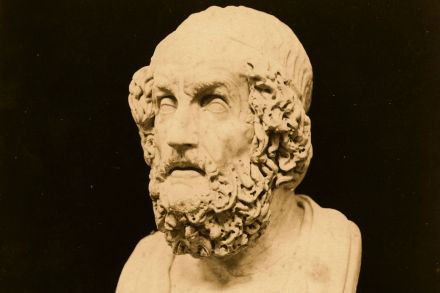
I liked Adam Nicolson’s The Mighty Dead: Why Homer Matters (William Collins, £25) so much that — if I had had the first idea how to operate in a betting shop — I would have put a pony on it to win the Samuel Johnson prize. In the event, my incompetence saved me £25. But Nicolson was robbed. Here is a book bursting with enthusiasm, erudition and eccentricity: a travelogue, a memoir, a work of literary criticism and, at bottom, an archaeology of the western imagination. I found it completely thrilling. Also, in John Berryman’s centenary year I was delighted to see Farrar, Straus and Giroux reissuing his work in some gorgeous new editions.

How Hitler’s dreams came true in 1946

From our UK edition

I should begin this review, in the spirit of full disclosure, by admitting that I know the author very slightly. Something close to 14 years ago, we were on the same press freebie: a slap-up lunch in Paris courtesy of — was it? — LBC radio. Who knows? The ignominious occasion of our acquaintance isn’t the reason I mention it: rather that, somewhere on the Eurostar under the Channel, he and I fell into a conversation about the European Union. As I trotted out the usual boilerplate grumbles about sovereignty and bureaucratic opacity and the iniquities of the Common Fisheries Policy, he exclaimed so passionately in its favour that the conversation stayed with me. After all these years I of course paraphrase, but what he said was: ‘Yes, yes, but it is such a beautiful idea.

Corrie and ready-salted crisps: the years when modern Britain began

From our UK edition

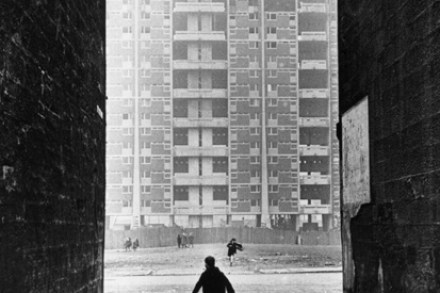
In Burberry’s on Regent Street on a dank December day in 1959, David Kynaston records, ‘a young Canadian writer, Leonard Cohen [...] bought a not-yet-famous blue raincoat’. For those joining Kynaston’s groaning historical wagon train for the first time, this is a sample of the sort of thing with which it abounds. Here is a fun little fact — gathered in from a distinctly marginal source — dropped in a wry half-sentence where it belongs chronologically, but looking forward to the future: a stitch in time. A Shake of the Dice is the sixth book in Tales of a New Jerusalem, the great historian’s ‘projected sequence of books about Britain between 1945 and 1979’. He is chewing his way through the giant lettuce-leaf of his chosen decades like a particularly thorough tortoise.

Soldier, poet, lover, spy: just the man to translate Proust

From our UK edition

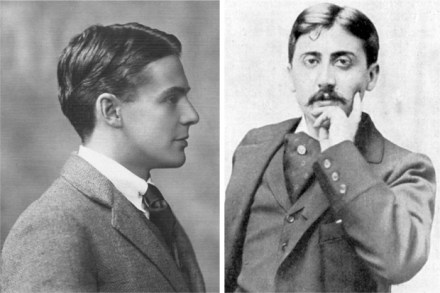
Charles Kenneth Scott Moncrieff’s Englishing of Proust — widely and immediately agreed to be one of the greatest literary translations of all time — very nearly didn’t happen. Scott Moncrieff only suggested the project to his publisher after they rejected a collection of satirical squibs in verse (sample: ‘Sir Philip Sassoon is the Member for Hythe;/ He is opulent, generous, swarthy and lithe.’). Like any good hack, he had another suggestion up his sleeve: there was this character Proust just starting to be published — making a bit of noise in France. Constable didn’t immediately see the value: ‘They replied that they did not see much use in publishing a translation of Prevost [sic].

Why movie musicals matter – to this author anyway

From our UK edition

Do movie musicals matter? Most readers, even those who love them, will embark on Richard Barrios’s short history of the genre with the thought: not much. They’ll very likely, I’m afraid, finish it holding much the same opinion. But not mattering much doesn’t prevent the best film musicals from being captivating. This is a book by someone who is indeed captivated: a love letter for the best of musical cinema and a blown raspberry for the worst.

A horse ride from Buenos Aires to New York? No problem!

From our UK edition

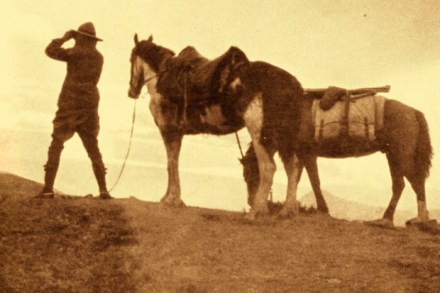
Aimé Tschiffely was what I have seen in other contexts called a ‘doublehard bastard’. In the middle of the 1920s, this Swiss-born schoolteacher at the age of 30 feared that he was getting stuck in a groove and that he wanted ‘variety’. So he set out on a solo horse-ride from Buenos Aires to New York City. Tschiffely wasn’t even much of a horseman at this point. But he had the notion that the wild Criollo horses of Argentina — descendents of the Spanish horses transported to the continent by the Conquistadors in the 16th century and brought to excellence by their survival in that unforgiving environment in the centuries since — were the hardiest horses for long riding in the world. Everyone else thought he was mad.

If you ever wanted a Homeric jump-start, this is your book

From our UK edition

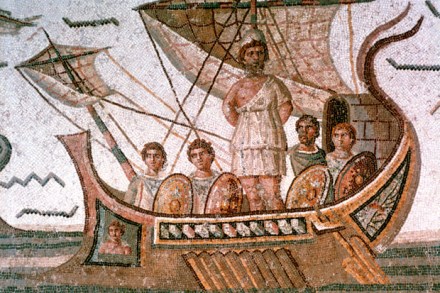
As a teenager, like many of his class and generation, Adam Nicolson encountered Homer in Greek lessons. The subject matter seemed remote and uninteresting — ‘like someone else’s lunchtime account of a dream from the night before’ — and the words dead on the page — ‘as if the poems were written in maths’. But when Nicolson took Robert Fagles’s translation of the Odyssey with him on a sailing trip up the west coast of Ireland ten years ago, something drastically different sparked. He came to see Homer ‘as a guide to life, even as a kind of scripture’.

Shooting prize-dispensing fish in literary barrels

From our UK edition

Edward St Aubyn’s new novel is a jauntily malicious satire on literary prizes in general, the Man Booker Prize in particular and, it may be presumed, the 2011 Man Booker Prize in especial particular. That was the year of the great ‘readability’ brouhaha in which — as every reviewer will point out — among many unexpected omissions from the longlist was Edward St Aubyn. He afterwards told an interviewer that ‘the Booker 2011 is of no more interest to me than the World Heavyweight Championship, which I’m not going to win either.

Churchill was as mad as a badger. We should all be thankful

From our UK edition

Land sakes! Another book about Winston Churchill? Really? Give us a break, the average reader may think. Actually though, as title and subtitle suggest, this isn’t just another biographical study. It’s at once odder and more conventional than that. More conventional because, in some ways, it is just another biographical study. Odder because — instead of being a straightforward discussion of Churchill’s literary work — it sees literature as the key to his biography. More than that, its author seems to think he has hit on a ‘new methodology’ in which ‘we can write political history as literary history’. Well, perhaps.

Management consultancy! Sculpture park! Sports stadium! The many faces of the Delphic Oracle

From our UK edition

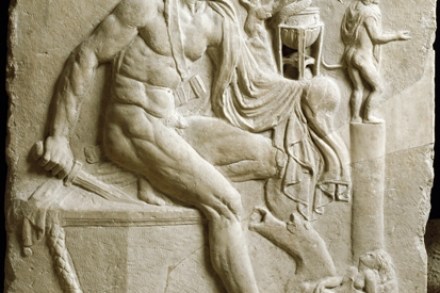
‘In ancient times ... hundreds of years before the dawn of history, lived a strange race of people ... the Druids. No one knows who they were ... or what they were doing. But their legacy remains ... hewn into the living rock ... of Stonehenge.’ The unforgettable opening of Spinal Tap’s song ‘Stonehenge’ was much in my head as I read this scholarly history of Delphi. We use the word ‘delphic’ to mean riddling, ambiguous, difficult to parse. It applies just as much to the history of Ancient Greece’s most sacred site as it does to the pronouncements of its oracle. No one knows who they were ... or what they were doing.

The Artist Formerly Known As Whistler

From our UK edition

When James Whistler was two years old, he was asked why he’d disappeared from company and hidden under a table. ‘I’s drawrin,’ he replied. He started as he meant to go on. Daniel E. Sutherland’s well-appointed new biography of the American-born painter — whom Henry James described as a ‘queer little Londonised Southerner’ — keeps the attention there, making its central emphasis Whistler’s ferocious single-mindedness in the making of his art. The striking thing is how much the other aspects of him — Whistler the rebel, Whistler the public combatant, Whistler the philanderer, the dandy, the show-off, the semi-delinquent father, the wit and conversationalist — fed into that rather than distracting from it.