Sam Leith

Sam Leith

Sam Leith is literary editor of The Spectator.

Spectator Books: Mick Herron on how to be a crap spy

From our UK edition

The spy writer Mick Herron’s Slough House series of comic thrillers has steadily established him as perhaps the most influential author in the genre since Le Carre. The latest in the series, Joe Country, is out now — and we thought to celebrate its publication with another opportunity to listen to my conversation last year with Mick — when London Rules came out -- about Slough House, slow horses and his unkillable, curry-stained antihero Jackson Lamb. Normal post-holiday service will be resumed next week with a box-fresh podcast featuring Lemn Sissay.

Spectator Books: books for the beach

From our UK edition

Even books editors have to go on holiday sometimes, so Spectator Books is taking a hiatus for a couple of weeks. But so there's not a gaping gap in your life where the podcast used to be, we're bringing out some of our favourite episodes from our archive. This week, I am joined by the critic Alex Clark and Damian Barr — memoirist and host of the Savoy’s Literary Salon — to talk about summer reading. What do you take? What do you regret taking? Kindle, dead-tree or — 19th-century-style — cabin trunk full of books sent on ahead? Our discussion yielded a host of recommendations — from the brand new to the reliable old friends — that we hope will help you plan your own travelling library.

Spectator Books: when Coleridge met Wordsworth

From our UK edition

In this week’s books podcast, we’re getting Romantic. I’m joined by the writer Adam Nicolson and the artist Tom Hammick to talk about their new book The Making of Poetry: Coleridge, Wordsworth and their Year of Marvels. In it, Adam describes how — inspired by Richard Holmes’s 'footsteps' approach — he attempted to imaginatively inhabit the worlds of Coleridge and Wordsworth in the crucial year in the late 1790s when they lived near each-other in the Quantocks in Somerset. That meant, for him, living in the same landscape, walking the same paths, reliving the struggles with lines of verse in manuscript.

Spectator Books: is there a meaning to life?

From our UK edition

The star New York Times columnist David Brooks has never been afraid to go beyond the usual remit of day-to-day politics. His new book The Second Mountain: The Quest for a Moral Life is exactly what it sounds like: a guide to the Meaning of Life, somewhere between a spiritual autobiography and a manual for living. He joins me to explain how he’s changed his mind about the meaning of life since his previous book The Road To Character (he’s cagy about whether refunds are available), about how his own humbling after the breakdown of his marriage made him a wiser and better person, and about whether a new-found appreciation for altruism could make him a socialist.

Spectator Books: how pigeons won the War

From our UK edition

Pigeons: revolting pests who can’t tell the difference between fag-butts and chips, right? Not so, according to my latest podcast guest Jon Day, distinguished man of letters, critic, academic and… pigeon-fancier. Jon’s new book Homing describes how — suffering an early midlife crisis in young married life with fatherhood approaching — he took up racing pigeons. His book will make you look at pigeons in a new light — and also reflect on what these extraordinary birds have to tell us about the relationship between humans and animals and about the idea of home.

Books Podcast: the double agent who changed the Cold War

From our UK edition

There’s nobody who writes true-life spy stories like Ben MacIntyre — and with his latest book The Spy and the Traitor out in paperback, Ben joins me to talk about the astonishing career of Oleg Gordievsky, a single spy who really did change the whole course of the Cold War. Ben tells me about Oleg's rise, his downfall, his daring escape from Moscow — and how he lives now and what he thinks of the situation between Russia and the West these days.

Spectator Books: Caroline Crampton’s forgotten histories of the Thames

From our UK edition

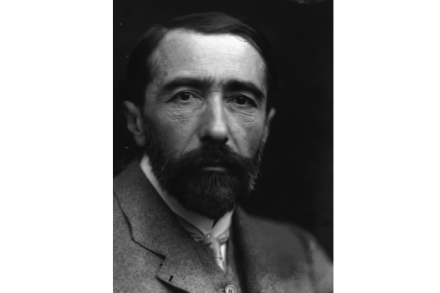
My guest on this week’s podcast is Caroline Crampton — whose fine and lyrical new book The Way To The Sea twines travelogue and memoir to pay tribute to the neglected mystery and beauty of the downriver portions of the Thames. Evoking Joseph Conrad and Dickens, ranging from prehistory to the sunken wrecks (and still live explosives!) of wartime ships that foundered on its shoals, from the 18th-century maritime madness to the modern day rejuvenation or social cleansing of the London docklands, Caroline tells a remarkable and fascinating story.

Why Trump’s Fourth of July speech was a botch job

To make a great success of a speech you need timing, what the ancient Greeks called kairos, you need an electric connection with your audience, and you need a bit of luck. President Trump, in his damp squib of a Fourth of July speech, had none of those things.  Kairos-wise, the Fourth of July was a near-miss: the sort of occasion that asks for and often gets rousing oratory. But in this case the resonance of the date was undermined by the suspicion that rather than honoring the national holiday the president was seeking to hijack it. As Elizabeth Warren commented tartly, 'If he's going to do a campaign event, then it should be paid for by his campaign contributions. It should not be paid for by the American taxpayer.

july speech

The social politics of Eton

From our UK edition

Every prime minister is a sociologist. Theresa May drew a distinction between citizens of somewhere and ‘citizens of nowhere’, a sort of riff on David Goodhart’s distinction between Somewheres (rooted, provincial, less well off) and Anywheres (snooty, international, at home on planes and in the corridors of power). Now Boris Johnson segments the country in a fresh way. He talks about the existence of both rural and ‘oppidan’ Britons feeling ‘under-invested, excluded’ and that ‘their lives and their futures weren’t as important’, and he implicitly opposes them to the elites. Why oppidan? Oppidan is essentially a posh word for ‘townie’ (from the Latin oppidum).

Would Faber & Faber still exist without T.S. Eliot?

From our UK edition

This year the publishers Faber & Faber celebrate their 90th birthday, and to honour the occasion I’m joined by Toby Faber, the founder’s grandson and the author of a new history of the company called Faber & Faber: The Untold Story. Most corporate histories are boring, but this one — told largely through the correspondence of that company’s astonishing cast of literary luminaries — is anything but. Toby talks about the company’s rackety start as a publisher of medical textbooks; about T.S. Eliot and the genesis of Cats; and Kazuo Ishiguro’s most mortifying moment.

The baffling oratory of Jared Kushner

The problem of resolving the tangle of conflict in the Middle East is one that has defeated generations of the world’s most experienced statesmen, and resisted the blandishments of its greatest orators. So who better now to step in than a well-groomed thirtysomething New York property developer, offering the 'deal of the century'? There were some hiccups to start with, sure. Jared Kushner launched his 'Peace to Prosperity' workshop in Bahrain with a cocktail party – alcohol not being traditionally the thing with Muslims. And it was boycotted from the off by the Palestinian Authority. Still, he had a bash.

jared kushner rhetoric

Croquet

From our UK edition

People say cricket is the quintessential English game. Those people are wrong. Cricket may have a longer pedigree, but it’s too boring, too democratic and too honourable to qualify: croquet is the game that truly captures what it is to be English. As any pub quizzer will tell you, Wimbledon started its life in 1868 as the All England Croquet Club, only developing its vulgar sideline in lawn tennis late in the following decade. Its reputation has yet to recover.   Just like cricket, where the game as played on the village green differs from the international game, the echt English croquet is the one played, ideally slightly drunk, in the echt Englishman’s garden. Its idiosyncrasies are what makes it special.

The Books Podcast: the right way to write with Benjamin Dreyer

From our UK edition

In this week’s Spectator Books podcast my guest is Benjamin Dreyer — whose name is pronounced, as I discover live on air, 'Dryer' rather than 'Drayer'. That seems an apt way to be introduced to a man who, as Random House US’s Copy Chief, makes his living correcting errors. His new book Dreyer’s English is a compendium of useful tricks of the trade, sharp opinions and authoritative rulings on everything to do with language and style. We talk transatlantic language differences, angry pedants, and punctuation nitty-gritty, with special reference to Steven Pinker, the New Yorker and Guns N’ Roses.

Books Podcast: writings of the working class

From our UK edition

In this week’s books podcast Kit de Waal is here to talk about her new anthology of working-class memoir, Common People. First a guest on this podcast a couple of years ago talking about her Desmond-Elliott-shortlisted debut My Name Is Leon, Kit explains why she thought an anthology of working-class writing was necessary, about if and how the pendulum has swung since previous booms in working-class writing, what still needs to change in publishing, and how, as an editor, she avoided falling victim to Four Yorkshiremen Of The Apocalypse Syndrome.

Common sense is the real generation gap – just ask John Cleese

From our UK edition

As I write these words, I regret to inform you, John Cleese is on his way to being cancelled. Now there’s a sentence that straddles a generation gap. Many people very familiar with John Cleese will have only the dimmest idea of what ‘cancelled’ means; while people who are all about cancelling celebrities will tend not to know what ‘John Cleese’ means. If anything saves him from cancellation, it will be the hope that he can snuggle down and hide in that gap until it’s all over.

Twitter: no country for old men

From our UK edition

As I write these words, I regret to inform you, John Cleese is on his way to being cancelled. Now there’s a sentence that straddles a generation gap. Many people very familiar with John Cleese will have only the dimmest idea of what ‘cancelled’ means; while people who are all about cancelling celebrities will tend not to know what ‘John Cleese’ means. If anything saves him from cancellation, it will be the hope that he can snuggle down and hide in that gap until it’s all over.

Books Podcast: does tripping balls tell us anything profound about human consciousness?

From our UK edition

This week’s books podcast promises to be a trip. I’m joined by Mike Jay to talk about the history of mescaline — a psychedelic drug whose influence goes from the earliest South American civilisations through the 19th-century Indian Wars up to W B Yeats, Aleister Crowley and (of course) Aldous Huxley and Hunter S Thompson. Does tripping balls tell us anything profound about human consciousness? How come Mexico got all the good drugs? And why did Aldous Huxley lie about his trousers?

Life at the Globe | 6 June 2019

From our UK edition

IN ASSOCIATION WITH THE PRINCIPAL PARTNERS OF SHAKESPEARE’S GLOBE’S 2019 SUMMER SEASON   This column concludes my brief series about Shakespeare and the Globe, linked to the summer season of history plays — from Richard II to Henry V — sponsored by Merian. It’s been a pleasure to write. And one of the special pleasures it has offered is the chance to explore what Oxford’s Professor of Shakespeare Studies, Emma Smith, identifies in her book This Is Shakespeare as the Stratford man’s outstanding quality: what she calls his ‘gappiness’. That is what academics more usually call indeterminacy. (I can see why she prefers ‘gappiness’.

Books Podcast: Chaucer’s European roots

From our UK edition

In this week’s books podcast we’re talking about why the Father of English Poetry, Geoffrey Chaucer, at least half belongs in a French, Latin and Italian tradition. Marion Turner’s magnificently scholarly Chaucer: A European Life sets the great writer in his own times — one of a hinge between feudal and early modern ideas about selfhood, authorship and originality; and one in which our man travelled widely and with profit across the Europe of his day, learning from poets in France and Hainaut, from Dante and Boccaccio, and even possibly from the painter Giotto.

The Books Podcast: science fiction from Jim Al-Khalili

From our UK edition

In this week’s books podcast I’m joined by the physicist Jim Al-Khalili (host of Radio Four’s The Life Scientific) to talk about his first novel, a science-fiction thriller called Sunfall. In it, Jim uses real science to conjure up a plausible but fantastical near-future crisis in which the earth’s magnetic field falters and dies. What would that mean? (Nothing good, is the answer.) He helps us sort our neutralinos from our neutrinos, tells us about the real existential threats we face, and explains why he’s drawn to so-called “hard sf”.