Sam Leith

Sam Leith

Sam Leith is literary editor of The Spectator.

American meltdown: November’s democratic disaster

From our UK edition

40 min listen

Is this week's presidential debate a taste of the chaos to come? (00:55) In defence of 'wokeness' (15:10) and are male-only spaces immoral? (30:25)With Matt Purple, Senior Editor at the American Conservative; Karin Robinson, host of the Primarily: 2020 podcast; Sam Leith, The Spectator's Literary Editor; Andrew Doyle, the writer behind Titania McGrath; and Emily Bendell, the entrepreneur who is bring a lawsuit against the Garrick Club.Presented by Cindy Yu.Produced by Cindy Yu and Max Jeffery.

A cat’s-eye view of 18th-century social history

From our UK edition

Jeoffry is, by now, one of the best-known cats in literary history. And unlike the Cheshire Cat, Mr Mistoffelees, Orlando, The Cat That Walked By Himself, Gobbolino or Behemoth in The Master and Margarita, he really existed. Protagonist of the most anthologised section of the mad poet Christopher Smart’s Jubilate Agno, the eccentrically spelled ginger tom now takes a fresh lease of fictionalised life in this jeu d’esprit. Oliver Soden’s ‘biography’ of Jeoffry takes its most obvious bearings from another novelised animal biography, Virginia Woolf’s life of Elizabeth Barrett-Browning’s cocker spaniel, Flush. It is, if you’ll forgive me, a pretty feline performance.

In defence of wokeness

From our UK edition

We have been reading an awful lot about ‘wokeness’ recently. Nobody, I notice, seems to be much in favour of it. In fact, the sharpest pens of the right seem to stab at more or less nothing else these days. Stab, stab, stab, they go. Many incisions are made and much ink and sawdust is spilled. So, being a believer in giving peace a chance, I’d like to sit for a moment on the bar stool still pleasantly warm from my colleague Rod’s momentarily departed bottom to offer a word or two in wokeness’s defence. I worry, you see, that it might be a bit of an Aunt Sally. Thing is, ‘woke’ is a term that you now only ever see used as a sneer.

Roy Foster: On Seamus Heaney

From our UK edition

35 min listen

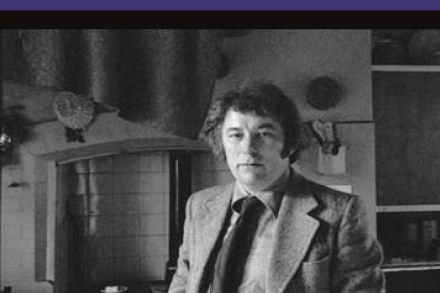
My guest in this week’s Book Club podcast is the distinguished Irish historian Roy Foster, talking about his new book On Seamus Heaney. He tells me how 'Famous Seamus'’s darkness has been under-recognised, how he negotiated with the shade of Yeats and the explosive politics of Ireland to find an independent space to write from, and just how 'certus' the man who signed himself 'Incertus' really was.

Kate Summerscale: The Haunting of Alma Fielding

From our UK edition

32 min listen

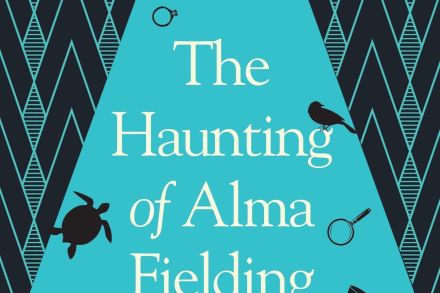
In this week's Book Club podcast, my guest is Kate Summerscale, here to talk about her latest book The Haunting of Alma Fielding: A True Ghost Story. Kate uses the true story of an eruption of poltergeist activity in 1930s Croydon to give what turns into a thoughtful and poignant look at the mental weather of interwar Britain, and the shifting meanings of the occult in light of new ideas about physics and the psychology of trauma. She tells me about the story's enduring mysteries and ambiguities, how spookily it chimed with its historical background - and about flying Bovril and a talking mongoose called Gef.

Ysenda Maxtone Graham: British Summer Time Begins

From our UK edition

30 min listen

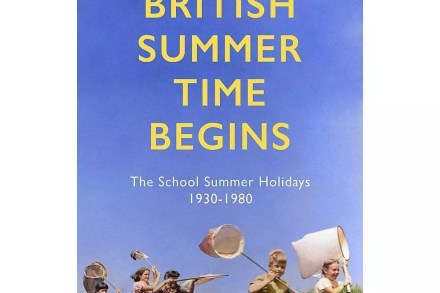
In this week's books podcast my guest is the writer Ysenda Maxtone Graham, whose new book casts a rosy look back at the way children used to spend their summer holidays. British Summer Time Begins: The School Summer Holidays 1930-1980 is a work of oral history that covers everything from damp sandwiches and cruelty to animals to tree-climbing, messing about in boats or endless games of Monopoly; intimidating fathers, frustrated mothers and grandparents who, if you weren't careful, would eat your pet rabbit. The good old days, in other words.

Former Australian PM Julia Gillard on sexism in politics

From our UK edition

38 min listen

My guest in this week's books podcast is the former Australian Prime Minister Julia Gillard. Along with the economist and former Nigerian finance minister Ngozi Okonjo-Iweala, Julia has written a new book called Women and Leadership: Real Lives, Real Lessons, which includes interviews with women who've reached the top roles in global institutions, from Christine Lagarde and Joyce Banda to Michelle Bachelet and Theresa May. I asked her about her own time in politics, what she'd have done differently, whether Australia is more sexist than the UK, and her notorious 'misogyny' speech - plus, what she thinks her old sparring partner Tony Abbott has to offer the UK as a trade adviser.

Annie Nightingale: Five decades of pop culture

From our UK edition

33 min listen

In this week’s Book Club podcast my guest is Annie Nightingale - Britain’s first female DJ, occasional Spectator contributor, and longest serving presenter of Radio One. Ahead of the publication of her new book Hey Hi Hello, Annie tells me about the Beatles’ secrets, BBC sexism, getting into rave culture, the John Peel she knew - and how when most people never get past the music they love in their teens, she’s never lost her drive to hear tunes she’s never heard before.

Paul Edmondson and Stanley Wells: All the Sonnets of Shakespeare

From our UK edition

41 min listen

In this week's Book Club podcast I talk to Paul Edmondson and Stanley Wells about their new book All The Sonnets of Shakespeare - which by collecting the sonnets that appear in the plays with the 154 poems usually known as 'Shakespeare's Sonnets', and placing them in chronological order, gives a totally fresh sense of what the form meant to our greatest poet-dramatist. They tell me what sonnets meant to Elizabethans, why so much of what has been said about 'the sonnets' has been wrong - they're not a sequence, and it's vain to look for a Dark Lady or Fair Youth in these candidly bisexual poems - and how they provide perhaps the most intensely inward view of the poet we have.

Today’s undergraduates are customers – and the customer is always right

From our UK edition

If you’re looking for a sign of the academic times, you could do worse than consider the image, published in newspapers recently, of Mr Chan King Wai at a solemn ceremony in China last year. There is Mr Chan, grinning stiffly but with real pride, dressed in a scholar’s cap with a gold tassel, and a red and shiny purple gown. Around his neck, a little incongruously, is a stripy Brideshead-type scarf. He looks like he has presented himself for Oxbridge theme week on RuPaul’s Drag Race. He is showing a certificate to the camera. Holding the other end of the certificate, and mustering more of a grimace than a grin, is Alan Hudson — recently retired director of programmes in leadership and public policy at Oxford’s China Centre.

Loyd Grossman: An Elephant in Rome

From our UK edition

37 min listen

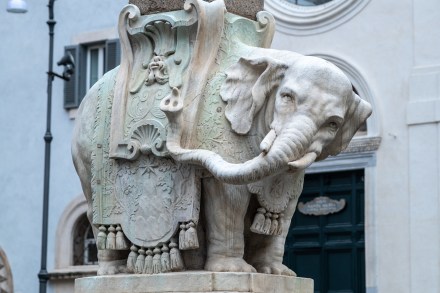
In this week's books podcast, my guest is that man of parts Loyd Grossman. Loyd's new book is An Elephant in Rome: Bernini, the Pope, and the Making of the Eternal City, which explores the titanic influence of Bernini on the Rome we see today, and his partnership with Pope Alexander VII. Loyd tells me why you couldn't bring Italian Baroque home to meet your parents, about Bernini's far from congenial character -- and why you'd stick an obelisk on top of an elephant anyway.

Sam Harris on the value of conversation

From our UK edition

66 min listen

In this week's Book Club podcast I'm joined by the philosopher, scientist and broadcaster Sam Harris - host of the hugely popular Making Sense podcast. Sam's new book is a selection of edited transcripts of the very best of his conversations from that podcast with intellectual eminences from Daniel Kahneman to David Deutsch, and explores some of the issues that preoccupy him most: to do with consciousness, human cognition, artificial intelligence and the political spaces in which these subjects come to bear. He tells me why civilised conversation is what the world needs now more than ever, why 'cancel culture' is real and J.K.

Adam Rutherford and Thomas Chatterton Williams: talking about race

From our UK edition

44 min listen

In this week’s podcast, we're replaying an episode that first aired earlier this year, but now seems more relevant than ever. Sam is joined by two writers to talk about the perennially fraught issue of race. There’s a wide consensus that discrimination on the basis of race is wrong; but what actually *is* race? Does it map onto a meaningful genetic or scientific taxonomy? Does it map onto a lived reality - is it possible to generalise, say, about 'black' experience? And can we or should we opt out of or ignore it?

The making of Kew’s Palm House

From our UK edition

40 min listen

In this week's books podcast my guest is Kate Teltscher, who tells the fascinating story of one of the greatest showpieces of Victorian Britain: the Palm House in Kew Gardens. Though the gardens and their glassy centrepiece are now a fixture of London's tourist map, as her new book Palace of Palms reveals, they very nearly weren't. She tells me how a team of brilliant mavericks used cutting-edge science and engineering to build one of the greatest constructions of its era... in just the wrong place. With walk-on parts for Darwin, Humboldt and Alfred Russel Wallace, she reveals the way in which Victorian botany extended its tendrils through the whole Empire, shows how the palm was seen as the 'prince of plants', and describes the quest for the palm of all palms, the elusive coco-de-mer.

What can be learnt from the history of magic?

From our UK edition

45 min listen

On this week's books podcast, my guess is Oxford University's Professor of European Archaeology, Chris Gosden. Chris's new book The History of Magic: From Alchemy to Witchcraft, From the Ice Age to the Present opens up what he sees as a side of human history that has been occluded by propaganda from science and religion. Accordingly, he delves back to evidence from the earliest human settlements all over the world to learn about our magical past - one thread in what he calls the 'triple-helix' of our cultural history. He tells me why John Dee got a bad rap, where magic wands came from - and why, unusually as an academic, he argues that magic isn't just an anthropological curiosity but might, in fact, have something useful to teach us.

She was just a damn cat – and I loved her

From our UK edition

I’ve never dug a grave before. But that was how I spent my Sunday afternoon. Three feet is awfully deep to dig, and three feet is how deep you have to go if you don’t want foxes to turn a little tragedy into a horror-comedy. I laboured till the head of the spade went out of sight. My children were eating burgers from the barbecue a few feet away, and I worried that they might guess what I was up to. Thank God for the heroic incuriosity of children. I told the youngest something about planting a tree and it seemed to satisfy him. The truth would have been ‘planting the family cat after we put her down tomorrow’. I worried the hole wasn’t big enough. But then it struck me that it was just about the diameter of a cat door and I felt my throat catch.

Robin Hanbury-Tenison’s guide to defeating pandemics and more

From our UK edition

33 min listen

This week's Book Club podcast is brought to you rather later than we'd planned. In spring this year, the explorer and writer Robin Hanbury-Tenison was due to be talking to me about his new book Taming The Four Horsemen: Radical Solutions to Defeat Pandemics, War, Famine and the Death of the Planet. We'd been excited to have him on, not least because his book's interest in pandemic disease was starting to seem strangely prescient. The day before we were due to record, Robin emailed me to say that he had developed a terrible cough that would make recording impossible so we agreed to postpone our conversation. The next I heard was from Robin's son Merlin: Robin had been taken into hospital with Covid and the prognosis was grim. He'd been given only a 20 per cent chance of survival.

Tom Holland on Christianity’s enduring influence

In this week's Book Club, my guest is the historian Tom Holland, author of the new book Dominion: How the Christian Revolution Remade the World. The book, though as Tom remarks, you might not know it from the cover, is essentially a history of Christianity — and an account of the myriad ways, many of them invisible to us, that it has shaped and continues to shape Western culture. It's a book and an argument that takes us from Ancient Babylon to Harvey Weinstein's hotel room, draws in the Beatles and the Nazis, and orbits around two giant figures: St Paul and Nietzsche. Is there a single discernible, distinctive Christian way of thinking? Is secularism Christianity by other means?

tom holland Notre-Dame stands charred in Paris in the aftermath of a fire that devastated the cathedral

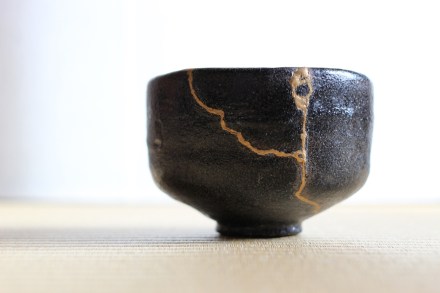
Nuclear disasters, multilingual jokes, and the art of Kintsugi

From our UK edition

49 min listen

In this week's Book Club podcast my guest is the Argentine-born novelist Andrés Neuman, who was acclaimed by the late Roberto Bolano as the future of Spanish-language fiction. We talk about boundary-crossing in literature, historical trauma, multilingual jokes - and his dazzling new novel Fracture, which sees a survivor of Hiroshima and Nagasaki grappling with the Fukushima nuclear disaster.

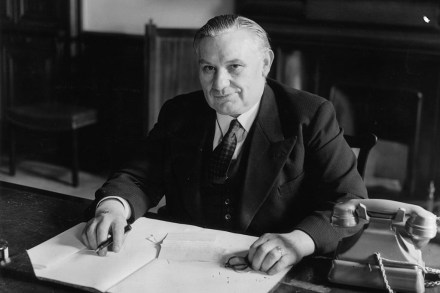
Andrew Adonis: how Ernest Bevin was Labour’s Churchill

From our UK edition

43 min listen

In this week's books podcast I'm joined by Alan Johnson and Andrew Adonis to talk about the latter's new biography of a neglected great of British political history: Ernest Bevin: Labour's Churchill. He was, in Andrew's estimation, the man who did most to save Europe from Stalin. So why has Bevin been so forgotten? In what way was he Churchillian? What would he have made of the current state of the Labour party? And will we ever see his like again?