Sam Leith

Sam Leith

Sam Leith is literary editor of The Spectator.

The death of David Amess and the narcissism of the discourse

From our UK edition

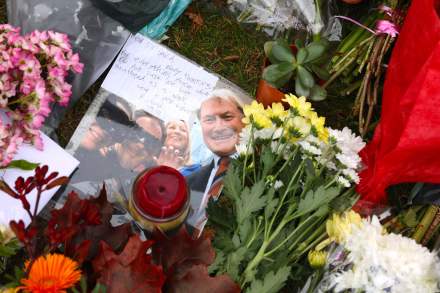
The speed with which tragedy turns into farce these days is quite something. Within minutes of Sir David Amess’s death being announced, social media was filled with sizzling hot takes. The back-and-forth centred on whether the decline in 'civility' and the use of dehumanising language in politics was to blame for the murder of an MP. It recalled nothing so much as the recriminations after Jo Cox’s death, except that the teams here had, as it were, swapped shirts at half-time. Back then, the left more or less directly attributed Jo Cox’s murder to the language used by the partisans of Brexit: 'traitors', 'saboteurs' and so on. Back then, the right accused them of playing politics with a tragedy.
Baby doomers: why are couples putting the planet ahead of parenthood?

From our UK edition

38 min listen

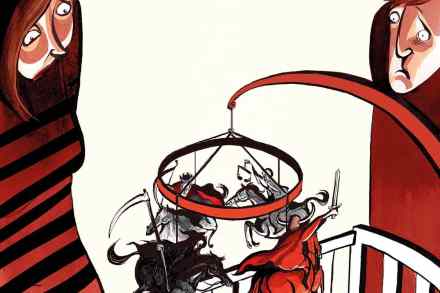
In this week’s episode: Why are a growing number of people putting the planet before parenthood? Madeleine Kearns writes about this phenomenon in this week’s issue and thinks that some of these fears might be unfounded. Tom Woodman author of Future is one of these people that Madeleine’s piece talks about. Tom has very real worries about bringing a child into the world. It's not only the least green thing he could do but also that the standard of living for that child could be severely limited due to a climate catastrophe. (00:47)Also this week: Has Boris Johnson brought Conservatism full circle? That’s the argument Tim Stanley makes in this week’s Spectator. He joins Lara on the podcast along with one of the MPs mentioned in the piece, Steve Baker.

Joan Bakewell: The Tick of Two Clocks

From our UK edition

32 min listen

In this week’s Book Club podcast my guest is Joan Bakewell, who talks to me about her new book The Tick Of Two Clocks: A Tale of Moving On. It describes how she made the decision to sell the house she lived in for half a century, and what it meant to her to face up to old age, and take stock of the past.

No, the term ‘white privilege’ is not extremist

From our UK edition

A Tory MP last week raised the delightful possibility that the big family of what we might call the terrorism community should be expanded yet further. Speaking to a group of activists at party conference, Jonathan Gullis declared: “The term 'white privilege' is an extremist term. It should be reported to Prevent, because it is an extremist ideology. It’s racist to actually suggest everyone who’s white somehow is riddled with privilege.” Goodness. Even now I see it: online social studies graduates and right-on corporate HR functionaries hauling on the old orange PJs and trooping glumly into their cells in some British equivalent of Guantanamo Bay, alongside the murderous jihadists of IS, pipe-bomb prone neo-Nazis, incel spree-killers and armalite-toting provos.

Boris Johnson’s speech was a triumph

From our UK edition

If you were listening to the Prime Minister’s keynote address to party conference, you would not for a second have suspected that the country’s petrol stations were empty, its service industries hopelessly short of staff, its pigs being slaughtered on farms for want of abattoir workers and its Christmas turkeys on the line. You would have left the hall with the sense that here was a nation in boisterous good health and irrepressible high spirits. That, among other things, was why Boris Johnson’s speech was a triumph. No doubt the factcheckers will rip it to tatters. No doubt there will be grumbles among hostile political scientists about its vagueness on policy.

Political arguments are now over words, not things

From our UK edition

There is a picture book, by the excellent David McKee, of which my youngest child was very fond. It’s called Two Monsters, and its protagonists are, as promised, two monsters. The blue one lives on the west side of a mountain, and the red one lives on the east side of the mountain. They communicate verbally but never see each other. It all kicks off when one evening the blue monster calls: 'Can you see how beautiful it is? Day is departing.' The red monster shouts back: 'Day departing? You mean night arriving, you twit!' Cantankerous words are exchanged before bedtime and both sleep badly. The following morning the blue one shouts: 'Wake up, you numbskull, night is leaving.' Red responds: 'Don’t be stupid, you peabrain! That is day arriving.

Chuck Palahniuk: Greener Pastures

From our UK edition

25 min listen

Chuck Palahniuk -- best known as the author of Fight Club -- has just announced that he's publishing his next novel not with a mainstream publisher but through the online subscription service Substack. He joins me on this week's Book Club podcast to tell me why; and to talk about how 9/11 changed literature, why he never tires of making his audience feel sick, and how he thinks David Foster Wallace might be alive today if he'd taken some time out to write a few Spider-Man comics.

Is anti-Etonian prejudice really OK?

From our UK edition

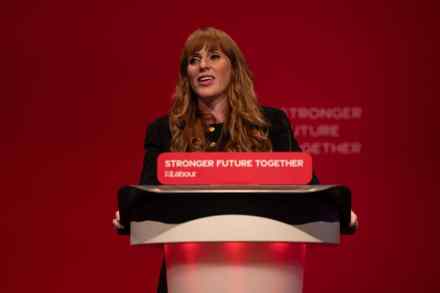
Don’t you wish Angela Rayner would come off the fence, just once in a while, and tell us what she really thinks? In a meeting of delegates to the Labour Conference, the heiress presumptive to the Labour leadership is reported to have said of the governing party: ‘We cannot get any worse than a bunch of scum: homophobic, racist, misogynistic… banana republic…vile, nasty, Etonian…piece of scum.’ I’ll let the purity-police in her own faction take Ms Rayner to task over the orientalist and patronising stereotyping of communities in the Global South as ‘banana republics’.

Keir Starmer’s essay is a cliché-ridden disaster

From our UK edition

Many years ago, a tabloid newspaper played an unkind prank on the author of a very long and much talked-about literary novel. They sent a reporter to various bookshops to place a slip of paper into copies of the book 50 pages or so from the end. The slip said that if you phoned a particular phone number, the newspaper would pay you a fiver. Gleefully, some weeks later, they reported that nobody had telephoned to collect their prize – from which they deduced that despite its sales figures, practically nobody was actually reading the book to the end. About halfway through reading Keir Starmer’s new pamphlet for the Fabian Society – The Road Ahead – I wondered idly whether a similar prank had been played.

Mikkel Borch-Jacobsen: Freud’s Patients

From our UK edition

37 min listen

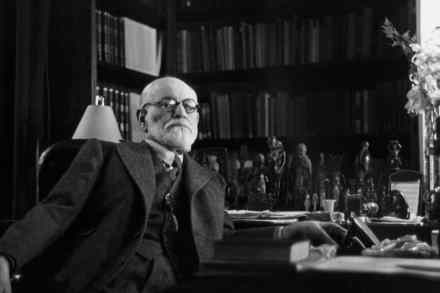
In this week's Book Club podcast I'm joined by Mikkel Borch-Jacobsen, a historian of psychoanalysis whose latest book is Freud's Patients: A Book of Lives. Mikkel has sifted through the archives to discover the real stories anonymised in the case studies on which Sigmund Freud based his theories, and the lives of the patients who submitted to analysis on the great man's original couch. What he discovered is startling. Mikkel tells me how Freud falsified the data to fit his theories, kept incurable cases coming back week after week to keep the fees rolling in -- and how the global industry of Freudian analysis resembles a religious cult more than a science.

Oliver Burkeman: 4,000 Weeks

From our UK edition

40 min listen

My guest in this week’s Book Club podcast is the writer Oliver Burkeman. His new book 4,000 Weeks offers some bracing reflections on time: how much we have of it, how best to use it, and why 'time management' and productivity gurus have the whole thing upside down.

Hermione Lee: Tom Stoppard, A Life

From our UK edition

41 min listen

My guest on this week’s podcast is the biographer and critic Hermione Lee. Her biography of Tom Stoppard is newly out in paperback, and she tells me about the decade of work behind Sir Tom’s overnight success, his unexpected influences, and the challenge to a biographer of getting to the heart of this elusive genius.

Michael Bracewell: Souvenir

From our UK edition

31 min listen

Michael Bracewell’s new book Souvenir is a vivid and poetic evocation of London on the brink of the digital era - the neglected in-between times between 1979 and 1986. He joins me to talk about fine art and post-punk, T S Eliot and William Burroughs - and the dangerous lure of nostalgia.

Michael Pye: Antwerp

From our UK edition

35 min listen

In this week's Book Club podcast I'm talking to Michael Pye about his new book Antwerp: The Glory Years. For most of the 16th century, as he tells me, Antwerp was the most important town in the western world – a city in which, as never before, ideas, information, goods and money circulated free of almost any authority. It was a time of extraordinary excitement – here are Bruegel, Thomas More and William Tyndale – and enormous danger and corruption. Michael tells me how it came about, what lessons it offers our own age... and how it reached an abrupt and bloody end.

Tom Tugendhat’s speech was a masterclass in oratory

From our UK edition

An ounce of emotion, it has been said, is worth a ton of fact. Tom Tugendhat’s remarkable speech to the Commons today was delivered with a current of emotion – pathos, as scholars of oratory call it – that was all the more electric for its restraint. His jaw clenched and trembled; his voice, now and again, seemed on the verge of faltering. As he said in his opening words: 'Like many veterans, this last week has been one that has seen me struggle through anger, and grief, and rage. The feeling of abandonment of not just a country but the sacrifice that my friends made. I’ve been to funerals from Poole to Dunblane. I’ve watched good men go into the earth, taking with them a part of me and a part of all of us.

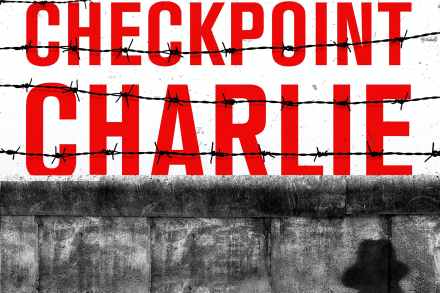
Iain MacGregor: Checkpoint Charlie

From our UK edition

53 min listen

In this week's Book Club podcast we anticipate the 60th anniversary of the Berlin Wall going up by talking to Iain MacGregor about his book Checkpoint Charlie: The Cold War, The Berlin Wall And The Most Dangerous Place On Earth. He tells me how, and why, the Russians cut a city in half overnight; and why we let them. He describes how events in Tiananmen Square reached Friedrichstrasse. And how, as the Wall came down, a single British soldier did something that the Red Army never forgot.

Mary Ann Sieghart: The Authority Gap

From our UK edition

36 min listen

My guest in this week’s books podcast is Mary Ann Sieghart, whose new book The Authority Gap accumulates data to show that so-called 'mansplaining' isn’t a minor irritation but the manifestation of something that goes all the way through society: women are taken less seriously than men, even by other women. She says it’s not just 'wokery' to point it out, and she makes the case for how she thinks it came to be, what we can do to change it, and why we should take the trouble.

The true cost of the convenience economy

From our UK edition

‘Where’s the car?’ said my wife Alice, interrupting my Zoom meeting on Saturday morning. ‘It’s where you left it,’ I said perhaps more pointedly than was kind. ‘When you drove it home last night. On the drive.’ ‘No it isn’t,’ she said. I left my Zoom meeting, shambled to the front of the house and looked out of the window. She was right. Half-full skip, yes. Wheelie bins, yes. The usual pizza boxes, empty vodka miniatures and crisp packets scattered outside our house by generous pedestrians? Present and correct. But no car. ‘It’s been stolen,’ I said gloomily and, of course, I was right.