Sam Leith

Sam Leith

Sam Leith is literary editor of The Spectator.

Chuck Palahniuk: Greener Pastures

From our UK edition

25 min listen

Chuck Palahniuk -- best known as the author of Fight Club -- has just announced that he's publishing his next novel not with a mainstream publisher but through the online subscription service Substack. He joins me on this week's Book Club podcast to tell me why; and to talk about how 9/11 changed literature, why he never tires of making his audience feel sick, and how he thinks David Foster Wallace might be alive today if he'd taken some time out to write a few Spider-Man comics.

Is anti-Etonian prejudice really OK?

From our UK edition

Don’t you wish Angela Rayner would come off the fence, just once in a while, and tell us what she really thinks? In a meeting of delegates to the Labour Conference, the heiress presumptive to the Labour leadership is reported to have said of the governing party: ‘We cannot get any worse than a bunch of scum: homophobic, racist, misogynistic… banana republic…vile, nasty, Etonian…piece of scum.’ I’ll let the purity-police in her own faction take Ms Rayner to task over the orientalist and patronising stereotyping of communities in the Global South as ‘banana republics’.

Keir Starmer’s essay is a cliché-ridden disaster

From our UK edition

Many years ago, a tabloid newspaper played an unkind prank on the author of a very long and much talked-about literary novel. They sent a reporter to various bookshops to place a slip of paper into copies of the book 50 pages or so from the end. The slip said that if you phoned a particular phone number, the newspaper would pay you a fiver. Gleefully, some weeks later, they reported that nobody had telephoned to collect their prize – from which they deduced that despite its sales figures, practically nobody was actually reading the book to the end. About halfway through reading Keir Starmer’s new pamphlet for the Fabian Society – The Road Ahead – I wondered idly whether a similar prank had been played.

Mikkel Borch-Jacobsen: Freud’s Patients

From our UK edition

37 min listen

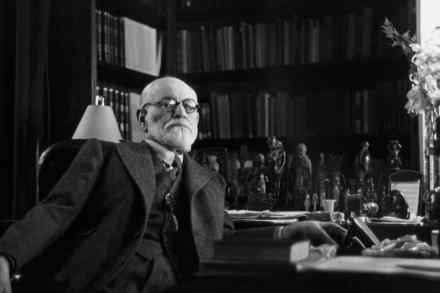
In this week's Book Club podcast I'm joined by Mikkel Borch-Jacobsen, a historian of psychoanalysis whose latest book is Freud's Patients: A Book of Lives. Mikkel has sifted through the archives to discover the real stories anonymised in the case studies on which Sigmund Freud based his theories, and the lives of the patients who submitted to analysis on the great man's original couch. What he discovered is startling. Mikkel tells me how Freud falsified the data to fit his theories, kept incurable cases coming back week after week to keep the fees rolling in -- and how the global industry of Freudian analysis resembles a religious cult more than a science.

Oliver Burkeman: 4,000 Weeks

From our UK edition

40 min listen

My guest in this week’s Book Club podcast is the writer Oliver Burkeman. His new book 4,000 Weeks offers some bracing reflections on time: how much we have of it, how best to use it, and why 'time management' and productivity gurus have the whole thing upside down.

Hermione Lee: Tom Stoppard, A Life

From our UK edition

41 min listen

My guest on this week’s podcast is the biographer and critic Hermione Lee. Her biography of Tom Stoppard is newly out in paperback, and she tells me about the decade of work behind Sir Tom’s overnight success, his unexpected influences, and the challenge to a biographer of getting to the heart of this elusive genius.

Michael Bracewell: Souvenir

From our UK edition

31 min listen

Michael Bracewell’s new book Souvenir is a vivid and poetic evocation of London on the brink of the digital era - the neglected in-between times between 1979 and 1986. He joins me to talk about fine art and post-punk, T S Eliot and William Burroughs - and the dangerous lure of nostalgia.

Michael Pye: Antwerp

From our UK edition

35 min listen

In this week's Book Club podcast I'm talking to Michael Pye about his new book Antwerp: The Glory Years. For most of the 16th century, as he tells me, Antwerp was the most important town in the western world – a city in which, as never before, ideas, information, goods and money circulated free of almost any authority. It was a time of extraordinary excitement – here are Bruegel, Thomas More and William Tyndale – and enormous danger and corruption. Michael tells me how it came about, what lessons it offers our own age... and how it reached an abrupt and bloody end.

Tom Tugendhat’s speech was a masterclass in oratory

From our UK edition

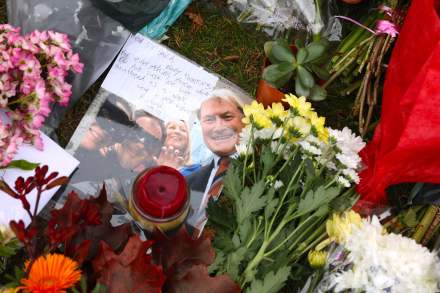
An ounce of emotion, it has been said, is worth a ton of fact. Tom Tugendhat’s remarkable speech to the Commons today was delivered with a current of emotion – pathos, as scholars of oratory call it – that was all the more electric for its restraint. His jaw clenched and trembled; his voice, now and again, seemed on the verge of faltering. As he said in his opening words: 'Like many veterans, this last week has been one that has seen me struggle through anger, and grief, and rage. The feeling of abandonment of not just a country but the sacrifice that my friends made. I’ve been to funerals from Poole to Dunblane. I’ve watched good men go into the earth, taking with them a part of me and a part of all of us.

Iain MacGregor: Checkpoint Charlie

From our UK edition

53 min listen

In this week's Book Club podcast we anticipate the 60th anniversary of the Berlin Wall going up by talking to Iain MacGregor about his book Checkpoint Charlie: The Cold War, The Berlin Wall And The Most Dangerous Place On Earth. He tells me how, and why, the Russians cut a city in half overnight; and why we let them. He describes how events in Tiananmen Square reached Friedrichstrasse. And how, as the Wall came down, a single British soldier did something that the Red Army never forgot.

Mary Ann Sieghart: The Authority Gap

From our UK edition

36 min listen

My guest in this week’s books podcast is Mary Ann Sieghart, whose new book The Authority Gap accumulates data to show that so-called 'mansplaining' isn’t a minor irritation but the manifestation of something that goes all the way through society: women are taken less seriously than men, even by other women. She says it’s not just 'wokery' to point it out, and she makes the case for how she thinks it came to be, what we can do to change it, and why we should take the trouble.

The true cost of the convenience economy

From our UK edition

‘Where’s the car?’ said my wife Alice, interrupting my Zoom meeting on Saturday morning. ‘It’s where you left it,’ I said perhaps more pointedly than was kind. ‘When you drove it home last night. On the drive.’ ‘No it isn’t,’ she said. I left my Zoom meeting, shambled to the front of the house and looked out of the window. She was right. Half-full skip, yes. Wheelie bins, yes. The usual pizza boxes, empty vodka miniatures and crisp packets scattered outside our house by generous pedestrians? Present and correct. But no car. ‘It’s been stolen,’ I said gloomily and, of course, I was right.

Marie Le Conte: Honourable Misfits

From our UK edition

28 min listen

My guest in this week’s Book Club podcast is the political journalist Marie Le Conte, whose new book isHonourable Misfits: A Brief History of Britain's Weirdest, Unluckiest and Most Outrageous MPs.

The misery of watching England beat Denmark on ITV Hub

From our UK edition

The tension in last night’s semi-final against Denmark was unbearable, wasn’t it? The early Danish goal – the thrilling equaliser – that penalty rebound! Every true Englishman had their hearts in their mouths. Even Priti Patel, I fancy, found herself reaching for a toothpick. But to those who were watching the show over the internet, it was a hundred times more tense. It wasn’t just: will we score a goal? It was: if we score a goal will I see it happen? The only means of watching the game, for those with Apple TV or a similar blessing of the modern age, was the ITV App. And by the climax of the game it had taken to crashing every seventy seconds or so.

Adam Roberts & Lisa Duggan on Ayn Rand

From our UK edition

43 min listen

Who is John Galt? This week's Book Club podcast looks at the life, work and personality of Ayn Rand, probably the most influential writer you've never read. A favourite of our new Health Secretary, the author of Atlas Shrugged -- and the most strident advocate of the idea that "greed is good" -- continues to be revered and reviled four decades after her death. What was it that made her work speak so powerfully to so many? Does her philosophical system add up? How was she shaped -- first by the Russian Revolution and then by Hollywood? And where does prog rock come into it? I'm joined by Professor Lisa Duggan -- author of Mean Girl: Ayn Rand and the Culture of Greed, and Adam Roberts, the science fiction writer and professor of English at Royal Holloway, University of London.

Anne Sebba: A Cold War Tragedy

From our UK edition

47 min listen

In this week’s Book Club podcast my guest is Anne Sebba - whose Ethel Rosenberg: A Cold War Tragedy tells the story of the first woman in US history to be executed for a crime other than murder. She tells me how attitudes to this notorious espionage case changed over the years; and why, while not wanting to relitigate the case, she thinks it’s important to get to a sense of who Ethel really was.

Richard Ovenden: Burning The Books

From our UK edition

50 min listen

My guest on this week's Book Club podcast is the chief librarian of Oxford's Bodleian Library, Richard Ovenden. In Burning The Books: A History of Knowledge Under Attack, shortlisted for the Wolfson History Prize, he explores the long history and vital importance of libraries and archives — and the equally long history of their destruction in acts of war, vandalism or censorship and their loss through attrition and neglect. He tells me about the librarian heroes of Poland and Lithuania, the accidental survival of Magna Carta and what really happened to the Great Library of Alexandria.

Charles Spencer: The White Ship

From our UK edition

35 min listen

My guest in this week's Book Club podcast is Charles Spencer, whose book The White Ship: Conquest, Anarchy and the Wrecking of Henry I's Dream is new out in paperback. He tells me why his story is like "Game of Thrones meets Titanic", about the piety and the startling cruelty of medieval kings, the tantalising suggestion that the wreck of the White Ship may have been found off Barfleur -- and how this 12th-century maritime disaster changed the course of English history.