Ruth Scurr

Spectator Books of the Year: Svetlana Alexievich’s ‘Second-Hand Time’

From our UK edition

‘Memory is a creature that is alive… nobody has simple relations with memory,’ Svetlana Alexievich told the Cambridge literary festival earlier this year. She was speaking through a translator about Second-Hand Time, first published in English in 2016 (Fitzcarraldo Editions, £14.99) and her earlier books including Chernobyl Prayer and War’s Unwomanly Face. Alexievich claims that she does not conduct interviews, only conversations, and that the stories she collects — about the collapse of communism, the suffering of those with radiation poisoning, and the experiences of women during the second world war — involve giving something of herself. Her books are repositories for voices that would otherwise be lost.

When the music changes

From our UK edition

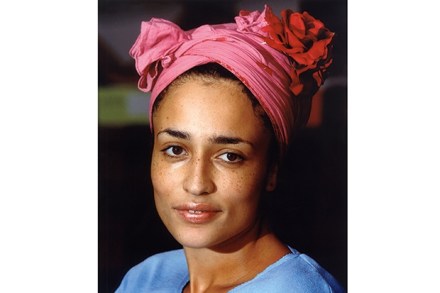
In 2011 the New York Times’s chief dance critic, Alastair Macaulay, asked: How should we react today to ‘Bojangles of Harlem’, the extended solo in the 1936 film Swing Time in which Fred Astaire, then at the height of his fame, wears blackface to evoke the African-American dancer Bill Robinson? No pat answer occurs. Zadie Smith’s fifth novel is a brilliant address to that question. In the prologue the unnamed narrator, who has recently lost her job as assistant to a Madonna-like star, goes to the Royal Festival Hall to hear an Australian director ‘in conversation’ and sees a clip from Swing Time — ‘a film I know very well, I watched it over and over as a child’.

Looking for treasure island

From our UK edition

It is not easy to avoid clichés when writing about J.M.G. Le Clézio. Born in Nice in 1940, the recipient of the 2008 Nobel Prize for Literature is known in the Anglophone world as an ex-experimental novelist. His early work, exploring language and insanity, was praised by Michel Foucault. But since the 1970s his style has become more mainstream and his subjects — childhood, travel and landscape — more lyrical. Reviewers quibble over the quality of translations, especially when there are two of the same novel in relatively quick succession. Le chercheur d’or (The Prospector) (1985), was translated into English by Carol Marks in 1993, and has now been retranslated by C. Dickson.

Fighting for progress

From our UK edition

It is very difficult to uncover accurate connections between ideas and events in history. A.C. Grayling is a philosopher and polemicist with a particular story to tell about the rise of freedom in the 17th century. In the introduction to his new book he writes: I hope the sketches offered here will illustrate the claim that the 17th century is truly the moment that history changed course so profoundly that everything before it is another world, and that it and the times since are our world. He replaces the conventional division of history into everything that happened before the birth of Christ and everything that has happened afterwards, with a new bifurcation: everything that happened when humans thought the world was the centre of the universe, and everything that has happened since.

Spectator books of the year: Ruth Scurr on a terrific year for women writers

From our UK edition

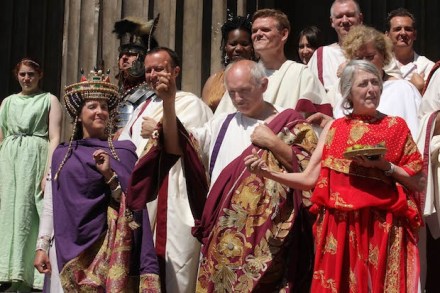
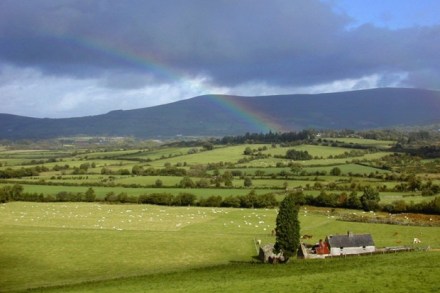
2015 has been a terrific year for women writers. I have especially enjoyed Mary Beard’s sceptical and subversive history of Rome, SPQR (Profile, £25); Alexandra Harris’s literary history of the English weather, Weatherland: Writers and Artists Under English Skies (Thames & Hudson, £24.95); and Antonia Fraser’s witty memoir of growing up, My History (Weidenfeld, £9.99). I loved Anne Enright’s darkly glinting novel of family life, The Green Road (Cape, £16.99), but my female novelist of the year is Elena Ferrante.

Jonathan Coe’s raucous social satire smoulders with anger behind the fun

From our UK edition

When Rachel, one of the unreliable narrators of Number 11, wants to ‘go back to the very beginning’, she starts with the death of Dr David Kelly, the former United Nations weapons inspector, discovered dead in woodland on Harrowdown Hill in Oxfordshire on 18 July 2003, shortly after casting doubt on the government dossier that claimed Saddam Hussein possessed weapons of mass destruction. Rachel was ten at the time, staying with her grandparents and school friend Alison in the nearby village of Beverley. For the next ten years — during which she gets into Oxford from a state school, graduates with a 2:1 in English, and becomes a private tutor for the offspring of the superrich — Rachel thinks about Kelly’s death often.

Guardians of an ideal

From our UK edition

Sudhir Hazareesingh’s bold new book is built on the assumption that ‘it is possible to make meaningful generalisations about the shared intellectual habits of a people as diverse and fragmented as the French’. France, as General de Gaulle pointed out, has such a fetish for singularity that it produces 246 varieties of cheese. Can France be any more a nation of thinkers than England is of shopkeepers? Hazareesingh, an Oxford don, brings specific strengths to this daunting task.

All the pomp of family life

From our UK edition

The Green Road is a novel in two parts about leaving and returning home. A big house called Ardeevin, walking distance from an unnamed town on the coastline of County Clare, is home to the Madigan family. At the centre of the family is Rosaleen Madigan, the matriarch: ‘A woman who did nothing and expected everything. She sat in this house, year after year, and she expected.’ The novel begins with the thwarting of one of Rosaleen’s expectations. She has taken to her bed in 1980 after Dan, the eldest of her four children, has announced that he is going to become a priest. Each of the first four chapters focuses on a Madigan sibling — Hanna, Dan, Constance, Emmet — and maps the escape routes they take out of rural Ireland in adult life.

When the money ran out, so did the idealism in post-Revolutionary France

From our UK edition

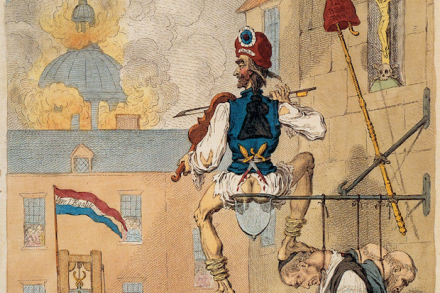
For his holiday reading in the summer of 1835, the literary and political journalist John Wilson Croker packed the printed lists of those condemned to death during the Reign of Terror in revolutionary France. The several thousand guillotined in Paris after the establishment of the Revolutionary Tribunal (10 March 1793) and before the fall of Maximilien Robespierre (27 July 1794), were accused of crimes ranging from hoarding provisions or conspiring against the republic to sawing down a tree of liberty or declaring ‘A fig for the nation!’ In horrified disbelief Croker asked the question that has never gone away: how could this have happened? How could the progressive revolutionary optimism of 1789 have turned in just five years to summary arrests and executions?

Haunted by the Holocaust: Three novellas by Patrick Modiano

From our UK edition

Earlier this year Patrick Modiano won the Nobel Prize in Literature ‘for the art of memory with which he has evoked the most ungraspable human destinies and uncovered the life-world of the Occupation’. A prolific and celebrated novelist in France, Modiano is not well known in Britain or America, where only a third of his works have been translated and many are out of print. Yale University Press has a coup in these circumstances with Mark Polizzotti’s translation of three of Modiano’s novellas, commissioned before the Nobel announcement. The novellas originally appeared over five years: Remise de peine (Suspended Sentences) 1988; Fleurs de ruine (Flowers of Ruin) 1991; and Chien de printemps (Afterimage) 1993.