Ross Clark

Ross Clark

Ross Clark is a leader writer and columnist who has written for The Spectator for three decades. He writes on Substack, at Ross on Why?

Did the Lib Dems sell data to the Remain campaign?

From our UK edition

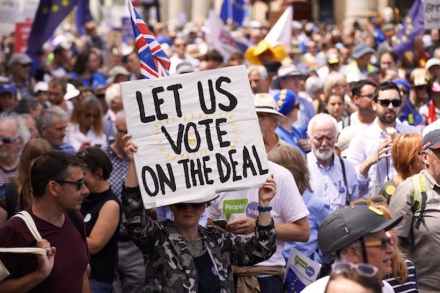
The rearguard Remain lobby, which has far from given up on its ambition to reverse the Brexit vote, has put much store in the alleged electoral malpractice of Aaron Banks and his Leave.EU campaign, as well as the actions of the now-defunct Cambridge Analytica. Along the way it has found the Electoral Commission and the Information Commissioner’s Office (ICO) eager to investigate. There has, however, been a drawback to this strategy: it has invited examination of the Remain campaign’s own spending and use of personal data. Sure enough, a report published by the ICO today offers some possible dynamite.

The good news about the developing world you probably haven’t heard

From our UK edition

The world’s poor are, as we know, suffering under the yoke of capitalism, getting ever poorer as we rich grab an ever-greater share of the world’s resources and pollute the environment for everyone else. We know this because the Left keeps telling us so. But amidst the unrelenting gloom of an ever-more unequal world, one might think there would be a little room for reporting the odd piece of positive news. Yet it is not easy to find.

Have the Labour moderates forgotten how elections are won?

From our UK edition

Labour, as we know, is a party which has fallen into the hands of a dreamy left-wing idealist who is out of touch with the public, and who has managed to push out the party's down-to-Earth moderates - people who, like Tony Blair, understand that if Labour wants to win power it must appeal to broad swathes of Middle England. That, at least, is how it seemed until this week. But it all looks a little different after 20 backbench Labour MPs defied the whips to vote against the Chancellor’s decision to raise income tax thresholds. Jeremy Corbyn had instructed his MPs to abstain. It is astonishing to read the names of the rebels: Yvette Cooper, Liz Kendall, Lucy Powell, Jess Phillips, Margaret Hodge.

The simple solution to the V&A’s Brexit fears

From our UK edition

Now it is London museums bleating about Brexit. A memo from the V&A released under Freedom of Information laws, warns darkly: 'we will struggle to keep the museum open to the public in the immediate short term'. A no deal Brexit, it is claimed, could affect visitor numbers from the EU, diminish donations and also affect the ability of the museum to stage travelling exhibitions. As with so many Brexit scare stories, it has the whiff of hysteria. But if the V&A and other museums do ever feel the pinch they could, of course, resort to an action they should have taken years ago: start charging an entry fee. It is astonishing that our museums and galleries are prepared to forgo a source of income that virtually all other museums and galleries around the world take for granted.

Hammond may regret breaking his promise to eliminate the deficit

From our UK edition

As Nick Clegg, George HW Bush and many other politicians have proved to their cost, manifesto promises matter. How damaging, then, will Philip Hammond’s brazen abandonment of the 2017 Conservative pledge be, whereby financial discipline was supposed to 'guide us to a balanced budget by the middle of next decade'? Now, Hammond seems to be trying to tell us that running a public deficit doesn’t really matter. While George Osborne delayed and delayed the date he promised to bring the public finances back into balance, Hammond has apparently abandoned any idea of ever doing so. There is now no target for eliminating the deficit at all.

Why James Dyson isn’t a hypocrite for manufacturing in Singapore

From our UK edition

Remainers’ first response to the news that James Dyson will build his new electric car in Singapore was to accuse him of hypocrisy. Here is a man who expects others to be patriotic, goes the argument, and yet when it comes to his own interests he dumps Britain and takes his business elsewhere. But those who try to make such accusations miss the point entirely. James Dyson has never argued for a protectionist, Britain-first policy. On the contrary, he has always argued for free and open markets. He just happens to think that those markets should extend beyond the borders of Europe. Singapore has won Dyson’s business because it offers a lower-cost location which will enable the company to compete better in international markets.

Is William Hague to blame for the Tories’ troubles?

From our UK edition

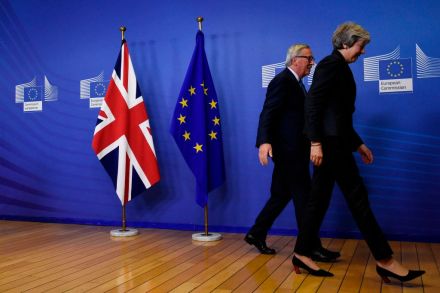
If Britain crashes out of the EU with no deal and the Conservatives plunge to a defeat against Labour in a subsequent general election, Theresa May, not without reason, will take the blame. But the blame will not be all hers. William Hague will deserve a fair slice of it as well.   It has become quite clear that May is not going to achieve a decent deal. The task is beyond her. She does not have the imagination to know where to go next, and she has already painted herself into a corner. She staked her entire authority on her Chequers plan – a solution which, it soon became clear, had virtually no support other than that of May herself.

Philip Hammond must not use rising wages as an excuse for hiking taxes

From our UK edition

In two weeks’ time, Philip Hammond is expected to declare an ‘end to austerity’. Today’s figures on wage growth are a reminder of why he needs to tread extremely carefully on this. What he will mean is that austerity is over for the public finances – he is confident enough to start increasing government spending again. Many individuals and families, on the other hand, remain deep in personal austerity. There is very little room for tax rises without making people feel poorer. News that wages are growing at their highest rate – 3.1 per cent – since the economic crash of 2008/09 is, on the face of it, a cause for celebration.

The return of fracking is a victory for common sense

From our UK edition

Now that fracking has resumed in Lancashire after a seven year hiatus, the green lobby which sought to frustrate it and delay it at every turn can reflect on what they have achieved: keeping the UK's carbon emissions rather higher than they would have been, had our native fracking industry been allowed to develop more quickly. In the short term at least, the alternative to burning UK-produced shale gas is not, as the green lobby says, using more energy from wind and solar farms. We do not currently have anything close to the electricity storage capacity to cope with a supply which comes exclusively from intermittent sources, and is it not clear at present how this will be resolved. For now, the real alternative to shale gas is either coal or imported gas.

Shrinking pizzas and pies isn’t the way to tackle obesity

From our UK edition

From 30 March next year, of course, we will no longer be subject to all those silly EU laws on bent bananas (which was genuine, not a myth), toasters, balloons and all the rest. Instead we will be able to concentrate on passing our own good old British silly laws. Even the European Commission never came up with the idea of limiting pies to 695 calories. So bravo, then, to Public Health England for having the imagination to out-Brussels Brussels. Today, the quango unveils its latest strategy in fighting obesity: regulating portion sizes. As well as regulating pies, the proposed rules include a maximum calorie count for pizzas of 928 calories. I struggle often to figure out what goes on inside a regulator’s head. How do you come up with such a precise figure. Why not 927 calories?

The gay cake row verdict is a victory for common sense – finally

From our UK edition

I imagine that Daniel and Amy McArthur, owners of Ashers bakery in Northern Ireland, may well want to celebrate their victory in the Supreme Court with a spot of baking today. If so, I suggest this slogan should be written in icing: the equality industry stinks. It has taken Ashers four years and a sequence of court hearings, costing them £200,000 in legal fees, to establish what should have been obvious from the beginning: that no, they didn’t discriminate against a gay couple when they refused to bake a cake bearing the words ‘Support Gay Marriage’ in 2014. Why on Earth did it take so long, and why did the Belfast County Court and Court of Appeal come up with perverse rulings along the way that Ashers bakery had discriminated against the couple?

Good news: we now have until 2030 to save the earth

From our UK edition

Phew! The dangers of global warming are receding. Admittedly that is not how most news sources are reporting the publication of the latest IPCC report this morning. But it is the logical conclusion of reading coverage of the issue over the past decade. According to today’s IPCC report we now have 12 years to avert climate catastrophe. That might not sound long, but it means we are a good deal further away from doom that we were in 2007, when the WWF said we had five years to save the world. The doomsday clock hadn’t moved in 2011 when the International Energy Agency warned us that we had five years to start slashing carbon emissions or lose the chance forever.

Unilever’s U-turn is another blow to Project Fear

From our UK edition

How funny. Remember how, when Unilever announced back in March that it had decided to move its headquarters from London to Rotterdam, it was all to do with Brexit? According to the Guardian’s subheadline on 14 March: 'Brexit and favourable business conditions in Netherlands said to be behind decision'. The following day an FT leader asserted: 'Unilever’s protestations that [the move] has nothing to do with Brexit do not convince'. It went on to add: 'The decision is clearly coloured by the approach Theresa May has taken on Brexit, and by the way she has handled relations with business.

Why is the BBC blaming falling car sales on Brexit?

From our UK edition

Congratulations once again to the BBC’s anti-Brexit propaganda unit, for its news website headline this morning: “Car sales plunge as Nissan warns on Brexit”. It takes talent to pin something on Brexit which even the Guardian admits is caused by something quite different – indeed, something which might more naturally be seen as constituting a case against the EU.     It is true that there was a sharp fall in car sales in September – which at 338,834 were 20.5 per cent lower than the same month in 2017.

What the rise of the middle class reveals about the global poverty myth

From our UK edition

According to a Vienna-based think tank, the World Data Lab, a remarkable milestone was reached this week – for the first time, half the world’s population can be classified as middle class. Obviously, there is wide room for interpretation as to what constitutes membership of the middle classes – the World Data Lab defines it as the ability to afford a washing machine and to be able to go on holiday. But it is nevertheless an indicator which deserves far more attention than it gets paid. After all, it is not so very long ago that economists would have described the middle classes as constituting a small proportion of the population even in the developed world.

Why didn’t the Tories back down over civil partnerships earlier?

From our UK edition

Much as I deplore the integration of the European Convention on Human Rights into domestic law there are some battles which really aren’t worth fighting. Today, Theresa May announced that civil partnerships are to be made available to heterosexual couples for the first time. This follows a ruling by the Supreme Court in June that the current arrangements – whereby gay couples can enter into a civil partnership but not heterosexual ones – are in conflict with the convention. Why on Earth did the Government resist this change in the first place when it was so plainly obvious that it was discriminatory? David Cameron made a huge fuss about enabling gay marriage – presenting it as if it were the greatest breakthrough in individual freedom since the Magna Carta.

Why Trump’s new trade deal shouldn’t be a surprise

From our UK edition

The news that the US, Canada and Mexico have agreed a new trade deal, USMCA, may have caused a little surprise this morning among Trump critics. Isn’t the US President supposed to be leading the world into a new dark age of protectionism, sparking a 1930s-style depression as he puts the interests of a few blue collar workers in rustbelt industries above the health of the US and global economies as a whole? Yet for anyone who has been following Trump’s methodology the news shouldn’t really have caught them unawares. Trump, it is true, was elected thanks in part to promises to protect US workers from unfair foreign competition.

The problem with the Brexit migration report

From our UK edition

Farming out the development of post-Brexit UK migration policy to a professor from the LSE was a political masterstroke by the former Home Secretary Amber Rudd. How much harder it will be for Remainers to condemn the government’s position on migration as some kind of racist, xenophobic exercise knowing that it has been formed in one of the liberal establishment’s favourite seats of learning. Yet there is nothing in Sir Alan Manning’s report which could not have come from the pen of a ‘populist’ politician trying to satisfy public grievance on migration.

Naz Shah needs to make up her mind about abortion

From our UK edition

There are a couple of things I just don’t get. Maybe someone of liberal mind can explain them. Didn’t equalities minister Penny Mordaunt back in July throw her weight behind Theresa May’s promise to make it much easier to reassign your own gender? Of the current process (which requires you, for example, to provide medical evidence before being allowed to redefine yourself as a woman) she said: 'It is overly bureaucratic and it's highly medicalised with people making decisions about you who have never met you.' In other words, it’s your life and your decision as to which gender you wish to identify with – the state should keep its nose out and leave you alone.

Why should we listen to the IMF’s Brexit warning?

From our UK edition

Why are we so addicted to economic forecasts? We'll know they are going to turn out to be wrong because they always do. And yet still we can’t seem to stop ourselves hanging on their every word. This morning it is the IMF’s turn, once more, to have its forecasts for the UK economy treated with undue seriousness. The Guardian reports that the IMF ‘backs Theresa May’s warnings over no-deal Brexit’ – by saying a ‘no deal’ scenario would lead to ‘substantial costs’ for the UK. But even May’s Chequers deal will condemn Britain to economic mediocrity, according to the IMF. The FT reports that, in the case of a smooth Brexit, the IMF sees Britain struggling to exceed growth of 1.5 per cent in the years ahead.