Ross Clark

Ross Clark

Ross Clark is a leader writer and columnist who has written for The Spectator for three decades. He writes on Substack, at Ross on Why?

The reason Corbyn is afraid of a general election

From our UK edition

There is at least one person in Britain who would beat Theresa May in a contest to see how far they could kick a proverbial can down the road. Fortunately for her, it is the leader of the opposition. Why won’t he do it? Why won’t he table that motion of no confidence in Her Majesty’s government while it is bleeding by the roadside? Given a chance to deliver the coup de grace, he chooses instead to table a personal motion of no confidence in Theresa May which he knows the government can put off through lack of time, and which he knows would have no great consequences if she did lose it. No government in the past 40 years has looked quite so miserable, quite so open to being toppled by Parliament, and yet still he won’t do it.

The simple solution to Theresa May’s Brexit dilemma

From our UK edition

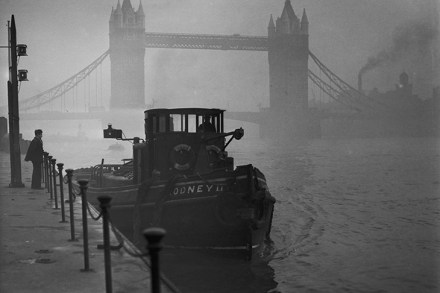
For once, I think Jean Claude-Juncker might have a point. “Nebulous” was a pretty good description of Theresa May’s mission to Brussels. What, exactly, was she expecting from EU leaders that was also going to please her own backbenchers? She must have known the EU would stonewall her over the backstop. She seemed merely to be asking for ‘reassurances’ rather than a legal guarantee that Britain could not be trapped in the backstop – in spite of knowing full well that reassurances are not going to be enough to win over her Commons critics. To adapt Winston Churchill, May’s strategy has become a nebula trapped inside a smog, hidden within a miasma.  Yet there is such as easy way out of the mess.

Is business really that bothered by the prospect of May’s departure?

From our UK edition

The world of business is, apparently, appalled by the actions of the 48 or more Conservative MPs who have triggered a vote of no confidence in Theresa May as Conservative leader. According to the Institute of Directors, its members are ‘tearing their hair out’ over today’s news. The message seems to be that a change of Prime Minister is an unwanted distraction when the country is already in a state of crisis. Yet markets seem to disagree. The FTSE this morning is up by more than one per cent. However negatively bosses might see the potential end of Theresa May as Prime Minister, investors in their companies seem to be taking a rather more positive view. It is not the first time that a divergence has emerged between business leaders and investors over Brexit.

May’s delay has made a leadership challenge more likely

From our UK edition

How painfully clear it is what happens next. Theresa May returns from her European travels with some kind of non legally-binding piece of paper saying that the EU would rather not enact the backstop if it can possibly avoid it, and, some time in January we finally have the crushing Commons defeat that we should have had today. Unless, that is, Conservative MPs finally overcome their chronic writers’ block and get their 48 letters to Graham Brady. It has become a received wisdom that May has somehow bought herself time by delaying the vote on the withdrawal bill – that she has stayed the executioner’s axe. Yet the opposite is true: by delaying the vote she has created the space for a leadership election.

The ECJ Brexit ruling hands power back to Britain

From our UK edition

The “People’s Vote” is celebrating the judgement by the European Court of Justice that Britain could unilaterally revoke Article 50 at any point up until 29 March next year and remain in the EU under existing terms. It destroys the argument that Michael Gove made last weekend: that reversing our decision to stay in the EU would lead to vastly inferior terms, the loss of Britain’s rebate and so on. And while the government still describes the judgement as hypothetical, it will also heap huge pressure on Theresa May if she loses tomorrow’s seemingly doomed vote on her withdrawal bill. Like it or not, she will have to fend off a reinvigorated campaign for a second referendum. But hang on a minute, is the ruling really only good news for Remainers?

The ‘People’s Vote’ campaign’s latest struggle with the truth

From our UK edition

Given how Remainers have lost no opportunity to accuse the official Leave campaign of telling porkies about how much money we send to the EU – £350 million per week according to Vote Leave but closer to a net £250 million once the UK rebate is taken into account – one might imagine that the 'People’s Vote' campaign would take extra special care over statements relating to financial contributions to the EU. But it seems not. It has been caught out doctoring a report written by an outside expert, leading to inaccurate claims about how EFTA members’ contributions to the EU are spent. Yesterday, 'People’s Vote' published a report entitled ‘Why Norway Plus Won’t Work’, with a foreword by David Miliband and Jo Johnson.

Are we heading for a recession? If so, don’t just blame Brexit

From our UK edition

So will those Remainers seemingly hoping for a Brexit-related recession get what they want after all? This morning Purchasing Managers’ Index (PMI) for the service sector certainly points in that direction. The index, which is really just a questionnaire to businesses but which can give advance warning of swings in economic growth, fell to 50.4 in November, down from 52.2 in October and 54 in September. Anything above 50 denotes growth – so it doesn’t indicate we are yet in recession – but it suggests a steep plunge in activity and confidence which could well take us there. It would be foolish to deny any link with the Brexit crisis.

The Article 50 ruling is good news for Remainers – and hard Brexiteers

From our UK edition

How Remainers are feasting on the ruling (although not final judgement) from the European Court of Justice suggesting that Britain could unilaterally revoke Article 50 at any point up until 29 March next year and remain in the EU under existing terms. If the final judgement confirms the ruling it will destroy the argument that Michael Gove made at the weekend – that reversing our decision to stay in the EU would lead to vastly inferior terms, the loss of Britain’s rebate and so on. It will also heap huge pressure on Theresa May if she loses next week’s seemingly doomed vote on her withdrawal bill. While Downing Street has described the ECJ ruling as hypothetical, she will have to fend off a reinvigorated campaign for a second referendum.

The real railway rip-off isn’t the soaring cost of season tickets

From our UK edition

I don’t know how the Chief Executive of the Competition and Markets Authority (CMA), Dr Andrea Coscelli, gets to work, but I guess it isn’t by train. In fact, I could quite imagine he had never heard of the existence of railways at all. How else to explain the complete lack of interest of his regulatory body in train operating companies and how they ruthlessly exploit their monopolies in order to jack up fares? The CMA is quick to descend on industries where there is at least some choice – its latest target being the funeral business – yet when it comes to an industry where in most cases there is no choice at all it has shown little interest in the subject other than a report in 2016 suggesting limited extra competition on intercity routes.

The Corbyn effect

From our UK edition

What’s wrong with UK financial markets? The global economy is recovering, but British stocks and shares are not keeping pace. The pound has failed to recover from the slide it experienced in the wake of the EU referendum. This is frequently blamed on investors being spooked by Brexit, even more so by the possibility of a no deal. But has anyone actually asked the markets what is spooking them? Look closer and it becomes clear that while Brexit is a problem for some investors, most are much more worried about a far bigger risk, even if they rarely speak about it in public. It is the possibility of a Corbyn government. Since last year’s election, when the Labour leader came within a stone’s throw of No. 10, it has been impossible to write off the idea of a Corbyn victory.

Philip Hammond has exposed the problem with the Treasury’s Brexit forecast

From our UK edition

It is the decimal point which really gets me. If we have a ‘no deal’ Brexit, according to Treasury forecasters, the economy will be 7.6 per cent lower in 15 years’ time than it would be if we didn’t leave the EU. What, not 7.7 per cent? It is an age-old trick: express your guesswork with a decimal point or two on the end and hope that it sounds a bit more convincing, as if a bit more science has gone into it. But sorry, the Treasury should not be fooling anyone this time.

How Macron became the modern day Marie Antoinette

From our UK edition

Imagine if David Cameron, at the height of the riots in August 2011, had abandoned London to embark on a speaking tour of foreign capitals to lecture the rest of the world on how European civilisation could help save the rest of the world from ‘chaos’. You now have an idea of what it must be like to French this week. Over the past week, protests against fuel taxes have erupted into violence across France, blocking autoroutes and leading to at least two deaths and 600 injuries. But where was the French president to be seen during all of this?

The Brexit political declaration confirms we are heading to a blind Brexit

From our UK edition

With the leak of a 26-page political declaration this morning – an enhanced version of last week’s briefer document – we now know the shape of the future EU-UK relationship which May and the EU negotiators want to achieve in the long run – if, and this could turn out to be a big if – the UK ever manages to escape from the purgatory of the backstop. It is not a bad document in itself. Neither does it bear much of a resemblance to Chequers. The big difference is that it envisages a future trade deal which encompasses services as well as goods – Chequers envisaged Britain pretty well staying in the single market for goods while diverging on services.

Extinction Rebellion is a wannabe Marxist revolution in disguise

From our UK edition

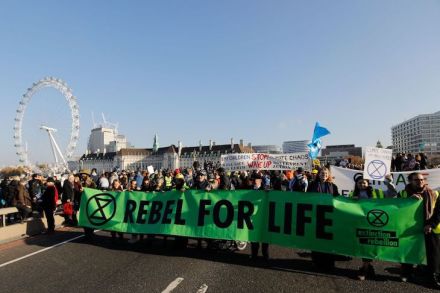
Anyone trying to get about London over the past few days may have come across the activities of a group called Extinction Rebellion, which blocked Westminster and several other bridges on Saturday, blocked Lambeth Bridge today and plans to repeat the exercise later this week. Its tactics are simple – it gathers raggle-headed eco warriors, together with some terribly nice middle class students, buses them up to London and then disgorges them to sit in the middle of the road, where they then get arrested for blocking the traffic. But no matter the illegal tactics. The world is in the middle of ecological crisis, and so, of course, the normal rules of political protest do not apply.

Why do we care what the CBI thinks about May’s Brexit deal?

From our UK edition

Big UK business is often guilty of short-termism and the CBI's response to Theresa May’s draft withdrawal proposal is no exception. Large companies are backing May’s appalling deal with the EU because they are preoccupied with ensuring that next year’s results are no worse than the guidance they have given markets. The opportunities which could arise from a proper Brexit, in which Britain is allowed to do its own trade deals, set its own regulations and lower taxes and other barriers in order to suck in overseas investment, are too far over their horizon for them to see. How often have you heard the words drip from well-fed FTSE 100 executives: 'what business needs most is stability'?

Only a ‘people’s vote’ can save the Tories now

From our UK edition

Brexit is, as we know, the most important issue facing the government and the country. Except it isn’t. For the Conservatives there is an even more pressing matter: how to prevent a socialist government. Yesterday, the pound plunged after ministerial resignations following Theresa May’s deal with EU negotiators. But were investors spooked by the thought of a ‘no deal’ Brexit or by the possibility of a government collapse, general election and Corbyn in Number 10? Who knows? One thing is for certain: the very worst outcome for markets would be a combination of the two, a Red Brexit. At least the EU would temper Corbyn’s ambition to turn Britain into Venezuela, through its rules on state funding of industry and so on.

Donald Trump isn’t wrong about the California wildfires

From our UK edition

Another day, another case of Donald Trump ignorantly tweeting from the hip. Or maybe not quite so much. On Saturday, the President blamed the deadly forest fires in California, which have killed over 40 people in the town of Paradise near San Francisco and devastated celebrity-inhabited areas outside Los Angeles, on poor forest management. It drew a furious response from, among others, singer-songwriter Neil Young whose home was reduced to a smouldering ruin and who posted on his website: 'California is vulnerable – not because of poor forest management as DT (our so-called president) would have us think. We are vulnerable because of climate change; the extreme weather events and our extended drought is part of it.

The wildmen of bitcoin: that’s right, not all money men wear suits

From our UK edition

Bitcoin, we’re told endlessly, is both the currency of choice for tax-dodging criminals and a vehicle to instant wealth for incautious dreamers (who in reality are destined to lose their money). But that’s not how many of the entrepreneurs who have latched onto it see things. There’s a kind of utopian ideology emerging from crypto-currencies. If the archetypal internet pioneer was a ponytailed nerd in a T-shirt who believed in the liberalisation of information and free fruit juice for all, pioneers of bitcoin are more likely to be found in surplus army gear, coveting some obscure corner of the globe as their own little micro-state where like-minded people can escape the oppression of the traditional nation-state.

The conundrum of Britain’s continued growth

From our UK edition

The conundrum of economic growth continues. The withdrawal process from the EU is, even by the admission of the most ardent Brexiteers, going pretty badly. We have a rearguard Remain lobby trying to talk down the economy at every opportunity – something which you might think ought to be undermining confidence. And yet still there is no sign of the Brexit-induced recession which the Treasury told us a month before the 2016 referendum would be inevitable within two years of a Leave vote. The GDP figures for the third quarter released by the Office of National Statistics (ONS) this morning, show that the economy grew by 0.6 per cent in the third quarter. It is not dynamite, especially considering that growth was a more modest 0.1 per cent in the first quarter and 0.

Why shouldn’t I be able to identify as a younger man?

From our UK edition

Just when you thought identity politics couldn’t get any more confusing, along comes along Emile Ratelband. Mr Ratelband, who is described in the Guardian as a ‘motivational speaker’ and ‘positivity guru’, has appeared in a court in Arnhem in the Netherlands trying to persuade the judge to allow him to change his official birth date – from 11 March 1949 to 11 March 1969. He complains that when he enters his birth date on Tinder he doesn’t get any replies. He says that his age has also limited his options in getting a mortgage and car insurance. He identifies as a man in his 40s – a view, he asserts, which is shared by his doctor, who tells him that he has a physical age of 45. So why can he not officially be one?