Will pension tax relief be abolished?
From our UK edition
Ross Clark is a leader writer and columnist who has written for The Spectator for three decades. His books include Not Zero, The Road to Southend Pier, and Far From EUtopia: Why Europe is failing and Britain could do better
From our UK edition
From our UK edition
I’ve never worked out why anyone would want to buy an outfit over the internet without first seeing it in the flesh and trying it on. I know my wife does it all the time — although the constant piles of parcels by the door, full of stuff waiting to be sent back whence it
From our UK edition
Assessing the number of Covid deaths has been notoriously difficult throughout the pandemic. Over the summer, English figures were revised down by more than 5,000 after researchers at Oxford University discovered a flaw in the way Public Health England was registering deaths. Another route for assessing the mortality of Covid is to look at excess deaths — while
From our UK edition
Just what is the essential difference between our two main political parties? Certainly not their respective attitudes towards fiscal prudence; the thing which used to provide clear blue water between the two. Now we have two parties which don’t give a damn about public debt, who think that they can spend willy-nilly and that something,
From our UK edition
What will the new map of tiers look like when England exits lockdown next week? It certainly won’t be the same system we left behind when we went into lockdown on 5 November. For one thing, we have been told that restrictions are tightening and that more areas will be shunted into Tier 3. The epicentres
From our UK edition
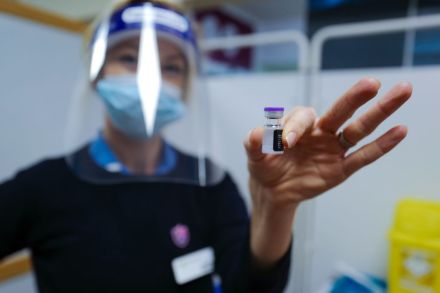
We have become used to Mondays bringing good news on the vaccine front. But the publication of interim results from the Astra Zeneca/Oxford University vaccine – AZD1222 – will certainly please the UK government. Not merely because this is the home-grown option and we have already ordered 100m shots, but because, shot for shot, it
From our UK edition
Remember ‘immunity passports’? Back in April they were floated as a possible means by which we could all get back to a normal life. We could be tested for antibodies to SARS-CoV-2 – the virus which causes Covid-19 – and, if we tested positive, we could be allowed to go about our business. The presumption
A new paper looks at the possibility that SARS-CoV-2 was artificially created
From our UK edition
There is nothing wrong with the general direction of policy contained within the government’s ten point plan to cut carbon emissions, announced today. Who doesn’t want clean energy and more energy-efficient homes and vehicles? The problem is the perverse target which lies at its heart: the legally-binding demand, laid down in the Climate Change Act,
From our UK edition
Now that we seem to have two Covid-19 vaccines that work, do we really need Operation Moonshot, the government’s programme to test 10 million people a day by early next year? It’s a poignant question, not least because of the extraordinary sums which appear to have been committed to it: briefing documents leaked to the
From our UK edition
Another week, another set of preliminary results from a Covid-19 vaccine trial. This time it is the Moderna vaccine candidate, mRNA-1273. And, to judge by the figures put out by the company this morning, it has outdone the Pfizer vaccine in its efficacy. Out of the 30,000 people involved in the phase three trial (half
From our UK edition
If the first victim of war is truth, then the first victim of Covid-19 was a sense of proportion. The pandemic continues to dominate the news every waking hour, as well as continuing to restrict our lives in ways not seen since wartime – in some ways even more severely. Yet how many people even
From our UK edition
How much has this week’s ructions in Downing Street been influenced by the Prime Minister’s decision, two weeks ago, to call for a new 28 day lockdown – and the subsequent questions asked of the data to justify it? On the one side are the 50 or so Conservative MPs who have joined the Covid
From our UK edition
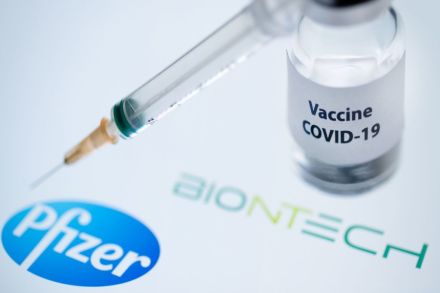
So is this the big turning point? Markets certainly seem to think so. No sooner had news broken that the vaccine being developed by Pfizer and German firm BioNTech is 90 per cent effective, the FTSE surged by 5 per cent. Given that the US Food and Drug Administration (FDA) has suggested that any vaccine
From our UK edition
On Monday morning Wales emerges from its 17 day ‘circuit-breaker’. Did it work? Not according to the rate of new infections. During the first 12 days – when Wales was in lockdown but England wasn’t – the epidemic seems to have grown far more quickly in Wales than it did in England. When Wales went
From our UK edition
The weekly ONS infection survey suggests that the rise in prevalence of Covid-19 in England has levelled off. Not only that, it suggests that the rate of new infections has actually fallen. In the week to 31 October, the ONS estimates that 618,700 people had Covid-19 — about 1 in 90 of the population. That
From our UK edition
The argument is now the wrong way around, Chris Whitty told MPs on Wednesday, among those critics of the first lockdown who argue that it resulted in fewer people accessing medical treatment, fewer diagnoses and more deaths from non-Covid causes. If hospitals are stuffed with Covid patients, the chief medical officer asserted, then they do not have the capacity
From our UK edition
If it wasn’t miserable enough being told that I have to spend the next month at home, now I have ‘Pete’ from Octopus Energy emailing me and asking if I would mind terribly turning off a few appliances between 4.30pm and 6.30pm. If fact, he says, if I can halve my energy usage during those
From our UK edition
The government’s £12 billion test and trace system has been described by its scientific advisory committee Sage as making a ‘marginal’ difference to the transmission of Covid-19. This is not least because test results are taking a long time to arrive — of tests conducted at testing centres in the week to 21 October, only 47
From our UK edition
The graph presented by chief scientific officer Sir Patrick Vallance during Saturday’s press briefing suggested that, in the absence of a new lockdown, deaths from Covid-19 could reach 4,000 a day by Christmas. To put this scenario in context, deaths in the first wave back in April peaked at just over 1,000 a day. Back