Ross Clark

Ross Clark

Ross Clark is a leader writer and columnist who has written for The Spectator for three decades. He writes on Substack, at Ross on Why?

Did Britain need to rejoin Erasmus?

From our UK edition

Is the government engaged in a campaign by stealth to return the UK to membership of the EU? It couldn’t make a better job of it if it was trying. This morning comes the news that Britain is to rejoin the Erasmus scheme, which offers students the opportunity to engage in an exchange with other European universities. The scheme was discontinued when Britain left the EU, but it will now be reintroduced for the 2027/28 academic year, when the government says that 100,000 students could benefit. It is easy to make a case for a scheme that gives students chance to study abroad – the ‘travel broadens the mind’ argument.

Europe’s EV market is rolling backwards

From our UK edition

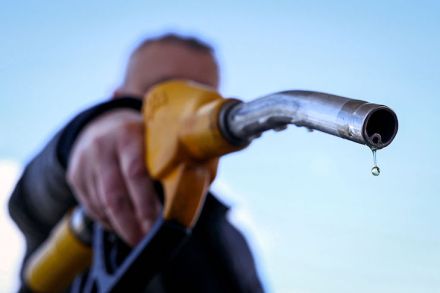
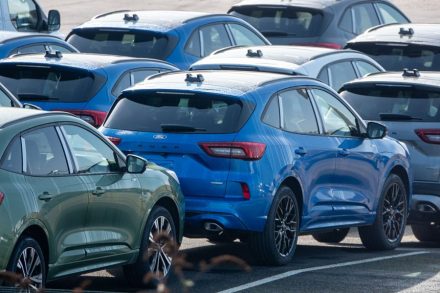
Imagine you are a keen Brexiteer and opponent of net zero plans, especially of the idea of being forced to buy an electric vehicle (EV). There are plenty of people like you; there is much evidence to suggest that the two things go together. But you must now be feeling a little confused. It must be dawning on you that, in terms of your freedom to buy the vehicle that you want, you would have been better off had Britain remained in the EU. Europe has just made the decision to relax the ban on petrol vehicles from 2035 to 2040 – while in Britain it is still planned to take effect from 2030. It is not hard to see why the EU has changed its mind. For one thing, the market for EVs has not just stalled; it has started to roll backwards.

The special needs racket is out of control

From our UK edition

We are, as vicars like to tell us, all special in our own way. But none so much as children in Scottish primary schools, 43 per cent of whom are classified as having special needs. This can entitle them to extra tuition and, when they are older, extra time in exams. The expansion of Send is diverting resources from genuine special needs pupils as well as from classrooms in general If ever we needed more evidence that special educational needs and disabilities (Send) is a runaway juggernaut that is bringing the education system to its knees, this is it. Children are routinely being made out to be disabled in some way – either because their schools want more money or because their sharp-elbowed parents want them to have some advantage. I am no stranger to special needs education.

Will I ever be a juror?

From our UK edition

David Lammy’s proposal to do away with jury trials for all but the most serious offences has a consequence which hasn’t so far been aired in national debate. It could deprive me of the chance to bang up some evildoer. Whoops! Saying that probably won’t help me realise my ambition. I think it was the wonderful Mary Killen who once suggested to an anguished correspondent, worried that his holiday would be ruined after being selected for jury service, that he write to His Majesty’s Courts and Tribunals Service saying pretty much what I have just said. In return, she wrote, he should expect a letter informing him that actually he wouldn’t be needed after all. But Gawd, have I been waiting a long time. It was 41 years ago that I first became eligible for jury service.

Climate doom is not science

The costs of not dealing with climate change are, of course, much higher than the costs of dealing with it. We know this because, as climate campaigners keep telling us, climate change is going to set the world alight and unleash mad tempests which are going to wreak destruction on the global economy. Not a few of them have been trying to prove this by parroting a paper by the Potsdam Institute for Climate Impact Research published in the journal Nature in 2024 which concluded that a rise of 8.5 Celsius in global temperatures by 2100 will shrink the economy by 62 percent.

Climate change

The day net zero died

From our UK edition

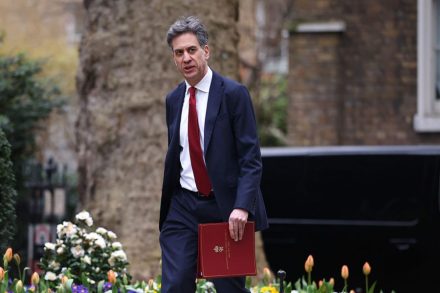
Quietly this afternoon, the government’s last remaining hope of achieving net zero by 2050 drained away. BP has abandoned its project to develop a ‘blue’ hydrogen plant on Teesside which was supposed to produce the gas at a rate of 1.2 GW. It is not just a defeat for net zero ambitions but for Ed Miliband personally, given that he had fought hard in cabinet to advance the project while Keir Starmer and business secretary Peter Kyle had favoured using the site for a rival data centre. The data centre is now likely to proceed – an energy-hungry project in place of a green energy one.

Starmer’s workers’ rights U-turn is a small victory for business

From our UK edition

A psychoanalyst might have some ideas as to why Keir Starmer’s thoughts have suddenly turned to the subject of unfair dismissal. But on the face of it, the government’s U-turn on giving workers the right to sue their employers for unfair dismissal from day one of their employment does seem to mark a change in its relations with business. The Employment Rights Bill had become bogged down in the House of Lords as peers and business leaders warned of the bizarre consequences of the legislation. The ability to sue for unfair dismissal would have provided a field day for job applicants who managed to land themselves a role for which they were wholly unsuitable – and who would find themselves unsackable.

The EV charging tax is the coward’s way out for Rachel Reeves

From our UK edition

One moral of the Budget is to beware of governments offering you incentives to buy a particular kind of car. On the advice of the then EU Transport Commissioner Lord Kinnock 25 years ago, the Blair government encouraged us all to buy diesel vehicles on the grounds they did more miles to the gallon and were therefore better for the environment. A few years later those who fell for the bait – including me – suddenly found ourselves treated like antisocial thugs, destroying kids’ lungs, and had our cars driven off the road by ULEZ zones. But at least we got the chance to drive around for a few years before officialdom turned against us.

Do supermarkets really make us sick?

From our UK edition

I contemplated this piece over a bowl of porridge; not a ready-mix concoction but the raw stuff: porridge oats mixed with milk and water and eaten without any adornment whatsoever. That will win me brownie points among many nutritionists and policymakers because I was not eating an ‘ultra-processed food’ (UPF). I have a gut feeling that raw porridge is more nutritious and less full of nasty stuff. It is also much cheaper. A few years ago, while I was on a walking holiday with my son, I pointed out to him – not least because he was about to go off to university and could do with a bit of guidance on living frugally – that while my porridge for the week had cost about £1.50, his prepared breakfast cereals had cost him – or rather me – upwards of a tenner.

The Covid Inquiry has ducked the most important questions

From our UK edition

The biggest lesson to come out of the first report of the official Covid Inquiry is what a mistake it was to hand to job to lawyers. They have interpreted their job as one of conducting a show trial of politicians, civil servants and advisers who were involved in handling the pandemic. The have obsessed with the processes of decision-making in Downing Street, and with the characters of the people involved. Baroness Hallett’s address to the nation from a large swivel chair was an extraordinary dystopian vision of a Britain in which democracy has been replaced by a kritarchy – rule by judges. The inquiry has made good theatre, but has failed to answer the questions which most needed to be asked.

The fatal flaw in Shabana Mahmood’s migration plan

From our UK edition

Today we will learn exactly what Home Secretary Shabana Mahmood meant when she hinted last week that the government would adopt a Danish-style migration policy to deter new arrivals. One thing she will announce is a ban on visas for nationals of three countries which she says are not taking back enough failed asylum seekers: Angola, Namibia and the Democratic Republic of the Congo. The ban may be extended to other countries later. How about withdrawing aid from any country which refuses to take back every single one of its failed asylum-seekers? It is a pretty token gesture. None of these three were in the top 20 countries for illegal migrant arrivals in 2024 – they come under ‘other countries’, which accounted for a total of 1,487 arrivals between them.

Who do junior doctors think should fund their pay rise?

From our UK edition

I know doctors have a long training and have to absorb a lot of knowledge before they are let loose in a surgery or a hospital ward, but still there is one extra module which needs to be inserted into their schedule: one on the public finances. In fact, maybe just give them an afternoon off to read the papers. For the past couple of months we have had almost daily briefings from Number 11 floating the ever-more desperate ways in which Rachel Reeves is flirting with raising taxes to fill her fiscal black hole. The bond markets are flickering at every suggestion, weighing up the risk that Britain is thrown headlong into a fiscal crisis if it doesn’t seek to reduce £160 billion a year in public spending.

Has Rachel Reeves crashed the economy?

From our UK edition

If Rachel Reeves was hoping for a glimmer of good news in today’s GDP figures, she has been left disappointed. We now have a whole year of data since she delivered her first Budget, and it does not look good. Labour’s promise to put ‘growth, growth, growth” at the heart of the economy looks increasingly forlorn. She may have to rethink her standard attack line of accusing Liz Truss of ‘crashing the economy’, on the grounds that it could equally well apply to her. When Labour came to power in July 2024, economic growth was enjoying a fillip – GDP had increased by 0.6 per cent over the previous quarter. The long shadow of Covid seemed finally to be passing. That has all gone now. In the three months to September, the ONS reports, GDP grew by just 0.1 per cent.

Starmer must not give in to the Waspi women

From our UK edition

If nothing else, the government is providing us with a masterclass in how to lose control of public spending. A billion dollars here, a billion dollars there, as Ronald Reagan once said, and soon it begins to add up to some serious money. Work and pensions secretary Pat McFadden has announced that he intends to take another look at one of the few good decisions Labour has taken since it came to office last year: to refuse compensation to nearly three million ‘Waspi’ women who have bleated that they weren’t given sufficient warning that their pension age was to be increased from 60 to 65, ruining their delicately-laid retirement plans. When the decision was made last year, the government argued that handing out £10.

Rachel Reeves is dragging Britain into a productivity doom loop

From our UK edition

Just how much more desperate can Rachel Reeves get? Giving an even heftier clue to Radio 5 listeners on Monday that she is going to break Labour’s manifesto promise and raise income tax, the Chancellor explained that this is necessary in order to raise Britain’s lousy productivity record. Sticking to the manifesto commitments, Reeves said: Would require things like deep cuts to capital spending. The reason why our productivity and our growth has been so poor these last few years is because governments have always taken the easy option to cut investment in rail and road projects, in energy projects, in digital infrastructure. As a result, we’ve never managed to get our productivity back to where it was before the financial crisis.

The taxman is coming for your electric car

From our UK edition

Sooner or later it is going to dawn on the drivers of electric cars that they have been benefitting from a huge introductory free offer. As EVs become more commonplace, that offer is going to come to an end, and the economics of running these cars is going to look very different. Not even the government’s green zealotry, it seems, is going to stop the Chancellor imposing a new charge of three pence per mile on electric cars – presumably charged via an annual read of the car’s odometer when it has its MOT (although it is less clear how the government will collect the money in a vehicle’s first three years of existence, when it doesn’t need to be tested). An annual charge of three pence per mile is just the beginning For years, EVs attracted no road tax.

The ‘John Lewis approach’ won’t fix workshy Britain

From our UK edition

Like the John Lewis Partnership he used to run, Sir Charlie Mayfield, who has just completed the government’s ‘Keep Britain Working’ review, comes across as terribly nice and civilised. It’s just a shame he can’t quite bring himself to put the boot in and deal properly with the problem of mass worklessness he correctly identifies. Had the job been given to a more ruthless business operator – perhaps someone from Amazon, Aldi or one of the other businesses which is steadily devouring John Lewis’s lunch – government might actually have a hope of a workable solution. Mayfield all but ignores the real problem: it has become far too easy to claim out-of-work benefits Mayfield is not wrong in his diagnosis.

Budget tax rises will mark the beginning of the long end for Labour

From our UK edition

So just what was the point in dragging political journalists out of bed to be addressed by Rachel Reeves in Downing Street this morning? We could – and should – have had the Budget by now. Instead, we got a half Budget speech – a desperate attempt to blame the Tories, a vague suggestion that taxes are going to go up (which we know anyway) without any details. We heard yet more about Liz Truss and Kwasi Kwarteng, despite the fact that they have been out of office for more than three years. Reeves herself has been in office approximately ten times as long as Truss and Kwarteng were. Reeves is fooling herself if she thinks that the public are going to swallow her excuses.

The hypocrisy of Labour’s international ‘greenwashing’

From our UK edition

There can be no more Panglossian document than the UK international climate finance results published by the government last month. Apparently, since 2011 UK taxpayers have helped prevent 145 million tonnes of greenhouse gas emissions, given 33 million people improved resistance to climate change and saved 717,000 hectares of ecosystem. How proud we can all feel of ourselves. Except, that is, we are beginning to learn a bit more about how our money – £11.6 billion of it between 2021/22 and 2025/26 alone – is being spent. There is £52 million, for example, on a road driven through the rainforest in Guyana and millions for a rewilding scheme in Uganda which involved subsistence farmers being thrown off the land.

Is extinction going extinct?

From our UK edition

It is getting pretty bitter in the world of evolutionary biology, and it could come down to the survival of the fittest. In August I reported here on the extraordinary spat between Professor John Wiens of the University of Arizona – who formerly wrote of a ‘sixth mass extinction’ but has since changed his mind and now thinks the destruction of species would come in at a lower level – and Robert Cowie of the University of Hawaii, who damned Wiens for daring even to question the scale of the expected wipe-out of life forms over the coming centuries.