Ross Clark

Ross Clark

Ross Clark is a leader writer and columnist who has written for The Spectator for three decades. He writes on Substack, at Ross on Why?

The surprising tricks that can cut your energy bills

From our UK edition

We are all facing months of rising bills, with warnings that there may even be blackouts ahead. But all is not lost. Here are ten ways you can cut your energy consumption – and some of them will surprise you… Change your lightbulbs – even the 'energy saving' ones. If you still have old-style incandescent lightbulbs in your home – or even the original, fluorescent energy-saving bulbs – you are wasting a fortune. A five-watt LED lightbulb produces as much light as an old-style 60-watt lightbulb does. Lighting constitutes the single biggest proportion of most energy bills on account of how often we have the lights on – so this single change can make a significant difference.

Starmer’s rail strike response shows he’s no heir to Blair

From our UK edition

Sir Keir Starmer faces an unenviable choice: whether to sack shadow transport minster Sam Tarry who defied the Labour leader’s instruction not to join RMT picket lines and posed for photos outside Euston station this morning. Fail to sack him and Starmer will undermine his own authority and make himself look pathetically weak. Wield the axe, on the other hand, and Starmer will stir anger well beyond the Corbynite wing of the party, and reveal to the world how deeply knee-jerk support for striking workers still runs within Labour’s ranks. Twenty five years ago Tony Blair convinced the electorate that the trade union movement and Labour’s relationship with it had evolved into one of maturity and responsibility.

Putin has Europe where he wants it

From our UK edition

Have we reached the endgame of Vladimir Putin’s energy war against the West, the point at which he turns off the gas for good? This afternoon, Gazprom announced that from Wednesday morning it will cut the quantity of gas flowing through the Nord Stream 1 pipeline to Germany to 33 cubic metres per day. This will halve the current flow of 67 million cubic metres and is just 20 per cent of the 167 million cubic metres which flowed through the pipeline before the Ukraine invasion. Ostensibly, the cut is for reasons of ‘maintenance’. That is unlikely to wash. Nord Stream 1 relies on a compressor station powered by six turbines, but Russia was supplied with two spare turbines to prevent any need for reduction in flows during maintenance periods.

Whisper it, but we’re allowed to enjoy the heatwave

From our UK edition

It was with some trepidation that I set off into the hills of Pyrenees Orientales on Saturday. The temperature was forecast to rise to 37°C by the afternoon – a level that is lethal, according to British news sites, even if you are sitting around in the garden. Apparently, today and tomorrow's heatwave is going to kill thousands of Britons.  The heatwave is just the latest manifestation of our own public authorities’ obsession with doom Was I going to end up being recorded in the local French newspapers as the foolish Englishman who perished after going out in the midday sun? I needn't have worried.

The truth about Britain’s ‘record-breaking’ heatwave

From our UK edition

Will temperature records be broken today? You bet they will. By the end of the day you can be sure we'll be bombarded with headlines along the lines of 'Records tumble as Britain wilts' – or, in the case of the Guardian, 'Record-breaking heat heightens fears of climate crisis'. But don’t get too excited. Read on a little and you will find that the records which have been broken will seem just a little less dramatic than they at first appeared. The reason we keep having ‘record-breaking’ heat is not so much because of climate change – although rising global temperatures are slightly increasing the chances of records being broken – but because there are so many records to break.

How high might interest rates go?

From our UK edition

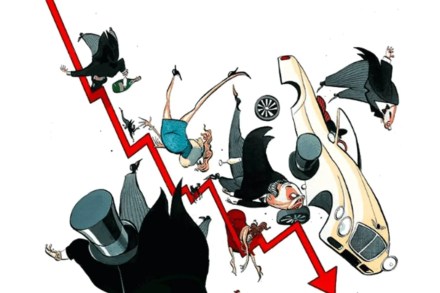
To nobody’s surprise, the Bank of England has hiked its base rate, and, equally unsurprisingly, it has chosen to do so by a relatively modest 0.25 per cent, bringing rates to 1.25 per cent. In 25 years of its existence, the Monetary Policy Committee (MPC) has never raised rates by more than 0.25 per cent at a time. That stands in contrast to the Fed’s decision to raise rates by 0.75 per cent on Wednesday. If the modesty of the rise was supposed to calm markets, however, it doesn’t seem to have worked. The FTSE100, already down nearly 2 per cent on the day, plunged further on the announcement.

Is the western boycott of Russian oil backfiring?

From our UK edition

Ukraine’s ability to defend itself against the Russian invasion has surprised almost everyone outside the country, none more so, presumably, than Vladimir Putin. As for the West’s efforts to harm Russia through sanctions on its fossil fuel exports, that is a very different matter. Sanctions have not been entirely useless. According to a report by the think tank Centre for Research on Energy and Clean Air (CREA), they have led to Russia losing over €200 million (£173 million) a day relative to what it was earning at the start of the year: €880 million (£692 million) per day in May compared to €1.1 billion (£951 million) per day in January and February.

Levelling up is failing

From our UK edition

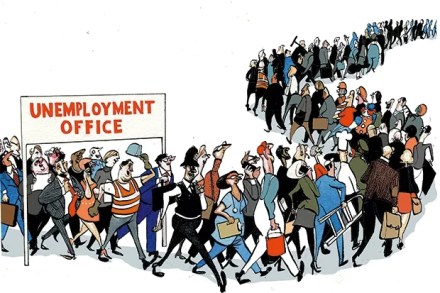
First the good news: the Office for National Statistics figures released today show that pay is rising at its fastest rate in two decades, with regular pay up by 4.2 per cent in the three months for February to April compared with a year earlier. Now the bad news: such is inflation that, in real terms, regular pay was actually down 2.2 per cent – lower than at any time in the past two decades except for a brief period in the autumn of 2011. So, yes, it isn’t just an illusion: we really are getting poorer. That is a big problem not just for households trying to make ends meet but also for the government, which at some point over the next two years will have to try to persuade voters to trust it with the economy.

Ordering farmers to grow tomatoes won’t make us any richer

From our UK edition

Should we cover Britain with greenhouses so that we can be self-sufficient in tomatoes? That seems to be the latest thrust of the government’s see-sawing farming, environment and food policy. Government advisers appear to have been looking longingly across the North Sea to the Netherlands, which has become one of Europe’s leading salad producers thanks to vast heated glasshouses. In Britain, by contrast, a lot of market gardening has gone to the wall, to the point where we grow only 23 per cent of our cucumbers and 15 per cent of our tomatoes. We would be better off if the government didn’t try to determine from Whitehall how our agriculturalists spend their time.

Did Rishi Sunak really make an £11 billion blunder?

From our UK edition

Could Rishi Sunak really have saved the taxpayer £11 billion by insuring against higher interest rates last year? That was the extraordinary claim made by the National Institute of Economic and Social Research (NIESR) and in the Financial Times on Friday. The NIESR claims that the government could have saved the money had the Chancellor taken up the institute’s own suggestion last year and forcibly converted £600 billion worth of reserves held by commercial banks at the Bank of England into two year fixed-rate bonds. By failing to foresee rising inflation and interest rates, the FT asserts, the Chancellor has blown even more money than Gordon Brown did by selling half Britain’s gold reserves at the bottom of the market in 1999.

Boris’s rewilding obsession could backfire

From our UK edition

Does Boris Johnson have the faintest idea what he and his government are trying to achieve anymore? I ask because of the Prime Minister’s ‘grow for Britain’ strategy which has been leaked to the Daily Telegraph. The strategy, due to be launched on Monday, apparently demands that farmers grow more fruit and vegetables to make us less reliant on imported food, especially in the face of the Ukraine crisis – which has created the headache of how to continue production and exports from one of Europe’s most agricultural nations. To this end, the grow for Britain strategy will, it is said, commit to ‘changes to planning rules to make it easier to convert land into farms’.

Soaring fuel prices could be lethal for Boris Johnson

From our UK edition

As if Boris Johnson was not in enough political trouble already, the latest surge in oil prices is threatening to overwhelm the government. This week, petrol prices in some filling stations have crossed the symbolic threshold of £2 per litre. This would be a problem for any government, but, for a Conservative administration which owes its last election victory to the votes of relatively low-paid manual workers, it is an existential threat.  People who rely on their cars to get to work face being priced out of the workplace. Decades of sky-high property prices – and high moving costs thanks especially to stamp duty – have changed the pattern of living and working. There are large numbers of voters who must drive long distances to reach their place of work.

What Boris’s right-to-buy gets wrong

From our UK edition

It isn’t hard to understand why the government should want to revive the spirit of Margaret Thatcher’s right-to-buy, which was credited for creating a whole new class of homeowners – and in the process Conservative voters. While the right to buy has never gone away – and survived the Blair and Brown years – it is a shadow of its former self. In 2020/21, 6,994 social homes were sold, compared with 167,123 in the peak year of the scheme, 1982/83. Last year’s figure was markedly lower even than the 17,756 homes sold in 2006/07 – the heyday of the Blair housing boom. What does today’s announcement do to widen the right-to-buy?

The utter shamelessness of Britain’s rail unions

From our UK edition

In what other industry could demand collapse by a tenth and yet the staff still think that they have a right to an above inflation pay rise and no job losses? Rail privatisation was supposed to put an end to union militancy and to relieve taxpayers of the financial risk of running the railways. Patently, it has achieved neither objective. Three national rail strikes have been declared for later in the month, to compound strikes on the London underground. Meanwhile, taxpayers will contribute £16 billion this year to propping up an industry in which demand for its services have collapsed. In the week to 22 May (before the effect of last week’s bank holidays) usage of national rail services averaged 89 per cent of what it did before the pandemic.

The EU’s phone charger rule will stifle innovation

From our UK edition

Who could argue with the words of the EU’s internal market commissioner Thierry Breton when he says: ‘a common charger is common sense for the many electronic devices in our daily lives’? No longer, it seems, will we have to fiddle around with several different cables, and curse when we have brought the along the wrong one on holiday. M. Breton has just succeeded in introducing a directive which, from 2024, will oblige the manufacturers of all electronic devices on sale in the EU to use the same model of charger.

This vote marks the beginning of the end for Boris Johnson

From our UK edition

There is a school of thought, expressed by Fraser Nelson here this morning, that the Prime Minister’s Tory opponents have shot their bolt too soon, that they should have waited for a couple of by-election defeats and for the emergence of a clear front-runner to replace Boris Johnson, before sending in their letters of no confidence. This analysis is right in that Johnson will very likely gain more votes that MPs vote against him this evening. Whether that really amounts to ‘winning’ is another matter. Historic precedence suggests that Keir Starmer is correct when he asserts that today’s confidence vote marks the beginning of the end for the Prime Minister.

Are republicans becoming an endangered species?

From our UK edition

How disappointing. Come Jubilee time and the Guardian can usually be relied upon to lead the way in publishing sour pieces moaning about ‘jingoism’, attacking the extravagance of a royal procession and trying to claim that the people who turn up to watch and join in with the celebrations are somehow outnumbered by people who would rather get rid of the royal family and live under a republic. At the time of the Queen’s Golden jubilee in 2002, Mary Riddell wrote of a ‘family that knows how to command a deference out of kilter with its popularity’, adding that ‘a third of the population wants a republic, a third couldn’t care what befalls the monarchy, but damp-palmed curtseyers abound.

The EU’s oil ban is a damp squib

From our UK edition

When Putin’s tanks rolled into Ukraine on 24 February there was a conceit that this might be the first war which the West could fight – and win – by sanctions alone. The EU’s latest efforts to stop importing Russian oil show just what a folly this was. Donations of military equipment to Ukraine are certainly helping to keep Russian forces at bay, but economic sanctions? That is another story. Europe’s dependence on Russian oil and gas is the product of years of ill-conceived energy policy Sanctions may be helping to lower living standards among Russian citizens, but they are still a long, long way from cutting off the lifeblood of the Russian economy – its oil and gas exports.

The World Health Organisation has lost all credibility

From our UK edition

Let’s be honest: is there anyone out there who has faith in the ability of the World Health Organisation (WHO) to tackle a future pandemic? Any lingering hope that the WHO might be an organisation fit to be trusted with global heath concerns has pretty well evaporated with the election, by acclamation, of China as one of the 12 members of its executive board on Friday.  It is true, of course, that an international body must have representation from all over the world if it is going to win the near-universal cooperation it needs in order to operate. It can’t be led entirely by western democracies and wealthy South Asian countries even if they might have the best skills available; you need members able to tap into every culture and religion on Earth.

It’s time for Boris to take on the rail unions

From our UK edition

Imagine if we gave the rail unions what they really wanted, and renationalised the railways. Would they then leave us alone and get on quietly with the job of driving trains, clipping tickets and so on? Like hell they would. Thankfully, Nicola Sturgeon has just tried this very human experiment, so that the Westminster government does not have to. On 1 April, railway services north of the border were taken back into public ownership so that, as the unions would put it, passengers could once again be put first and profits no longer drained away by nasty private companies rewarding their evil shareholders. And the result? Er, a national rail strike – just the same as the unions are threatening in England.