Ross Clark

Ross Clark

Ross Clark is a leader writer and columnist who has written for The Spectator for three decades. He writes on Substack, at Ross on Why?

Could Britain avoid recession altogether?

From our UK edition

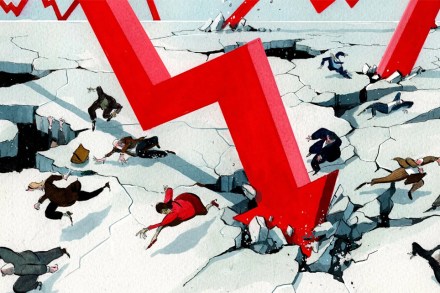
The idea that we face a certain recession has been drummed into our heads for months. The Bank of England recently produced a graph showing recession lasting into 2024. Just yesterday, the International Monetary Fund repeated its assertion that Britain faces an especially gloomy 2023, with recession inevitable – while simultaneously upsetting the House of Commons Treasury select committee by refusing to testify before it.  But could the unthinkable happen? Could Britain now avoid recession altogether? The Office of National Statistics’ (ONS) first estimate for economic growth for November shows that GDP grew by 0.1 per cent – unexciting, but still remarkable given that many economists were expecting negative growth by now.

Is Starmer foolish to attack the Tories’ strike laws?

From our UK edition

Labour feels strongly on the NHS – you can tell that by the number of times Keir Starmer brings up the NHS during Prime Minister’s questions, which he did again today. Historically, the NHS has always been a weak point for the Conservatives. In spite of granting the health service ever more resources, come election time Labour automatically trots out the charge that the Tories are out to privatise or otherwise dismantle the NHS. But has Starmer made a miscalculation in attacking the government’s proposed strike laws, which would oblige the unions to ensure that minimum service levels are maintained in the ambulance service, as well as several other public services, on strike days?

Why Rishi Sunak doesn’t need to fear the unions

From our UK edition

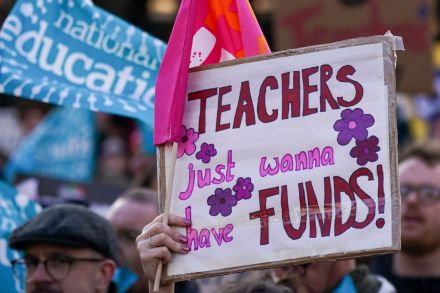
The calendar for January is already pock-marked with strike dates for railway workers, ambulance staff, postal workers and others. But does the current situation really deserve to be compared with the Winter of Discontent in 1979, when the rubbish piled high in Leicester Square and dead went unburied (as the gravediggers went on strike)? The answer is surely no – or at least not yet. So long as the government holds firm against wage demands, Rishi Sunak should have no fear of being humiliated as Jim Callaghan was then. As was the case 44 years ago, the unions are engaged in a raw exercise of power. Yet they are struggling a lot more now to bring the government to the table.

Are the rail strikes nearing an endgame?

From our UK edition

With five continuous days of rail strikes this week, it’s beginning to look like we’re reaching an endgame. Someone, or something, has got to give. And it must be becoming gradually clear to the RMT’s Mick Lynch – and the other unions involved – that they won’t necessarily be the ones left standing at the end. They might like to think they have the power to bring the country to its knees, but the past few months has shown the folly of believing that. Even before the current strikes, rail passenger numbers were only three-quarters of what they were before the pandemic. All sorts of organisations have learned to work remotely when they need to. Nor, in contrast to the 1970s, do we rely on coal trains to keep power stations working.

How likely is a global recession this year?

From our UK edition

The best thing that can be said about global economic growth prospects for 2023 is that no-one is expecting very much. On that basis, hopefully, things can only get better. Over the weekend, International Monetary Fund (IMF) managing director Kristalina Georgieva said that she expects a third of the globe to be in recession, including half of the EU. That doesn’t sound too bad on the face of it. If the IMF’s predictions proved to be accurate – and the record of economic forecasting is pretty dire – it would still mean that the economy was still growing in two thirds of world. We might, yet, avert global recession. But then how often does the world as a whole sink into recession?

Putin has failed to bring Europe to its knees

From our UK edition

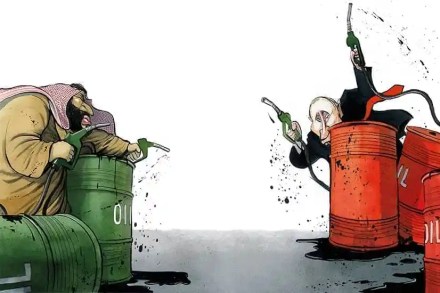
Unforeseen events which provoke global crises – such as Covid -- have come to be known as ‘black swans’. By the same token, the end of 2022 has just been visited by a great big fluffy white swan.     Over the past 24 hours the main benchmark for European gas futures – the Dutch Title Transfer Facility (TTF), for gas to be delivered in February – has crashed below 80 Euros per MWh, taking it below the level it was on 23 February, the day before Russia invaded Ukraine. This, in the dead of a winter which we have been warned many times could see Europe’s shivering masses rioting in response to blackouts.

Is global warming behind America’s snowstorms?

From our UK edition

Is there any weather condition which cannot be blamed on anthropogenic global warming (AGW)? No, it seems, judging by the reaction in the US liberal press to the snowstorm which has engulfed much of the US over the past few days. According to Bloomberg it is all down to a loopier-than-normal jet stream, “the kind of event that could become more common as climate change accelerates”. A similar claim was made by Eric Mack, a correspondent on Forbes, who wrote this week that the poles are warming disproportionately and that, “studies [he didn’t say which ones] have shown that all this unusual and rapid warming in the north affects the jet stream in new and sometimes weird ways”.

How Britain’s economy might bounce back in 2023

From our UK edition

Whatever happened to the economic boom that was supposed to follow the Covid pandemic? The 2020s, some argued, would be like the 1920s, with an economy roaring its way out of recession, to be remembered as a time of unprecedented wealth and opportunity. That is not how things have turned out so far.  While economic growth in the UK during 2022 is still likely to come out positive, the growth was concentrated in the first half of the year – in the third quarter GDP fell by 0.3 per cent. The economy, according to the Office of National Statistics, is now 0.8 per cent smaller than it was on the eve of the pandemic at the end of 2019.

Most-read 2022: Crypto is dead

From our UK edition

We’re finishing the year by republishing our ten most popular articles from 2022. Here’s number eight: Ross Clark’s piece from May on the crypto crash. When Britain voted for Brexit, Macron boasted that Paris would eat the City of London’s lunch. It didn’t quite work out that way, with most league tables continuing to put London as the number one or two financial centre, with not a single EU city in the top ten. Emmanuel Macron's government has now announced that it has invited Binance, a crypto exchange site, to set up a European HQ in Paris. You have to ask: has Macron leapt on a bandwagon which has already started to lose its wheels?

Britain’s worrying industrial decline

From our UK edition

Economic growth is the third quarter was known to be depressed, but the Office for National Statistics (ONS) has this morning upped its estimate of the retreat in GDP for the third quarter, from a fall of 0.2 per cent to a drop of 0.3 per cent. That need not be too alarming in itself – September was always going to be a difficult month owing to the period of mourning for the Queen and the extra bank holiday for her funeral. The ONS has already reported its first estimate that growth in October rebounded by 0.5 per cent. But it is the detail which is more concerning. While the service sector in the third quarter managed to inch upwards by 0.1 per cent, the production sector fell by a whacking 2.5 per cent, with all 13 sub-sectors of manufacturing falling.

Mick Lynch leads a middle-class union

From our UK edition

Mick Lynch told Mishal Husain this week that it is about time she started showing partiality to Britain’s working people. Leave aside the assertion that the BBC should break its impartiality guidelines to please Mick Lynch, is he really representing the working classes? Unless you count as ‘working class’ everyone who does any paid work, the answer is somewhat questionable. The fact is that members of the Rail, Maritime and Transport (RMT) union are significantly better off than Britain’s working population as a whole. Forget Lynch’s flat cap image: judged by income alone, the RMT’s rail members are thoroughly middle class.

Could 30,000 Britons really die of flu this winter?

From our UK edition

Could flu really kill 30,000 people in Britain this year as our immune systems, rendered naïve after two years of lockdowns and other anti-Covid measures, are over-ridden by the virus? That suggestion has been reported in places this morning. There has certainly been a sharp increase in people reporting flu symptoms over the past couple of weeks, as shown up in the various metrics used by the UK Health Security Agency. For the first time since the beginning of the pandemic there are now more people being admitted for flu – at 6.8 per 100,000 in the week to 11 December – than are being admitted for Covid (6.6 per 100,000).

The Bank of England’s interest hike shows the worst is to come

From our UK edition

After a faltering start in its programme of rate rises, the Bank of England is catching up. Today’s half-point rise in its base rate to 3.5 per cent may be relatively modest compared with last month’s 0.75 per cent rise, but it is still twice as high as any rise the Monetary Policy Committee (MPC) was prepared to inflict on the economy during the first quarter-century of its existence. The MPC has turned itself into a prisoner of the markets – if it does anything unexpected, there is likely to be trouble In the space of three months rates have now been jacked up by 1.75 per cent. That is serious stuff. It is as if the MPC has suddenly woken up and told itself: look, the whole purpose of our existence is to control inflation.

Inflation slows to 10.7% – and may have passed its peak

From our UK edition

Has inflation peaked? The Consumer Prices Index fell to 10.7 per cent last month, down from 11.1 per cent in October. This follows predictions that October would be the month in which inflation peaked – so this morning’s figures from the Office for National Statistics will raise hopes that the worst may be behind us. This doesn’t appear to be a blip. The market expects this to continue for the next two years before bottoming out in 2025. There will be optimism, too, that we can look forward to a sharp fall in the CPI over the next few months as the surge in energy prices begins to drop out of the figures. Global oil prices have fallen sharply, as have wholesale gas prices.

The fall of FTX is just the beginning of the crypto collapse

From our UK edition

It will come as no comfort to those who have already lost fortunes, but it is remarkable how resilient the crypto currency market has been this year, especially following the collapse of the FTX exchange in November. But if the arrest of FTX founder Sam Bankman-Fried in the Bahamas and the request by US authorities for his extradition isn’t a sign to rush for the exits then I don’t know what is.   Without trying to pre-judge his case, there is going to be a lot more of this to come. FTX, it is easy to forget, was one of the more trusted players in a market that remains largely unregulated. Bill Clinton and Tony Blair both judged Bankman-Fried to be respectable enough to risk their reputations appearing on a platform with him at a public event.

Oxford’s highwayman campaign against motorists

From our UK edition

Oxford councillors are feeling rattled by opposition to their proposal to divide the city into six districts and to limit the passage of road traffic between them. The city and county councils put out a press release last week accusing residents of spreading ‘misinformation’ about the scheme. It complained of abuse received from members of the public and said that its staff had been offered ‘support’ to cope with the tirade of abuse, the worst cases of which had been reported to police. If anyone working for the council has been threatened then that, of course, is deplorable and quite properly a police matter. But are residents justified in complaining about the proposals?

John Kerry gets an easy ride from the climate establishment

From our UK edition

For climate campaigners, Donald Trump was the anti-Christ, pooh-poohing climate change and withdrawing the US from the Paris climate agreement. But what of the Biden administration – is it really going to make the climate lobby any happier? Things may be a little clearer following the visit to Britain of John Kerry, Biden’s climate envoy, who gave the annual Fulbright lecture at King’s College London on Friday evening. He was certainly keen to assert that America is now wearing a different pair of boots than it was under Trump, telling his audience ‘you need guideposts, and unfortunately in my country many of those guideposts were torn down.

Rishi Sunak needs to get tough on strikers

From our UK edition

We are still a long way from the Winter of Discontent, when 29.5 million worker-days were lost to strikes. Nevertheless, with today’s strike of 115,000 postal workers the number is creeping inexorably upwards. This one-day strike alone will cost 40 per cent of the 273,000 lost working days recorded across all industries over the whole of 2018. To describe Britain as being in the grip of a wave of public sector strikes isn’t quite accurate. The 115,000 Royal Mail workers who have walked out today are not public sector workers. Nor are the train drivers, guards and other train staff who have been striking, on and off, for much of the past decade. All are employees of private companies, yet their unions have still managed to engineer national strikes.

Britain should embrace new coal mining

From our UK edition

For those of us who remember the miners’ strike in the 1980s it takes some getting used to the journey made by coal miners over the past 40 years: from working class heroes to climate ‘criminals’. To hear today’s reaction to the news that Michael Gove has granted permission to build Britain’s first deep coal mine for a generation is to step through the looking glass into a bizarre world where a Conservative government is considered evil for helping to create mining jobs in a de-industrialised region – and the ‘enlightened’ position is to eradicate the very last traces of the coal industry. Lord Deben, chair of the government’s Climate Change Committee, thinks Gove’s decision to be ‘indefensible’.

Striking railway workers can’t avoid reality for ever

From our UK edition

Rail strikes on a couple of days when no trains would be running anyway might not seem the biggest inconvenience facing the British public at the moment, yet the announcement of yet another walkout from the evening of 24 December to the morning of 27 December will have implications for many services: this is the window when a lot of track maintenance is scheduled. That now promises to spill over into the New Year to an even greater extent than in normal years.    By calling a Christmas strike – something he previously said he wouldn’t do – RMT leader Mick Lynch is not looking like a man who is close to doing a deal with his employers; rather someone who is knuckling down for the long-haul.