Ross Clark

Ross Clark

Ross Clark is a leader writer and columnist who has written for The Spectator for three decades. He writes on Substack, at Ross on Why?

When will the Greens get real?

There is something a little refreshing about the Green party. In contrast to Rishi Sunak, who has no option but to carry on pretending he has the slightest chance of remaining in Downing Street after 4 July, Green party co-leader Adrian Ramsay admitted at his manifesto launch this morning that his party isn’t looking to form the next government. The party’s realistic hope seems to be to double its number of Commons seats, from one to two. Nevertheless, the Greens do have a full manifesto for government, so let’s do it justice by taking it seriously. Mercifully, the Greens seem to have not bought into the fashionable concept of ‘degrowth’ (i.e., permanent recession). In fact, there is a rash of spending promises that seem to rely on a rapidly-growing economy.

Sunak’s National Insurance pledge could backfire

Two years ago, as Chancellor, Rishi Sunak chose to jack up National Insurance contributions. It is a mark of how all over the place this government has been that cutting NI has now emerged as Sunak’s big idea.  Fairness to the Conservatives seems to mean the self-employed being excused from a 6 per cent tax which is paid by employees Abolishing the main rate of NI for the self-employed by the end of next parliament is the one eye-catching initiative which was not trailed before the launch of the Conservative manifesto – the now customary ‘rabbit out of the hat’. Employees will get an NI cut, too – their rate will fall to 6 per cent by 2027. But there is a clear risk with Sunak’s strategy. Employees might feel a little hard done-by by comparison.

Lib Dem policies are as barmy as their campaign

Ed Davey has finally taken a break from fooling around to launch some policies. But one of them, in particular, is not going to please a great number of Lib Dem voters. The Lib Dem manifesto is to propose giving local councils the power to put a 500 per cent council tax surcharge on second homes. Obviously, there is minimal danger of the Lib Dems actually getting into power to impose such a policy, so those nice Lib Dem voters in Richmond and Kingston who have boltholes in Salcombe, Southwold, and so on can still afford the luxury of voting for the party without actually having to face the cost of its policies.

How many more houses will Labour actually build?

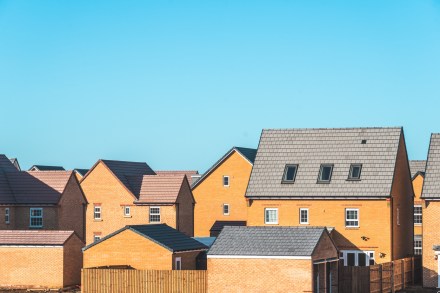
Is Labour really going to help get 80,000 people on the housing ladder over the next five years under its Freedom to Buy scheme, as it is claiming this morning? Given the rather light ambition of this target, I would say it probably has a chance of hitting that target, although it won’t transform the life-chances of young people. According to the ONS, 51.4 per cent of 20 to 24-year-olds were still living with their parents, along with 26.7 per cent of 25 to 29-year-olds. That is several million people who in past generations might have been expected to be making their own way in the world – indeed, the figures above have grown substantially over the past decade: in 2011, 44.5 per cent of 20 to 24-year-olds and 20.1 per cent of 25 to 29-year-olds were living with their parents.

What happened to the ‘gigafactories’?

Remember all those ‘gigafactories’ that were going to decarbonise our road transport and create many thousands of green jobs into the bargain? Now comes yet one more sign that all is not going according to plan. The Automotive Cells Company (ACC), a joint venture between carmakers Stellantis and Mercedes-Benz, and energy company Total Energies, has suspended work on two plants that it was constructing at Kaiserslauten in Germany and Termoli, Italy. It already operates one factory in France which was opened last year.   Ostensibly, the retrenchment is just temporary while the company investigates alternatives to the nickel-based batteries it was planning to manufacture there.

The trouble with the Tories’ ‘Family Home Tax Guarantee’

There is a very big problem with Jeremy Hunt’s Family Home Tax Guarantee, though which he promises a Conservative government would not increase the number of council tax bands, carry out a council tax revaluation, cut council tax discounts, impose capital gains tax on sales of main homes or increase the level of stamp duty. It reminds voters of all the times that the Conservatives have jacked up property taxes in the past 14 years. No-one paid more than 4 per cent on any sale. George Osborne soon changed that When David Cameron become Prime Minister in 2010, stamp duty was levied at 1 per cent on homes sold for between £125,000 and £250,000, 3 per cent on homes sold for between £250,000 and £500,000 and 4 per cent on homes sold for over £500,000.

The truth about Labour’s fiscal black hole

It is small wonder that Treasury officials are unhappy about Conservative claims about Labour tax rises being attributed to them. The civil service is supposed to be neutral, and be seen to be neutral. James Bowler, permanent secretary at the Treasury, who wrote to the Labour party expressing concern that certain figures are being attributed to his officials, will almost certainly find himself having to work with a Labour government in a few weeks’ time.  There is one figure at the heart of the Conservative analysis of Labour’s tax and spending plans which really should be causing concern What the Conservatives have done in making the claim that Labour will saddle households with an extra £2,000 in tax rises might be described as sharp practice.

The problem with Sunak’s migrant cap

It is perhaps no accident that Rishi Sunak has rushed out his proposal for a cap on migrant workers and their dependants the day after Nigel Farage announced that he was taking over as leader of Reform UK. But you wonder how many votes there really are in a migration cap when Farage is already out there promising to reduce net migration to zero – a new interpretation of net zero, if you like. If you don’t like migration at all, Reform UK would seem to be your obvious choice. If, on the other hand, you are offended by illegal migration while accepting the argument that employers need the right to recruit some overseas workers, then the Tory policy announced today doesn’t seem quite right, either.

Nigel Farage’s election U-turn could be deadly for the Tories

No wonder that Nigel Farage has decided that he would rather be leader of Reform UK than merely honorary president, and that he would like another shot at standing as an MP in Clacton. He looks as if he is the only politician – with the possible exception of Ed Davey – who is actually enjoying this campaign. Indeed, he seems to have engaged what used to be Boris Johnson’s secret political weapon: optimism. That could prove to be deadly for the Conservatives. Farage's thin skin seems to have thickened markedly Farage hasn’t always been all smiles on the campaign trail.

Who will survive to lead the Tories?

In spite of his conviction for falsifying business records, Donald Trump is still expected by many to make a remarkable political comeback in November’s US election. Could we see an equally remarkable comeback this side of the Atlantic, too, with Liz Truss returning to the stand for the leadership of the Conservative party? It’s possible to see a scenario where Truss is one of the few hopefuls remaining Today’s Electoral Calculus poll predicting that the Conservatives could be reduced to just 66 seats on 4 July raises the question: who would still be around to lead the party after the almost certain resignation of Rishi Sunak?

Labour’s energy plan doesn’t add up

So, we have a little more flesh on the bones of Labour’s energy policy, with the party giving more details of Great British Energy, the state-owned company it wants to set up to invest in wind and solar energy. But there are still gaping holes in Labour’s promise to decarbonise the electricity grid by 2030 – and save consumers money in the process. First to note is that Labour seems drastically to have toned down the claims as to how much its energy policies will supposedly save consumers. Until today it was claiming that it would save us ‘up to £1,400’ a year.

Home insulation is the latest net zero farce

Zoe Godrich of Swansea might best be described as collateral damage in Britain’s glorious march towards net zero. Three years ago, she had her three-bedroom home fitted with cavity-wall insulation – which the government is out to encourage through its Great British Insulation Scheme. Sadly for her, it has not worked out quite as intended. With Labour now promising billions more to retrofit homes with this kind of stuff, what could possibly go wrong? Within weeks of having it fitted, Godrich says her walls started to run with water, and black mould started to form on her walls. She can no longer use two of her bedrooms, and she and her children now have to slum it on mattresses in the one remaining habitable room.

Why are white men being shamed as transport polluters?

Black women are the worst for carbon-intensive travelling habits, according to the Guardian, citing research by the Institute for Public Policy Research (IPPR). Oh, sorry, I must have misread that. What the Guardian headline actually says is: ‘Wealthy white men are Britain’s largest transport polluters.’ While is poses as scientific inquiry this is really just political activism dressed up in academic clothes But it is worth quoting the other way around because the former is, of course, a headline you will never, ever read – either in the Guardian, an academic paper or anywhere.

The truth about pensioners and tax

The Tories' ‘Triple Lock Plus’ is a pretty blatant attempt to secure the votes of a demographic group which is more inclined to vote Conservative than any other. That much is clear. The party's proposal would give pensioners a high personal tax allowance to spare them from having to pay income tax as the state pension rises faster than either inflation or average earnings. If the government wants to spare pensioners from having to pay income tax it could, of course, raise the income tax threshold for everyone. But instead, while pensioners are spared tax, the personal tax allowance for working-age people is due to be frozen for another four years. But is it necessarily true that pensioners get the best of everything while the young get screwed over again and again?

Private schools can’t complain about Labour’s VAT raid

Of course Labour’s policy of charging VAT on private school fees is all about throwing a bit of red meat to those in the party who are motivated by class envy. Why otherwise expend so much political effort on a policy which in the opinion of the Institute of Fiscal Studies will only raise £1.6 billion a year? And that, of course, is mere guesswork. No-one really knows how the parents of private school pupils will really behave when whacked with a 20 per cent uplift in fees. Even if parents don’t withdraw pupils immediately, many might be tempted to do so at the end of prep school – and it will certainly impact on the decisions of parents whose children haven’t yet reached school age.

Why is UK retail doing badly?

This morning’s retail sales figures are not what Rishi Sunak will have hoped for as he pitches his case for re-election on economic recovery. They are yet more indication that Britain has fallen out of love with shopping. Sales volumes were 2.3 per cent down in April compared with the previous month, while the March figure was revised downwards from zero to minus 0.2 percent. Some of this might be connected with the timing of Easter: the holiday weekend straddled March and April, so people will have done their food shopping, Easter egg purchases, filled their car with petrol, and everything else, in March rather than April, but the bigger picture is that retail sales volumes have never recovered from the pandemic – and they continue to fall, down 2.7 percent over the past year.

The next Bitcoin bubble will be the largest yet

The power of Bitcoin to make and lose fortunes in a very short time is unmatched in history. But could the biggest boom and bust be yet to come? Since January the value of Bitcoin has staged a remarkable recovery, and is now back trading at or even above the highs it reached in 2022. That is all the more remarkable given that its recovery coincided with the trial, and eventual conviction and imprisonment of Sam Bankman-Fried who, following the collapse of his cryptocurrency exchange FTX, is now reported to be on a new venture: trading grains of rice with his fellow inmates at the Brooklyn Metropolitan Detention Center. For his customers, Bitcoin turned into the scam many of the cryptocurrency’s critics feared it would be. So how come anyone wants to buy it now?

The deluge: Rishi Sunak’s election gamble

53 min listen

It’s a bumper edition of The Edition this week. After Rishi Sunak called a surprise – and perhaps misguided – snap election just a couple of hours after our press deadline, we had to frantically come up with a new digital cover. To take us through a breathless day in Westminster and the fallout of Rishi’s botched announcement, The Spectator’s political editor Katy Balls joins the podcast. (01:35) Next: Our print magazine leads on the electric car bust. Ross Clark runs through all the issues facing electric cars today – from China flooding the market with discounted EVs to Rishi Sunak dropping the unrealistic target of banning new petrol car sales by 2030. ‘Could the outlook suddenly improve for British EVs?’ asks Ross. ‘It’s hard to see how.

Don’t blame climate change for the crummy weather

It was climate change wot gave us such a wet and stormy winter – or so you may have gathered from various reports this week. ‘Never ending UK rain made ten times more likely by climate change,’ declared a Guardian headline. ‘Climate change is a major reason why the UK suffered such a waterlogged winter, scientists have confirmed,’ asserted the BBC. There have also been numerous references to a ‘record stormy winter’ – based on it having the highest number of named storms in, er, the nine years since the Met Office started naming storms. We hear endlessly about the costs of flooding, but not at all about the savings from the declining incidence of strong winds But how much of this reflects reality?

What happened to the electric car revolution?

China is often characterised as a copycat when it comes to industry and technology but in one way it has proved to be a pioneer. It was China which saw the first boom in electric cars – and it was China that was the first to suffer when demand for them collapsed. The vast graveyards of unsold vehicles found in Hangzhou and other Chinese cities are the result of a huge, subsidised push to manufacture electric vehicles, demand for which has never caught up with supply. Ride-share services bought the vehicles– in a rerun of the great cycle-share fiasco of 2018, which led to piles of unused and unwanted bikes. But private buyers have been notably less keen. Where China leads, the rest of the world seems doomed to follow.