Ross Clark

Ross Clark

Ross Clark is a leader writer and columnist who has written for The Spectator for three decades. He writes on Substack, at Ross on Why?

Starmer’s response to the riots raises several questions

From our UK edition

It goes without saying that the riots in Southport, Hartlepool and London are a mindless reaction to the killing of three girls, based on false information which, according to former MI6 chief Sir Richard Dearlove, may have been propagated from Russia in a deliberate attempt to stir up social unrest in Britain. But is Sir Keir Starmer really wise to use these particular events to launch what he calls a ‘national capability’ to track across the country those suspected of plotting violent disorder? When he visited Southport on Tuesday he appealed to people not to play politics with the tragedy, yet to many people that is exactly what he is doing.

How independent is the Bank of England?

From our UK edition

As Kate Andrews argues here, the Bank of England were never going to cut interest rates during an election campaign for fear of being accused of favouring one side or the other. That ruled out a rate cut in June, while in July there was no meeting of the Monetary Policy Committee. But are those five members who voted for a quarter-point cut today really confident that they have not opened themselves to charges of bias, by cutting rates at the earliest opportunity after the election of a Labour government? For months, the MPC was telling us that it was too early for a rate cut – in spite of rapidly falling inflation – because wage growth was too high. What has happened since May suddenly to make it safe to cut rates?

Why is Hollywood funding Just Stop Oil?

From our UK edition

It will surprise no-one to learn that there is a trail of money which leads from climate protesters and their pranks in Britain back to the self-satisfied celebs of Hollywood. It will come as a greater – and possibly happier – revelation that this particular source of money appears to be drying up fast. If you want to know who was paying for Insulate Britain to block motorways during September 2021 and March 2022 you need look no further than the website of the Climate Emergency Fund, a charitable organisation based in West Hollywood and run by a bunch of film directors and actors including Adam McKay – who made the film Don’t Look Up – actor Jeremy Strong and funded by Abigail Disney.

The inconvenient truth about ‘rewilding’

From our UK edition

Angela Rayner has announced that the government will aim to build 370,000 new homes, up from the 300,000 a year implied in the party’s manifesto. But if the deputy prime minister really thinks that all she needs to do to achieve that target is to take on Nimbys – as Rayner and chancellor Rachel Reeves have suggested in recent weeks – she needs to take a trip to a slice of the ‘grey belt’ in Essex. There, a 206 acre farm at Harold’s Farm near Epping is to be turned over to rewilding. Why is the cost of encouraging rewilding being lumped on new housing? Some locals have announced themselves to be delighted because it means the land will not now be developed, as they feared, for housing. That is a predictable Nimby response, but it is not really the point.

Is Rachel Reeves really worried about a fiscal black hole?

From our UK edition

There is one over-arching question hanging over Rachel Reeves’s speech today, in which she claimed that a £21.9 billion hole has opened up in the current political spending for this financial year: why, if there is such a large ‘black hole’ in the public finances, is there suddenly money available for £9.4 billion worth of above-inflation pay rises for public sector workers? Preposterously, those pay rises – which Reeves has chosen to make and which were not committed to by the previous government – are included as one of the unfunded spending items (indeed the single biggest spending item) which has contributed to the ‘black hole’.

How Labour plans to justify its tax hike

From our UK edition

Oh, the suspense. It seems that we will have to wait until next week to discover the details of the £20 billion ‘black hole’ which chancellor Rachel Reeves has supposedly discovered in the public finances. Don’t get too excited, though. The revelation will be no greater a surprise than the ending of James Cameron’s blockbuster film Titanic (spoiler alert: a large ship hits an iceberg and sinks). As Paul Johnson of the Institute for Fiscal Studies pointed out before the election and has done so again: the state of the UK government’s finances are not exactly a secret – they are already open to anyone who cares to examine them. You do not need a Treasury pass to access them.

Are we really experiencing more ‘extreme’ weather?

From our UK edition

The UK climate is getting ever more extreme. We know this because the BBC keeps telling us so, most recently in today’s reporting of the annual Met Office/Royal Meteorological Society (RMetS) State of the Climate Report for 2023. ‘Climate change is dramatically increasing the frequency of extreme high temperatures in the UK,’ writes climate editor Justin Rowlatt on the BBC website. As well as experiencing more really hot days, ‘its observations suggest there has been an increase in the number of really wet days too, such as the prolonged and heavy rain Storm Babet brought to wide areas of the country in October last year.’ He comments: ‘The UK’s shifting climate represents a dangerous upheaval for our ecosystems as well as our infrastructure’.

Miliband will need natural gas to hit net zero

From our UK edition

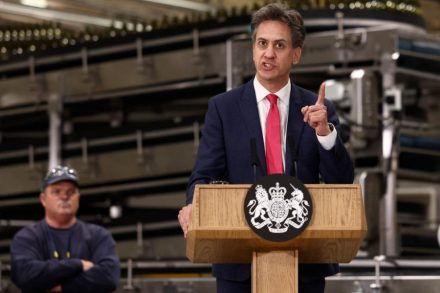
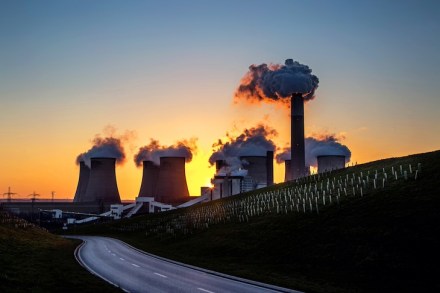
Three weeks into the new Labour government and it is already becoming clear where some of its weaknesses lie – none more so than Ed Miliband’s promise to decarbonise the electricity grid, save consumers money and boost the economy with many thousands of ‘well-paid green jobs’. Today the Royal Academy of Engineering weighs in with its own assessment of Miliband’s chances. Its verdict? That even if the government wants to decarbonise the grid, Britain is going to have to invest in new gas plants – and ‘unabated’ ones (i.e. not fitted with carbon capture and storage CCS technology) at that. Even in an optimistic scenario, the Academy thinks that in 2030 we will still need gas plants to be operating a quarter of the time.

Can Labour afford inflation-busting pay rises for teachers and NHS staff?

From our UK edition

Well, that didn’t last long. Having preached to us about fiscal responsibility and ‘securonomics’, Chancellor Rachel Reeves appears to be about to cave in at the first opportunity – by hinting that she will grant 5.5 per cent pay rises to teachers, NHS workers, and other public sector workers. At the heart of Reeves’s problem is the role of pay review bodies The unions feel entitled to pay rises of 5.5 per cent because they have been recommended by pay review bodies – even though that is more than 3.5 percentage points above inflation. But there is a very big problem. Labour’s manifesto – which we kept being told was ‘fully-costed’ – didn’t allow for pay rises of 5.5 per cent for several million public sector workers.

Why is British retail so sluggish?

From our UK edition

Is the retail sector ever going to recover from Covid-19? The rest of the economy seems to be purring quite nicely at the moment, with GDP up 0.7 per cent in the first quarter (not adjusting for population growth). But the good times have yet to reach the retail sector, where sales volumes fell by 1.2 per cent in June. This followed a surprise 2.9 per cent rise in May, but over the second quarter as a whole sales were down 0.1 per cent. Compared with the second quarter of 2023, sales were down 0.2 per cent. Overall, sales were 1.3 per cent lower last month than they were in February 2020, on the eve of the pandemic. One conclusion from today’s release is that retail sales figures are too volatile to be read month on month – they should really be read quarter on quarter.

Keir Starmer is deluding himself about the EU

From our UK edition

'We cannot let the challenges of the recent past define our relationships of the future,' declared the Prime Minister ahead of today’s meeting of the European Political Union at Blenheim Palace. The meeting, he added, 'will fire the starting gun on this government’s new approach to Europe'. The subtext to this is: the grown-ups are back in charge, and from now on we are going to have a far more constructive relationship with the EU. Keir Starmer has even promised a renegotiation of Britain’s trading relationship with the EU, which is supposedly going to make life easier for our exporters. Keir Starmer has even promised a renegotiation of Britain’s trading relationship with the EU He can dream on.

Labour’s war on nimbys won’t work

From our UK edition

Deputy prime minister Angela Rayner has promised the 'most ambitious programme of devolution this country has ever seen', with new powers for local councils and more directly-elected mayors. But this will not apply, it seems, when it comes to planning. On the contrary, the centrepiece of the King’s speech today will be planning reforms aimed at reducing the powers of local communities to block housing and infrastructure developments. Powers will be centralised, with central government taking it upon itself to rule on more housing and infrastructure projects deemed to be in the national interest – just as Energy Secretary Ed Miliband did last week when he approved three large solar farms in Cambridgeshire, Suffolk and Lincolnshire.

Britain has entered a birth rate crisis

From our UK edition

Few will notice, yet this year England and Wales are almost certainly going to cross a remarkable threshold: the number of deaths will exceed the number of births. In the year to mid 2023 – figures for which have been published today by the Office of National Statistics (ONS) – there were 598,400 births and 598,000 deaths. Given the long-term downward trends in births, and the lag in the figures being published, we have almost certainly arrived at the point of negative natural population growth – a condition which has not properly afflicted Britain since the Industrial Revolution.

What makes George Osborne think he’s a centrist?

From our UK edition

Don’t bother going after the Reform UK vote – the next Conservative leader should target voters lost to the Lib Dems instead. So says George Osborne, who told ITV ‘the Conservative party over a number of years vacated the central ground of British politics and allowed the Labour party to move from the Corbynista position it was in to the centre ground.’ The Tories, in other words, should do as he and David Cameron did before winning the 2010 election (or sort of winning it) and put before the electorate a set of reassuringly moderate policies. What makes Osborne think that he and Cameron occupied this mythical centre ground of British politics?  Just the one problem: what makes Osborne think that he and Cameron occupied this mythical centre ground of British politics?

The trouble with Ed Miliband’s North Sea oil plan

From our UK edition

Just Stop Oil continued its campaign by spreading orange paint over road junctions in Westminster this week, but why bother when the organisation seems now to be in power? Energy and Climate Change Secretary Ed Miliband is said to be weighing up blocking new licenses for oil drilling in the North Sea. Labour has previously said that it wouldn't allow exploration of entirely new fields but wouldn't stand in the way of the continued exploitation of existing fields. Yet even this limited exploration now looks in doubt. How is the government going to generate that income if oil and gas companies are not going to be allowed to drill?

How Starmer should deal with Thames Water

From our UK edition

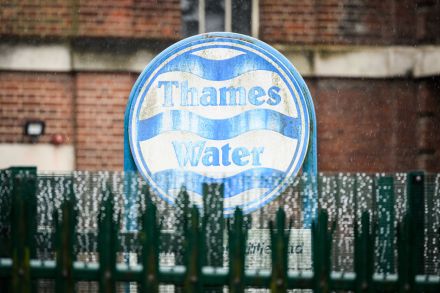
Less than a week in to his government and Keir Starmer is already facing an ideological battle within the Labour party – over the nationalisation, or non-nationalisation, of the water industry. News that Thames Water has been put in special measures at the same time that Ofwat has given permission for other water companies to increase bills by an average of £94 over the next five years is going to rekindle the beliefs of many in his party that public utilities do not belong in the private sector. Starmer is not helped by the fact that when he won the Labour leadership in 2020 it was on the promise of renationalising water and energy companies. His leadership has looked as if it was bought on a false prospectus ever since he changed his mind on the matter in 2022.

The trouble with Rachel Reeves’s ‘National Wealth Fund’

From our UK edition

What country ever went wrong with a sovereign wealth fund? It is easy to envy Singapore and Norway – the latter of which now has £1.3 trillion squirrelled away, equivalent to £240,000 for every citizen. Britain would be in a much better situation now had it, like Norway, invested its windfall from the North Sea, rather than chucking it into the pot of general day-to-day expenditure. Paying state and public sector pensions liabilities out of tax revenue rather than from a long-term investment fund is going to become an ever more serious burden on the state. We shouldn’t, then, sniff at Rachel Reeves’ idea for a ‘national wealth fund’. It is just that what the Chancellor has in mind is very different from what Norway has.

Was this council’s four-day week experiment really a success?

From our UK edition

What a surprise. South Cambridgeshire District Council has declared its controversial experiment with a four day week – which put council staff on a 32 hour rather than 40-hour week with no loss of pay – a tremendous success. The council, whose chief executive Liz Watts was revealed last year to be doing a doctorate on the subject of the four day week as well as her day job, has published the results of a study by the Universities of Salford and Cambridge which claims that the council’s performance improved on 11 measures during the trial period compared with prior performance and decreased on just two measures.

Will Reeves be brave enough to take on the eco blockers?

From our UK edition

On the eve of the election the then shadow minister without portfolio Nick Thomas-Symonds appeared to be getting Labour’s excuses in early. If an incoming Labour government started to look at the books and realised that things were even worse than they had thought, he said, then the new government’s fiscal policy might have to diverge from the Labour manifesto. He was immediately slapped down by Paul Johnson of the Institute for Fiscal Studies who pointed out that the government’s books are not hidden away in a Whitehall cellar – they already are open to whoever wishes to inspect them. What does Reeves’ have in mind to prevent developments being held up by increasingly well-armed environment groups?

Ed Miliband will be a liability as energy secretary

From our UK edition

I know it has only just begun, but it is not too early to start wondering: what will it be that causes the Starmer government its first serious problem? A likely surge in arrivals of illegal migrants seems one possibility, given that some of those encamped in northern France appear to be well aware of British politics and have been reported to be waiting for the moment when Starmer fulfils his policy of ending the Rwanda scheme ‘on day one’. But the confirmation of Ed Miliband as Energy and Climate Secretary raises another source of trouble: Labour’s hugely ambitious plan to decarbonise the national grid by 2030. It should be noted that there has already been some shifting on this target.