Ross Clark

Ross Clark

Ross Clark is a leader writer and columnist who has written for The Spectator for three decades. He writes on Substack, at Ross on Why?

Public sector pay rises are hurting the economy

From our UK edition

Today’s labour market figures ought to bring good news: they show that growth on earnings has moderated to 5.4 per cent, the lowest level in two years. That should ease fears of inflation – it is growth in pay which has most concerned the Bank of England in recent months – and pave the way for further cuts in interest rates. The trouble is, though, that the Chancellor, Rachel Reeves, has undermined this by granting pay rises of 5.5 per cent to several million public sector workers – threatening to reignite wage growth again. The public sector has become an inflationary engine chugging away in one corner of the economy Indeed, there is little in today’s figures to show that public sector workers were getting a raw deal – a narrative spun by public sector unions.

In defence of Labour’s ‘communist land grab’

From our UK edition

We will find out in Rachel Reeves’ first budget on 30 October whether Labour really does intend to wage a war on wealth. It is all too easy to see the Chancellor playing to her gallery by imposing punitive taxes which are designed more to achieve social engineering than to raise revenue, and which stifle entrepreneurism and make the country poorer in the process. But there is one issue on which I am afraid I will not be joining the barricades. The government is reported to be considering capping the price which landowners in the green belt can receive when selling their land to feed Labour’s proposed house-building boom. Landowners, in other words, would not be able to make huge profits on land which they had bought at agricultural value.

Is the Great Barrier Reef really dying?

From our UK edition

The Great Barrier Reef is, of course, dying – a victim of humans’ hubris and callousness towards the natural world. We know this because we keep being told this is the case. This week, the New York Times carried the headline: 'Heat Raises Fears of Demise for Great Barrier Reef Within a Generation'. This story, echoed elsewhere, was based on a paper in Nature claiming that the seas around the reef, off the eastern coast of Queensland, are at their warmest in at least 400 years. 'Highest ocean heat in four centuries places Great Barrier Reef in danger,' asserted the authors of the study, led by the University of Wollongong in Australia's New South Wales.

Why Britain riots

From our UK edition

Riotous summers seem to occur in Britain with about the same frequency as sunny ones: roughly every decade. Sometimes it’s Afro-Caribbeans protesting (Brixton in 1981), sometimes Asians (Oldham in 2001). The white working classes rioted over the poll tax in 1990 and in Southport this year. The riot in Harehills, Leeds, last month was precipitated by social services removing children from a Roma couple. Whatever sparks the unrest, what all riots have in common is that they involve mindless destruction. Rioters smash and burn their own communities and opportunists descend, trying to exploit the situation for political ends. Fake news and misinformation abound.

Can the grid take Ed Miliband’s net zero targets?

From our UK edition

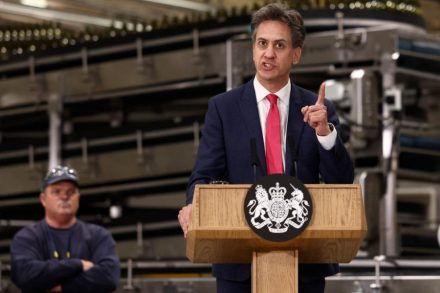
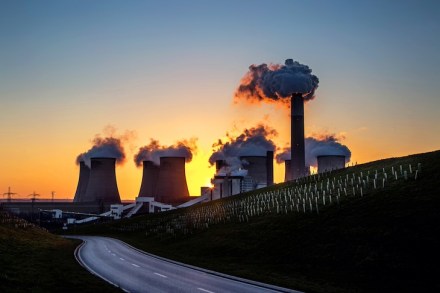
Ed Miliband, along with those who support his ambition to decarbonise the electricity grid by 2030, has long had a favourite argument with which to try to put down people who say it can’t be done: why, if it is going to be so difficult to achieve, is the National Grid ESO – the company which manages the electricity network – not more worried? It is true the company has not been protesting openly about government policy, yet it transpires that in private it is another story. ESO executives, the Telegraph reports this morning, have warned that the South East could be facing blackouts by 2028 as a result of the switch towards intermittent and less predictable wind and solar.

Thames Water isn’t solely to blame for the South’s dirty rivers

From our UK edition

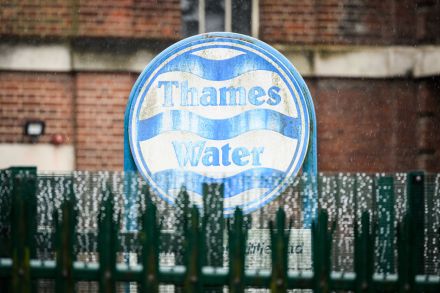
Few will, or should, feel sympathy for Thames Water being fined 9 per cent of its annual turnover for fouling rivers through sewage discharges. Water regulator Ofwat found numerous failings with maintenance and a lack of investment, which resulted in sewage discharges becoming a routine event rather than an emergency response to heavy rainfall. The volume of water which has to be handled by the storm drains is increasing Thames Water has been under-investing for years, preferring to spend its profits on dividends for its private equity shareholders. What has happened with the rivers is an advert neither for Thames Water's business ethics nor for privatisation of the water industry.

The FTSE fall will upset Rachel Reeves’s October Budget

From our UK edition

For a while it looked as if Keir Starmer and Rachel Reeves were going to be lucky: they had walked into an economic recovery. The anaemic growth and market turmoil of the past few years – which Labour liked to blame entirely on ‘Tory chaos’ and absolutely nothing to do with the pandemic or energy crisis which followed the invasion of Ukraine – were going to be replaced by a period of stability and prosperity. Some governments are fortunate in their timing: Tony Blair walked into a decade of non-inflationary growth thanks to globalisation and the emergence of China as a major economy. But Starmer, it now looks, will not be so lucky.

Why are stocks suffering?

From our UK edition

Today’s stock market plunge is interesting for two main reasons. First, for those of us who have never traded on the Japanese stock exchange, comes the revelation that the colours used to denote changes in stock prices are the inverse of those used on western markets: red means a share has gone up, green means it has gone down. The same, apparently, is true in China. Fortunately, for the sake of foreign drivers neither country inverts the colour of its traffic lights, although ‘go’ in Japan is denoted by something closer to blue than green… Second, UK markets seem to have been dragged down in sympathy with others even though the economic news here might suggests they should be rising.

Starmer’s response to the riots raises several questions

From our UK edition

It goes without saying that the riots in Southport, Hartlepool and London are a mindless reaction to the killing of three girls, based on false information which, according to former MI6 chief Sir Richard Dearlove, may have been propagated from Russia in a deliberate attempt to stir up social unrest in Britain. But is Sir Keir Starmer really wise to use these particular events to launch what he calls a ‘national capability’ to track across the country those suspected of plotting violent disorder? When he visited Southport on Tuesday he appealed to people not to play politics with the tragedy, yet to many people that is exactly what he is doing.

How independent is the Bank of England?

From our UK edition

As Kate Andrews argues here, the Bank of England were never going to cut interest rates during an election campaign for fear of being accused of favouring one side or the other. That ruled out a rate cut in June, while in July there was no meeting of the Monetary Policy Committee. But are those five members who voted for a quarter-point cut today really confident that they have not opened themselves to charges of bias, by cutting rates at the earliest opportunity after the election of a Labour government? For months, the MPC was telling us that it was too early for a rate cut – in spite of rapidly falling inflation – because wage growth was too high. What has happened since May suddenly to make it safe to cut rates?

Why is Hollywood funding Just Stop Oil?

From our UK edition

It will surprise no-one to learn that there is a trail of money which leads from climate protesters and their pranks in Britain back to the self-satisfied celebs of Hollywood. It will come as a greater – and possibly happier – revelation that this particular source of money appears to be drying up fast. If you want to know who was paying for Insulate Britain to block motorways during September 2021 and March 2022 you need look no further than the website of the Climate Emergency Fund, a charitable organisation based in West Hollywood and run by a bunch of film directors and actors including Adam McKay – who made the film Don’t Look Up – actor Jeremy Strong and funded by Abigail Disney.

The inconvenient truth about ‘rewilding’

From our UK edition

Angela Rayner has announced that the government will aim to build 370,000 new homes, up from the 300,000 a year implied in the party’s manifesto. But if the deputy prime minister really thinks that all she needs to do to achieve that target is to take on Nimbys – as Rayner and chancellor Rachel Reeves have suggested in recent weeks – she needs to take a trip to a slice of the ‘grey belt’ in Essex. There, a 206 acre farm at Harold’s Farm near Epping is to be turned over to rewilding. Why is the cost of encouraging rewilding being lumped on new housing? Some locals have announced themselves to be delighted because it means the land will not now be developed, as they feared, for housing. That is a predictable Nimby response, but it is not really the point.

Is Rachel Reeves really worried about a fiscal black hole?

From our UK edition

There is one over-arching question hanging over Rachel Reeves’s speech today, in which she claimed that a £21.9 billion hole has opened up in the current political spending for this financial year: why, if there is such a large ‘black hole’ in the public finances, is there suddenly money available for £9.4 billion worth of above-inflation pay rises for public sector workers? Preposterously, those pay rises – which Reeves has chosen to make and which were not committed to by the previous government – are included as one of the unfunded spending items (indeed the single biggest spending item) which has contributed to the ‘black hole’.

How Labour plans to justify its tax hike

From our UK edition

Oh, the suspense. It seems that we will have to wait until next week to discover the details of the £20 billion ‘black hole’ which chancellor Rachel Reeves has supposedly discovered in the public finances. Don’t get too excited, though. The revelation will be no greater a surprise than the ending of James Cameron’s blockbuster film Titanic (spoiler alert: a large ship hits an iceberg and sinks). As Paul Johnson of the Institute for Fiscal Studies pointed out before the election and has done so again: the state of the UK government’s finances are not exactly a secret – they are already open to anyone who cares to examine them. You do not need a Treasury pass to access them.

Are we really experiencing more ‘extreme’ weather?

From our UK edition

The UK climate is getting ever more extreme. We know this because the BBC keeps telling us so, most recently in today’s reporting of the annual Met Office/Royal Meteorological Society (RMetS) State of the Climate Report for 2023. ‘Climate change is dramatically increasing the frequency of extreme high temperatures in the UK,’ writes climate editor Justin Rowlatt on the BBC website. As well as experiencing more really hot days, ‘its observations suggest there has been an increase in the number of really wet days too, such as the prolonged and heavy rain Storm Babet brought to wide areas of the country in October last year.’ He comments: ‘The UK’s shifting climate represents a dangerous upheaval for our ecosystems as well as our infrastructure’.

Miliband will need natural gas to hit net zero

From our UK edition

Three weeks into the new Labour government and it is already becoming clear where some of its weaknesses lie – none more so than Ed Miliband’s promise to decarbonise the electricity grid, save consumers money and boost the economy with many thousands of ‘well-paid green jobs’. Today the Royal Academy of Engineering weighs in with its own assessment of Miliband’s chances. Its verdict? That even if the government wants to decarbonise the grid, Britain is going to have to invest in new gas plants – and ‘unabated’ ones (i.e. not fitted with carbon capture and storage CCS technology) at that. Even in an optimistic scenario, the Academy thinks that in 2030 we will still need gas plants to be operating a quarter of the time.

Can Labour afford inflation-busting pay rises for teachers and NHS staff?

From our UK edition

Well, that didn’t last long. Having preached to us about fiscal responsibility and ‘securonomics’, Chancellor Rachel Reeves appears to be about to cave in at the first opportunity – by hinting that she will grant 5.5 per cent pay rises to teachers, NHS workers, and other public sector workers. At the heart of Reeves’s problem is the role of pay review bodies The unions feel entitled to pay rises of 5.5 per cent because they have been recommended by pay review bodies – even though that is more than 3.5 percentage points above inflation. But there is a very big problem. Labour’s manifesto – which we kept being told was ‘fully-costed’ – didn’t allow for pay rises of 5.5 per cent for several million public sector workers.

Why is British retail so sluggish?

From our UK edition

Is the retail sector ever going to recover from Covid-19? The rest of the economy seems to be purring quite nicely at the moment, with GDP up 0.7 per cent in the first quarter (not adjusting for population growth). But the good times have yet to reach the retail sector, where sales volumes fell by 1.2 per cent in June. This followed a surprise 2.9 per cent rise in May, but over the second quarter as a whole sales were down 0.1 per cent. Compared with the second quarter of 2023, sales were down 0.2 per cent. Overall, sales were 1.3 per cent lower last month than they were in February 2020, on the eve of the pandemic. One conclusion from today’s release is that retail sales figures are too volatile to be read month on month – they should really be read quarter on quarter.

Keir Starmer is deluding himself about the EU

From our UK edition

'We cannot let the challenges of the recent past define our relationships of the future,' declared the Prime Minister ahead of today’s meeting of the European Political Union at Blenheim Palace. The meeting, he added, 'will fire the starting gun on this government’s new approach to Europe'. The subtext to this is: the grown-ups are back in charge, and from now on we are going to have a far more constructive relationship with the EU. Keir Starmer has even promised a renegotiation of Britain’s trading relationship with the EU, which is supposedly going to make life easier for our exporters. Keir Starmer has even promised a renegotiation of Britain’s trading relationship with the EU He can dream on.

Labour’s war on nimbys won’t work

From our UK edition

Deputy prime minister Angela Rayner has promised the 'most ambitious programme of devolution this country has ever seen', with new powers for local councils and more directly-elected mayors. But this will not apply, it seems, when it comes to planning. On the contrary, the centrepiece of the King’s speech today will be planning reforms aimed at reducing the powers of local communities to block housing and infrastructure developments. Powers will be centralised, with central government taking it upon itself to rule on more housing and infrastructure projects deemed to be in the national interest – just as Energy Secretary Ed Miliband did last week when he approved three large solar farms in Cambridgeshire, Suffolk and Lincolnshire.