Ross Clark

Ross Clark

Ross Clark is a leader writer and columnist who has written for The Spectator for three decades. He writes on Substack, at Ross on Why?

Should the UK copy Europe on standardised chargers?

From our UK edition

You probably know the frustration: you are sitting there trying to stuff a charging cable into your phone before realising that no, it’s the wrong one: it is left over from your last phone, or belongs to some other device. Just how many kinds of near-identical cables and sockets is it possible to produce? It was this frustration, together with the wastage which arises when old chargers are thrown away purely because they won’t fit a charging port, which led the EU to announce in 2022 that phone companies will have to use a common charging cable: the USB type C port. Apple protested that iPhones would no longer be allowed to use their own unique charging sockets, but relented. The changes are due to come in from 28 December this year.

Tim Davie and the death of BBC ‘talent’

From our UK edition

Has anyone ever come up with a better put-down for Nick Robinson? It is even better that it came from his own boss. Interviewed on the Today programme yesterday morning, BBC director-general Tim Davie said 'we often refer to people like yourself as ‘talent’, but I’ve kind of banned that.' From now on, he intimated, Robinson and his colleagues would be known as mere ‘presenters’. The heavies will still be clamping down on those who fail to pay the licence fee Davie also went on to speak about ‘bad actors’, although it turned out he wasn’t talking about the cast of EastEnders – he meant propagandists in Russia, whose activities the BBC is out to challenge. But that aside, does anyone care whether presenters are known as on-air ‘talent’?

Is Labour’s Britain really an investor’s paradise?

From our UK edition

So, is it really time in invest in Britain, as the heads of fourteen banks and other financial institutions have declared in a letter to the Times today, ahead of Keir Starmer’s investment summit? Sorry, but the more that I read the letter, signed by Amanda Blanc of Aviva and David Solomon of Goldman Sachs among others, the more it reads like a note scrawled by hostages suffering from Stockholm Syndrome.     Do they really believe that Britain was a basket case under the Tories but that now under Starmer and Labour it has suddenly become a land of opportunity? Or are they fearful of what Rachel Reeves might have in store for them in the Budget, with this part of a lobbying effort to avert the worst?

Labour will regret its war with P and O

From our UK edition

Labour’s Employment Rights Bill promises workers flexible working, is supposed to protect them from unfair dismissal from day one of their new job, and make it easier for them to go on strike. In particular, according to Louise Haigh this week, it will stop companies doing what ferry operator P&O did two years ago and fire UK staff so that it could hire overseas agency staff at a lower rate of pay. ‘In less than 100 days of this government,’ Haigh told ITV this week, ‘we have brought forward legislation that will mean P&O Ferries and the scandal that it brought to Britain will never happen again.

Ron DeSantis’s climate bill has nothing to do with Hurricane Milton

From our UK edition

Hurricane Milton has left more than two million homes and businesses in Florida without power and threatens to be a mortal threat for those in its path. But for some, the hurricane also appears to a very large stick with which to beat Florida governor Ron DeSantis for scrapping the state’s climate change goals. DeSantis' detractors have to explain how a plan to achieve 100 per cent green energy by 2050 will keep Florida's residents safe from hurricanes A bill, which DeSantis signed in May, removed climate change as a priority in state energy policy and cut the word 'climate' from several pieces of state legislation. It banned offshore wind turbines and watered down obligations on state agencies to use products deemed to be green.

How bad will Hurricane Milton be?

From our UK edition

‘Astronomical’; the ‘strongest storm in a century’; ‘nearing the mathematical limit for a storm’ – the increasingly fraught descriptions of Hurricane Milton are coming through thick and fast even before it has struck Florida. But how strong is Milton really? The hurricane has been recorded as a category five hurricane – the highest classification – with maximum wind speeds of 180 mph. But it is still out to sea. By the time it makes landfall at the end of the week it is forecast to fall to category three. As for the ‘strongest storm in a century’, it may turn out to be the strongest hurricane to hit Tampa Bay in Florida in 100 years, but not elsewhere. Tampa Bay is not usually struck by hurricanes, which tend to hit the east coast of Florida, rather than the west.

Does Britain really want less immigration?

From our UK edition

The economy shrinks quarter by quarter; whole streets of houses in northern towns are abandoned, schools start closing for want of pupils – but there is no shortage of jobs for those who want to work, and traffic on the M25 seems a bit easier. That is a vision of Britain without migration. The headline to the latest population estimates from the Office of National Statistics – which cover the year to the middle of 2023 – is that the number of people living in the United Kingdom swelled by what is a record for modern times. The population grew by 1 per cent, adding an extra 662,400 people – more than the population of Manchester. You have to dig deeper into the figures to realise that all of this growth is down to migration.

Ordering water firms to cut bills is a mistake

From our UK edition

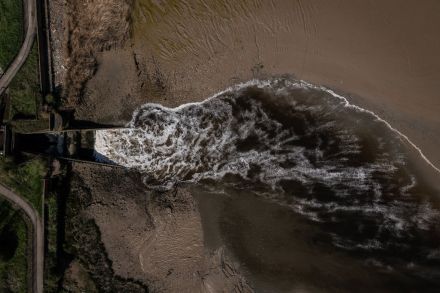
Water companies have sweated the assets they were handed upon privatisation in the late 1980s. They have failed to invest properly, and have regarded fines for sewage spills as a business cost, to be balanced against the price of investment, rather than as a deterrent. They have, as Ofwat chief executive David Black told the Today programme this morning, blamed the weather rather than their own failures. Sewage spills more than doubled last year All this is true. Even so, is what the water industry really needs at the moment an order to return £158 million to customers through lower bills in 2025/26? That is what Ofwat has just ordered the water companies to do, as a punishment for failing to meet targets for reducing sewage spills.

What’s the truth about ‘irregular migration’ levels?

From our UK edition

Should we trust a new study that claims that the level of irregular migration in the UK has essentially not changed in the past 16 years? That is the assertion being made in the reporting of a project called Measuring Irregular Migration, or MIrreM – a collaboration between Oxford University and 17 other universities across Europe and North America. ‘Irregular Migration to the UK and other large European countries is same as 2008, research shows,’ states a headline in the Guardian. This, needless to say, flies in the face of reports over the weekend that nearly 1,000 migrants arrived in small boats in a single day.

Private schools should be cheaper

From our UK edition

Independent schools are an asset to the education system and they have been singled out by Labour for a tax rise which has as much to do with pressing the right buttons for the party faithful as it does with raising revenue. But really, those schools could do with better PR. Whoever thought it a good idea to suggest to the i newspaper that private schools will be putting plans for new swimming pools, astroturf pitches on hold, and doing away with frills like personalised ring binders, in reaction to the imposition of VAT on their fees? They have succeeded only in feeding education secretary Bridget Phillipson with an attack line. ‘Our state schools need teachers more than private schools need embossed stationery,’ she tweeted on Saturday.

Is there really a private school exodus?

From our UK edition

Will Labour actually gain some revenue for slapping VAT on school fees, or is it heading for fiscal embarrassment as so many private school pupils are decanted into the state sector that the taxpayer will suffer a net loss? The question has been batted around for months as everyone ponders a great unknowable: how many parents would throw in the towel when faced with a higher bill for educating Barnabus and Fenella, and send them to the local comp instead? An early indication has been provided on Friday by the Independent Schools Council (ISC), which claims that the number of pupils enrolled in independent schools (or at least those affiliated to the ISC) has fallen by 10,000 – or 1.7 per cent – in a year.

Ed Miliband’s ‘new era’ for energy policy is anything but

From our UK edition

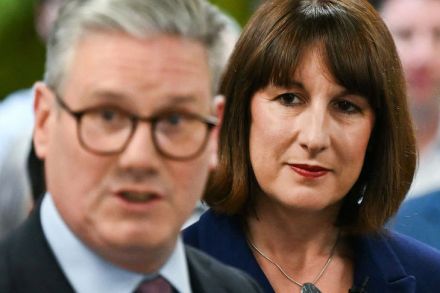
How the ground is shifting now that Labour finds itself in government and is actually responsible for UK energy policy. This morning, workers at a glass factory on Merseyside were treated to an unusual visit from the threesome that is the Prime Minister, Chancellor and Energy Secretary. Keir Starmer, Rachel Reeves and Ed Miliband had travelled up to announce the latest twist in the government's energy policy: a £22 billion investment in carbon capture and storage (CCS). This, apparently, is an inspired policy to create jobs, help us accelerate to net zero and boost our economy. It is also extraordinarily similar to an announcement that the previous government made in March 2023, when Rishi Sunak pledged £20 billion towards CCS projects.

You can’t deal rationally with the rail unions

From our UK edition

The idea that the government had somehow managed to draw a line under the rail strikes by offering drivers and other staff a fat pay rise with no conditions attached even managed to fool the former Tory rail minister Huw Merriman, who declared in August: ‘I can understand why the new government have decided to cut a deal to end the uncertainty and move on with goodwill.’ There are more than 60 metro systems around the world that run without drivers Goodwill? That didn’t even last a day as Aslef celebrated the award of a pay rise for drivers by announcing a further round of strikes on LNER, this time over rostering. Those were cancelled after the government expressed outrage, but that hasn’t stopped Mick Lynch’s Rail, Maritime and Transport (RMT) union coming back for more.

Badenoch is the best the Tories have got

From our UK edition

What an ordeal. If there is one thing more trying than watching a leader’s speech at a party conference, it is watching four of them in a row – four doses of platitudes, jokes that miss the mark, personal anecdotes about their childhood and parents which are supposed to build up a sense of character but instead make you groan because you have heard them a dozen times before. She speaks with words, not phrases Tom Tugendhat came across as a middle manager on a public speaking course. Never mind where he wanted to take the country – he didn’t seem sure how and in which direction he was supposed to leave the stage after his low-energy presentation.

What has become of the Wellcome Collection?

From our UK edition

In 2022 the Wellcome Collection caused a stir by closing its Medicine Man exhibition on the grounds that it was ‘based on racist, sexist and ableist theories and language’. Director Melanie Keen had previously talked of reinterpreting the collection but had now evidently decided it was beyond redemption. ‘We can’t change our past,’ she said in a statement at the time. ‘But we can work towards a future where we give voice to the narratives and lived experiences of those who have been silenced, erased and ignored.

The uncomfortable truth about the end of UK coal

From our UK edition

Should we celebrate the end of Ratcliffe-on-Soar, Britain’s last coal-fired power station, whose boilers went cold on Monday, bringing to an end 142 years of coal-fired electricity in Britain? Even as recently as 2012, 39 per cent of our electricity came from coal.  The news of the power station’s demise was, predictably enough, received with great enthusiasm by the climate lobby, who asserted that renewables had displaced this filthy form of generation. According to Lord Deben, the former Chair of the Climate Change Committee, the end of coal power in Britain will inspire the rest of the world to follow suit.

Can anything stop Germany’s decline?

From our UK edition

Brexit is, we’re told, a disaster that shaved a hefty slice off UK economic growth. But there does seem to be a very large proverbial elephant standing in the way of this thesis. Our EU neighbours don’t seem to have been doing any better than an admittedly sluggish – if now recovering – Britain. While the UK economy grew by 0.7 per cent in the first quarter of this year followed by 0.5 per cent in the second quarter, the French economy managed only 0.3 per cent and 0.2 per cent. It is Germany that continues to surprise most on the downside. The economy shrank again in the second quarter, by 0.1 per cent.

Boris Johnson has just proven he was unfit to be prime minister

From our UK edition

For the past five years, I have been in something of a conflict: was Boris Johnson an unconventional but essentially wise prime minister whose ability to see the big picture was more important than his weakness on detail, and whose gift for spreading optimism outweighed his disorganisation? Or was he, as his many detractors have argued, simply not up to the job of leading the country? Fortunately, Johnson has now answered the question himself. Yes, he was stark-ravingly unsuited to being prime minister.

Why did it take Baroness Warsi so long to quit the Tory party?

From our UK edition

There will be little surprise that Baroness Warsi has resigned the Conservative whip; the greater wonder is that she didn’t do so years ago. In her leaving, she complains 'how far right my party has moved', but then she has been making complaints about the Tories for years. Warsi has never been slow to accuse the Conservatives of Islamophobia. In June 2020, for example, following the murder of three men in Reading by an Islamist extremist – an asylum-seeker from Libya – it was the then Conservative government which caught her ire. Describing the murders as a ‘lone wolf’ attack, she said: 'How can the government seek the support of a community that it needs to deal with these challenges when it simply refuses to work with that community?'.

Is Labour’s non-dom crackdown backfiring already?

From our UK edition

It takes something when even the Guardian is warning you that your tax rises might end up costing more than they raise in revenue. The paper is reporting today that Treasury officials are becoming worried that the Office for Budgetary Responsibility (OBR) will conclude that plans to abolish non-dom status and its associated loopholes will persuade so many rich individuals to leave the country that, even with higher taxes, the government will be the net loser. If that is what the OBR concludes it will blow a hole in Rachel Reeves’ budget next month. Ending non-dom status was one of the handful of planned tax rises which the government was prepared to admit to during the election campaign.