Ross Clark

Ross Clark

Ross Clark is a leader writer and columnist who has written for The Spectator for three decades. He writes on Substack, at Ross on Why?

Can the grid cope with many more EV chargers?

From our UK edition

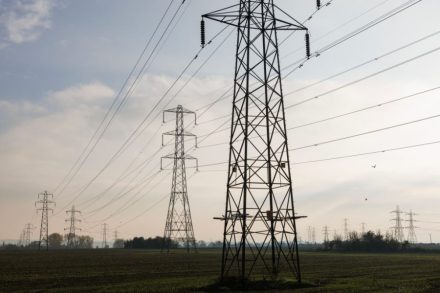
Is this the development that is finally going to make us shake off our aversion to electric vehicles (EVs)? Local authorities are reported this morning to have granted planning permission for £692 million worth of public chargers, potentially leading to the installation of ‘hundreds of thousands’ of EV charging points. A lack of public charging points is regularly cited as a reason for the slow uptake of EVs and the failure of car manufacturers to reach the target set for them in 2024: to ensure that 22 per cent of the vehicles they sold were pure electric. In the event, they managed only 19.6 per cent – and that was only achieved thanks to hefty discounting and the refusal to deliver new petrol and diesel cars until the new year, so that they would show up in 2025 figures.

Foreign national crime stats show we have an immigration problem

From our UK edition

Britain, as we know, is a country where sex offences are on the rise because toxic males are having their minds poisoned by internet porn, and are picking up bad attitudes towards women from the likes of Andrew Tate. We know this because liberal-minded folk keep telling us so. What the liberals don’t like to tell us is that sex offences are, to some extent, an imported problem. We have learned today that foreign nationals living in Britain are three times more likely to be arrested for sex offences relative to UK citizens – but only because the Centre for Migration Control has spent months teasing out the information via Freedom of Information requests.

Tommy Robinson isn’t the story here

From our UK edition

Elon Musk’s Twitter attack on Jess Phillips is certainly offensive. It may even deserve to be called a ‘disgraceful smear’, as Wes Streeting put it on the Laura Kuenssberg Show this morning. But the trouble is that every time government ministers bring up Musk’s spat with Phillips, the more they remind people of just how close Labour was to the scandal of rape gangs in Rotherham, Rochdale, Oxford, Telford and other places.

The banking system’s net zero reckoning

From our UK edition

It all seemed so unstoppable in April 2021 when a group of the world’s banks, under the guidance of former Bank of England governor turned UN envoy for climate action and finance Mark Carney, announced the creation of the Net Zero Banking Alliance. Founding members, which included Citibank and Bank of America, agreed to reconfigure their lending and investment portfolios 'to align with pathways to net zero by 2050 or sooner'. In other words they would draw up a plan to stop future lending for nasty stuff like pumping fossil fuels out of the ground.   'The largest financial players in the world recognise energy transition represents a vast commercial opportunity as well as a planetary imperative,' declared the then US climate envoy John Kerry.

The fatal flaw in Labour’s vote reform plans

From our UK edition

Keir Starmer’s government won’t be the first to engage in gerrymandering when it seeks to lower the voting age from 18 to 16, inviting into the polling booths a group which most people suspect will be more inclined to vote Labour. But could Labour’s elections Bill end up being more radical than that? The Labour-linked think tank the Institute for Public Policy Research (IPPR) has just published a report arguing for more extensive reforms, including removing the requirement for photo ID at polling booths, automatic voter registration and giving the vote to foreign nationals who are long-term residents of Britain.

Ed Miliband doesn’t understand how energy pricing works

From our UK edition

Are we about to find out the full foolishness of Ed Miliband’s policy of blocking licences for new oil and gas extraction in the North Sea? While it may come as a surprise to some, until New Year’s Eve Europe was still receiving gas supplies from Russia – not through the Nord Stream 1 pipeline which was sabotaged in 2022, but via an unlikely route through Ukraine. These taps have now been turned off, after an agreement for Russia to supply gas to Europe came to an end. That leaves the continent facing a similar situation, if less acute, to that which it faced in 2022. It must look elsewhere to make up for lost Russian gas.

Starmer’s queue-cutting blunder shows he isn’t very good at politics

From our UK edition

Who would want to be Prime Minister, when even an innocent holiday can lead to a PR disaster? Keir Starmer had to cancel his summer holiday last year because he couldn’t be seen to be swanning off to the sun while towns in the Midlands and North were erupting into rioting. Surely, then, a few days in out-of-season Madeira in the dead period between Christmas and New Year would provide a well-earned rest? It would be tempting to feel sorry for Starmer if he hadn’t taken every opportunity to make political capital out when his predecessors were accused of exceptionalism Unfortunately not. Starmer is back in the headlines for turning up at a toboggan run and being ushered past a queue of holidaymakers who had been waiting for a reported three hours.

Why has ‘decolonising’ Sadiq Khan accepted a knighthood?

From our UK edition

If you are going to give gongs for public service, I guess a three-times elected London mayor ought to be a candidate. True, it is hard to see what particular achievements have earned Sadiq Khan his knighthood. Violent crime has risen inexorably on his watch, while his efforts to clean up London’s air have been clumsy at best, making life next-to-impossible for low-wage shift workers in outer London who really don’t have any option but to commute to work in their 20 year-old cars. Cars, in should be noted, which are not a lot less clean than the newer Chelsea Tractors which wealthy Londoners – Khan included – use to get around. But that rather misses the point: Khan has been elected three times, so some people must think he is doing a good job.

Elon Musk is the real leader of the opposition

From our UK edition

No wonder the left hates X so much. Elon Musk is using it to carve himself a role as Britain’s unofficial opposition – a role at which he is proving rather more effective than the official opposition. His latest interjection into UK politics is deadly. Responding to Scottish politicians who would like him to set up a Tesla factory in Scotland he replied simply: ‘very few companies will be willing to invest in the UK with the current administration.’ Ouch! It is so damaging to the Keir Starmer and his ministers because Musk is exactly the person whom they should want to be investing in Britain. He makes all the stuff which this government, and its predecessor, have tried but failed to get Britain making. Electric cars?

Does Starmer really think quangos will boost economic growth?

From our UK edition

If you wanted some ideas for how to boost economic growth, would you ask the people who run businesses or the quangos which regulate them? No prizes for guessing which of them Keir Starmer, Rachel Reeves and Jonathan Reynolds have plumped for. Yes, they really do seem to think that government regulators have some useful ideas for how to boost growth. They have written a jointly-signed letter to the heads of Ofwat, the Environment Agency, the Financial Conduct Authority and healthcare regulators asking them for advice as to how the government might lighten regulation and so make the country richer. You might as well ask a bunch of turkeys what should be done about Christmas. You might as well ask a bunch of turkeys what should be done about Christmas.

What was Badenoch hoping to achieve with her attack on Farage?

From our UK edition

Kemi Badenoch believes she has caught out Nigel Farage with a bit of digital sleuthing. No sooner had Farage announced that the official membership of Reform has surpassed the 132,000 declared membership of the Conservative Party than Badenoch declared it is all a con. All Badenoch has really achieved is to emphasise how shrunken the Conservative party has become “Manipulating your own followers at Xmas, eh Nigel?” she tweeted on Boxing Day. The counter that Reform has been showing us is a fake, she declared. “It is designed to tick up automatically. We’ve been watching the back end for days, and can also see that they have just changed the code to link to a different site as people point this out. Farage doesn’t understand the digital age.

Labour is out of its depth with electric cars

From our UK edition

When Vauxhall announced the closure of its Luton plant a few weeks ago it seemed that the government had finally woken up to how the Zero Emission Vehicle (ZEV) mandate was killing off Britain’s car industry. We were promised a consultation on the rules – which demand that manufacturers ensure 22 per cent of cars they sell this year are pure electric, with fines of £15,000 for every petrol or diesel car sold over the limit. This morning we got it. Does it promise salvation for our remaining car factories? Sadly not. Where are all the booming car factories?

What happened to ‘growth, growth, growth’?

From our UK edition

This is hardly how 2024 was supposed to end for Labour. Free from the shackles of ‘14 years of Tory misrule’, the economy was supposed to take off. ‘Growth, growth, growth,’ Keir Starmer told us, a little unconvincingly, were going to be the government’s three main priorities. Indeed, Britain was going to tear away as the fastest-growing economy in the G7 – although he never offered us any explanation as to why this would be the case, still less which of his policies was going to achieve it. This morning’s revised GDP figures from the Office for National Statistics (ONS) reaffirm just how big a failure the government’s economic policies have so far proven to be. The figures show zero growth in the third quarter, while GDP per head shrank by 0.2 per cent.

Is it time to scrap the planning system?

From our UK edition

If Keir Starmer does succeed in his aim of stimulating a house-building boom, it may be that landowners will have little to celebrate. The government has launched a consultation into proposals to extend the powers of compulsory purchase to help councils assemble land for new housing developments. No public body can simply seize land; that would be in breach of the Human Rights Act. But the price that landowners should be paid when their land is required for public projects is a matter of much argument.

Britain is living beyond its means

From our UK edition

Today’s figures on the public finances and retail sales will bring some relief to Rachel Reeves; both show a small positive direction. In November, they reveal, the government had to borrow £11.2 billion, which was £3.4 billion down on the same month last year. Retail sales were up 0.2 per cent in November, following a 0.7 per cent fall in October. It means that the Chancellor can avoid further negative headlines at the end of the year – but really there is little to detract from the underlying story that the government has succeeded in creating an economic downturn out of thin air. One of the factors behind the slightly improved public finances picture is that a drop in the Retail Prices Index (RPI) reduced the cost of servicing index-linked government debt.

Fixing Britain’s sewers will be fantastically expensive

From our UK edition

It isn’t going to help with the cost of living, but Ofwat’s decision to allow water companies to raise bills by an average of £157 (36 per cent) over the next five years is absolutely necessary. Yes, some companies like Thames Water have loaded themselves up with debt to pay their owners handsome dividends – and may yet go bust as a result. But looking overall at the UK water industry we have been underinvesting for decades. If we want to reliable water supply, and a wastewater treatment system which does not involve the routine dumping of sewage into rivers and the sea, we are going to have to pay for it. Look around Britain and you can find some impressive water infrastructure, from the Ladybower reservoir system in Derbyshire to the largely unseen sewers of London.

Waspi women don’t deserve compensation

From our UK edition

Labour is right not to pay compensation to the Waspi women – those who feel aggrieved that the state pension age for women was raised from 60 to 66 without, so they claim, them being given adequate information about the change. We are being invited to believe that tens of thousands of women drew up detailed plans for their retirement – all now undermined – without actually bothering to find out at what age they would retire. You can’t claim poverty one moment while writing open-ended cheques for favoured groups the next To swan off into state-funded retirement at 60 when life expectancy for women is now well into the 80s would be absurd. We can’t have a working age population supporting a retired population that consists of around a third of all adults.

The hypocrisy of Hollywood’s environmental preaching

From our UK edition

You can’t expect anything reasonable when Hollywood gets on its high horse, but really, are our pension contributions truly helping to strip the Amazon of its rainforests? That is the claim made in a short film featuring Benedict Cumberbatch, in which the actor appears in a sauna as 'Benedict Lumberjack', the CEO of a logging company. 'The business of deforestation is on fire right now and it is all thanks to you,' he says. 'The money from your pension has helped scorch, slash and burn entire rainforests… some bits of the world are literally burning but it’s just the bits that no one cares about.' Let’s sketch over the assertion that logging companies are setting fire to rainforests – emphasised in a shot of tall trees being consumed by fire.

The unintended consequence of Angela Rayner’s nature tax

From our UK edition

Political office does odd things to parties which were in opposition. Angela Rayner and Steve Reed have written in the Sunday Times this morning complaining that environmental rules are threatening the government’s house-building targets. We’re in a situation, they say, ‘where bats and newts are getting in the way of people who desperately need housing.’ They are not wrong. One of the reasons why there are 1.2 million would-be homes which have been granted planning permission over the past decade but which have yet to be built is that pettifogging green rules are standing in their way. Three of those ghost homes are in my village.

Who does Starmer think is going to build Britain’s houses?

From our UK edition

Why does the government keep setting itself up for failure? It did it with the target for decarbonising electricity by 2030 – which virtually no one outside Ed Miliband’s department and its attached agency, the National Energy Systems Operator (NESO), thinks is possible and which has already been watered down to a 95 per cent reduction in emissions. And it has done it again with its target of building 1.5 million homes across the lifetime of this Parliament. Angela Rayner seems to think it is just a case of trampling over Nimbys and the houses will magically appear. But today the Construction Industry Training Board (CITB) has scotched that notion, saying that Britain simply doesn’t have the skilled workforce necessary for such an acceleration.